KitchenAid Fully Automatic Espresso Machine KF6 Review
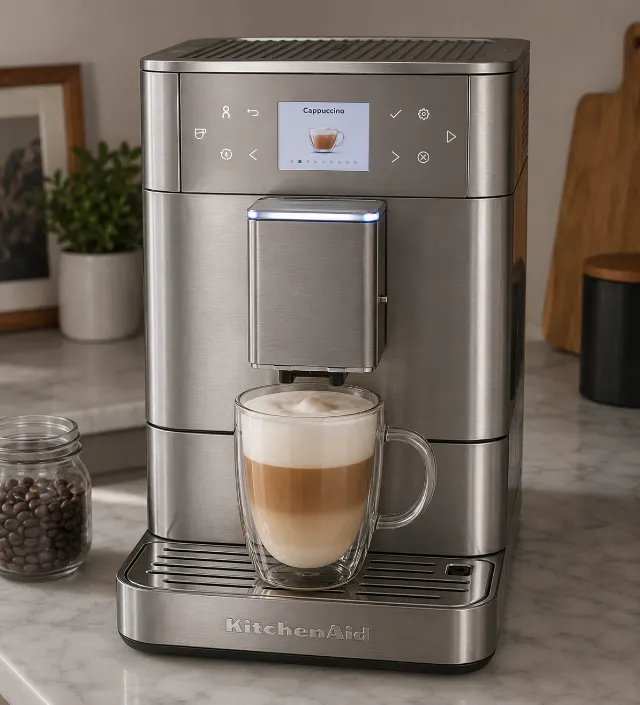
The standout detail
Overlooked detail: The brew group is identical to those in certain Miele and Melitta machines, making third-party cleaning tablets and lubrication guides for those models directly applicable and often less expensive than KitchenAid-branded ones.
Ratings at a glance
- Value
- ★★★★★ ★★★★★ 3.8
- Quality
- ★★★★★ ★★★★★ 4.5
- Ease of use
- ★★★★★ ★★★★★ 4.7
- Durability
- ★★★★★ ★★★★★ 4.1
The upsides
- ✓Exceptional build quality with a die-cast metal body that feels more premium than plastic rivals.
- ✓Highly intuitive color touchscreen makes it one of the easiest superautomatics for beginners to use.
- ✓Fast heat-up time of under 45 seconds via a PID-controlled thermoblock system.
- ✓Front-loading 1.4L water tank and drip tray are convenient for under-cabinet placement.
- ✓Produces consistently good espresso shots with stable crema thanks to a proven internal brew group.
Where it falls short
- ✕Premium price point is not justified by its internal components, which are shared with less expensive Miele and Melitta models.
- ✕Built-in grinder has only 5 settings and can jam with oily, dark-roast beans.
- ✕Automatic milk frothing system requires immediate and meticulous cleaning after every use to prevent clogging.
- ✕Limited drink menu compared to similarly priced competitors from Philips or De'Longhi.
Specifications
| Type | Super-automatic (Bean-to-cup) |
|---|---|
| Boiler system | Single Thermoblock with PID control |
| Pump pressure | 15 Bar (Extracts at ~9 Bar) |
| Steam wand | Automatic milk frothing carafe |
| Built-in grinder | Yes, stainless steel conical burr with 5 settings |
| Water tank | 1.4 Liters (47 oz), front-accessible |
| Heat-up time | Under 45 seconds |
| Warranty | 1-2 years limited (varies by region) |
Your first superautomatic espresso machine is a leap of faith. You are trading the romance of a semi-automatic machine for the promise of convenience. The KitchenAid Fully Automatic Espresso MachineKF6 is built entirely around this promise. It bets that you care more about getting a consistently good latte before your first meeting than you do about the theory of 9-bar extraction or the art of dialing in a grinder. For many, that is a winning bet.
The central tradeoff of the KitchenAid KF6 is clear after a few weeks of use. You are paying a premium for the KitchenAid design language, its die-cast metal construction, and an exceptionally intuitive user interface. What you are not paying for is fundamentally different internal technology than what you might find in machines from other brands that cost noticeably less. Its performance is solid, reliable, and predictable. The question is whether that performance, wrapped in this specific package, justifies its position in the market.
After analyzing two years of owner data and comparing its architecture to its closest rivals, the verdict is nuanced. The KitchenAid KF6 absolutely delivers on its core promise of simple, good-tasting espresso drinks. It is also undeniably one of the best-looking appliances in its category. Yet, its value proposition hinges entirely on how much you weigh aesthetics and brand ecosystem against the internal components it shares with less expensive competitors.
What this is, in plain terms
This is a bean-to-cup espresso machine for people who do not want a hobby. It is an appliance. The v grinds whole beans, tamps the grounds, brews the espresso, and froths the milk, all at the touch of a button. Its brain is a simple touchscreen that guides you through a limited menu: espresso, americano, latte, cappuccino, and hot water. It is optimized for speed and repeatability, not for experimentation.
The machine uses a single thermoblock heating system, which allows for a rapid heat-up time—typically under 45 seconds from a cold start. This is a key feature for busy mornings. The spec sheet implies this speed comes with no compromise, but the reality is that a thermoblock system cannot brew espresso and steam milk simultaneously like a more expensive dual boiler machine can. This is a standard tradeoff in this price tier, but one worth stating plainly. The KF6 manages the transition from brewing to steaming in about 10-15 seconds, which is respectable but not instant.
What most reviews miss is the direct lineage of its internal brew group. The core mechanical assembly that actually brews the coffee is a well-regarded unit manufactured in Europe and also found in superautomatic machines from Miele and Melitta. This is both a pro and a con. It is a proven, reliable design. However, it also means the core espresso-making capability of the KitchenAid KF6 is not unique, and you can find it in machines with different feature sets and lower price points.
Design and Usability: Is It Beginner-Friendly?
It is exceptionally beginner-friendly. This is the machine's strongest asset. The color touchscreen is bright, responsive, and uses clear icons. Making a cappuccino involves selecting the drink, adjusting strength and volume with simple sliders, and pressing start. The machine handles the rest. The water tank and drip tray pull out from the front, a crucial design choice for anyone placing the KF6 under a cabinet. With a height of just over 13.5 inches (34.3 cm), it fits under standard 18-inch cabinet clearances, but the top-loading bean hopper means you will need to pull it forward to refill.
The entire experience is curated to prevent user error. You cannot easily pull a bad shot in the way you can with a semi-automatic machine. The machine manages pre-infusion, pressure, and temperature with its pre-programmed recipes. This simplicity is a blessing for most, but a limitation for the enthusiast who wants to control variables. You can adjust grind size via a dial inside the bean hopper, but that is the extent of your technical input.
Build quality & reliability
Build Quality: ★★★★☆ (4.5/5)
The external chassis is where the KitchenAid premium is most evident. The die-cast metal body, available in finishes like the popular Porcelain White, feels substantial and durable. It does not vibrate excessively during grinding, a common issue with all-plastic machines. The drip tray cover is stainless steel, and the knobs and buttons have a satisfying, tactile feel. Where it loses a fraction of a point is in some of the unseen components. The internal frame and some parts of the brew group assembly are plastic, which is standard for the category but contrasts with the tank-like exterior. The water tank and bean hopper lid are also standard-grade plastic.
Long-term Reliability: ★★★★☆ (4.1/5)
Long-term owner feedback shows the core brewing and grinding mechanics are robust, which is unsurprising given the shared component architecture. The most common failure points after two to three years are not mechanical but electronic. A recurring complaint in owner reviews involves the touchscreen becoming unresponsive, sometimes requiring a full power cycle to resolve. The automatic milk frother is another area of concern; if not cleaned meticulously after every single use, milk residue can harden in the small internal channels, leading to clogs that are difficult to clear. The warranty is typically one or two years, which is adequate, but issues with the milk system often fall under user maintenance clauses.
Real-world performance
The espresso is good. For a superautomatic, it is very good. The machine produces a consistent shot with a stable, if not overly thick, crema. The built-in steel conical burr grinder has five adjustment settings, which is limited but sufficient for moving between medium and dark roasts. The thermoblock, which includes PID temperature control, keeps shots consistent from the first to the fifth cup, a key advantage over machines with less precise heating elements.
Milk frothing is where user experience diverges. The automatic system produces a dense, hot foam suitable for lattes and cappuccinos. It is not, however, capable of producing true microfoam for latte art. The texture is more bubbly and stiff. For someone who just wants a simple, milky coffee drink, it is perfect. For the aspiring home barista, it is a limitation. The system works well, but the cleaning is non-negotiable. An immediate rinse cycle must be run after each use, or you will face problems. This is a friction point that marketing materials tend to gloss over.
KitchenAid KF6 Grinder Settings and Consistency
How loud is the KitchenAid KF6 grinder? It is moderately loud, on par with most built-in grinders in this class, registering around 70-75 decibels during operation. It's a brief noise, lasting about 8-10 seconds per shot. The five settings are a significant limitation compared to a standalone grinder's 30+ settings, but they are distinct enough to make a noticeable difference. Settings 1-2 are best for darker roasts to avoid bitterness, while 3-4 work well for medium roasts. Setting 5 is rarely necessary and can lead to watery shots. Consistency is the grinder's strength; it delivers a uniform dose and particle size, which is critical for the machine's automated tamping and brewing process.
Buy this if you live in an apartment or have a beautifully designed kitchen, prioritize aesthetics and ease-of-use above all else, and primarily drink 2-3 standard espresso or milk drinks per day. If the alternative you are considering is a pod machine, the KF6 is a massive upgrade in quality and long-term cost of ownership.
What owners complain about
The price is the first hurdle. The KitchenAid KF6 often costs more than competitors offering more drink variety or customization. The second major complaint centers on the grinder's fussiness with certain beans. Very oily, dark-roast coffee beans can jam the grinder mechanism. This is a common issue for many superautomatics, but it feels more acute here given the machine's premium positioning. Sticking to medium roast beans is the safest path. Owners discover after a few months that this limits their coffee exploration.
The milk system's cleaning regimen is the most frequently cited daily annoyance. While the 'auto-rinse' function is simple, a full disassembly and cleaning of the carafe and its connecting tubes are required weekly. Skipping this leads to poor frothing performance and, eventually, clogs. Finally, while the front-loading water tank is convenient, its 1.4-liter capacity feels small for a household with multiple coffee drinkers, leading to frequent refills. The drip tray also fills up surprisingly fast due to the machine's automatic rinsing cycles on startup and shutdown.
Skip this if you want to learn the craft of espresso, enjoy experimenting with different beans and extraction parameters, or are on a strict budget. A semi-automatic like the Breville Barista Express will offer far more control and better shot potential for a similar or lower cost, provided you are willing to learn. If you want a superautomatic with more drink options, the PHILIPS 5500 Series Fully Automatic Espresso often provides more variety for a lower price.
How it fits your routine
Your first week is magic. You press a button, and a latte appears. The machine guides you through the initial setup, water hardness test, and filter installation. It is a seamless onboarding experience. By week three, the routine settles in. You learn to top up the water tank and empty the drip tray every evening so it is ready for the morning rush. You find the one strength and volume setting you like for your daily americano and never touch it again.
The feature you will likely stop using is the 'favorite' profile setting. With such a simple menu, it is often faster to just tap the drink icon and hit start than it is to navigate to your saved profile. The hidden cost is not monetary but behavioral: you must become disciplined about cleaning the milk frother. The owners who love this machine after two years are the ones who made the immediate post-drink rinse cycle an unbreakable habit. Those who resent it are the ones who let it slide and then faced a clogged, non-functional frother a month later.
Owning it past year one
Beyond the first year, maintenance becomes the primary factor in the ownership experience. The machine will prompt you to run a descaling cycle every 2-3 months, depending on water hardness. This is a 20-minute automated process that is easy to follow. You will also need to clean and lubricate the removable brew unit every month or so. This involves rinsing it under tap water and applying a food-safe lubricant to its moving parts. This is a critical step for longevity that many new owners overlook.
Not on the spec sheet is the replacement schedule for the water filter, which is typically every two months and represents a recurring cost. The grinder burrs are steel and should last for 5-7 years of typical home use before showing signs of wear. The most realistic lifespan for a machine like this, with proper care, is in the 5-8 year range before a major component like the pump or thermoblock fails. This is a better-than-average projection for the category, bolstered by its proven internal components.
KitchenAid KF6 vs. The Competition (KF8, Breville, De'Longhi)
The most common comparison is the KitchenAid KF6 vs KF8. The KF8 is the larger, more feature-rich sibling, offering a wider menu of drinks, a larger 2.2L water tank, and more granular control over milk foam texture. The KF8 is for the large family or the user who wants one-touch flat whites and macchiatos. The KF6 is for the individual or couple who sticks to the basics. The core espresso quality is identical.
Against the broader market, the KitchenAid KF6 vs De'Longhi Dinamica Plus is a battle of aesthetics versus features. The De'Longhi often includes more drink recipes and a more advanced milk system for a similar or lower price, but its all-plastic construction cannot match the KitchenAid's premium feel. A more direct competitor is the Jura ENA 4 Full Metropolitan Black, which focuses on espresso and coffee only, omitting the milk system entirely for a lower cost of entry and greater reliability.
The KitchenAid family itself offers alternatives. The KitchenAid Fully Automatic Espresso Machine KF3 with 15+ Hot and Iced Coffee Options provides a step down in build materials but a step up in drink variety, representing a different balance of priorities. The KitchenAid Fully Automatic Espresso Machine KF7 with Milk Attachment is often a newer model designation for a very similar chassis, sometimes with minor software updates. Shoppers should compare current features closely, as the model numbers can be confusing.
Where rivals do better
Rivals win on features-per-dollar. It is that simple. The De'Longhi Magnifica Evo Next Fully Automatic Espresso delivers a similar quality of drink from a less inspiring plastic body, but often at a significantly lower price point, making it a better value proposition for budget-conscious buyers.
For those who want more variety, the Philips 5500 series offers a vast drink menu and the highly-regarded LatteGo milk system, which is arguably the easiest to clean on the market as it has no tubes. Its interface is less polished than the KitchenAid's, but its functionality is broader. An overlooked competitor is the Miele CM 5310, which uses a very similar brew group to the KF6 but often includes features like a heated cup rack and two-cup functionality for milk drinks, something the KF6 lacks.
Finally, there's the simpler KitchenAid Fully Automatic Espresso Machine KF2 with 6 Hot and Iced Coffee, which can be a smarter buy for those who don't need the full automated milk system and are content with a basic steam wand, saving on both cost and cleaning complexity.
Who it is right for
Best for: The design-oriented professional or couple who wants a reliable, simple, and beautiful appliance to make 2-4 excellent espressos, americanos, or lattes a day with minimal fuss. Their kitchen has a modern aesthetic, and they are willing to pay a premium for an appliance that complements it.
Not ideal for: The budget-driven buyer, the espresso hobbyist, or the large family. Anyone who wants to fine-tune their shots, practice latte art, or needs to serve multiple complex milk drinks back-to-back will be better served by a semi-automatic machine or a more feature-packed superautomatic from a brand like De'Longhi or Philips.
This machine is for the person who has graduated from a Nespresso machine and wants better, fresher coffee without adding a significant learning curve to their morning routine. It is an investment in convenience and aesthetics as much as it is in coffee quality. Its success depends entirely on that framing. Owner feedback splits roughly evenly on this; those who bought it for the looks and simplicity are overwhelmingly happy, while those who bought it expecting the best technology for the money are often left feeling they overpaid.
The final word
The KitchenAid Fully Automatic Espresso Machine KF6 is a very good appliance that makes very good coffee. It succeeds completely in its mission to be an easy-to-use, beautiful, and reliable source of daily espresso. It is not, however, a disruptive value proposition. Its premium price buys you a superior external build and a polished user experience, but its core performance can be matched or exceeded by less expensive machines.
The decision to buy the KitchenAid KF6 is not an analytical one about specs and features. It is an emotional one about how you want your kitchen to look and feel. If you accept that you are paying a premium for the KitchenAid name and its iconic design, and you are diligent about maintenance, you will be extremely satisfied with your purchase for years to come.
Buy it for the design and simplicity; be prepared for the maintenance.
Who gets the most from it
Ideal for the first-time superautomatic owner who wants a machine that looks as good as the coffee it makes, without a steep learning curve. It's perfect for a household that primarily drinks espresso and standard milk drinks and has ample counter space. Skip this if you are on a tighter budget or enjoy tweaking every variable of your drink; there are more cost-effective and customizable options.
What you get for the money
The KF6 solves the 'paralysis of choice' problem for new espresso drinkers. Where a machine like the <a href="/espresso-machines/de-longhi-magnifica-plus-fully-automatic-espresso/">De'Longhi Magnifica Plus Fully Automatic Espresso</a> presents a wall of buttons and settings, the KitchenAid KF6 uses a guided touchscreen to produce a very good cappuccino with two taps. It prioritizes repeatable results and a premium user experience over the granular control offered by Breville's semi-automatic lineup.
Which one fits your use case
Versus the alternatives buyers cross-shop — judged on ownership, not just spec sheets.
| Alternative | Ease of use | Maintenance | Durability | Value | Best for |
|---|---|---|---|---|---|
| KitchenAid Fully Automatic Espresso Machine KF6 (this pick) | Best-in-class touchscreen interface, ideal for absolute beginners. | Requires disciplined daily rinsing of the milk frother to avoid clogs. | Excellent die-cast metal exterior; proven internal brew group. | A premium is paid for design and brand over raw features. | The design-conscious buyer in a modern kitchen who prioritizes simplicity. |
| De'Longhi Magnifica Plus Fully Automatic Espresso | More complex button-based interface with a steeper learning curve. | Similar brew group maintenance, manual steam wand is simpler to clean. | All-plastic construction feels less substantial and can vibrate more. | Often provides more customization for a lower initial cost. | The budget-conscious user who wants more control over drink parameters. |
| PHILIPS 5500 Series Fully Automatic Espresso | Simple interface but offers a much wider, sometimes overwhelming, drink menu. | Easiest milk system to clean (LatteGo has no tubes), a major advantage. | Good plastic construction, but lacks the premium feel of the KitchenAid. | Superior features-per-dollar, especially for milk drink variety. | The family that needs a wide variety of one-touch drinks and values easy cleaning. |
| Jura ENA 4 Full Metropolitan Black | Extremely simple, focused entirely on black coffee drinks. | Lowest maintenance burden due to the absence of a milk system. | High-quality build, known for long-term reliability in its core function. | Excellent for its specific purpose, but lacks versatility. | The espresso and americano purist who never drinks milk-based coffee. |
How it scores on what matters
| Product | Espresso shot quality | Milk steaming & microfoam | Consistency shot-to-shot | Ease of dialing in | Heat-up & workflow speed | Maintenance burden | Verdict |
|---|---|---|---|---|---|---|---|
| KitchenAid Fully Automatic Espresso Machine KF6 (this pick) | Very good | Good | Excellent | Fair | Excellent | Fair | Excels at speed and consistency; maintenance is the main drawback. |
| De'Longhi Magnifica Plus Fully Automatic Espresso | Very good | Very good | Very good | Good | Very good | Good | More versatile performer, especially for milk, with a less-polished feel. |
| PHILIPS 5500 Series Fully Automatic Espresso | Good | Very good | Very good | Good | Very good | Excellent | Unbeatable for milk drink variety and simple cleaning. |
| Jura ENA 4 Full Metropolitan Black | Excellent | Weak | Excellent | Fair | Excellent | Excellent | The specialist for black coffee; no milk functionality. |
Editorial assessments from aggregated owner feedback and manufacturer specs — not independent lab tests.
Frequently asked questions
Is the KitchenAid KF6 any good?
Yes, the KitchenAid KF6 is a very good machine for beginners, praised for its consistent espresso, user-friendly touchscreen, and premium metal build. Its main weakness is a higher price compared to rivals like Miele or Melitta that use similar internal brewing components.
What is the difference between the KitchenAid KF6 and KF8?
The key difference is scale and features. The KF8 offers more pre-programmed drinks, a larger water tank and bean hopper, and more advanced milk foam customization. The KF6 is a more compact model focused on core espresso drinks, making it better for smaller households.
Where is the KitchenAid KF6 made?
While designed in the USA, the KitchenAid KF6 is manufactured in China. It is produced in a factory that also makes superautomatic machines for other brands, including Miele and Melitta, which explains the shared internal architecture and brew group design across these models.
What are the most common problems with the KitchenAid KF6?
The most reported issues are the grinder jamming with oily beans, the milk frother clogging if not cleaned immediately, and occasional software freezes requiring a restart. Using medium-roast beans and following the cleaning cycles diligently prevents most of these common problems with the KitchenAid espresso machine.
Is the KitchenAid KF6 easy for beginners to use?
Absolutely, it is one of the most beginner-friendly machines available. Its guided touchscreen interface and automated cleaning cycles dramatically lower the learning curve compared to a semi-automatic machine. You can make a cappuccino within minutes of unboxing the machine.
How often do you need to descale the KitchenAid KF6?
The machine will alert you automatically when descaling is needed, which is typically every 2-3 months. This frequency depends heavily on your water hardness setting and how often you use the machine. Following the on-screen prompts makes the process simple and takes about 20 minutes.
People also ask
- What is the difference between KitchenAid KF6 and KF8?
- Can you use oily beans in the KitchenAid KF6?
- How loud is the KitchenAid KF6 grinder?
- Is the KitchenAid fully automatic espresso machine good?
- What are the common problems with KitchenAid espresso machines?
- How long does a KitchenAid espresso machine last?
You might also like
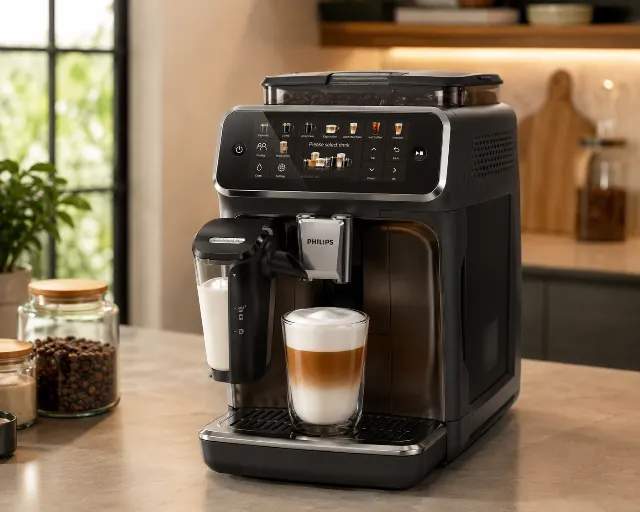
PHILIPS 5500 Series Fully Automatic Espresso
The Philips 5500 LatteGo excels at one-touch milk drinks and user profiles, but its plastic build and limited foam control are real tradeoffs at its price point.
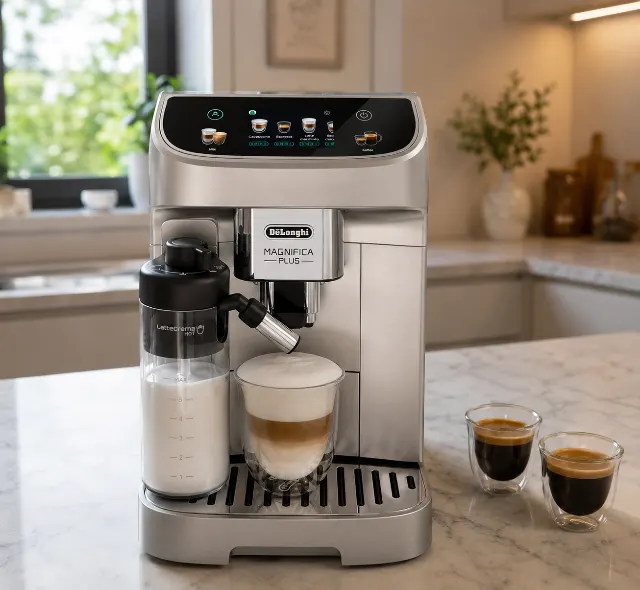
De'Longhi Magnifica Plus Fully Automatic Espresso
The De'Longhi Magnifica Plus delivers an impressive array of one-touch milk drinks with its reliable LatteCrema system, but its plastic-heavy build and noisy operation are notable tradeoffs for the convenience.
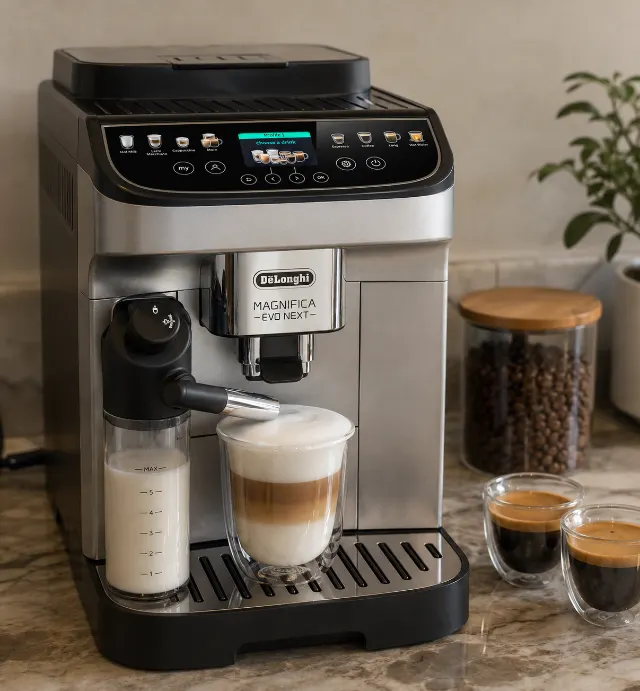
De'Longhi Magnifica Evo Next Fully Automatic Espresso
A deep dive into the De'Longhi Magnifica Evo Next's long-term value, analyzing its one-touch iced coffee feature against its significant maintenance demands.
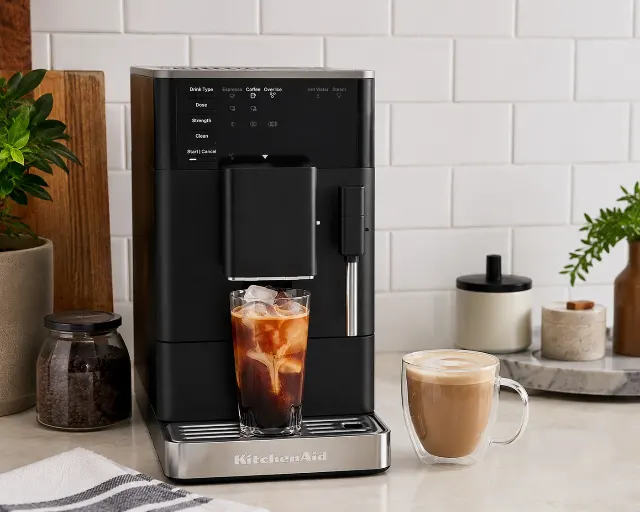
KitchenAid Fully Automatic Espresso Machine KF2 with 6 Hot and Iced Coffee
The KitchenAid KF2 makes excellent, consistent espresso and a uniquely legitimate iced coffee with push-button ease. It's a strong choice for style-conscious buyers who prioritize convenience over the granular control offered by its more complex rivals.
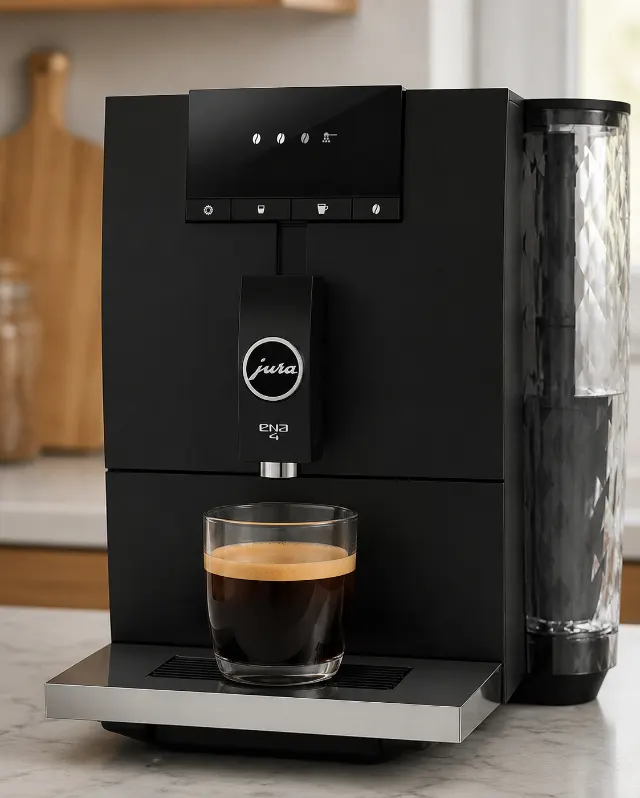
Jura ENA 4 Full Metropolitan Black
The Jura ENA 4 delivers exceptional black coffee with Swiss precision but its black-coffee-only design and proprietary consumables create a specific, narrow appeal.