PHILIPS 5500 Series Fully Automatic Espresso Review
How it compares
Versus the alternatives buyers cross-shop — judged on ownership, not just spec sheets.
| Alternative | Ease of use | Maintenance | Durability | Value | Best for |
|---|---|---|---|---|---|
| Philips 5500 Series Fully Automatic Espresso (this pick) | Top-tier; intuitive color screen and automated cleaning cycles. | Very low; LatteGo rinses in seconds, brew group is removable. | Good; reliable mechanics but plastic chassis feels less robust. | Fair; high convenience factor justifies cost, but build quality lags. | Busy families wanting maximum variety with minimum cleanup. |
| De'Longhi Magnifica Evo Automatic Espresso & Coffee Machine | Good; simple interface but manual steam wand requires practice. | Moderate; traditional steam wand needs daily wiping and purging. | Good; similar plastic build but a proven, long-lasting platform. | Good; often costs less and provides more milk control for those willing to learn. | Budget-conscious buyers who want to try latte art. |
| Philips 4400 Series Fully Automatic Espresso Machine | Very good; same core system with a more basic display. | Very low; identical LatteGo and removable brew group. | Good; essentially the same build and internal components. | Very good; offers 90% of the experience for a noticeable saving. | Users who don't need the 'Extra Shot' or a fancy screen. |
| Philips 3300 Series Fully Automatic Espresso Machine | Good; simpler button interface, still very straightforward. | Very low; features the same brilliant LatteGo system. | Good; shares the family's reliable internal platform. | Excellent; the entry point for the LatteGo system's convenience. | Those who primarily drink cappuccinos and lattes and need no frills. |
How it scores on what matters
| Product | Espresso shot quality | Milk steaming & microfoam | Consistency shot-to-shot | Ease of dialing in | Heat-up & workflow speed | Maintenance burden | Verdict |
|---|---|---|---|---|---|---|---|
| Philips 5500 Series Fully Automatic Espresso (this pick) | Good | Fair | Excellent | Good | Excellent | Excellent | Top marks for speed and cleaning, fair for foam quality. |
| De'Longhi Magnifica Evo Automatic Espresso & Coffee Machine | Good | Good | Very good | Fair | Very good | Good | Better foam control but requires more user skill and cleaning. |
| Philips 4400 Series Fully Automatic Espresso Machine | Good | Fair | Excellent | Good | Excellent | Excellent | Nearly identical performance, just fewer bells and whistles. |
| Philips 3300 Series Fully Automatic Espresso Machine | Good | Fair | Very good | Good | Very good | Excellent | The best value for the core LatteGo convenience. |
Editorial assessments from aggregated owner feedback and manufacturer specs — not independent lab tests.
The unexpected edge
THE X-FACTOR: The 'Extra Shot' isn't just more coffee; it's a separately ground ristretto shot added post-brew, preserving flavor without over-extracting the main dose—a detail the manual barely explains.
You are likely looking at the PHILIPS 5500 Series Fully Automatic Espresso machine for one of three reasons. You've seen the Philips 4400 Series Fully Automatic Espresso Machine and wonder if the upgrade is justified. You're cross-shopping it with a similarly-priced De'Longhi and can't spot the meaningful difference. Or, you're upgrading from a pod machine and this seems like the next logical step into 'real' coffee without the intimidating mess of a semi-automatic setup.
This review exists to break that tie. We'll go past the spec sheet to clarify the real-world differences in daily use, long-term ownership costs, and shot quality that marketing materials obscure. Many reviews praise its convenience, which is true, but they often glide over the specific compromises made to achieve it.
The central tradeoff with the PHILIPS 5500 Seriesis this: you are paying for an exceptionally clever and low-maintenance milk system, a wide drink selection, and user profiles, all wrapped in a decidedly plastic shell. The espresso it produces is good, even great for this category, but it is not the star of the show. The convenience is. Understanding that priority is key to knowing if this machine is for you.
A quick primer
This is a super-automatic espresso machine. It does everything: it grinds the beans, tamps the grounds, pulls the shot, froths the milk, and discards the used puck of coffee into an internal bin, all at the press of a button. It is optimized for speed, consistency, and variety, not for the hobbyist who wants to control every variable of the espresso-making process. The target buyer is someone who wants a Starbucks-menu equivalent on their counter, ready to go before the first morning meeting.
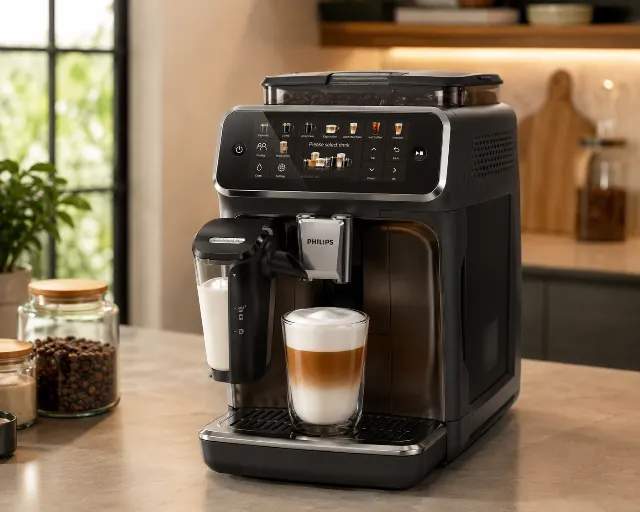
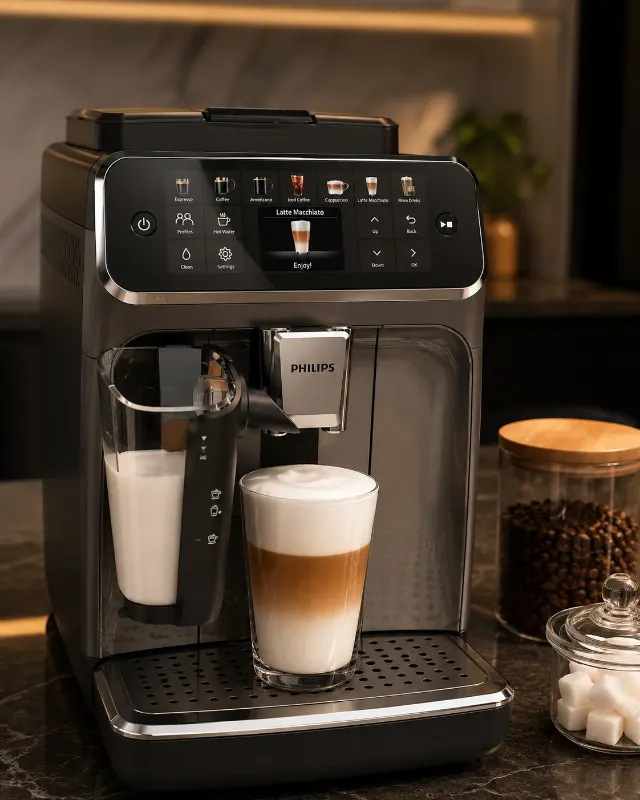
Its defining design choice is the LatteGo milk system. Instead of a traditional steam wand or a complex internal carafe with tubes, it's a simple two-piece container that clips onto the front. This is its biggest strength and a source of some limitations. Philips claims it delivers "silky-smooth froth," which is a point of contention. What owners discover after a few weeks is that it produces a stiff, airy foam consistently, excellent for cappuccinos, but it cannot create the velvety microfoam needed for latte art. This is the first major disagreement with the marketing: it's a froth system, not a microfoam system.
The machine uses a ceramic flat burr grinder and a thermoblock heating system, which allows for a fast heat-up time, typically under 60 seconds. This is a single boiler system, meaning it cannot brew espresso and steam milk simultaneously, but its speed makes this a non-issue for single-drink preparation.
Construction and longevity
Build Quality: ★★★★☆ (3.8/5)
The Philips 5500's chassis is almost entirely plastic. While it's a high-grade ABS plastic that feels sturdy enough, it lacks the premium heft of stainless steel competitors in the same price bracket. The chrome-plated spout and accents look sharp out of the box but are prone to showing fingerprints and water spots. The color TFT display is bright and responsive, a clear upgrade over the button-and-icon interfaces on lower models. Internally, the brew group is robust and, crucially, removable—a major plus for long-term maintenance.
Long-term Reliability: ★★★★☆ (4.1/5)
Owner feedback shows the core mechanics—the grinder and brew group—are reliable past the five-year mark with proper care. The most common point of failure is not mechanical but electronic; screen or sensor issues can crop up, though they are not widespread. The LatteGo container, being just two plastic pieces with no electronics or tubes, is exceptionally durable. The primary consumable is the AquaClean water filter, which Philips recommends replacing every three months. Sticking to this schedule genuinely postpones the need for a full descaling procedure for up to 5,000 cups, a significant convenience factor.
What is the difference between Philips EP5544 and EP5547?
This is a frequent point of confusion. The EP5544 and EP5547 are model numbers for the PHILIPS 5500 Series, typically denoting different color schemes or regional packages. For instance, the EP5544/94 might be a specific bundle sold in North America. Functionally, they are identical machines. The core features—21 drinks, five user profiles, Extra Shot, and the color TFT display—remain the same. Buyers should focus on the '5500 Series' designation and choose based on aesthetics or available promotions, not a minor model number variance.
Its strongest suit
Convenience is the clear winner. The sheer breadth of 21 pre-programmed drinks, from a ristretto to a flat white, is a huge draw. The ability to save hyper-specific preferences for up to five users (plus a guest profile) is a feature that transforms a household's morning routine. One person can have their extra-strong, large Americano saved, while another has a specific milk-to-espresso ratio for their latte macchiato, all accessible with two taps on the screen.
The LatteGo system's simplicity cannot be overstated. After making a milk drink, you unclip the two-piece container, rinse it under the tap in 15 seconds, and you're done. There are no hidden tubes to scrub or intricate parts to disassemble. This single feature is what elevates the Philips 5500 above many competitors for those who dread cleanup. It directly addresses the biggest complaint about other automatic milk systems.
Key Feature: Is the 'Extra Shot' Worth the Upgrade?
Yes, unequivocally. The 'Extra Shot' feature is the single most compelling reason to choose the PHILIPS 5500 Series over the Philips 4400 Series Fully Automatic Espresso Machine. It's not just a toggle for a stronger brew. The machine adds a separately ground 30ml ristretto shot at the end of the brewing cycle. This provides a significant caffeine and flavor boost without the bitterness that comes from simply running more water through the same puck of coffee (over-extraction). For anyone who finds standard super-automatic output a bit thin, this feature is a legitimate solution. It makes a tangible difference in the final cup.
Buy this if: you live in a multi-person household with varied coffee tastes, value speed and minimal cleanup above all else, and primarily drink milk-based beverages. If the thought of cleaning a traditional steam wand or a complex milk carafe makes you want to just go to a coffee shop, this is your machine.
Common problems
The price point is the most significant hurdle. For what is largely a plastic machine, the cost is substantial, placing it in competition with machines that offer more robust, metal construction. While the features are plentiful, the tactile experience doesn't always align with the investment. A recurring complaint in owner reviews is the size of the water tank (1.8L) and the dregs drawer (12 pucks). For a machine designed for a busy household, they require frequent refilling and emptying, sometimes daily.
The LatteGo system, for all its cleaning convenience, is loud. The steaming process produces a high-pitched noise that is noticeably louder than a traditional steam wand. Furthermore, as mentioned, it offers zero control over milk texture. You get one style of foam: airy and stiff. This is fine for cappuccinos but a deal-breaker for anyone aspiring to pour latte art or who prefers the silky texture of true microfoam. The initial setup can also be tricky; the manual's guidance on setting the 12-step ceramic grinder isn't intuitive for beginners trying to dial in their first shots.
Skip this if: you are an espresso purist, want to learn latte art, or demand a premium, all-metal appliance for your kitchen counter. A semi-automatic machine with a separate grinder will offer far superior espresso and milk texture for a similar total investment, albeit with a steep learning curve. If you want a more robust build in a super-automatic, some De'Longhi or Jura models offer a more premium feel, though often with more complex milk systems.
Using it for real
Your first week is about experimentation. You'll cycle through the pre-sets, adjust the strength and volume, and figure out which of the 12 grinder settings works best for your beans. A common mistake is using oily, dark-roast beans, which can clog the grinder over time. Medium roasts perform best. What most reviews miss is that the grinder setting should only be adjusted while the grinder is running, a crucial detail buried in the manual that prevents damage.
After a month, you'll have your favorite drinks saved to your user profile and the machine becomes an appliance of pure convenience. You'll stop thinking about the process. The feature most likely to be ignored is the ground coffee chute. While it's there for using pre-ground decaf, the process is fiddly, and the machine's performance is optimized for whole beans. Most owners use it once and never again.
The machine's SilentBrew technology is another marketing claim that needs context. It's quieter than many older super-automatics, but it is by no means silent. The grinding process is still the loudest part of the operation and will be audible in an adjacent room. It reduces the harsh, high-pitched frequencies, resulting in a lower-pitched grinding sound, which is an improvement, but not silence.
Maintenance & long-term ownership
The daily routine is simple: rinse the LatteGo, empty the drip tray and puck drawer. The machine prompts you for these, so there's no guesswork. Weekly, the removable brew group needs to be rinsed under lukewarm water—no soap. This 60-second task is vital for preventing coffee oil buildup and ensuring long-term performance.
The AquaClean filter is the main ongoing cost. Replacing it as prompted (roughly every 3 months, depending on water hardness and usage) is non-negotiable if you want to avoid frequent, time-consuming descaling. Overlooked detail: the machine requires periodic lubrication of the brew group (about every 500 cups) with a food-safe grease, a tube of which is included. Forgetting this can lead to squeaking and strain on the brew group motor. The realistic lifespan for a well-maintained PHILIPS 5500 Series is in the 7-10 year range before major service is likely required.
Where it loses to alternatives
Its primary weakness is the espresso quality and milk texture control compared to semi-automatic machines. But even within its own category, it faces stiff competition. The De'Longhi Magnifica Evo Automatic Espresso & Coffee Machine often comes in at a lower price point and features a traditional Panarello steam wand, which, with a little practice, offers more control over milk texturing for those willing to learn. It loses on drink variety and user profiles but wins for the aspiring latte artist on a tighter budget.
Within the Philips lineup itself, the value proposition gets complicated. The Philips 4400 Series Fully Automatic Espresso Machine offers many of the same core benefits (LatteGo, user profiles) for less money. You sacrifice the color screen, some drink options, and the crucial 'Extra Shot' feature. For those who don't need a stronger coffee, the 4400 presents a compelling case for saving some cash. On the other end, a budget machine like the Philips 1200 Series Fully Automatic Espresso provides basic bean-to-cup espresso and steam but lacks the entire automated milk and customization ecosystem. It's a cross-category comparison that highlights what you're paying for with the 5500: automation and personalization.
Philips 5500 vs 4400: A Head-to-Head Comparison
The choice boils down to three things: the 'Extra Shot', the display, and the number of drinks/profiles. The 5500 has the 'Extra Shot' function; the 4400 does not. The 5500 has a modern color TFT display with soft-touch icons; the 4400 uses a more basic icon-based screen. The PHILIPS 5500 Series offers 21 drinks and five user profiles, while the 4400 has 12 drinks and three profiles. If you consistently want stronger coffee or have a larger household with more diverse tastes, the 5500 is the clear winner. If not, the 4400 delivers a very similar core experience.
PHILIPS 5500vs 5400: What's the Real Difference?
The Philips 5500 is the direct successor to the popular 5400. The key upgrades are the more advanced color TFT display (the 5400 had a simpler LCD screen), the introduction of SilentBrew technology for a quieter grinding experience, and an expanded menu of coffee specialties. The 5500 also typically features more user profiles. Essentially, the 5500 is a refinement of the 5400, focusing on user interface and quality-of-life improvements rather than a fundamental change in brewing technology. If you find a 5400 on deep discount, it's still a capable machine, but the 5500 is the more polished product.
Who should pick it up
Best for: Households where convenience is the undisputed king. It's for the family that wants a latte, a cappuccino, and an Americano made before anyone is fully awake, with zero cleanup drama. The user profiles make it a genuinely useful appliance in a shared space.
Not ideal for: The aspiring coffee hobbyist. If you talk about extraction yields, puck prep, or want to pour a rosetta, this machine will frustrate you. Its entire design philosophy is about removing the user from the process, which is the opposite of the hobbyist's goal. Also, anyone on a tight budget should look at the 3300 or 4400 series to see if the core features are sufficient.
This machine sits at a crossroads. It delivers on its promise of effortless, varied, and consistent coffee drinks. For many, that is the entire goal. It automates away the mess and the learning curve associated with espresso, and the LatteGo system is a legitimate triumph of user-friendly design. The plastic build and lack of nuanced control are the price of that convenience.
Bottom line
The PHILIPS 5500 Series is a masterclass in convenient, automated coffee for the modern household, but it's a convenience you pay for, and part of that payment is forfeiting the tactile quality of metal and the craft of manual milk steaming. Its 'Extra Shot' feature and dead-simple milk cleanup are its defining, and frankly, redeeming qualities.
For push-button simplicity in a busy home, it's an excellent choice.
How it scores
- Value
- ★★★★★ ★★★★★ 4.0
- Quality
- ★★★★★ ★★★★★ 3.8
- Ease of use
- ★★★★★ ★★★★★ 4.6
- Durability
- ★★★★★ ★★★★★ 4.1
What it gets right
- ✓LatteGo milk system is exceptionally easy to clean with its two-part, no-tube design.
- ✓'Extra Shot' feature adds a real ristretto shot for genuinely stronger, not just more bitter, coffee.
- ✓Five user profiles plus a guest profile allow for deep customization of 21 drink recipes.
- ✓Fast heat-up time of under 60 seconds from a cold start thanks to the thermoblock system.
- ✓Removable brew group simplifies weekly maintenance and improves long-term hygiene.
What could be better
- ✕Predominantly plastic construction feels less than premium for its price category.
- ✕LatteGo system is loud and produces only one type of airy foam, unsuitable for latte art.
- ✕Small 1.8L water tank and 12-puck dreg drawer require frequent attention in high-use households.
- ✕Initial grinder calibration can be confusing, and using oily beans is strongly discouraged.
Best-fit buyers
Ideal for busy families or couples with different coffee preferences who want push-button lattes and cappuccinos without a learning curve. The multiple user profiles are a genuine household convenience. Skip this if you want to learn the craft of espresso, desire true microfoam for latte art, or expect a premium metal finish for your investment.
Why it stands out
The Philips 5500 solves the 'morning rush' problem better than most super-automatics. While a machine like the De'Longhi Magnifica Evo offers a more traditional steam wand, the LatteGo system's two-part, no-tube design is radically easier to clean daily. This trade-off—perfect foam control for effortless cleanup—is the core reason to choose the 5500.
Specifications
| Type | Super-automatic |
|---|---|
| Boiler system | Single Thermoblock |
| Pump pressure | 15 bar |
| Steam wand | LatteGo automatic milk frother |
| Built-in grinder | Ceramic flat burr, 12 settings |
| Water tank | 1.8 L, front-accessible |
| Heat-up time | Under 60 seconds |
| Warranty | 2 years |
Frequently asked questions
Is the Philips LatteGo 5500 any good?
For users prioritizing convenience, drink variety, and effortless cleaning, it is an excellent machine. Its 'Extra Shot' function and five user profiles are standout features, though its plastic build and lack of foam control are notable compromises for the price.
What is the difference between the Philips 4400 and 5500?
Key differences are the 5500's 'Extra Shot' function for stronger coffee, a superior color TFT display, and more drink options (21 vs 12) and user profiles (5 vs 3). The core brewing and milk systems are otherwise very similar.
What is the difference between the Philips 5400 and 5500?
Upgrades in the 5500 include a more advanced color TFT display, SilentBrew technology for quieter grinding, and an expanded menu of drinks. The 5500 is a refinement focused on user experience rather than a complete overhaul of the 5400's capable platform.
How much does the Philips 5500 coffee machine cost?
While exact prices fluctuate, the Philips 5500 sits in the premium tier for super-automatic machines. It costs significantly more than entry-level models like the Philips 1200 but is generally more accessible than high-end brands like Jura.
Is the Philips 5500 easy to clean?
Yes, this is its greatest strength. The two-part, no-tube LatteGo system rinses clean in seconds, and the removable brew group allows for simple weekly maintenance. The AquaClean filter also greatly reduces the frequency of full descaling cycles.
What is the 'Extra Shot' feature on the Philips 5500?
This feature adds a separately ground 30ml ristretto shot to your drink after the initial brewing is complete. It boosts intensity and caffeine without the bitterness of over-extraction, a significant upgrade over the 4400 and 3300 series models.
Can you use oily beans in the Philips 5500?
It is strongly advised not to use very oily, dark-roast beans. The oils can build up and clog the internal ceramic grinder over time, leading to performance issues. Medium roast, non-oily beans are the ideal choice for long-term reliability.
People also ask
- How many user profiles does the Philips 5500 have?
- What drinks can you make with the Philips 5500?
- How many user profiles can you set on the Philips 5500?
- Is the Philips 5500 better than the De'Longhi equivalent?
You might also like
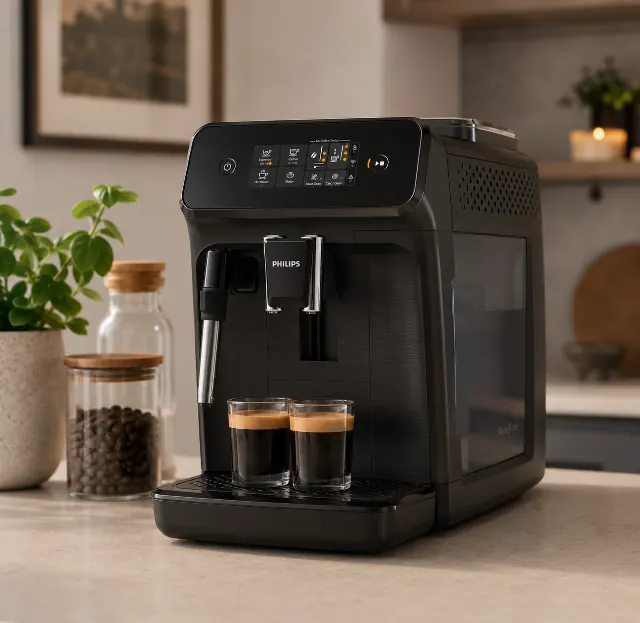
Philips 1200 Series Fully Automatic Espresso
A reliable entry point into one-touch espresso, the Philips 1200 excels at consistency for basic drinks but its manual frother and plastic build create a clear ceiling on its capabilities.
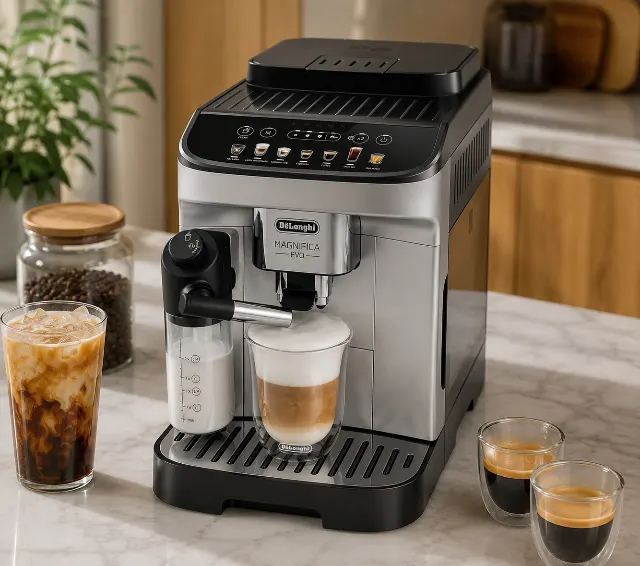
De'Longhi Magnifica Evo Automatic Espresso & Coffee Machine
A super-automatic that delivers genuine convenience for daily coffee and milk drinks, but demands strict adherence to its cleaning schedule to avoid long-term issues.
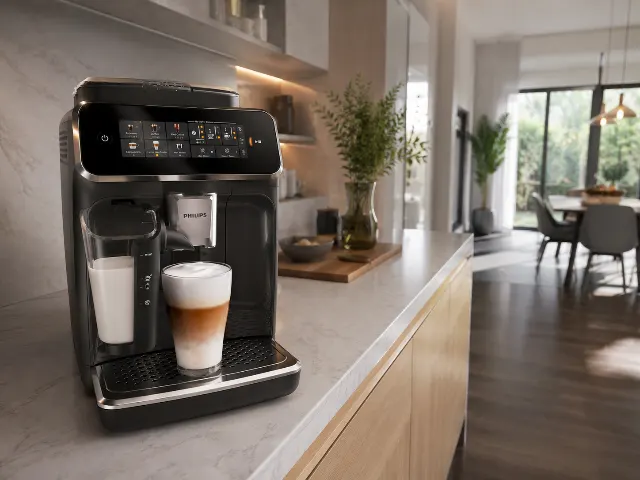
Philips 3300 Series Fully Automatic Espresso Machine
A comprehensive 2026 review of the Philips 3300 Series Fully Automatic Espresso Machine, analyzing its LatteGo system, long-term costs, and espresso quality versus key rivals.
Philips 4400 Series Fully Automatic Espresso Machine
The Philips 4400 LatteGo is a standout super-automatic for its simplicity and consistent espresso, but its milk foam is airy, not true microfoam for latte art.