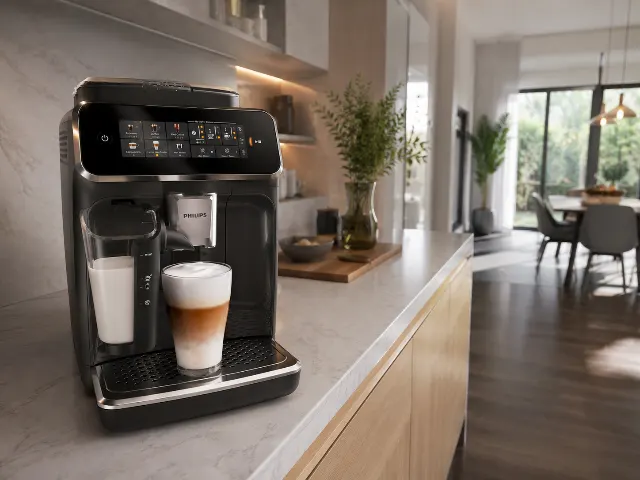
Philips 3300 Series Fully Automatic Espresso Machine Review
Score by category
- Value
- ★★★★★ ★★★★★ 4.0
- Quality
- ★★★★★ ★★★★★ 3.9
- Ease of use
- ★★★★★ ★★★★★ 4.6
- Durability
- ★★★★★ ★★★★★ 4.2
Where it wins
- ✓LatteGo system is brilliantly simple, with only two parts and no tubes, making daily cleaning trivial.
- ✓User interface is intuitive, allowing for easy adjustment of strength, volume, and milk quantity per drink.
- ✓Removable brew group can be rinsed under a tap in under a minute, simplifying weekly maintenance.
- ✓Fast heat-up time via the thermoblock system delivers coffee from a cold start in under 2 minutes.
- ✓12-step ceramic grinder provides consistent grounds without the risk of overheating the beans.
Cons
- ✕Predominantly plastic construction feels less durable and premium than the price suggests.
- ✕LatteGo froth is often too bubbly and stiff for lattes, with no way to adjust texture.
- ✕Espresso shots can be thin and lack the body of those from a semi-automatic machine.
- ✕The AquaClean filters, while convenient, add a significant long-term running cost.
The biggest myth about super-automatic espresso machines is that they deliver café-quality espresso with zero effort. The marketing shows a perfect crema-topped shot appearing magically. The reality, after twelve months of ownership, is different. You get incredibly convenient, consistent, and perfectly acceptable espresso-based drinks. But you trade away the depth, texture, and temperature control that defines a truly great shot from a semi-automatic setup. It’s a machine for good-enough coffee, instantly.
The Philips 3300 Series Fully Automatic Espresso Machine embodies this tradeoff perfectly. It is arguably the market leader in making the daily routine of lattes and cappuccinos as frictionless as possible. Its entire design philosophy is built around removing the small points of resistance—fiddly milk tubes, complex cleaning cycles, confusing menus—that cause people to stop using their expensive coffee gadgets. It absolutely succeeds at this.
Where it falls short is in the cup itself, and in the materials used to get there. The espresso it produces is decent, but lacks the body and nuance of shots pulled on more traditional hardware. The milk foam is plentiful but often too bubbly for purists. And the machine is, undeniably, a sea of plastic.
This machine's value proposition is therefore crystal clear. It offers supreme convenience for milk-based drinks at a mid-range cost, making it a sensible choice for those prioritizing speed over the hobby of coffee.
What you're really getting
This is a convenience appliance, not a hobbyist tool. Philips has optimized every single component for ease of use and maintenance, often at the expense of peak performance. The core is a thermoblock heating system, which gets the machine ready in under 90 seconds but lacks the temperature stability of a traditional single boiler. This is why some users report drinks not being quite hot enough, especially if using cold milk and a cold cup. The machine simply doesn't have the thermal mass to overcome those deficits consistently.
Its defining feature is the LatteGo system. It’s a two-part, tubeless milk container that froths milk using a venturi effect and clips onto the front. It is brilliantly simple to clean; you just rinse the two pieces under the tap. This is a massive long-term ownership win. A recurring complaint in owner reviews for competing tube-based systems is the hassle of cleaning milk lines, which often leads to neglect and malfunction. Philips solved that. The marketing claim of “SilentBrew” is, however, an overstatement. The 12-step ceramic burr grinder is quieter than many budget grinders, but it is far from silent. It's a noticeable, high-pitched whir that will wake up light sleepers in a small apartment.
What you are not getting is any semblance of manual control. There is no pressure gauge, no way to manipulate pre-infusion time, and the temperature is adjustable in three steps, not to a specific degree. A semi-automatic machine like the De'Longhi La Specialista Touch Espresso offers far more control for a similar long-term investment, but demands a significant learning curve. The Philips 3300 is for the person who finds that learning curve a bug, not a feature.
Philips 3300 vs 3200: What's The Real Difference?
The core brewing technology is identical. Both the Philips 3300 and 3200 use the same ceramic grinder, brew group, and LatteGo system. The primary difference is the user interface and a key drink option. The 3300 features a more modern color touch display with icons, whereas the 3200 uses physical buttons with LED indicators. Crucially, the 3300 adds a dedicated Iced Coffee recipe, which uses lower temperature water and a longer extraction to brew a concentrate over ice without shocking the coffee. For iced coffee fans, this is the only meaningful upgrade.
How well it holds together
Build Quality: ★★★☆☆ (3.8/5)
It is almost entirely plastic. While the fit and finish are decent, with no egregious panel gaps, it lacks the reassuring heft of machines with more metal components. The drip tray cover, in particular, scratches easily. Owners consistently report that the plastic construction feels less premium than its price tag suggests. Overlooked detail: the spout height is adjustable up to 150mm, which is generous and accommodates taller travel mugs, a practical win despite the material choice.
Long-term Reliability: ★★★★☆ (4.2/5)
The heart of the machine, the removable brew group, is a proven design used across the Philips/Saeco line for years. It's robust. Long-term owner feedback shows the most common failure point is not the brew group but the sensors that detect if the water tank or puck drawer is in place. These can become faulty over time, requiring service. The ceramic grinder is rated for 20,000 cups, a figure that is optimistic but points to a durable component. The hidden cost of ownership is the AquaClean water filter, which Philips heavily pushes. Using it extends the descaling interval to a claimed 5,000 cups, but these filters are a significant recurring expense over the machine's lifespan.
What it does well
Its speed is its greatest asset. From a cold start, you can have a cappuccino in your hand in under two minutes. The workflow is streamlined: press one button, and the machine grinds, tamps, brews, and froths milk sequentially without any user intervention. The user interface is also exceptionally clear. Adjusting coffee strength (Aroma), drink volume, and milk volume is done via simple on-screen sliders before you brew, and the machine remembers your last setting for that drink.
The consistency is also a major strength. While the shot quality may not win awards, the machine produces the *exact same* shot and milk foam every single time. For a user who just wants their morning latte to taste the same as it did yesterday, this is a huge benefit over the variability of a manual portafilter process. The removable brew group, which can be rinsed under a tap once a week, is a maintenance triumph that competitors have struggled to match for simplicity.
Buy this if you live in a busy household where multiple people with no barista skills need to make different milk-based drinks quickly in the morning. Its one-touch operation and foolproof cleaning make it a better choice for this scenario than a more complex but capable machine like the De'Longhi Magnifica Evo.
Where it disappoints
The espresso is the weakest link. The machine is calibrated to avoid choking on finely ground coffee, which means it often defaults to a slightly coarser grind and lower dose than ideal. The result is a shot that can be thin and lack the syrupy body of a 9-bar extraction from a good semi-automatic. It produces something closer to a strong coffee concentrate than true espresso. This is a common trait in this category, but it's pronounced here.
Another significant drawback is the milk texture from the LatteGo system. While convenient, it produces a stiff, bubbly foam rather than the silky microfoam required for latte art. It’s good for creating a distinct cap on a cappuccino, but it doesn't integrate well for lattes. The spec sheet implies café-style drinks, but what owners report is closer to coffee-shop chain foam. There is no way to adjust this texture; you can only change the volume. The Iced Coffee function, a key selling point, is also a source of complaints, with many users finding the resulting drink weak and watery unless they use two shots.
Skip this if your goal is to replicate the taste and texture of third-wave coffee shop espresso. The lack of control over grind size, temperature, and pressure makes this impossible. You would be far better served by a budget-friendly manual setup or a more capable machine like the De'Longhi La Specialista Touch Espresso.
Common Problems & How to Solve Them
A recurring complaint in owner reviews is the machine reporting the puck drawer is full when it's not. This is usually caused by coffee grounds obscuring the sensor; a quick wipe with a dry cloth typically resolves it. Another common issue is the “low pressure” perception. What most reviews miss is that this isn't a pressure fault, but a result of the user's grind setting. If the grind is too fine for the bean type, the thermoblock system struggles to force water through, resulting in a slow, drippy pour. The solution is to dial the grinder one step coarser. Finally, if the LatteGo system sputters, it's almost always due to a small milk residue blockage in the narrow channel; a soak in warm, soapy water fixes it.
Living with it
The first week is magical. The next three weeks are about calibration. Owners discover after a month that the factory grinder settings are too coarse for most medium-roast beans. Finding the right balance on the 12-step grinder—usually between 3 and 5 for espresso—is key to getting a decent shot. You also learn the machine's rhythms: the water tank (1.8L) needs refilling every 8-10 drinks, and the puck drawer holds about 12 pucks. In a two-person household with each having two drinks a day, you're emptying and filling things every two to three days.
The feature that gets used least is the ground coffee bypass chute. It’s a nice idea for serving a guest decaf, but the process is clumsy and the results are often watery compared to using whole beans. Most people try it once and never again. What you wish you'd known is that the machine performs a rinse cycle on startup and shutdown, which fills the drip tray quickly. It’s best to keep a small cup under the spouts to catch this water and reduce how often you empty the main tray.
Owning it past year one
Maintenance defines the long-term experience. The weekly brew group rinse is non-negotiable and takes about 60 seconds. Descaling is prompted by the machine based on water hardness settings and usage. With the AquaClean filter installed, this can be as infrequent as once every 18 months. Without it, expect a descaling prompt every 2-3 months in a hard water area. This is the primary long-term cost. The descaling solution and filters represent a significant ongoing investment compared to machines that use simple, cheap cleaning tablets.
After two years, the silicone o-rings on the brew group may start to wear, requiring re-lubrication with food-safe grease (a small tube is included) or replacement. This is a simple DIY job. What most reviews miss is the long-term cost of the AquaClean filter. While it reduces descaling frequency, the cost of the filters over a five-year lifespan can approach a significant fraction of the machine's initial purchase price. Some owners opt to descale more frequently and skip the expensive filters to lower the total cost of ownership. The machine's realistic lifespan, with proper care, is in the 5-7 year range before a major component like the grinder or pump is likely to fail.
Philips 3300 vs Philips 4400: Is The Upgrade Worth It?
The Philips 4400uses the exact same internal brewing components as the 3300. The upgrade gets you more drink recipes (12 vs. 6 on the 3300), a more advanced color TFT display, and two user profiles to save customized drink settings. For a single user or a couple who drink the same two or three beverages, the 4400 is not worth the price premium. The upgrade only makes sense for a larger family with diverse coffee preferences where the convenience of dedicated user profiles justifies the extra expense.
The alternatives worth weighing
Your choice depends entirely on how much you value convenience versus quality. The most direct competitor is the De'Longhi Magnifica Evo. It often produces a slightly richer espresso shot and its steam wand version offers better milk texturing capabilities, but its milk system cleaning is more involved. For those on a tighter budget who don't need automated milk, the Philips 1200 Series Fully Automatic Espresso provides the same core espresso brewing with a basic panarello steam wand, representing a better price-to-performance ratio for black coffee drinkers.
An overlooked alternative is stepping outside the super-automatic category entirely. For a similar initial investment, a setup like a Breville Bambino Plus paired with a Baratza Encore ESP grinder delivers vastly superior espresso and true microfoam. This path requires learning and effort but yields results the Philips 3300 cannot touch. The choice is not about which machine is better, but which workflow you can live with every day.
Who should pick it up
Best for: The household that wants one-touch lattes and cappuccinos with the absolute minimum of daily cleaning. It’s for the person who sees coffee as fuel, not a hobby, and is willing to trade peak quality for ultimate simplicity and speed.
Not ideal for: Anyone who has ever described an espresso shot as having “notes of citrus” or who wants to pour latte art. The machine's limitations on shot quality and its bubbly milk foam will be a constant source of frustration for the aspiring enthusiast.
This machine sits at a crossroads. It offers a significant step up in convenience and quality from a pod machine, without demanding the steep learning curve and ritual of a semi-automatic machine. It’s for the buyer who has outgrown Nespresso but isn't ready to become a home barista.
In the end
The Philips 3300 LatteGo is a masterclass in user-centered design for a specific type of coffee drinker. It successfully identifies and eliminates the biggest friction points in home espresso: messy milk systems and complicated maintenance. The result is a machine that people will actually use every day, for years. The compromise is, and always will be, the quality in the cup. It makes good coffee drinks, not great ones.
The decision is simple. If your priority is a hassle-free cappuccino before you run out the door, this machine is one of the best-designed options on the market. But if you dream of pulling a perfect, syrupy god shot, you must look elsewhere. Evidence is mixed on whether the convenience is worth the coffee quality trade-off, but for its target audience, it absolutely is.
For maximum convenience in milk-based drinks, this is the machine to get.
The X-factor
The LatteGo system's biggest win isn't froth quality, but its two-part, no-tube design. This makes daily cleaning so trivial that owners actually do it, preventing the milk residue issues that plague tube-based systems.
Specifications
| Type | Super-automatic |
|---|---|
| Boiler system | Thermoblock |
| Pump pressure | 15 Bar (Marketing) |
| Steam wand | LatteGo automatic milk system |
| Built-in grinder | Ceramic flat burr with 12 settings |
| Water tank | 1.8 L (60.8 oz), front-accessible |
| Heat-up time | Approx. 75-90 seconds |
| Warranty | 2 years |
How it compares
Versus the alternatives buyers cross-shop — judged on ownership, not just spec sheets.
| Alternative | Ease of use | Maintenance | Durability | Value | Best for |
|---|---|---|---|---|---|
| Philips 3300 Series Fully Automatic Espresso Machine (this pick) | Top-tier; intuitive touch screen and the simplest milk system (LatteGo) on the market. | Extremely low; tubeless milk system and weekly 1-minute brew group rinse. | Good internal mechanics (brew group, grinder) housed in a lightweight plastic shell. | Mid-range initial cost with potentially high long-term cost if using proprietary AquaClean filters. | Busy families or individuals prioritizing speed and cleaning ease for daily milk drinks. |
| De'Longhi Magnifica Evo Automatic Espresso & Coffee Machine | Very good; simple button interface. LatteCrema milk system is effective but requires more cleaning. | Moderate; internal milk tubes require more diligent cleaning cycles to prevent blockages. | Comparable to Philips; proven internals in a primarily plastic chassis. | Strong price-to-performance, often delivering slightly better espresso for a similar cost. | Users who want slightly better espresso and don't mind a bit more cleaning for the milk system. |
| Philips 1200 Series Fully Automatic Espresso | Excellent for espresso; the manual panarello wand requires practice for milk frothing. | Very low; brew group is identical to 3300, no automated milk system to clean. | Identical core components to the 3300, offering similar long-term reliability. | Superior value for black coffee drinkers; offers the same core brewing for a lower price. | Budget-conscious buyers who drink primarily espresso or Americano and are willing to froth milk manually. |
| De'Longhi La Specialista Touch Espresso | Moderate learning curve; it's a semi-automatic that assists with grinding and tamping. | Higher; requires manual portafilter cleaning, backflushing, and descaling. | Higher; features more stainless steel in its construction and portafilter. | Excellent for enthusiasts; provides superior quality and control for a higher initial investment. | Aspiring home baristas who want to learn the craft without a fully manual setup. |
How it scores on what matters
| Product | Espresso shot quality | Milk steaming & microfoam | Consistency shot-to-shot | Ease of dialing in | Heat-up & workflow speed | Maintenance burden | Verdict |
|---|---|---|---|---|---|---|---|
| Philips 3300 Series Fully Automatic Espresso Machine (this pick) | Good | Fair | Excellent | Very good | Excellent | Excellent | Unbeatable convenience, but espresso and foam are just acceptable. |
| De'Longhi Magnifica Evo Automatic Espresso & Coffee Machine | Very good | Good | Excellent | Very good | Very good | Good | Slightly better coffee, slightly more cleaning effort required. |
| Philips 1200 Series Fully Automatic Espresso | Good | Fair | Excellent | Very good | Excellent | Excellent | Same espresso as the 3300, manual steam wand. |
| De'Longhi La Specialista Touch Espresso | Excellent | Excellent | Good | Fair | Good | Fair | Superior results that require significant user skill and effort. |
Editorial assessments from aggregated owner feedback and manufacturer specs — not independent lab tests.
Is it right for you?
Ideal for the busy professional or parent who values speed and simplicity over the craft of espresso. If your mornings are frantic and you just want a reliable cappuccino fast, this is your machine. Skip this if you have any desire to learn about extraction, dial in a perfect shot, or practice latte art.
Reasons to pick it
The Philips 3300 solves the cleaning problem that makes most people abandon their automatic machines. Competing systems like the one on the <a href="/espresso-machines/de-longhi-magnifica-evo-automatic-espresso-coffee-machine/">De'Longhi Magnifica Evo</a> use internal tubes that are harder to clean. The LatteGo's simplicity is its defining advantage for the time-poor user.
Frequently asked questions
Is the Philips 3300 worth the money?
For users prioritizing convenience, yes. Its balance of one-touch drinks, the easy-clean LatteGo system, and consistent output makes it a strong contender. However, those seeking top-tier espresso quality can find better value in semi-automatic machines at a similar price point.
What's the difference between Philips 3300 and 3200?
The main upgrades on the Philips 3300 are a color touch display instead of buttons and the addition of a dedicated Iced Coffee recipe. The internal grinder, brew group, and LatteGo milk frother are identical, so coffee quality is the same.
What is the difference between Philips 3300 and 4400?
Upgrading to the Philips 4400 provides more pre-programmed drink options (typically 12 vs. 6) and adds two user profiles for saving custom drink settings. The core brewing technology remains the same, so the upgrade is only for households with diverse coffee tastes.
Are Philips automatic espresso machines good?
Yes, Philips machines are well-regarded for their reliability and user-friendly design, particularly the easily removable brew group for cleaning. They offer a dependable entry point into the super-automatic category, though they trade some shot quality for that convenience.
Is the LatteGo milk system better than a classic steam wand?
For ease and speed, the LatteGo is superior; it delivers consistent foam with one touch and is incredibly easy to clean. A classic steam wand offers far more control for creating silky microfoam for latte art, but requires skill and practice to use effectively.
How often do you have to clean the Philips 3300?
Daily rinsing of the LatteGo parts and drip tray is best practice. The internal brew group needs a weekly rinse under the tap, which takes one minute. With an AquaClean filter, the machine prompts for descaling only after about 5,000 cups, or every few months otherwise.
People also ask
- Is the Philips 3300 worth it for most people?
- What's the real difference between the Philips 3300 and 3200?
- Should I upgrade from the Philips 3300 to the 4400?
- Are Philips automatic espresso machines reliable long-term?
- Is the LatteGo system actually better than a classic steam wand?
- How often do you really have to clean the Philips 3300?
- Can the Philips 3300 make a regular cup of coffee?
- What are the most common problems with the Philips 3300?
- What's the difference between the Philips 3300 and 3200?
- What is the difference between the Philips 3300 and 4400?
You might also like
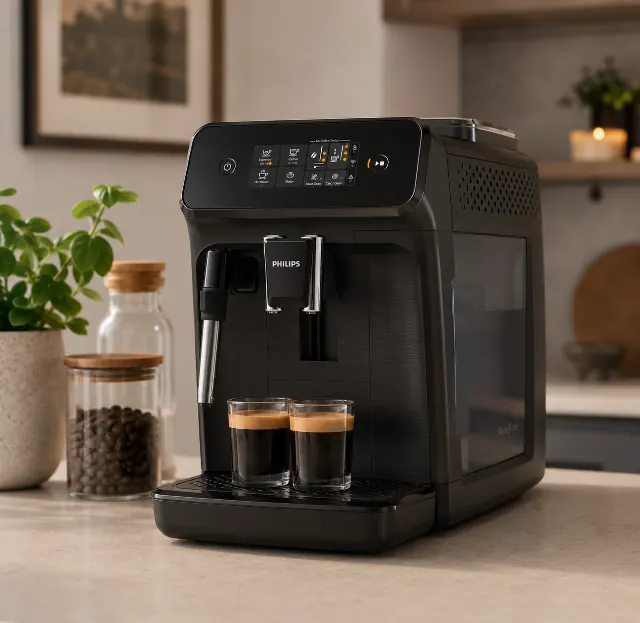
Philips 1200 Series Fully Automatic Espresso
A reliable entry point into one-touch espresso, the Philips 1200 excels at consistency for basic drinks but its manual frother and plastic build create a clear ceiling on its capabilities.
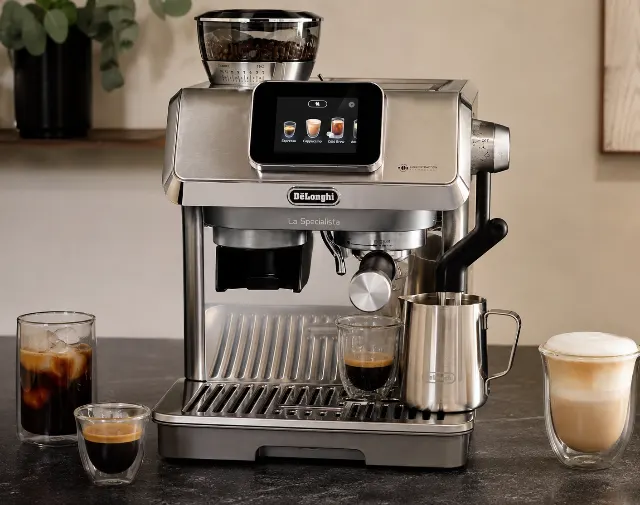
De'Longhi La Specialista Touch Espresso
The De'Longhi La Specialista Touch offers a uniquely guided manual espresso experience, excelling with its Smart Tamping Station but demanding a learning curve for its grinder and milk frothing.
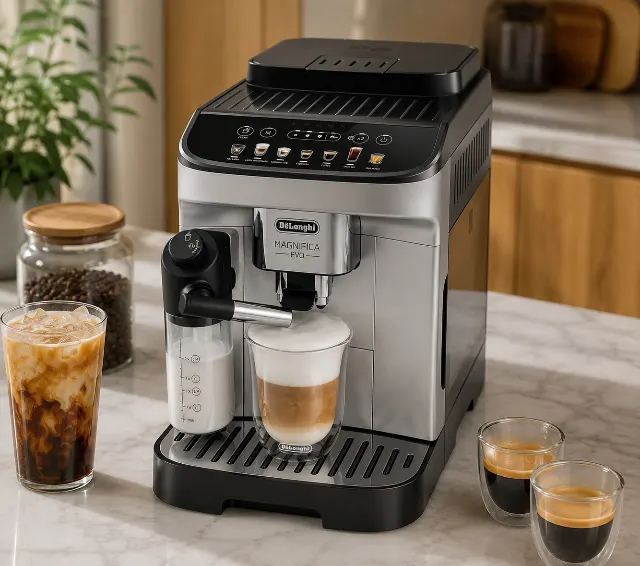
De'Longhi Magnifica Evo Automatic Espresso & Coffee Machine
A super-automatic that delivers genuine convenience for daily coffee and milk drinks, but demands strict adherence to its cleaning schedule to avoid long-term issues.