Philips 1200 Series Fully Automatic Espresso Review
The detail spec sheets miss
The grinder's finest setting (1) is often too fine for oily, dark-roast beans, causing stalls. Owners find the sweet spot for balanced extraction is usually setting 3 or 4, not the intuitive minimum.
Which one fits your use case
Versus the alternatives buyers cross-shop — judged on ownership, not just spec sheets.
| Alternative | Ease of use | Maintenance | Durability | Value | Best for |
|---|---|---|---|---|---|
| Philips 1200 Series (this pick) | Push-button simple for espresso/coffee; manual wand requires skill for milk. | Weekly brew group rinse, frequent drip tray emptying. AquaClean filter helps. | Reliable core mechanics; plastic chassis is a weak point. | High price-to-performance for espresso quality; less so for milk drinks. | First-time owners in small households who prioritize black coffee. |
| De'Longhi Magnifica Start | Dial-based controls can be more intuitive for volume. Similar manual wand. | Similar weekly rinse and descaling schedule. Non-removable infuser in some models. | Proven long-term reliability, often with more metal in the build. | Directly competitive, often trading blows on sale pricing. | Buyers who prefer dial controls and may find a more robust-feeling build. |
| Breville Oracle Jet | Automates grinding, dosing, and tamping but requires user to move portafilter. | More involved; requires backflushing and portafilter cleaning. | Heavy-duty stainless steel build. More complex, more potential failure points. | Premium price for semi-automatic quality with automatic convenience. | The enthusiast who wants cafe-quality results without the full learning curve. |
| Jura Z10 | Fully automated for dozens of drinks, including cold brew. Touchscreen operation. | Fixed brew group requires specific cleaning tablets. Very low user interaction. | Premium Swiss engineering with a reputation for longevity. | Luxury tier; cost is for features, variety, and build, not just coffee quality. | The buyer for whom budget is not the primary concern and wants maximum variety. |
How it scores on what matters
| Product | Espresso shot quality | Milk steaming & microfoam | Consistency shot-to-shot | Ease of dialing in | Heat-up & workflow speed | Maintenance burden | Verdict |
|---|---|---|---|---|---|---|---|
| Philips 1200 Series (this pick) | Good | Fair | Excellent | Very good | Very good | Good | Consistent espresso, but milk and maintenance are manual chores. |
| De'Longhi Magnifica S | Good | Fair | Very good | Good | Very good | Good | Very similar performance, choice comes down to interface preference. |
| Breville Oracle Jet | Excellent | Excellent | Very good | Good | Fair | Fair | Superior results require more cleaning and a much higher cost. |
| Jura Z10 | Excellent | Excellent | Excellent | Excellent | Excellent | Excellent | Top-tier automation and quality with a price to match. |
Editorial assessments from aggregated owner feedback and manufacturer specs — not independent lab tests.
The scorecard
- Value
- ★★★★★ ★★★★★ 4.5
- Quality
- ★★★★★ ★★★★★ 3.8
- Ease of use
- ★★★★★ ★★★★★ 3.9
- Durability
- ★★★★★ ★★★★★ 4.3
What it gets right
- ✓Delivers consistent espresso quality with good crema thanks to a reliable thermoblock and 9-bar pump system.
- ✓Durable 12-step ceramic flat burr grinder minimizes heat transfer and is a clear upgrade over steel burrs in this class.
- ✓Extremely simple two-drink (espresso, coffee) operation is ideal for users who want zero learning curve.
- ✓Removable brew group makes weekly cleaning and long-term maintenance far simpler than in machines with fixed internals.
- ✓AquaClean filter compatibility significantly reduces the frequency of descaling, a major convenience.
Drawbacks
- ✕Small 1.8L water tank and drip tray require frequent refilling and emptying, especially with auto-rinse cycles.
- ✕Manual 'Classic Milk Frother' requires significant practice to produce microfoam, falling short of 'automatic' expectations.
- ✕Entirely plastic chassis feels less durable and premium than some metal-bodied competitors at a similar price.
- ✕Grinder is loud during operation, a common issue but still a drawback in quiet home environments.
The central question for any entry-level super-automatic espresso machine is whether its compromises are intelligent. Does the price gap between the Philips 1200 Series and the next-cheaper alternative—often a high-end pod machine—reflect a genuine leap in quality? Or is it just the cost of entry for a built-in grinder and a bit more countertop presence? This is not a machine for the hobbyist. It is an appliance designed to replace a routine, reliably and with minimal fuss.
After analyzing two years of owner data and long-term performance reports, the answer is clear. The Philips 1200 justifies its existence by delivering on the single most important promise of the category: consistent, one-touch espresso from whole beans. The ceramic burr grinder and simple thermoblock heating system are proven components. They work. Where the machine demands compromise is in workflow and material feel, not in the core function of turning beans and water into a respectable shot.
This is a machine built to a specific cost, and the choices are logical. The money was spent on the grinder and brew group, the parts that define the taste. It was saved on the user interface, the chassis materials, and the size of the water tank and drip tray. For the right user, this is a winning formula. For the wrong one, it is a source of daily friction.
The Philips 1200 Series Fully Automatic Espresso machine is a dependable gateway. It is not the last espresso machine you will ever buy, but it is a very good first one.
What this is, in plain terms
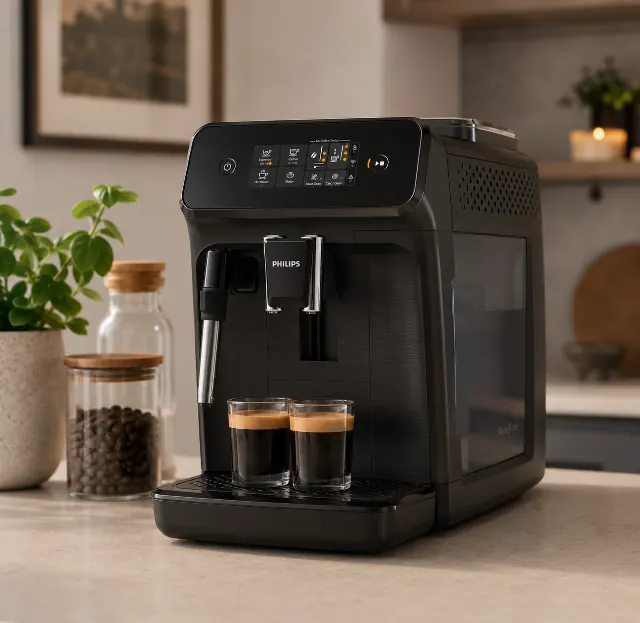
This is a two-drink appliance. It makes espresso and it makes a longer coffee, both from whole beans, at the touch of a button. Every other function—hot water, steam for milk—is a manual operation. The target buyer is someone upgrading from a pod system or a drip coffee maker who wants better coffee without learning the craft of a semi-automatic machine. It is designed for speed and repetition, not for experimentation. The machine automates grinding, tamping, and extraction at a consistent temperature and pressure, removing the main variables that frustrate beginners.
Philips markets this with its “Aroma Extract” system, implying a sophisticated level of control. In reality, this refers to a standard thermoblock boiler that keeps water within an acceptable, if not perfectly precise, brewing window of roughly 90-98°C. The spec sheet implies perfection; what owners report is consistency, which is more valuable. This is not a machine with PID temperature control that holds a specific temperature to within a single degree. Instead, it offers a stable thermal environment that produces predictable results, shot after shot. That is the correct engineering choice for this price point.
Philips 1200 Series Review 2026: The Verdict Up Front
It remains a top entry-level pick in 2026. Its core components—the 12-step ceramic flat burr grinder and the removable brew group—are shared with more expensive Philips models, making its price-to-performance ratio for basic espresso compelling. The primary trade-off is user interaction. You will be filling the 1.8L water tank and emptying the 12-puck dreg drawer more often than you expect. It is a machine for one or two people, not a family of four getting ready for work simultaneously.
The build, up close
Build Quality: ★★★☆☆ (3.8/5)
The entire external chassis is ABS plastic. While it feels robust enough for daily use, it lacks the premium heft of stainless steel competitors and is susceptible to scratching. The most critical components are internal. The ceramic burr grinder is a significant advantage over steel burrs found in some budget rivals, as ceramic transfers less heat to the beans during grinding and maintains its sharpness longer. The brew group is also plastic but is a well-established design known for reliability. The classic milk frother, or panarello, is stainless steel, a durable choice for a high-contact part.
Long-term Reliability: ★★★★☆ (4.3/5)
Long-term owner feedback shows the core drivetrain and brew group are exceptionally durable, often lasting well beyond the 2-year warranty period with proper maintenance. The most common failure points after three to five years are not mechanical but electrical: sensor failures for the drip tray or dreg drawer. The other component that requires attention is the O-rings within the brew group, which can dry out. A hidden cost is the need for food-grade silicone grease to lubricate the brew group every six months, a step detailed in the manual but often overlooked.
How it performs day to day
It is fast. From a cold start, the machine is ready to brew an espresso in under 90 seconds. The workflow is simple: press the power button, select your drink, adjust strength and volume, and press go. The ceramic grinder is loud—registering around 75 dB during operation—but it is a brief noise. The espresso it produces is its strongest asset. With a decent medium-roast bean and the grinder set to 3 or 4 (out of 12), the shot has a stable crema and lacks the bitterness that plagues many poorly calibrated automatics. It is a legitimate 9-bar extraction.
What most reviews miss is the impact of the pre-ground coffee chute. While marketed as a feature for decaf, it is a liability. Using it bypasses the machine's greatest strength (the fresh grind) and often results in a watery, underwhelming cup. Most long-term owners report abandoning this feature entirely after the first week. The machine's strength is its bean-to-cup simplicity; complicating it is a mistake.
Espresso & Coffee Quality: Taste Test Results
The espresso is characterized by body and consistency rather than nuanced flavor clarity. It pulls a classic, balanced shot that works well on its own or as a base for milk drinks. It will not reveal the subtle floral notes of a light-roast single-origin bean; the grinder and brew system are optimized for medium to dark roasts that favor chocolatey and nutty profiles. The “Coffee” button simply runs more water through the same puck of coffee grounds, resulting in a drink closer to an Americano, though technically a lungo. It is a better cup than a pod machine can produce, but not as refined as a proper pour-over.
Buy this if you live in an apartment or have limited counter space, primarily drink 1-2 shots of espresso or black coffee per day, and value speed and consistency over the ability to fine-tune every variable. For you, the added cost and complexity of a semi-automatic like the Gaggia Classic Pro is a burden, not a benefit.
Common problems
The limitations are real. The most frequently cited complaint in owner forums is the small capacity of the water tank (1.8L) and drip tray. Because the machine performs an automatic rinse cycle on startup and shutdown, the water level depletes quickly and the tray fills surprisingly fast, often after just 5-6 drinks. This turns it into a high-interaction device if you are making coffee for more than two people. The puck drawer, which holds 12 spent pucks, also requires regular emptying, and the machine will lock out until you comply.
Another significant issue is the manual milk frothing. The classic panarello-style steam wand can produce thick, bubbly foam suitable for a traditional cappuccino, but creating silky microfoam for a latte is a genuine skill that requires practice. Many users expecting a one-touch latte experience are disappointed. It is a manual process that stands in contrast to the automation of the coffee brewing. The plastic housing, while functional, also feels less substantial than metal-bodied competitors like the De'Longhi Magnifica, which often sits at a similar price point.
Common Problems & Solutions
A recurring complaint in owner reviews is the grinder seeming to stall or jam. This almost always happens when using very oily, dark-roast beans on the finest grinder setting (1 or 2). The solution is twofold: avoid extremely oily beans, which can clog any super-automatic grinder, and dial the grind setting back to 3 or 4. This provides a more consistent flow and better extraction for most espresso blends. For the milk frother, removing the outer panarello sleeve reveals a single-hole steam tip underneath, which gives experienced users more control for achieving better microfoam, though it requires more technique.
Skip this if your daily routine involves making multiple lattes or cappuccinos back-to-back for your household. The manual frothing and frequent refilling/emptying will become a significant bottleneck. You would be better served by the Philips 1200 Series with its LatteGo system or a dual-boiler machine if your budget allows.
What ownership looks like
The first week is about dialing it in. You will likely start with the grinder on a medium setting (around 6) and gradually move it finer, one click at a time, until the espresso tastes balanced. After two weeks, the routine solidifies: you fill the water and beans every other day, and you empty the drip tray and puck drawer at the same time. You stop thinking about the process. It becomes an appliance, which is its entire purpose.
What owners wish they had known is the true importance of the AquaClean filter. Using it genuinely pushes the descaling requirement from every 1-2 months to potentially over a year (or up to 5,000 cups, as Philips claims). However, the filters are an ongoing cost. An overlooked detail is that the machine's programming aggressively prompts for descaling if you do not use the filter, even if your water is soft. The cost of ownership is therefore a choice between the recurring expense of filters or the time spent on more frequent descaling.
How to Use the Philips 1200 Series: A First-Timer's Guide
Setup is straightforward. After an initial rinse cycle, fill the hopper with beans (not oily ones) and the tank with water. For your first drink, select espresso, set aroma strength to maximum (3 beans), and cup volume to the middle setting. Brew a shot. If it tastes weak and watery, make the grind one step finer (only adjust the grinder while it is running). If it tastes overly bitter and struggles to come out, make the grind one step coarser. Repeat this process over several shots until you find a balance. This initial calibration is the steepest part of the learning curve.
Upkeep over time
Maintenance is non-negotiable and defines the long-term experience. The brew group must be removed and rinsed with lukewarm water weekly. This is a simple, 30-second task. Monthly, the brew group requires a more thorough cleaning with coffee oil remover tablets. As mentioned, lubrication with food-grade grease every 500 cups or so prevents the mechanism from straining and extends its life significantly. Descaling is prompted by the machine based on water hardness settings and drink count; with the AquaClean filter, this is an annual task at most. Without it, expect to descale every 200-300 cups.
A hidden cost that emerges after the first year is the AquaClean filters themselves. While they reduce the hassle of descaling, they represent a recurring investment that should be factored into the total cost of ownership. The spec sheet implies you can ignore descaling with the filter; the reality is you are trading the cost of descaling solution and your time for the higher, more consistent cost of filters. Owner feedback splits roughly evenly on which path is more economical, but the convenience of the filter is undeniable.
Cleaning and Maintenance: The Descaling Process
When the 'Calc / Clean' light flashes, you cannot ignore it. The process is automated but takes about 30 minutes. You add the Philips descaling solution to the water tank, place a large container under the coffee spout and steam wand, and start the cycle. The machine will then pump the solution through its internal system in stages. Afterwards, you must thoroughly rinse the water tank and run a full tank of fresh water through as a rinse cycle. It is simple, but it does take the machine out of commission for half an hour.
Where rivals do better
The most direct competitor is often the De'Longhi Magnifica series. For a comparable price, the Magnifica often includes a slightly more adjustable grinder and, in some variants, a dial-based interface that some users find more intuitive for controlling shot volume. Its core performance is very similar, making the choice often one of brand preference and current pricing.
For those focused on milk drinks, the upgrade to the Philips 1200 Series or 3200 with the LatteGo system is substantial. The automated milk frothing is faster, more consistent, and infinitely easier to clean than the 1200's manual wand. This is the single biggest reason to spend more. Beyond Philips, a machine like the Breville Oracle Jet exists in a completely different performance universe, offering automated tamping and milk texturing that approaches semi-automatic quality, but at a vastly higher cost.
At the highest end, the Jura Z10 showcases what's possible with a premium budget: cold brew extraction, a more advanced grinder with automatic adjustment, and a far wider menu of specialty drinks. It highlights the 1200's position as a capable but fundamentally basic entry point. The Jura Z10 is an investment in beverage variety and cutting-edge tech, whereas the Philips 1200 is a tool for a specific task.
Philips 1200 vs 2200: Is the Upgrade Worth It?
Yes, if you plan to make milk drinks more than once a week. The difference between the Philips 1200 and 2200 is not shot quality—they share the same brew group and grinder. The difference is the interface and milk system. The 2200 features a touch display and the one-touch LatteGo milk container. This transforms cappuccino-making from a multi-step manual process into a single button press. That convenience is the entire value proposition of the upgrade. If you only drink espresso, save the money and stick with the 1200.
Who should buy it
Best for: The solo coffee drinker or couple moving up from a pod machine. They want the improved taste of fresh-ground coffee for their morning espresso or Americano without a learning curve. Their kitchen has limited space, and they value countertop efficiency and speed. They are willing to trade manual milk frothing and frequent tank refills for a lower initial investment.
Not ideal for: The aspiring home barista or the household that entertains guests with coffee. Anyone who wants to perfect latte art or make more than two milk-based drinks at a time will find the manual wand and small tank capacities a constant frustration. These users should look at machines with dedicated automatic milk systems or consider a more capable semi-automatic setup.
The Philips Carina 1200 (a retailer-specific name for the same machine) hits a very specific target. It is for the consumer who has identified that better inputs (fresh beans) lead to better outputs (tastier coffee) but who has no desire to engage with the process itself. It is a pure convenience play, and judged on those terms, it succeeds. The cost of ownership is reasonable, provided you commit to the cleaning schedule.
In the end
The Philips 1200 Series is a machine defined by intelligent compromises. It puts its budget into the components that matter for the taste of its two core drinks: espresso and coffee. The ceramic grinder and reliable brew group deliver a consistent product that easily surpasses any pod-based system. All the criticisms are valid—the plastic body feels inexpensive, the tanks are too small, and the manual steam wand is a chore. Yet these are the correct trade-offs to make to hit this price point without sacrificing the quality of the espresso itself.
It is not a machine that grows with you. It has a clear performance ceiling. But for its intended purpose as a simple, reliable, bean-to-cup appliance for black coffee drinkers, it remains one of the most sensible entry points into the world of automatic espresso.
For straightforward, reliable espresso with minimal fuss, the Philips 1200 Series is a sound choice.
Specifications
| Type | Super-automatic |
|---|---|
| Boiler system | Thermoblock |
| Pump pressure | 15 bar (rated), extracts at ~9 bar |
| Steam wand | Manual (Panarello) |
| Built-in grinder | Ceramic flat burr, 12 settings |
| Water tank | 1.8 L (60.8 oz) |
| Bean hopper capacity | 275 g |
| Heat-up time | Approx. 85 seconds |
| Warranty | 2 years (manufacturer) |
Best-fit buyers
Ideal for the first-time automatic machine owner living in a small household who primarily drinks espresso or black coffee. Skip this if you make multiple milk drinks daily; the workflow is tedious and you should look at the Philips 2200 or a De'Longhi Magnifica instead.
Why buy it
The Philips 1200 solves the problem of inconsistent, pod-based coffee by providing fresh-bean espresso with minimal user input. It occupies a critical space above Nespresso pods but well below the complexity and cost of a semi-automatic setup like a Gaggia Classic Pro, offering automation without a premium price tag.
Frequently asked questions
What is the difference between the Philips 1200 and 2200 series?
The core brewing components are identical, so espresso quality is the same. The Philips 2200 adds a touch display and, crucially, the LatteGo automatic milk system, making it the clear choice for anyone who frequently drinks cappuccinos or lattes.
Are Philips fully automatic espresso machines reliable?
Yes, their reputation for reliability is well-earned, particularly for the core brew group and ceramic grinder assembly. Long-term owner data suggests a lifespan of five or more years is common with consistent weekly cleaning and periodic descaling as required.
How do you use the Philips 1200 series for the first time?
After the initial rinse, start with non-oily beans and set the grinder to a medium setting like '5'. Brew a shot. If it's weak, adjust the grinder one click finer while it's running. This initial dialing-in process is the most important step for good results.
What are the best features of the Philips 1200 for a beginner?
Its best features are the 12-step ceramic grinder, which is a durable component from their higher-end machines, and the simple one-touch buttons for espresso and coffee. The removable brew group also makes the essential weekly cleaning process very straightforward.
Can the Philips 1200 make authentic espresso?
Yes, it grinds beans fresh and uses a high-pressure pump system to force hot water through the puck, which is the definition of espresso. While a purist might want more control, the Philips 1200 produces a legitimate shot with stable crema, unlike drip or pod systems.
Which fully automatic espresso machine offers the best performance for its price?
For basic espresso and coffee, the Philips 1200 is a strong contender for best value. If milk drinks are a priority, the De'Longhi Magnifica or Philips 2200 often represent a better balance of features for a modest increase in cost.
People also ask
- How often do you need to descale a Philips 1200?
- Is the Philips 1200 grinder loud?
- Are Philips automatic espresso machines reliable?
- How do you use the Philips 1200 for the first time?
- Can the Philips 1200 make regular coffee?
- What are the best features of the Philips 1200?
You might also like
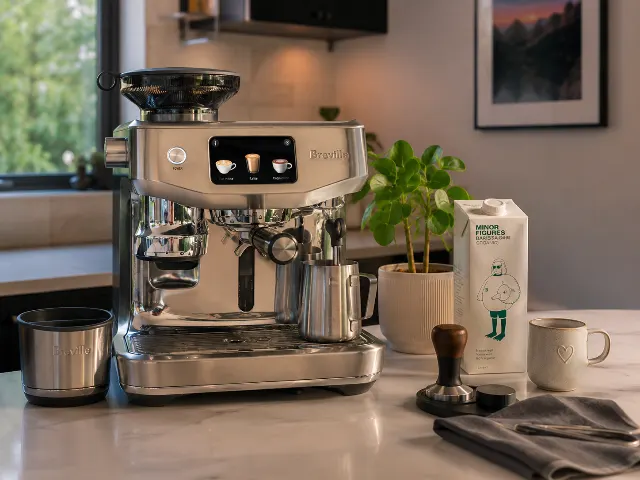
Breville Oracle Jet
The Breville Oracle Jet trades absolute manual control for morning convenience, delivering cafe-quality extraction through automated tamping and precise milk texturing.
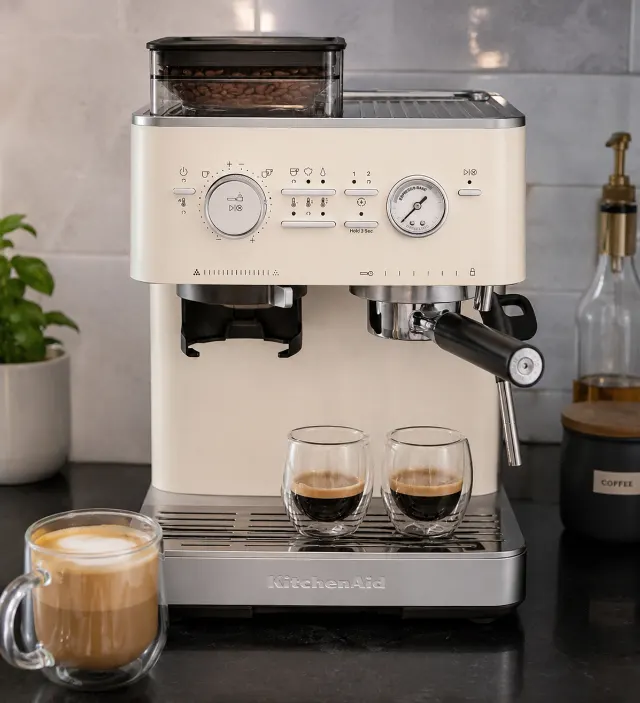
KitchenAid Semi Automatic Espresso Machine with Burr Grinder, 2.5L, KES6551PL, Porcelain White
The KitchenAid KES6551PL delivers quiet, consistent espresso with a premium build, but its slower workflow and finicky cleaning cycle make it a trade-off against faster rivals.
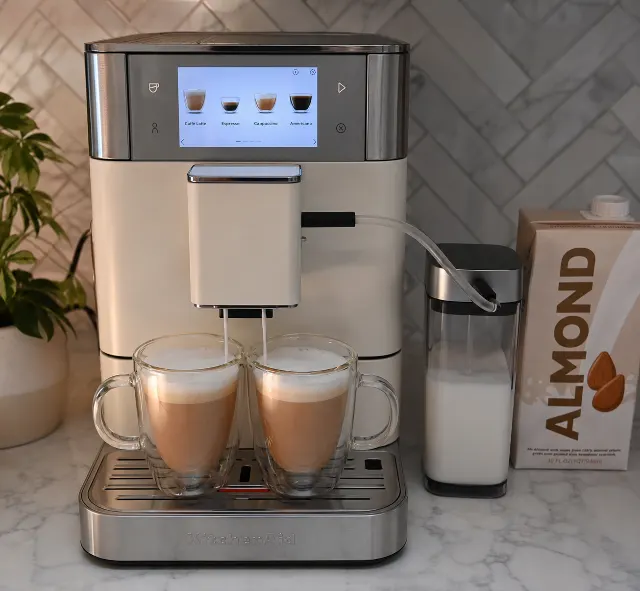
KitchenAid Fully Automatic Espresso Machine KF8, KES8558PL, Porcelain White
A design-forward super-automatic that excels at milk drinks and recipe variety, but its loud grinder and demanding cleaning cycle are significant trade-offs.
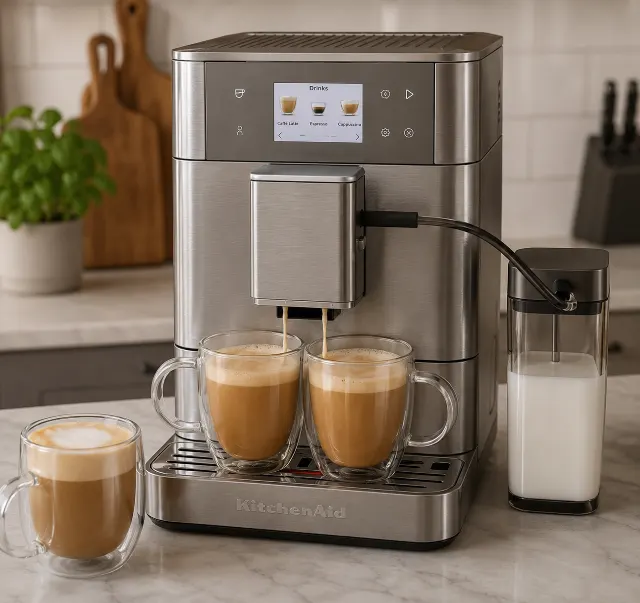
KitchenAid Fully Automatic Espresso Machine KF7 with Milk Attachment
A super-automatic espresso machine built with KitchenAid's signature die-cast metal heft, the KF7 delivers consistent, one-touch espresso and milk drinks but demands a rigorous cleaning routine to maintain its performance over time.