Breville Oracle Jet Review
Who should buy it
Ideal for busy professionals who demand high-quality espresso but refuse to manually weigh and tamp grounds at 6 AM. Skip this if you exclusively drink traditional Italian dark roasts, as the internal grinder chute will inevitably clog. It suits those upgrading from entry-level appliances who want better milk texture without learning manual steaming techniques.
The case for it
It solves the consistency problem that plagues novice home baristas by automating the tamp pressure and milk aeration. Unlike the Terra Kaffe TK-02, which handles everything internally but sacrifices extraction quality, the Oracle Jet uses a true 58mm portafilter for genuine cafe-style shots.
What it sets out to do
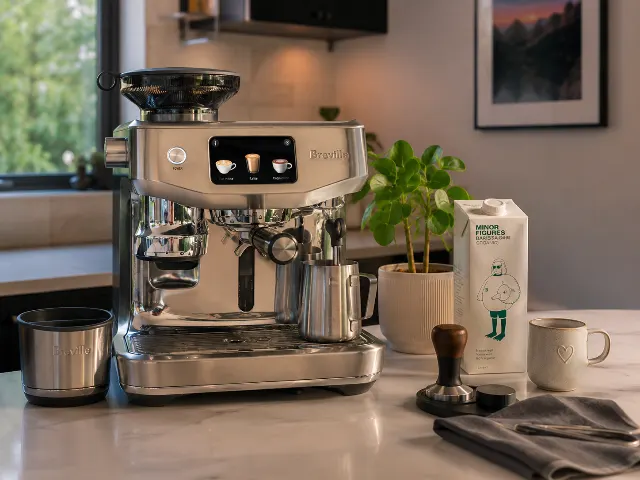
Breville engineered this model to eliminate the learning curve of traditional espresso without sacrificing the physical hardware that makes good espresso possible. It utilizes a commercial-standard 58mm portafilter, which is crucial. Most consumer machines use 54mm or even 51mm baskets, which require deeper pucks that are harder to extract evenly. By sticking to the 58mm standard, the water interacts with the coffee bed exactly as it would in a cafe setting. Two major specifications define this machine's architecture. First is the ThermoJet heating system. Older dual-boiler machines require ten to fifteen minutes to reach thermal stability. The Oracle Jet hits its optimal 93°C extraction temperature in roughly three seconds. Second is the Auto-milQ system, which adjusts air injection timing based on the type of milk selected—dairy, oat, almond, or soy.Key Features: Built-in Grinder and Auto Tamping
The spec sheet implies the automated tamping system is a flawless robotic barista. What owners report is closer to a highly consistent, but occasionally messy, mechanical assist. The machine grinds directly into the portafilter, then an internal fan mechanism drops down, applying exactly 22 pounds of pressure while twisting to polish the puck. Breville's marketing frames the Baratza burr upgrade as a complete replacement for a standalone grinder. I disagree. While it is a massive step up from the older Barista Express models, the stepped adjustment mechanism still lacks the micro-adjustments required for highly finicky light roasts. You get 45 grind settings. A dedicated standalone grinder often offers near-infinite stepless adjustments. For medium to medium-dark roasts, the built-in system is perfectly adequate. For a delicate Ethiopian single-origin, you will likely find yourself frustrated, wishing for a setting exactly halfway between a 12 and a 13.Construction and longevity
Build Quality: ★★★★☆ (4.4/5)
The exterior chassis is wrapped in thick brushed stainless steel, giving it a commanding, heavy presence on the counter. The touchscreen is responsive, avoiding the frustrating lag found on earlier generation smart appliances. The 340g bean hopper feels robust, and the steam wand operates on a smooth, professional-feeling ball joint.Long-term Reliability: ★★★☆☆ (3.8/5)
This is where the automation tradeoff becomes apparent. A fully manual machine like a Profitec Go is essentially a metal box with a boiler, a pump, and some wires. It can last decades. The Oracle Jet contains a motorized tamping fan, a touchscreen computer, and complex internal chute sweeps. Long-term owner feedback shows the grinder chute is the most common failure point, particularly when fed oily beans. The complex internal automation makes DIY repairs difficult and out-of-warranty servicing expensive.Design and Build: Brushed Stainless Steel & Brass Options
Aesthetic choices matter when an appliance occupies this much counter space. The standard stainless steel matches most modern kitchens, but Breville has introduced brass and matte black variants. Be aware that the darker finishes show water spots and milk splatters much more aggressively than the brushed steel.How it performs day to day
The morning workflow is undeniably smooth. You lock the empty portafilter into the grinding cradle. The machine doses, tamps, and polishes automatically. You move the portafilter to the group head, place your cup, and press a button on the screen. The extraction begins with a gentle pre-infusion, saturating the puck at low pressure before ramping up to a full 9-bar extraction. The milk texturing is genuinely impressive. You fill the provided pitcher, place it on the temperature sensor, drop the wand in, and select your temperature and foam level. The machine uses a 45-hole steam tip to create a rolling vortex, injecting air precisely to create microfoam suitable for latte art. I expected the new ThermoJet system to struggle with back-to-back milk steaming, but it actually maintains pressure surprisingly well. You can pull a shot, steam milk, and immediately pull another shot without waiting for a boiler to recover.Breville Oracle Jet vs Oracle Touch: Which Should You Buy?
Upgrading from the older Touch model to the Jet brings the ThermoJet heater and the Baratza burrs. If you already own the Touch, the upgrade is difficult to justify unless you are deeply frustrated by heat-up times. If you are buying new, the Jet is the clear choice. Buy this if you want your partner or houseguests to be able to make a perfect latte without a 20-minute tutorial. It offers an incredible price-to-performance ratio when you factor in the cost of buying a separate high-end grinder and a dual-boiler machine.What owners complain about
The most glaring limitation is bean compatibility. If you buy dark, oily beans from the grocery store, you will hate this machine. The oils coat the internal grinder chute, causing grounds to back up into the tamping fan. Clearing this jam requires vacuuming out the chamber and running cleaning cycles. Another frequent friction point is the touchscreen interface. While generally responsive, it can occasionally lag during rapid inputs. If you are trying to quickly swipe through drink menus while the machine is purging the steam wand, the processor sometimes stutters.Common Issues with the Oracle Jet (And How to Fix Them)
When the machine fails to reach adequate extraction pressure, the culprit is almost always stale beans. The automated tamping system relies on the physical resistance of fresh coffee. If your beans are more than four weeks off roast, the water will channel right through the puck, resulting in a sour, watery shot. Skip this if you are a purist who views espresso as a manual craft, or if you exclusively drink traditional Italian dark roasts. You would be much better served by pairing a manual machine with a dedicated grinder that has a straight-through chute.The day-to-day reality
During the first 48 hours of ownership, you will likely waste a bag of coffee dialing in the grind size. Despite the automation, you still have to tell the grinder how fine to crush the beans. Once dialed in, the routine settles into a predictable, efficient rhythm. What most reviews miss is the sheer volume of water this machine moves during its automated purges. The ThermoJet system flushes water into the drip tray after every steaming cycle to regulate temperature. You will find yourself emptying the heavy, awkward drip tray daily, even if you only make two drinks.How to Dial In Your First Shot on the Oracle Jet
Start with the grind size set to 15. Pull a shot and watch the flow. If it pours fast and tastes sour, adjust the dial finer. If it drips slowly and tastes bitter, adjust coarser. The machine handles the dose and tamp, so grind size is your only variable. This dramatically simplifies the learning curve.Living with it long term
After six months, the reality of appliance maintenance sets in. The machine is aggressive about its cleaning schedule. It will prompt you to run a backflush cycle with proprietary cleaning tablets roughly every 200 shots. Owners discover after a few months that the water filter replacement schedule is aggressively timed by the software, locking out certain features if ignored. This creates a recurring hidden cost. You must factor in the ongoing expense of Breville water filters and cleaning tablets when calculating the long-term cost of ownership.Maintenance Guide: Cleaning and Descaling Your Machine
Descaling the ThermoJet is a loud, 20-minute process. Unlike traditional boilers that hold water, the ThermoJet is a heated block with narrow channels. Scale buildup here is fatal to the machine's performance. Never ignore the descale warning.Competitors to consider
Buyers looking at this tier frequently cross-shop against super-automatics. The Gaggia Cadorna Prestige handles the entire process internally—you never touch a portafilter. However, the Gaggia produces a thinner, less complex shot because it cannot replicate the 22 pounds of tamp pressure or the 58mm basket geometry of the Breville. Another strong alternative is the Terra Kaffe TK-02. It offers a more modern app interface and a smaller footprint. The Terra Kaffe is cheaper than the Oracle Jet, making it a viable budget alternative for those who prioritize convenience above all else. Yet, the milk texture from the TK-02's internal frother cannot compete with the microfoam produced by Breville's steam wand. If you want absolute control, stepping away from built-in grinders entirely is the only path. A dual-boiler machine paired with a Niche Zero grinder will produce better coffee, but it demands your full attention for five minutes every morning.Who it is right for
Best for: The busy household where multiple people want cafe-quality drinks but possess varying levels of barista skill. It is perfect for the buyer upgrading from a pod machine who wants real espresso without adopting a new, time-consuming hobby.Reddit's Take: Talk Me Out of Buying an Oracle Jet
Forum discussions point to a pattern of frustration among advanced users who feel constrained by the software. They dislike that they cannot manually override the tamp pressure or easily swap between decaf and regular beans due to the hopper design. Not ideal for: The tinkerer. If you want to experiment with flow profiling, WDT distribution tools, and precision baskets, the Oracle Jet will actively fight your attempts to intervene in its automated processes.Bottom line
The Oracle Jet successfully democratizes excellent espresso. It removes the physical inconsistencies of tamping and the steep learning curve of milk texturing, leaving you with a machine that reliably produces a fantastic latte in under two minutes. The spec sheet implies the Auto-milQ system perfectly detects milk temperature regardless of pitcher placement—what owners report is closer to a strict requirement for the pitcher to sit perfectly flush on the sensor. Minor quirks aside, it delivers on its core promise. It is a significant investment, but it justifies its position by effectively replacing both a high-end grinder and a dual-boiler machine. **Buy the Oracle Jet if you value your morning time as much as you value your coffee, but only if you are willing to commit to medium-roast beans.**The standout detail
The ThermoJet purge cycle fills the drip tray nearly twice as fast as the original Oracle, requiring daily emptying even if you only pull two shots a morning.
The upsides
- ✓ThermoJet heating system reaches optimal 93°C extraction temperature in just three seconds.
- ✓Automated tamping mechanism applies a consistent 22 pounds of pressure and polishes the puck.
- ✓Auto-milQ system adjusts air injection timing specifically for dairy, oat, almond, or soy milk.
- ✓Commercial-standard 58mm portafilter allows for proper puck geometry and cafe-quality extraction.
- ✓Upgraded Baratza precision burrs offer significantly better grind consistency than previous Breville models.
Drawbacks
- ✕Internal grinder chute frequently clogs when fed oily, dark-roast coffee beans.
- ✕Complex internal robotics make out-of-warranty repairs difficult and expensive.
- ✕ThermoJet purge cycles fill the drip tray rapidly, requiring daily emptying.
- ✕Software aggressively locks out features if water filter replacement schedules are ignored.
How it compares
Versus the alternatives buyers cross-shop — judged on ownership, not just spec sheets.
| Alternative | Ease of use | Maintenance | Durability | Value | Best for |
|---|---|---|---|---|---|
| Breville Oracle Jet (this pick) | Automated tamping and milk steaming remove major variables. | Requires frequent drip tray emptying and strict descaling. | Stainless steel exterior is robust, but internal robotics are complex. | Replaces the need for a separate high-end grinder. | Busy professionals wanting cafe quality without the morning ritual. |
| Gaggia Cadorna Prestige | Fully automatic one-touch operation; no portafilter to move. | Internal brew group requires weekly rinsing and lubrication. | Plastic housing feels less premium but internal mechanics are proven. | Lower entry cost for full automation. | Buyers who prioritize absolute convenience over extraction depth. |
| Terra Kaffe TK-02 | App-driven interface is highly intuitive for modern users. | Automated cleaning cycles handle most daily upkeep. | Modern build but lacks the heavy metal chassis of traditional machines. | Strong budget alternative in the super-automatic space. | Tech-focused users who want drip coffee and espresso from one sleek unit. |
How it scores on what matters
| Product | Espresso shot quality | Milk steaming & microfoam | Consistency shot-to-shot | Ease of dialing in | Heat-up & workflow speed | Maintenance burden | Verdict |
|---|---|---|---|---|---|---|---|
| Breville Oracle Jet (this pick) | Excellent | Excellent | Very good | Good | Excellent | Fair | Unmatched automated milk texture and rapid morning workflow. |
| Gaggia Cadorna Prestige | Fair | Good | Excellent | Excellent | Good | Good | Sacrifices shot complexity for one-touch brewing convenience. |
| Terra Kaffe TK-02 | Good | Fair | Very good | Excellent | Very good | Very good | Sleek app integration but weaker microfoam capabilities. |
Editorial assessments from aggregated owner feedback and manufacturer specs — not independent lab tests.
How it scores
- Value
- ★★★★★ ★★★★★ 3.8
- Quality
- ★★★★★ ★★★★★ 4.2
- Ease of use
- ★★★★★ ★★★★★ 4.5
- Durability
- ★★★★★ ★★★★★ 4.0
Specifications
| Type | Hybrid Semi-Automatic |
|---|---|
| Boiler system | ThermoJet Heating System |
| Portafilter size | 58mm Stainless Steel |
| Pump pressure | 15-bar Italian pump (9-bar extraction) |
| Built-in grinder | Baratza European Precision Burrs (45 settings) |
| Heat-up time | 3 seconds |
Frequently asked questions
Is the Breville Oracle Jet worth it?
Paying the premium tier for this machine makes sense if you demand cafe-quality extraction but refuse to manually weigh and tamp grounds at 6 AM. The Baratza burrs and automated milk texturing bridge the gap between super-automatics and manual hobbyist gear perfectly.
What is the difference between Oracle and Oracle Jet?
Upgrading to the Jet introduces the ThermoJet heating system, cutting the wait time from minutes to three seconds. It also swaps the older burr set for precision Baratza components and adds an upgraded touchscreen interface that handles alternative milk temperatures far more accurately.
Why is the Oracle Jet so expensive?
Buyers fund complex internal robotics with this purchase. You are acquiring a 58mm commercial-style group head, an integrated precision grinder, and an auto-tamping fan system that applies a consistent 22 pounds of pressure while polishing the puck, eliminating massive variables.
What are common issues with the Oracle Jet?
Dark, oily beans frequently cause the internal chute to clog. Because the grinding and tamping occur in an enclosed collar, clearing a jam requires vacuuming out the chamber, making it less forgiving than a standalone grinder with a straight-through chute.
Does the Breville Oracle Jet automatically tamp the coffee?
The machine executes a precise tamp using an internal fan mechanism. After grinding, it applies downward force and twists to polish the puck surface, ensuring a perfectly level bed inside the 58mm portafilter without any manual distribution tools required.
How do you clean the Breville Oracle Jet?
Routine upkeep involves wiping the steam wand and emptying the rapidly filling drip tray. The software actively monitors usage, prompting mandatory backflush cycles with proprietary cleaning tablets and strict descaling routines that will eventually lock the machine if routinely ignored.
People also ask
- Does the Oracle Jet have a built-in grinder?
- How long does the Breville Oracle Jet last?
- Can you use oily beans in the Oracle Jet?
- How often should I descale the Oracle Jet?
- Is the Oracle Jet good for beginners?
You might also like
Breville Oracle Jet
The Breville Oracle Jet trades absolute manual control for morning convenience, delivering cafe-quality extraction through automated tamping and precise milk texturing.
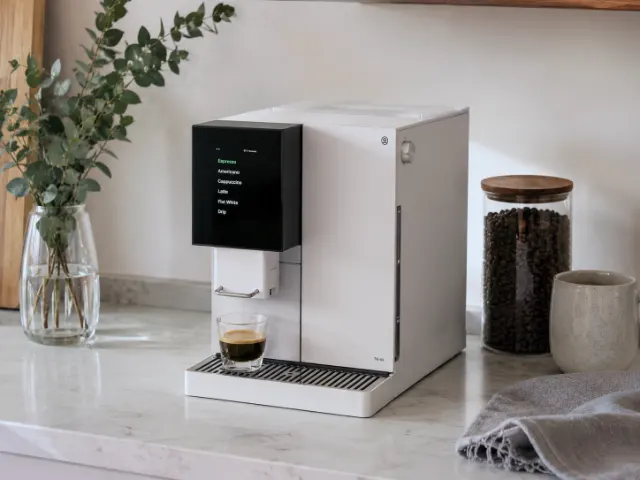
Terra Kaffe TK-02
The Terra Kaffe TK-02 brews both true espresso and standard drip coffee, but its loud operation and demanding milk system maintenance require patience.
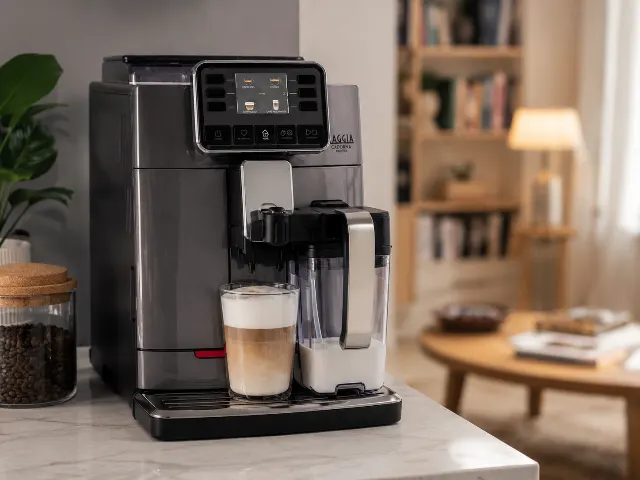
Gaggia Cadorna Prestige
The Gaggia Cadorna Prestige offers unmatched drink variety in a superautomatic, but its long-term ownership demands meticulous daily cleaning of its milk carafe.