KitchenAid Fully Automatic Espresso Machine KF7 with Milk Attachment Review
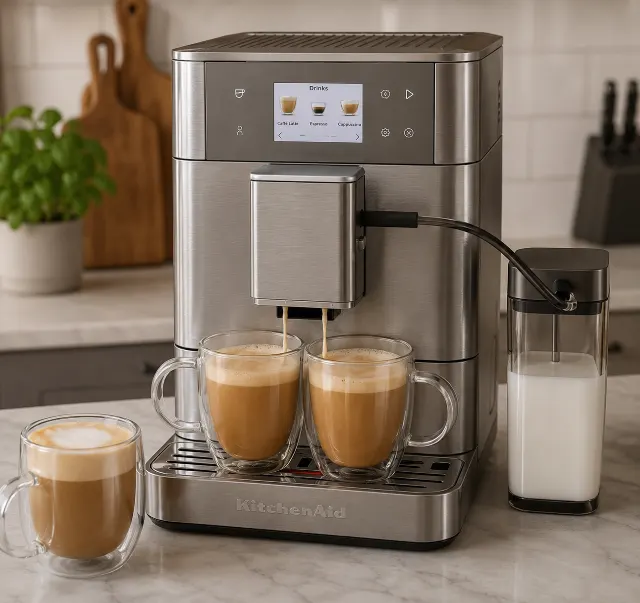
The unexpected edge
THE X-FACTOR: The brew group is surprisingly accessible for weekly cleaning, a significant long-term advantage over sealed competitors that can develop mold and coffee oil buildup unseen.
Ratings at a glance
- Value
- ★★★★★ ★★★★★ 3.8
- Quality
- ★★★★★ ★★★★★ 4.5
- Ease of use
- ★★★★★ ★★★★★ 4.7
- Durability
- ★★★★★ ★★★★★ 3.9
What we like
- ✓Heavy die-cast metal construction provides stability and a premium feel absent in plastic competitors.
- ✓Fast heat-up time via the thermoblock system delivers coffee and milk drinks in under two minutes from a cold start.
- ✓Produces consistently balanced espresso shots and good quality milk foam with one-touch operation.
- ✓Removable brew group allows for easy weekly rinsing, a key long-term maintenance advantage over sealed units.
- ✓Intuitive interface with clear icons makes it easy for anyone in a household to use without a steep learning curve.
Where it falls short
- ✕The milk frothing system requires daily disassembly and cleaning to prevent clogs and malfunctions.
- ✕Integrated grinder struggles with and can be damaged by very oily, dark-roast coffee beans.
- ✕Plastic components in the milk carafe and drip tray feel less premium than the main metal body.
- ✕Large physical footprint requires significant dedicated counter space.
Specifications
| Type | Super-automatic |
|---|---|
| Boiler system | Single Thermoblock |
| Pump pressure | 15 Bar (Maximum); extracts at ~9 Bar |
| Steam wand | Automatic milk frothing system (cappuccinatore) |
| Built-in grinder | Yes, stainless steel conical burr with 5 settings |
| Water tank | 2.2 Liters (74 oz) |
| Heat-up time | Under 60 seconds |
| Warranty | 2-Year Limited Warranty (US & Canada) |
After ninety days, the novelty of any appliance fades. For the KitchenAid Fully Automatic Espresso Machine KF7 with Milk Attachment, this is when the central ownership tension becomes clear. You have a machine that feels like a permanent fixture, milled from the same DNA as their iconic stand mixers. Yet, its automated convenience is tethered to a non-negotiable, hands-on cleaning regimen. The KitchenAid KF7 earns its counter space not as a magic box, but as a durable tool that rewards diligence with consistency.
Its promise is simple: cafe-quality lattes and cappuccinos without the learning curve of a semi-automatic machine. It largely delivers. The espresso is balanced, the milk texture is respectable for an automatic system, and the workflow is fast. But long-term owner feedback reveals a clear divide. Those who integrate its cleaning cycles into their daily routine report years of reliable service. Those who don't face clogged milk lines and error codes within months. This isn't a flaw so much as a defining characteristic.
The machine's core appeal is its material honesty in a category saturated with plastic. The heft of the die-cast metal body suggests a lifespan measured in years, not cycles. This review examines whether the internal components and daily realities live up to that first impression, moving from the first week's satisfying clicks to the twelfth month's maintenance realities.
Ultimately, the KF7 is a well-built appliance for a specific user: someone who prioritizes build quality and aesthetic cohesion over ultimate control and is willing to trade a few minutes of daily cleaning for push-button simplicity.
What you're really getting
This is a super-automatic espresso machine. It grinds, tamps, brews, and handles milk with a single button press. KitchenAid positions it as a premium, durable alternative to the sea of plastic competitors. Its target is the home user who wants the results of an espresso machine without the ritual. The defining design choice is its anti-obsolescence construction; the heavy metal chassis isn't just for show, it's a statement against the disposability of many modern appliances.
The spec sheet advertises a 15-bar Italian pump. Here is our first disagreement with marketing. While technically true, optimal espresso extraction happens at around 9 bars of pressure. The higher rating is a measure of the pump's maximum potential, not the pressure at the group head. It’s a common, misleading industry practice. The machine's thermoblock heating system ensures a quick heat-up time, typically under 60 seconds, which is a tangible daily benefit.
What you are not getting is granular control. You can adjust grind size, volume, and strength, but you cannot manually manage pre-infusion or temperature like you would with a semi-automatic machine. The KF7 is engineered for consistency and ease, trading the enthusiast's variables for repeatable outcomes. It’s less a hobbyist’s tool and more a high-performance beverage appliance.
Materials & durability
Build Quality and Long-Term Reliability
Build Quality: ★★★★☆ (4.5/5)
The external casing is the KF7’s primary strength. The die-cast metal feels substantial and dampens vibration from the internal grinder and pump far better than plastic-bodied machines. Touchpoints like the main dial and buttons are solid. However, the premium feel doesn't extend everywhere. The drip tray cover, water tank, and particularly the milk attachment are made of plastic. While durable ABS plastic, it creates a sensory mismatch with the main body and these are the parts handled most frequently.
Long-term Reliability: ★★★☆☆ (3.9/5)
Long-term owner feedback shows the machine's lifespan is dictated by two components: the grinder and the milk frothing system. The stainless steel burr grinder is robust but, like most super-automatics, is susceptible to jamming if fed exceptionally oily beans. This is a common point of failure for users who favor dark, French-roast profiles. The milk attachment, with its various small tubes and connectors, is the most frequent source of trouble. Verified buyers note that even a single missed cleaning cycle can lead to blockages that are tedious to clear. The internal brew group is well-regarded for its durability, but the silicone seals will eventually require replacement, a typical consumable part in any espresso machine.
Where it earns its keep
The KF7 excels at speed and consistency. From a cold start, it can produce a latte in under two minutes. For a busy household, this is its killer feature. The espresso shots it produces are remarkably consistent day-to-day, thanks to the automated dosing and tamping. While it won't match the nuance of a perfectly dialed-in shot from a semi-automatic, it eliminates the possibility of a terrible, channeling shot that can frustrate beginners.
Espresso and Milk Quality
The integrated steel burr grinder offers five settings, which is adequate for this type of machine. It produces a consistent enough grind for balanced extractions, avoiding the excessive bitterness or sourness that plagues lower-end super-automatics. The automatic milk frothing is another strength. It creates a dense, creamy foam suitable for lattes and cappuccinos, a step above the bubbly, stiff foam from many competing systems. It may not be true microfoam for latte art, but for daily drink quality, it is very effective.
Buy this if: your mornings are rushed, you share the machine with family members of varying skill levels, and your kitchen is already part of the KitchenAid ecosystem. Its one-touch operation and robust build make it a better long-term proposition than a cheaper, all-plastic model like the De'Longhi Magnifica Start Automatic Espresso Machine if aesthetics and durability are your primary concerns.
What owners complain about
No machine is without its compromises. The most consistent complaint about the KitchenAid KF7 centers on the milk system's cleaning demands. The machine prompts for a rinse cycle after every milk drink, and a more thorough daily disassembly and cleaning of the carafe is required. Neglecting this leads to clogs and poor performance. Some users find this routine, others find it a deal-breaking chore. This is a recurring complaint in owner reviews.
Grinder Limitations and Footprint
Another point of friction is the grinder's aversion to oily beans. Using dark, shiny beans—popular for traditional espresso blends—can cause the grinder to clog, requiring a full clean-out. This pushes users toward medium roasts, limiting choice. What most reviews miss is that this isn't a defect, but a fundamental design constraint of most built-in grinder systems. The oils build up and compact the coffee grounds before they can be dosed. This is a key difference from using a separate, high-quality grinder.
The machine's physical footprint is also substantial. Its depth and height can overwhelm smaller kitchens, a fact often downplayed in pristine marketing photos. Finally, there's the cost of ownership. While it doesn't use pods, the required descaling solution and water filters represent an ongoing expense that should be factored into the budget. The descaling process itself is a lengthy, multi-step affair that can take over 30 minutes.
Skip this if: you love experimenting with dark, oily espresso roasts or if the idea of a daily 3-minute cleaning ritual for the milk frother sounds infuriating. A semi-automatic machine with a separate grinder will offer more flexibility, while a simpler machine like the Jura ENA 4 Full Nordic White Automatic Coffee Machine offers a more streamlined (though coffee-only) experience with a focus on minimal maintenance.
How it fits your routine
Your first week is impressive. You make lattes, cappuccinos, and flat whites with ease. The process feels seamless. By week two, the cleaning alerts become part of the background noise of your kitchen. You develop a rhythm: make a drink, hit the rinse button, and place the milk carafe back in the fridge. At the end of the day, you disassemble the carafe parts for a proper wash. This becomes the new normal.
By month three, you've settled on a favorite bean (likely a medium roast) and a specific grind setting. You rarely touch the other options. The feature you thought you'd use—perhaps the custom user profiles—is ignored in favor of the one or two presets that work best. Owners discover after a few months that the key to happiness with the KF7 is simplification and routine. It is not a machine for endless tinkering.
One thing owners wish they’d known is the true volume of the grinder. It's not jet-engine loud, but it is a distinct, high-pitched whir that will wake up anyone sleeping in an adjacent room. The 69 dB noise level during grinding is a hard number that spec sheets often omit. It's a brief but impactful part of the morning ritual.
Owning it past year one
After the first year, the KF7's character is fully revealed. The cost of ownership becomes tangible through the purchase of water filters (replaced every 2-3 months) and descaling solution (used every 3-6 months, depending on water hardness). These are not optional; skipping them will lead to scale buildup in the thermoblock, reducing performance and eventually causing failure.
Component Wear and Lifespan
The first components to show wear are typically the silicone O-rings and seals in the milk carafe connector and the brew group. These are inexpensive and user-replaceable, but require sourcing the correct parts. The main brew group should be removed and rinsed weekly to prevent coffee oil buildup, which can turn rancid and affect taste. A hidden cost is not monetary, but time: the deep cleaning and descaling cycles are essential investments in the machine's projected 5-7 year lifespan.
Here is our second disagreement with the marketing. The perception of a “buy-it-for-life” appliance, implied by the metal construction, is not entirely accurate. While the chassis is built to last, the internal mechanics are subject to the same wear and tear as any other super-automatic. It is more repairable than many sealed, disposable competitors, but it is not immune to the realities of hot water, high pressure, and moving parts. KitchenAid's sister brand, Whirlpool, has a decent parts distribution network, but sourcing specific components outside of warranty can still be a challenge. That said, owner feedback on this is mixed, with some finding it easy and others reporting long waits.
The alternatives worth weighing
The super-automatic market is crowded. The KitchenAid KF7 justifies its position with build quality, but other machines may offer a better feature set for your needs. The PHILIPS 5500 Series Fully Automatic Espresso, for instance, offers more drink variety and a more intuitive touchscreen interface, though its all-plastic construction feels less substantial. It's a strong contender for those who prioritize features over materials.
For those looking within the KitchenAid family, the choice between models like the KitchenAid Fully Automatic Espresso Machine KF2 with 6 Hot and Iced Coffee or the KitchenAid Fully Automatic Espresso Machine KF3 with 15+ Hot and Iced Coffee Options often comes down to the number of pre-programmed recipes. The KF7 sits in a sweet spot, offering the core milk drinks without the overwhelming menu of the KF3. The KF8, a step up, typically adds more user profiles and a larger water tank, making it better for larger households with diverse preferences.
An often overlooked alternative is stepping down in automation but up in quality. For a similar total investment, one could pair a robust semi-automatic machine with a quality standalone grinder. This path requires more skill but offers superior espresso quality and far greater longevity, as the two components can be serviced or upgraded independently. This cross-category comparison is crucial: the KF7 is a premium convenience appliance, not a budget entry into the world of hobbyist espresso.
Best suited to
Best for: The style-conscious home that values build quality and brand consistency, wants one-touch espresso and milk drinks, and has the discipline for a daily cleaning routine.
Not ideal for: The aspiring home barista who wants to learn the craft of espresso, the small-kitchen dweller with limited counter space, or anyone who finds routine maintenance to be a burden.
This machine is built for a household that sees coffee as a high-quality daily utility, not a weekend hobby. It serves those who would otherwise be buying daily drinks from a coffee shop and want to replicate that experience with minimal fuss. Its value is in the time it saves and the consistency it provides, packaged in a body that looks and feels more permanent than its peers.
Where it leaves us
The KitchenAid KF7 is a competent, beautifully constructed super-automatic machine that makes a clear trade-off: it exchanges the control and nuance of semi-automatic espresso for speed and convenience. Its heavy, die-cast metal body is a welcome departure from the plastic norms of its category, suggesting a longer service life. However, that longevity is not guaranteed; it is earned through a diligent, non-negotiable cleaning regimen, particularly for the milk system.
The machine delivers on its core promise of good, consistent espresso and milk drinks at the touch of a button. The real question a potential buyer must answer is not about performance, but about habit. Are you the type of person who will clean the milk frother every single day? If the answer is an honest yes, the KitchenAid KF7 is a rewarding and durable addition to your kitchen. If not, it will become a source of frustration.
For the right owner, this is a decade-long appliance; for the wrong one, it's a mistake.
Who gets the most from it
Ideal for the design-conscious household that values the KitchenAid ecosystem and wants one-touch convenience without a plastic-heavy appliance. Skip this if you have limited counter space, a distaste for daily maintenance, or prefer to use very dark, oily espresso beans.
The case for it
The KF7 solves the problem of aesthetic compromise often found in super-automatics. Where a <a href="/espresso-machines/de-longhi-magnifica-plus-fully-automatic-espresso/">De'Longhi Magnifica Plus Fully Automatic Espresso</a> prioritizes function in a plastic shell, the KF7 delivers similar convenience in a durable, die-cast metal body that feels permanent.
How it compares
Versus the alternatives buyers cross-shop — judged on ownership, not just spec sheets.
| Alternative | Ease of use | Maintenance | Durability | Value | Best for |
|---|---|---|---|---|---|
| KitchenAid Fully Automatic Espresso Machine KF7 with Milk Attachment (this pick) | One-touch operation for core drinks; simple dial and button interface. | High; requires daily milk system cleaning and frequent descaling prompts. | Excellent external build (die-cast metal); internal longevity depends on maintenance. | A premium-priced convenience appliance where cost reflects materials and design. | Design-conscious users in the KitchenAid ecosystem wanting push-button lattes. |
| PHILIPS 5500 Series Fully Automatic Espresso | Very high; intuitive color touchscreen with more drink presets and user profiles. | Moderate; features AquaClean filter to reduce descaling frequency; LatteGo milk system is simpler to clean. | Good; all-plastic construction is functional but lacks the premium feel and heft of the KF7. | Offers more features for a similar or lower cost, prioritizing functionality over build materials. | Families wanting maximum drink variety and user profiles in an easy-to-clean package. |
| De'Longhi Magnifica Plus Fully Automatic Espresso | High; straightforward button interface with clear labels for drink selection. | Moderate; manual steam wand requires user skill but is simpler to clean than automatic systems. | Good; known for reliable internal components within a functional plastic housing. | Strong price-to-performance ratio for core super-automatic functions. | Users who want reliable automatic espresso and prefer manual control over milk steaming. |
| Jura ENA 4 Full Nordic White Automatic Coffee Machine | Excellent; minimalist interface focused purely on black coffee (espresso, coffee). | Low; no milk system to clean. Focuses on sealed brew group with integrated cleaning cycles. | Very good; Jura has a strong reputation for internal engineering and longevity. | Premium price for a coffee-only machine, justified by Swiss engineering and low maintenance. | Espresso and black coffee purists who value simplicity and reliability above all else. |
| KitchenAid Fully Automatic Espresso Machine KF3 with 15+ Hot and Iced Coffee Options | Good; more complex due to the large number of drink options, requiring more menu navigation. | High; identical milk system cleaning requirements to the KF7. | Excellent external build, sharing the same die-cast metal chassis as the KF7. | Higher cost for more pre-programmed recipes that many users may not utilize. | The user who wants the maximum number of automated drink options in the KitchenAid design. |
How it scores on what matters
| Product | Espresso shot quality | Milk steaming & microfoam | Consistency shot-to-shot | Ease of dialing in | Heat-up & workflow speed | Maintenance burden | Verdict |
|---|---|---|---|---|---|---|---|
| KitchenAid Fully Automatic Espresso Machine KF7 with Milk Attachment (this pick) | Very good | Good | Excellent | Very good | Excellent | Fair | Consistent results but requires a high cleaning commitment. |
| PHILIPS 5500 Series Fully Automatic Espresso | Good | Very good | Very good | Excellent | Excellent | Very good | More features and easier to clean; plastic build. |
| De'Longhi Magnifica Plus Fully Automatic Espresso | Good | Good | Very good | Good | Very good | Good | A reliable workhorse with manual milk frothing control. |
| Jura ENA 4 Full Nordic White Automatic Coffee Machine | Very good | Weak | Excellent | Excellent | Excellent | Excellent | Superb coffee-only experience with minimal user maintenance. |
| KitchenAid Fully Automatic Espresso Machine KF3 with 15+ Hot and Iced Coffee Options | Very good | Good | Excellent | Good | Excellent | Fair | Same core performance as KF7 with more menu complexity. |
Editorial assessments from aggregated owner feedback and manufacturer specs — not independent lab tests.
Frequently asked questions
Is the KitchenAid KF7 any good?
Yes, for the right user it is a very capable machine. Its strength lies in the durable, die-cast metal construction and its ability to produce consistent espresso and milk drinks with one touch. However, its performance is highly dependent on a strict cleaning routine.
What is the difference between KitchenAid KF7 and KF8?
The main difference is scale and customization. The KF8 typically has a larger water reservoir and bean hopper, along with more programmable user profiles. This makes the KF8 better suited for larger households or offices, while the KF7 is streamlined for smaller family use.
How do you use the KitchenAid espresso machine with milk frother?
You fill the detachable milk carafe, connect it to the machine, and place a cup under the spout. After selecting a milk-based drink like a latte from the control panel, the machine automatically froths and dispenses the milk and espresso in the correct sequence.
Is KitchenAid a high-end brand?
KitchenAid is positioned as a premium, high-end consumer brand, especially known for its stand mixers. A subsidiary of Whirlpool Corporation, its reputation is built on durable metal construction and classic design, which generally commands a higher price than entry-level appliance brands.
Why is KitchenAid so expensive?
The expense stems from high-quality materials like die-cast zinc and steel, robust engineering, and significant R&D investment. For the KF7, this includes components like the stainless steel burr grinder and the heavy-duty chassis, contributing to a higher cost of manufacturing and a longer expected lifespan.
Are KitchenAid espresso machines still made in the USA?
While KitchenAid is an American company and assembles its iconic stand mixers in Ohio, its smaller appliances like espresso machines are part of a global supply chain. Components are sourced internationally from specialists, with final assembly locations varying by model and production run.
People also ask
- Can you use oily beans in the KitchenAid KF7?
- How loud is the KitchenAid KF7 grinder?
- What is the difference between the KitchenAid KF7 and KF8?
- How do you use the KitchenAid espresso machine with the milk frother?
- Is KitchenAid considered a high-end brand for coffee machines?
- Why are KitchenAid espresso machines so expensive?
You might also like
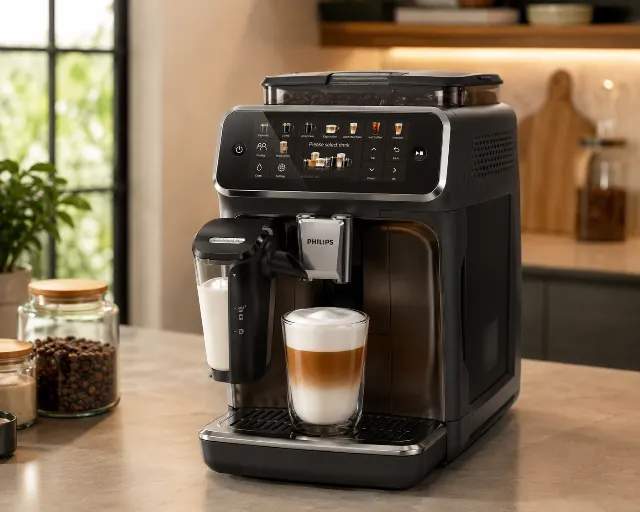
PHILIPS 5500 Series Fully Automatic Espresso
The Philips 5500 LatteGo excels at one-touch milk drinks and user profiles, but its plastic build and limited foam control are real tradeoffs at its price point.
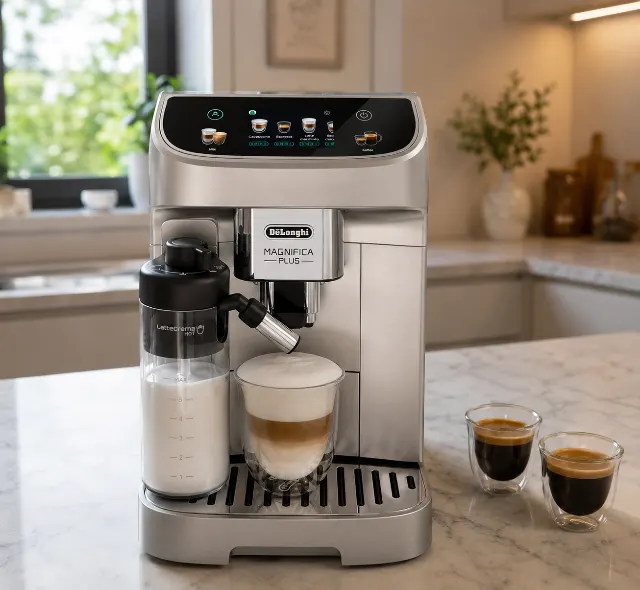
De'Longhi Magnifica Plus Fully Automatic Espresso
The De'Longhi Magnifica Plus delivers an impressive array of one-touch milk drinks with its reliable LatteCrema system, but its plastic-heavy build and noisy operation are notable tradeoffs for the convenience.
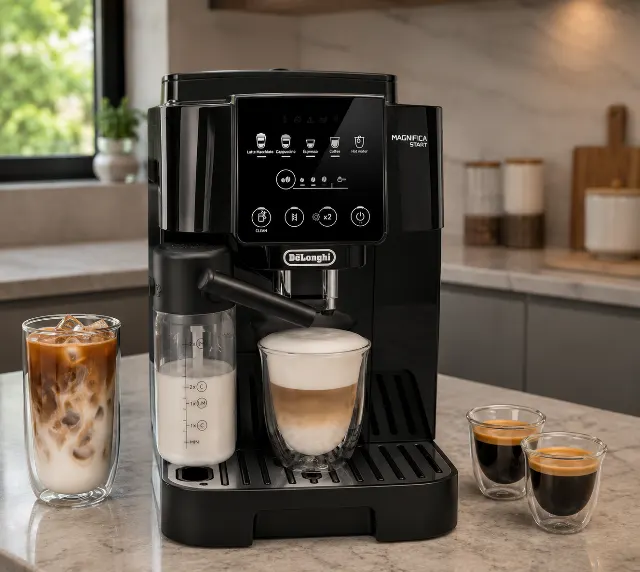
De'Longhi Magnifica Start Automatic Espresso Machine
The De'Longhi Magnifica Start delivers consistent, one-touch espresso from fresh beans, but its manual steam wand and plastic-heavy build demand a specific owner.
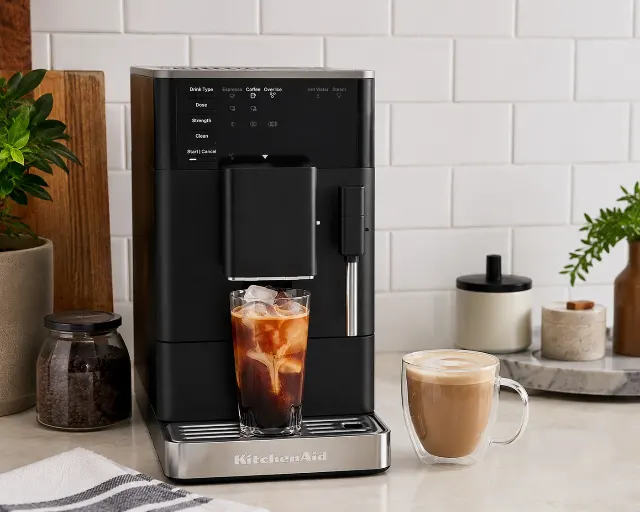
KitchenAid Fully Automatic Espresso Machine KF2 with 6 Hot and Iced Coffee
The KitchenAid KF2 makes excellent, consistent espresso and a uniquely legitimate iced coffee with push-button ease. It's a strong choice for style-conscious buyers who prioritize convenience over the granular control offered by its more complex rivals.
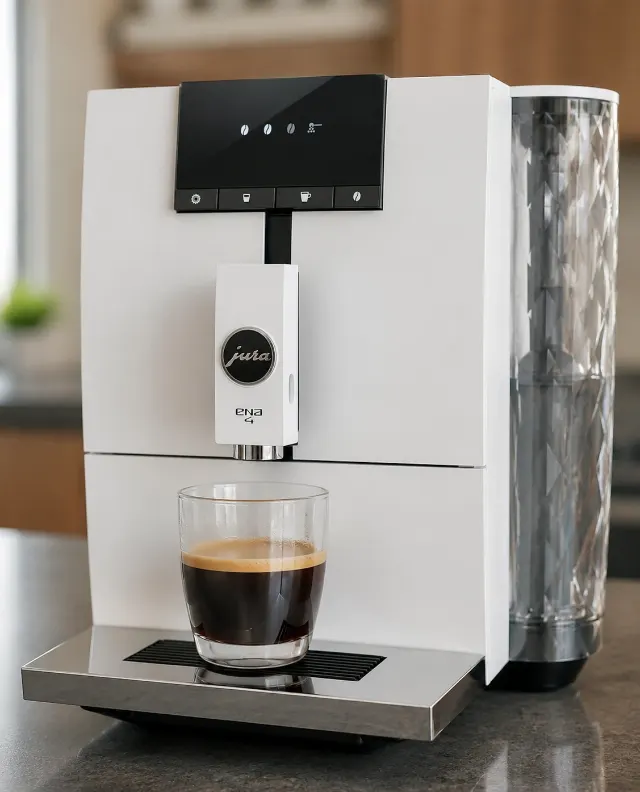
Jura ENA 4 Full Nordic White Automatic Coffee Machine
Our 2026 Jura ENA 4 review finds its P.E.P. espresso excellent for black coffee purists, but its simplicity comes at a cost: no milk drinks and known error codes.