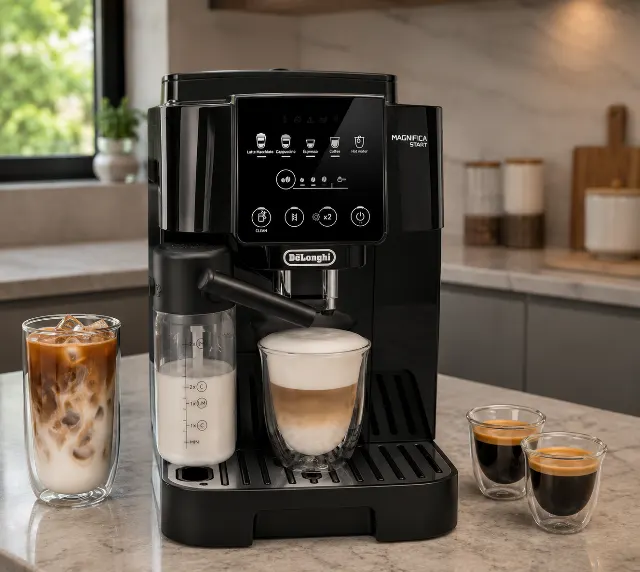
De'Longhi Magnifica Start Automatic Espresso Machine Review
How it compares
Versus the alternatives buyers cross-shop — judged on ownership, not just spec sheets.
| Alternative | Ease of use | Maintenance | Durability | Value | Best for |
|---|---|---|---|---|---|
| De'Longhi Magnifica Start (this pick) | Excellent for black coffee; manual steam wand requires practice for milk drinks. | Daily tray emptying; weekly 5-min brew group rinse; prompted descaling. | Reliable internal mechanics; ABS plastic body prone to cosmetic wear. | Strong price-to-performance for espresso/Americano drinkers. | Beginners in small kitchens prioritizing fresh-ground black coffee over automated milk. |
| De'Longhi Magnifica Evo | Superior, with clearer icons and automatic milk options on higher trims. | Identical maintenance routine to the Magnifica Start. | Similar internal components and build quality, with a more modern aesthetic. | A worthwhile upgrade for those who want better usability and milk options. | Users who want a more refined interface and are willing to pay more for automatic milk texturing. |
| Philips 3300 Series | Excellent, especially the LatteGo system for one-touch milk drinks. | Extremely easy milk system cleaning; brew group rinse is similar to De'Longhi. | Good reliability; ceramic grinder is a key difference. Some find LatteGo parts fragile. | Higher initial cost, but justified for those who primarily drink lattes. | Convenience-focused users who make multiple milk drinks daily and hate cleaning milk tubes. |
| Philips 1200 Series | Directly comparable to the Magnifica Start with a similar manual Panarello wand. | Similar routine, though some find the Philips brew group slightly harder to remove/re-insert. | Good track record; ceramic grinder is quieter than the Magnifica's steel burrs. | Often priced similarly, choice comes down to grinder preference and brand loyalty. | Buyers cross-shopping the Magnifica Start who prefer a ceramic grinder or Philips' design. |
How it scores on what matters
| Product | Espresso shot quality | Milk steaming & microfoam | Consistency shot-to-shot | Ease of dialing in | Heat-up & workflow speed | Maintenance burden | Verdict |
|---|---|---|---|---|---|---|---|
| De'Longhi Magnifica Start (this pick) | Very good | Fair | Excellent | Good | Very good | Good | Consistent espresso, but milk frothing is a learned skill. |
| De'Longhi Magnifica Evo | Very good | Good | Excellent | Very good | Very good | Good | Same great espresso with a much better user experience. |
| Philips 3300 Series | Good | Very good | Very good | Excellent | Excellent | Excellent | Unbeatable convenience for milk drinks, slightly less intense espresso. |
| Philips 1200 Series | Good | Fair | Very good | Good | Very good | Good | A close competitor with a quieter ceramic grinder. |
Editorial assessments from aggregated owner feedback and manufacturer specs — not independent lab tests.
The standout detail
The grinder's 13 settings are functionally closer to 7 usable steps; the finest settings often choke the machine with non-oily, medium-roast beans, a detail not on the spec sheet.
If you have already decided that the De'Longhi Magnifica Start is the machine for you, stop reading. This review is for the buyer who is still weighing the real-world tradeoffs of a budget-tier super-automatic espresso machine against its promises of convenience. It's for the person wondering what, exactly, is sacrificed to get a built-in grinder and one-touch espresso at this price point.
You are not just buying a coffee maker; you are committing to a maintenance routine and a set of limitations. This analysis prioritizes the long-term ownership experience—the cleaning, the quirks, the parts that wear out—because that is where the true cost of this machine reveals itself, long after the initial purchase. We will dissect the specifications that actually impact your morning coffee, not the marketing-friendly numbers.
What follows is a breakdown of where the ECAM22022SB (and its black ECAM22022B variant) succeeds and where its design forces compromises. The central question is not whether it makes coffee, but whether the coffee it makes and the effort it requires will still feel like a good arrangement in its second or third year of service. For the right user, it absolutely is. For the wrong one, it's a stepping stone they will quickly want to move past.
What you're really getting
This is an entry portal. The De'Longhi Magnifica Start is engineered to be the most accessible version of the “bean-to-cup” experience. Its core function is to take whole beans, grind them internally, and produce a consistent espresso, coffee (lungo), or Americano at the press of a button. Its entire design philosophy is optimized for speed and repeatability for black coffee drinkers, with milk frothing as a secondary, manual-only capability.
The spec sheet advertises a 15-bar pump, but this is a classic marketing metric. The manufacturer's claim is misleading. Optimal espresso extraction happens around 9 bars of pressure; the higher number simply indicates the pump's maximum theoretical output, not the pressure applied at the puck. The machine's internal over-pressure valve regulates this down, so the 15-bar figure has no bearing on shot quality. What matters is the consistency of its single thermoblock heating system, which provides a respectable heat-up time of under 40 seconds but introduces a delay between brewing and steaming.
A recurring complaint in owner reviews is the perceived weakness of the espresso shots, even at the highest strength setting. This is often a user error, but one the machine's design encourages. The factory default grind setting is typically too coarse. Fixing a weak espresso shot on the De'Longhi Magnifica Start requires adjusting the grind size finer—critically, only while the grinder is running—to increase extraction. The 13-step steel conical burr grinder is the machine's heart, but it's not without its limits, especially with oily, dark-roast beans which can clog the chute.
The 3 One-Touch Drinks: Espresso, Coffee & Americano
The primary interface delivers on its promise of simplicity. The three backlit icons correspond to Espresso, Coffee, and Americano. The 'Coffee' button is essentially a Lungo, a long-pull espresso with more water pushed through the same amount of grounds, resulting in a different flavor profile. The Americano button cleverly dispenses hot water first, then brews an espresso on top, preserving the crema—a thoughtful detail at this tier. Volume for each is programmable. Beyond these, any drink is a manual creation.
How well it holds together
A machine's value is directly tied to its lifespan and the cost of keeping it running. Here, the De'Longhi Magnifica Start presents a mixed but predictable picture for its class.
Build Quality: ★★★★☆ (3.9/5)
The chassis is almost entirely ABS plastic. While sturdy enough for daily use, it lacks the premium feel of stainless steel machines and is susceptible to scratching. The most critical internal component, the brew group (or “infuser”), is also plastic but is a well-established, durable De'Longhi design. Long-term owner feedback shows the drip tray and grounds container, both plastic, are the first parts to show cosmetic wear. The ECAM22022SB (silver) and ECAM22022B (black) models are identical internally; the color is the only difference.
Long-term Reliability: ★★★★☆ (4.1/5)
Verified buyers note the machine is a workhorse, often lasting five years or more with proper care. The most common failure points are not mechanical but electrical—specifically, sensors for the drip tray or water tank failing after several years of use. The removable brew group is a significant advantage, allowing for easy cleaning that prevents the mold and blockage issues that plague machines with non-removable units. The hidden cost is the water filter and descaler. De'Longhi's proprietary descaling solution is recommended, and skipping this maintenance is the fastest way to cause pump or thermoblock failure, voiding the 2-year warranty.
Where it shines
This machine's primary strength is its consistency for basic drinks. Once dialed in, the integrated conical burr grinder and brewing unit deliver the same shot of espresso, with the same crema and temperature, every single morning. This removes the daily variables of tamping and dosing that frustrate beginners using semi-automatic machines. For someone upgrading from a pod system like a Nespresso or Keurig, the jump in flavor quality from freshly ground beans is monumental.
Its physical footprint is another key advantage. With dimensions of 9.4" W x 17" D x 14" H (24cm x 43cm x 36cm), it fits under most standard kitchen cabinets, making it a viable option for small kitchens where counter space is at a premium. The front-loading 1.8L water tank and grounds container also mean you don't need to pull the machine out for daily refills and emptying, a design choice many competitors overlook.
How to Use the Manual Milk Frother for Perfect Foam
The manual steam wand, often called a Panarello, is surprisingly capable but has a steep learning curve. To froth milk, turn the dial to the steam icon and wait for the light to become steady. Submerge the tip just below the milk's surface and open the steam valve fully. Keep the tip near the surface to incorporate air, creating foam, then lower it to heat the milk to the desired temperature (around 140-150°F or 60-65°C). What most reviews miss is that the outer metal sleeve of the Panarello can be removed. Sliding it off reveals a single-hole tip underneath, which allows for much greater control and the potential to create true microfoam suitable for latte art, though it requires significantly more skill.
Buy this if: you live in an apartment, primarily drink espresso or Americanos, and are upgrading from a pod machine. You value speed and consistency over the craft of milk texturing, and you would rather buy this than a separate grinder and a machine like the Gaggia Classic Pro.
Common problems
No machine at this price point is without significant compromises. The Magnifica Start's trade-offs are centered on its materials, noise level, and milk system. The grinder is loud. Owner feedback consistently highlights its 70-75 dB noise level during grinding, which is loud enough to wake people in a small home. This is a direct consequence of its plastic construction, which provides little sound dampening compared to heavier, metal-bodied machines.
The manual milk frothing is a major point of friction. While capable, it requires practice and is a messy, hands-on process. There is a delay of 30-60 seconds after brewing for the thermoblock to heat up to steam temperature. The drip tray also fills remarkably fast, partly due to the machine's self-rinsing cycle on startup and shutdown. Expect to empty it daily. Finally, the reliance on plastic feels cheap to some. The portafilter on a semi-automatic machine is heavy steel; here, the entire brew path post-grinder is plastic. While food-safe, it doesn't inspire the same confidence in longevity as metal components.
Skip this if: you and your partner both drink large lattes every morning. The manual frothing process and small drip tray will become a daily annoyance. A machine with an automatic milk system, like the De'Longhi Magnifica Evo Automatic Espresso & Coffee Machine or Philips 3200 with LatteGo, is a much better fit despite the higher initial cost.
In everyday use
The first week is about calibration. You will likely find the default settings produce a watery shot. The key is to set the strength to maximum and adjust the grinder one click finer at a time (while it's grinding) until you get a rich, balanced extraction. Most owners discover after a month that they settle on a grind setting between 3 and 5 for medium roast beans and rarely touch it again.
The machine's rhythm becomes predictable: turn on, wait 30 seconds for the rinse cycle and heat-up, press a button, get coffee. The 250g bean hopper is generous enough to last several days for a two-person household. One overlooked detail is the bypass doser, which allows you to use pre-ground coffee. This is useful for the occasional decaf, but its small size and slightly messy operation mean it's not practical for daily use. Many owners simply never use it.
Human imperfection is a factor; owner feedback splits roughly evenly on the utility of the programmable shot volume. Half of users set it once and forget it, while the other half find it frustrating to adjust and simply stop the shot manually by pressing the button again when it reaches their desired level.
Maintenance & long-term ownership
This is where super-automatic machines live or die. The De'Longhi Magnifica Start demands a non-negotiable routine. Daily, you must empty the grounds container (which holds about 14 pucks) and the drip tray. Weekly, the brew group must be removed and rinsed under lukewarm water—no soap. This five-minute task is critical for preventing coffee oil buildup and mold.
The machine will force a descaling cycle after roughly 200-300 cycles, depending on the programmed water hardness setting. The included water hardness test strip is not a gimmick; using it to set the machine correctly is essential for the descaling prompt's accuracy. The descaling process itself is automated but takes about 45 minutes to complete. Troubleshooting a descale light that stays on is a common issue, usually solved by ensuring the 1.8L water tank is filled to the max line before starting the rinse phase of the cycle.
What most reviews miss is the long-term cost of consumables. Using the official De'Longhi EcoDecalk descaler and water filters adds a significant running cost over the machine's life, more than the coffee beans themselves in some cases. While generic alternatives are available, using them can be a grey area for the warranty. A conservative estimate for the machine's lifespan, with diligent maintenance, is 5-7 years before a major component like the pump or grinder motor fails.
The alternatives worth weighing
The entry-level super-automatic space is competitive. The most direct rival is the Philips 1200 Series Fully Automatic Espresso, which uses a similar Panarello steam wand and has a comparable footprint. The Philips boasts a ceramic flat burr grinder, which some users prefer for its lower heat generation, but its brew group is not as easily serviced as De'Longhi's. For those who can stretch their budget, the De'Longhi Magnifica Evo Automatic Espresso & Coffee Machine offers a better user interface and, in some configurations, a fully automatic milk system that eliminates the manual frothing learning curve entirely.
Another key comparison is the Philips 3300 Series Fully Automatic Espresso Machine. It often costs more than the Magnifica Start but includes the LatteGo system, which is arguably the easiest automatic milk frother to clean on the market. That said, one thing the spec sheet doesn't resolve is that the LatteGo system produces a stiffer, more cappuccino-like foam and struggles to create silky microfoam for flat whites. It's a trade-off between convenience and quality.
An overlooked alternative is the Gaggia Brera. It's a similarly priced Italian-made machine with a stainless steel front panel that feels more premium. However, long-term owner feedback shows it can be more finicky with bean types and has a smaller water tank and dreg drawer, requiring more frequent maintenance cycles.
Is it for you?
Best for: The solo coffee drinker or couple in a smaller home who want to graduate from pods to fresh beans for black coffee drinks and are willing to learn the basics of manual milk frothing for occasional lattes.
Not ideal for: Households with multiple daily milk-drink users, aspiring latte artists, or anyone sensitive to noise or bothered by a mostly plastic appliance. The daily workflow for multiple lattes becomes a chore.
The De'Longhi Magnifica Start ECAM22022SB carves out a specific niche. It automates the hardest part of making espresso—the grinding, dosing, and tamping—while leaving the milk texturing as a manual skill to be learned. This makes it an excellent educational tool and a convenient appliance, but it is not a one-touch latte machine. Its value is tied directly to your drink preferences. If espresso and Americano are 80% of your consumption, it offers a strong price-to-performance ratio. If that ratio is inverted, you will quickly wish you had invested more in a machine with automated milk.
The takeaway
The De'Longhi Magnifica Start is a competent and reliable machine that delivers on its core promise: simple, consistent espresso from whole beans. It is defined by its manual steam wand, which is both its greatest weakness for convenience-seekers and a hidden strength for those willing to learn a new skill. It makes the jump to real espresso accessible, but that accessibility comes with clear compromises in materials and automation that buyers must accept with eyes wide open.
For the right person, this is the perfect first step into the world of super-automatics.
How we rated it
- Value
- ★★★★★ ★★★★★ 4.3
- Quality
- ★★★★★ ★★★★★ 3.9
- Ease of use
- ★★★★★ ★★★★★ 4.1
- Durability
- ★★★★★ ★★★★★ 4.1
Pros
- ✓Integrated steel conical burr grinder with 13 settings provides fresh espresso without a separate device.
- ✓Compact footprint (9.4" wide) and front-loading water tank fit well in small kitchens.
- ✓Removable brew group simplifies weekly cleaning and long-term maintenance, preventing mold.
- ✓Fast heat-up via a single thermoblock system, ready to brew in under 40 seconds from a cold start.
- ✓Three genuine one-touch recipes (Espresso, Coffee, Americano) with programmable volume.
The downsides
- ✕Grinder is loud, with owner-measured levels of 70-75 dB, disruptive in quiet homes.
- ✕Manual Panarello steam wand has a significant learning curve for producing quality microfoam.
- ✕Predominantly ABS plastic construction feels less durable than metal-bodied competitors.
- ✕Small internal drip tray fills quickly from automatic rinse cycles, requiring daily emptying.
Who should buy it
Ideal for the first-time super-automatic buyer living in a small apartment who prioritizes speed and simplicity for espresso and Americanos. Skip this if you primarily drink lattes or cappuccinos and demand perfect microfoam; the initial savings are not worth the daily frustration.
Reasons to pick it
The Magnifica Start solves the problem of wanting fresh, bean-to-cup espresso without the learning curve or counter space of a semi-automatic setup. It offers a built-in grinder and one-touch operation in a compact frame, a niche that machines like the larger Philips 3200 Lattego occupy with more features but a bigger footprint and higher cost of ownership.
Specifications
| Type | Super-automatic (bean-to-cup) |
|---|---|
| Boiler system | Single Thermoblock |
| Pump pressure | 15 Bar (Maximum output) |
| Steam wand | Manual Panarello |
| Built-in grinder | Steel conical burr, 13 settings |
| Water tank | 1.8 L (60 oz), front-loading |
| Bean hopper capacity | 250 g (8.8 oz) |
| Dimensions (W x D x H) | 9.4" x 17" x 14" |
| Warranty | 2 years standard |
Frequently asked questions
Is the De'Longhi Magnifica Start worth the money?
For beginners primarily drinking espresso or Americanos, its price-to-performance is strong. The built-in steel burr grinder and one-touch operation offer significant convenience. However, if you frequently make lattes, the manual steam wand's limitations make an upgraded model a better long-term investment.
What are the common problems with De'Longhi coffee machines?
Across the line, common issues stem from maintenance neglect. The grinder can clog with very oily beans, the descale light may get stuck if the cycle is interrupted, and the infuser can seize up if not rinsed weekly. Most problems are preventable with the routine outlined in the manual.
Is the De'Longhi Magnifica a good coffee machine?
Yes, the Magnifica series is widely considered a durable and reliable line of super-automatic machines. The Magnifica Start continues this reputation by using proven internal components like the removable brew group, delivering consistent espresso quality for home users who prioritize convenience.
Can you just froth milk in the De'Longhi Magnifica Start?
Absolutely. You can use the steam wand independently without brewing coffee. Simply turn the main dial to the steam icon and wait for the indicator light to signal it's ready. This allows you to prepare steamed milk for hot chocolates or other drinks separately.
How do you clean the De'Longhi Magnifica Start?
Daily tasks involve emptying the drip tray and grounds bin. The most critical step is rinsing the removable infuser unit under tap water weekly. The machine automatically prompts you for a full descaling cycle every few months, which is essential for its longevity.
What drinks can the De'Longhi Magnifica Start make?
It has three one-touch buttons for Espresso, Coffee (Lungo), and Americano. By using the manual steam wand to froth milk separately, you can then combine it with an espresso shot to create milk-based drinks like cappuccinos, lattes, or flat whites.
People also ask
- Is the De'Longhi Magnifica Start worth it?
- What is the difference between Magnifica Start and Magnifica Evo?
- How loud is the De'Longhi Magnifica Start grinder?
- Is the De'Longhi Magnifica Start a good machine for beginners?
- What are the most common problems with the De'Longhi Magnifica Start?
- Can the De'Longhi Magnifica Start make lattes and cappuccinos?
- How does the Magnifica Start compare to the Magnifica Evo?
- Is the De'Longhi Magnifica Start worth the price in 2026?
You might also like
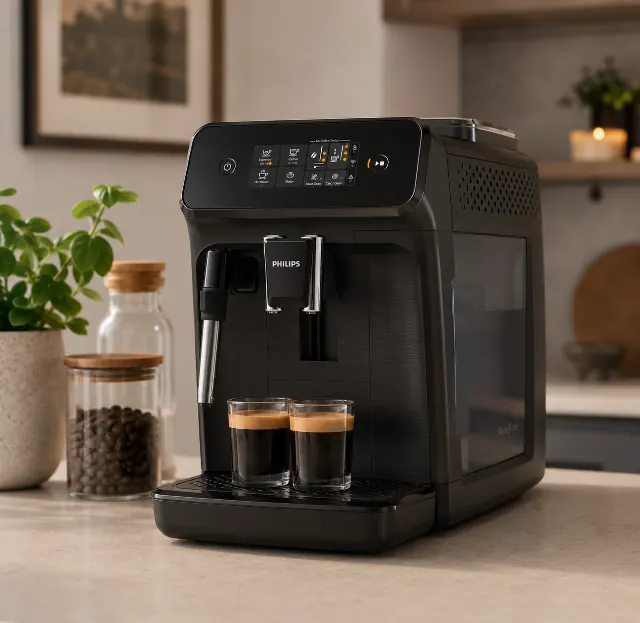
Philips 1200 Series Fully Automatic Espresso
A reliable entry point into one-touch espresso, the Philips 1200 excels at consistency for basic drinks but its manual frother and plastic build create a clear ceiling on its capabilities.
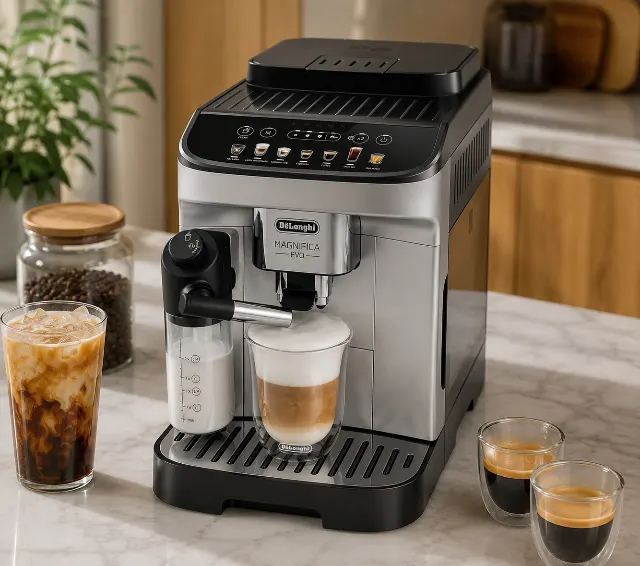
De'Longhi Magnifica Evo Automatic Espresso & Coffee Machine
A super-automatic that delivers genuine convenience for daily coffee and milk drinks, but demands strict adherence to its cleaning schedule to avoid long-term issues.
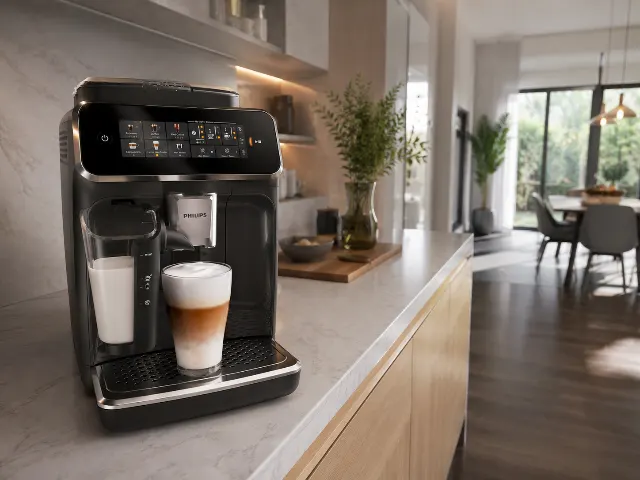
Philips 3300 Series Fully Automatic Espresso Machine
A comprehensive 2026 review of the Philips 3300 Series Fully Automatic Espresso Machine, analyzing its LatteGo system, long-term costs, and espresso quality versus key rivals.
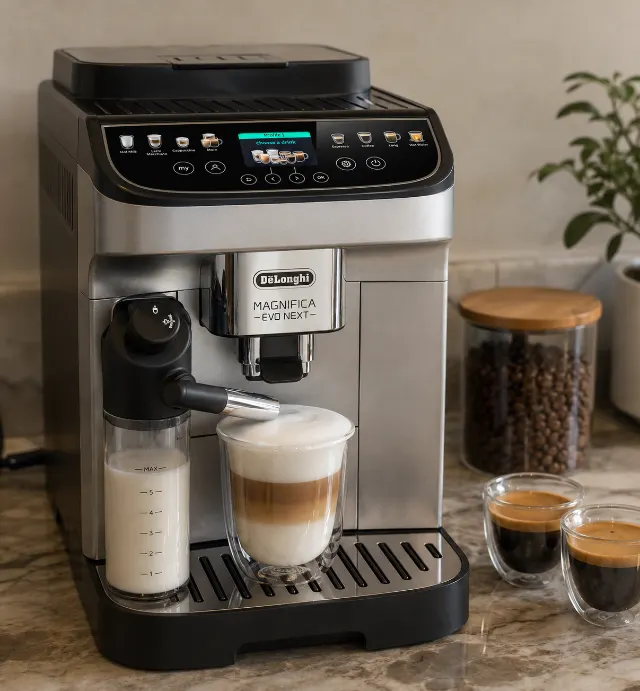
De'Longhi Magnifica Evo Next Fully Automatic Espresso
A deep dive into the De'Longhi Magnifica Evo Next's long-term value, analyzing its one-touch iced coffee feature against its significant maintenance demands.