De'Longhi Magnifica Evo Next Fully Automatic Espresso Review
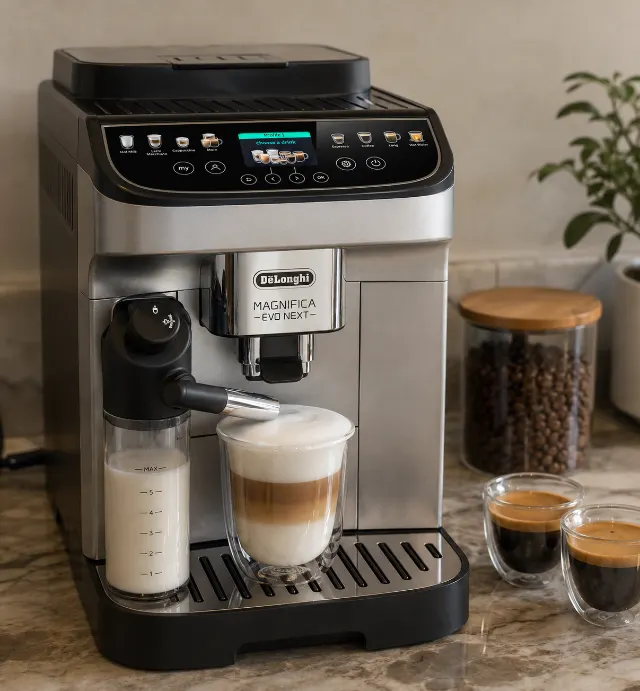
The myth of the super-automatic espresso machine is that it delivers third-wave café quality with zero effort. You press a button, a perfect latte appears, and you never think about it again. That is not the reality. After a year with a machine like the De'Longhi Magnifica Evo Next Fully Automatic Espresso, the truth emerges: it delivers consistent, B+ grade coffee with *low* effort, but its survival depends entirely on your commitment to a non-negotiable maintenance routine.
Picture this machine three years from now. If you've diligently rinsed the brew unit weekly and descaled it on schedule, it's likely still producing the same espresso it did in week one. If you haven't—if you treated it like a pod machine—it has become a countertop monument to a failed experiment, plagued by error codes and weak, watery shots. The real cost of ownership isn't just the purchase price; it's the 15 minutes per week you must invest to keep it from self-destructing.
This isn't a flaw, but a fundamental contract of the bean-to-cup category. The De'Longhi Magnifica Evo Next honors its side of the bargain by simplifying the complex process of grinding, tamping, and brewing into a single touch. Your side is to keep its intricate internal mechanics clean. Understanding this tradeoff is the only way to evaluate if this machine is a sound investment for you.
The basics worth knowing
This is a bean-to-cup super-automatic. It does everything. You add whole beans and water, and it handles the rest: grinding with its integrated 13-setting conical burr grinder, dosing, tamping, brewing at a claimed 15-bar pump pressure (though espresso requires only 9-bar for proper extraction), and ejecting a dry puck of used grounds. Its core heating system is a single thermoblock, which heats water on demand for fast heat-up times—typically under 60 seconds from a cold start.
Its primary optimization is for menu breadth and simplicity. The control panel is icon-based, offering direct access to espresso, coffee, long, and its signature 'Over Ice' recipe. This is not a machine for the hobbyist looking to tweak pre-infusion times or obsess over PID temperature control. The manufacturer's marketing suggests barista-level results at home. This is a significant overstatement. What it actually delivers is supreme consistency and convenience, producing a drink that is leagues better than a pod machine but cannot match the texture and flavor clarity of a well-dialed-in semi-automatic setup.
Magnifica Evo Next vs. Magnifica Evo: What's New?
The core difference is the user interface and drink menu. The De'Longhi Magnifica Evo Next(ECAM31080SB) introduces a more modern, full-color touch icon panel compared to the grayscale buttons on the original De'Longhi Magnifica Evo Automatic Espresso & Coffee Machine. The most significant functional upgrade is the dedicated 'Over Ice' recipe, which brews a concentrated shot at a slightly lower temperature to minimize ice melt. For anyone who regularly makes iced coffee, this feature alone justifies the price difference. The underlying brew group and grinder are largely identical, so shot quality for standard espresso remains comparable.
Fit, finish and durability
It looks sharp on the counter. The combination of black plastic and stainless steel accents gives it a modern, clean aesthetic that fits into most kitchens. But the feel tells a different story.
Build Quality: ★★★★☆ (3.8/5)
The entire housing is Acrylonitrile Butadiene Styrene (ABS) plastic. While durable, it lacks the reassuring heft of machines with more metal components. The drip tray, grounds container, and water tank feel adequate, but not overbuilt. Overlooked detail: The plastic grille on the drip tray scratches easily from ceramic mugs, showing wear within the first few months. This is purely cosmetic, but it undermines the premium feel De'Longhi aims for.
Long-term Reliability: ★★★★☆ (4.1/5)
Long-term owner feedback shows the machine's lifespan is directly tied to maintenance. The removable brew unit is the heart of the machine and its most common point of failure. Failure to rinse it weekly causes old coffee oils to solidify, straining the motor and leading to the dreaded "stuck brew unit" error. The ceramic burr grinder is robust, but only if you avoid oily, dark-roast beans which are known to cause clogs. With proper care and descaling every 2-3 months, a 5-7 year lifespan is a reasonable expectation. Without it, you could be facing repair bills within 24 months.
Where it performs
This machine shines in speed and variety. From a cold start, you can have an espresso in your hand in about a minute. The ability to make seven different drinks with a single touch is its core strength. The espresso it produces is characterized by a thick, stable crema, a result of the pressurized brewing system. While this can mask imperfections and won't satisfy purists, it delivers a visually appealing and palatable shot every single time.
The standout feature is the 'Over Ice' function. Unlike simply brewing a hot shot over ice, this recipe adjusts the brewing parameters to create a more concentrated, less acidic shot that stands up to dilution. This is not a marketing gimmick; it produces a genuinely better iced coffee than other super-automatics in its class that lack this specific algorithm. The manual steam wand is also surprisingly capable, producing decent microfoam for lattes with a bit of practice, though it requires more user skill than an automatic carafe system.
Drink Options: From Espresso to Iced Coffee
The Evo Next is built around its menu. You get Espresso, Coffee (a longer, Americano-style drink), Long (a low-pressure drip-style brew), and Over Ice. The milk frother allows for Cappuccinos and Latte Macchiatos. What most reviews miss is that the 'Long' coffee function uses a two-stage infusion process—half the water is pushed through, there's a pause, then the second half—which more closely mimics a drip coffee maker. It's a subtle but effective feature for those who want more than just espresso from their machine.
Buy this if: you live in a busy household with multiple coffee drinkers who have different preferences, and no one has the time or interest to learn how to use a semi-automatic machine. If your mornings are frantic and your priority is getting a decent latte or iced coffee into your hand with minimal fuss, this is a strong contender. It's a better choice than the Philips 4400 Series Fully Automatic Espresso Machine specifically if iced coffee is a daily ritual for you.
What owners complain about
No machine is perfect. The most consistent complaint about the Magnifica Evo Next is the noise level of the grinder. It's loud enough to be disruptive in a quiet house during early mornings. A second recurring issue is the small capacity of the water tank (1.8L) and drip tray. In a household with two or three daily coffee drinkers, you will be refilling the water and emptying the tray constantly, which chips away at the 'automatic' convenience.
The manual steam wand, while capable, is also a source of frustration. It requires thorough cleaning *immediately* after every use. Failure to do so results in a clogged nozzle that is difficult to clear. Finally, the reliance on plastic in the construction feels incongruous with its price point, especially when compared to more robustly built machines from brands like Gaggia. The descaling process is also lengthy, taking around 45 minutes to complete, and the machine will lock you out if you ignore the warning for too long.
Common Problems & Solutions
A common issue owners report is the machine getting stuck in a descale loop or the light refusing to turn off after the cycle. This is often caused by not following the manual's multi-step procedure to the letter, especially failing to refill the water tank completely at the final stage. Another frequent problem is watery pucks in the grounds container, which usually indicates the grind is set too coarse. Adjusting the grinder one click finer at a time (only while it's running) typically resolves this.
Skip this if: you are the sole coffee drinker in your home and primarily drink straight espresso. The premium you pay for the Evo Next is for its drink variety and milk-frothing capability. You could get equivalent or better espresso quality from a less expensive, more compact machine. You should also skip it if you live in a small apartment with thin walls and are sensitive to noise. In that case, a quieter machine like the Jura E8 might be a better, albeit more expensive, long-term investment.
The day-to-day reality
After the first month of novelty wears off, a routine settles in. You find your preferred bean and lock in the grinder setting (usually around 4 or 5 for a medium roast). Your go-to drinks become the simple espresso or coffee buttons. The milk frother, which seemed exciting at first, sees less use on weekdays because of the cleanup involved. The 'Over Ice' button, however, remains a consistent favorite through the warmer months.
You learn the machine's quirks. You know to place your mug just so to avoid splatter. You can tell by the sound of the pump if the water tank is about to run empty. What owners wish they'd known is the true importance of bean choice. Not on the spec sheet is the grinder's intolerance for oily beans. Using shiny, dark-roasted beans (like many popular supermarket blends) will, over 6-12 months, lead to a clogged grinder chute and a service call. Sticking to dry, medium-roast beans is the secret to its longevity.
Maintenance & long-term ownership
This is the machine's Achilles' heel or its hidden strength, depending on your personality. The long-term cost of ownership is less about money and more about time. De'Longhi recommends a strict maintenance schedule: the drip tray and grounds container need emptying daily, the brew unit must be removed and rinsed with water weekly, and the machine will force a descaling cycle every 200 brews or so (roughly every 2-3 months for an average user).
A hidden cost is the water filter, which needs replacing every two months to maintain performance and reduce scale buildup. While you can use the machine without it, doing so will require more frequent descaling. The official De'Longhi descaling solution is more expensive than generic brands, but owner feedback splits roughly evenly on whether the generic options are as effective. Sticking to the official products is the safest bet during the 2-year warranty period. Realistically, budget 20 minutes a week for cleaning and an hour every quarter for descaling to keep this machine running smoothly for years.
Where it loses to alternatives
For all its convenience, the Magnifica Evo Next faces stiff competition. Its most direct rival, the Philips 4400 Series Fully Automatic Espresso Machine, offers a similar feature set but with a LatteGo milk system that is arguably easier to clean than De'Longhi's manual wand. The Philips machine, however, lacks a dedicated iced coffee function, making the Evo Next superior for that specific need.
For those willing to spend a bit more, the PHILIPS 5500 Series Fully Automatic Espresso adds more user profiles and a larger drink menu, representing a direct upgrade path. An often-overlooked competitor is the Gaggia Cadorna Prestige. For a similar price, the Gaggia offers an integrated milk carafe and a more robust internal build, appealing to buyers who prioritize lattes and cappuccinos and are willing to trade the iced coffee feature for it. The Gaggia's user interface is also considered more intuitive by many.
Finally, it's worth comparing this machine to a different category altogether. A setup with a Breville Bambino Plus and a separate Baratza Encore ESP grinder costs about the same, but offers vastly superior espresso quality and milk texture. The tradeoff is the complete loss of one-touch convenience and a much steeper learning curve. This cross-category comparison highlights that the Evo Next is selling convenience first, and espresso second.
The buyer it fits
Best for: Families or couples with varied coffee tastes who prioritize speed and simplicity above all else. It's for the person who wants a reliable latte, iced coffee, or long black before the morning commute without any fuss.
Not ideal for: The espresso purist, the tinkerer, or anyone who finds routine maintenance to be a chore. The pressurized brewing system and limited customization will frustrate hobbyists, and the strict cleaning regimen will be a deal-breaker for those seeking a truly hands-off appliance.
This machine finds its perfect home on the kitchen counter of someone who views coffee as a functional and enjoyable part of their day, not a craft to be perfected. Its price-to-performance ratio is justified only if you use its full range of features, especially the iced coffee and milk frothing. If you only drink black coffee, there are cheaper and simpler machines that will serve you better.
Where it leaves us
The De'Longhi Magnifica Evo Next is a competent and versatile super-automatic machine that makes a strong case for itself with its unique 'Over Ice' feature. It successfully lowers the barrier to enjoying a wide variety of coffee drinks at home, delivering on its promise of bean-to-cup convenience. However, this convenience is conditional, predicated on a rigorous and non-negotiable cleaning schedule that many buyers may underestimate.
The decision to buy hinges on a simple question: are you purchasing a coffee machine or subscribing to a coffee system? If you are prepared to embrace the maintenance routine as part of the package, the Evo Next offers a rewarding and consistent daily experience. If not, that convenience will prove to be frustratingly short-lived.
For the right user, this is a definitive purchase.
How to Use the Milk Frother & Optional Carafe
The standard De'Longhi Magnifica Evo Next comes with a Panarello-style manual steam wand. To use it, press the steam button, wait for the light to become steady, and insert the wand just below the surface of cold milk in a pitcher. Keep the tip submerged to heat the milk, then lower the pitcher slightly to introduce air and create foam. For best results with non-dairy milk, oat milk (barista blend) and soy milk tend to produce the most stable microfoam. Some models are bundled with the 'LatteCrema' automatic milk carafe. This is a plug-and-play system; you fill it with milk, attach it to the machine, and select a milk-based drink. The carafe is dishwasher safe, but the internal components require regular rinsing to prevent clogs.
Cleaning and Maintenance Guide
Your maintenance schedule is non-negotiable. Daily: Empty the drip tray and grounds container. After each milk use: Wipe and purge the steam wand. Weekly: Remove the infuser/brew unit (accessible behind the water tank) and rinse it thoroughly with lukewarm water only—do not use soap. Let it air dry completely before reinserting. Monthly: Perform a deeper clean of the brew unit and coffee spout area. Every 2-3 Months (or when prompted): Run the 45-minute automated descaling cycle using a recommended descaling solution. This is critical for preventing internal mineral buildup from the thermoblock heater.
Magnifica Evo Next vs. Philips 4400: Head-to-Head
Choosing between the De'Longhi Magnifica Evo Next and the Philips 4400 Series comes down to three factors: milk system, special recipes, and grinder material. The Philips 4400 uses the LatteGo system, a two-part, tube-free carafe that is exceptionally easy to clean. The Evo Next uses a manual wand (requiring more skill) or an optional, more complex carafe. The Evo Next wins decisively on specialty drinks with its 'Over Ice' function, a feature the Philips lacks. Finally, the Evo Next uses a stainless steel conical burr grinder, while the Philips uses 100% ceramic burrs, which Philips claims run cooler and last longer. In practice, both are reliable with proper bean selection.
The X-factor
Owners discover after six months that using medium-roast, non-oily beans is non-negotiable. Oily dark roasts will clog the integrated grinder's chute, a problem not mentioned in the manual.
Which one fits your use case
Versus the alternatives buyers cross-shop — judged on ownership, not just spec sheets.
| Alternative | Ease of use | Maintenance | Durability | Value | Best for |
|---|---|---|---|---|---|
| De'Longhi Magnifica Evo Next Fully Automatic Espresso (this pick) | Icon-based, one-touch operation is very simple for core drinks. | High; requires weekly brew unit rinsing and frequent descaling. | Good, but ABS plastic housing can scratch and feel less premium. | Strong if you frequently make iced coffee; otherwise, average for its class. | The busy family that needs variety and speed, especially for iced drinks. |
| Philips 4400 Series Fully Automatic Espresso Machine | Excellent, with a simple display and the dead-simple LatteGo milk system. | Moderate; LatteGo system is easier to clean than a manual wand or carafe. | Comparable to De'Longhi, with a similar plastic-heavy build. | Excellent for milk-drink lovers due to the low-maintenance frother. | The latte or cappuccino drinker who prioritizes ease of cleaning over all else. |
| De'Longhi Magnifica Evo Automatic Espresso & Coffee Machine | Slightly less intuitive with grayscale buttons instead of color icons. | Identical to the Evo Next; weekly brew unit cleaning is required. | Identical internal components and build quality to the Evo Next. | A better budget buy if you do not need the dedicated iced coffee feature. | The budget-conscious buyer who drinks hot coffee and wants proven technology. |
| PHILIPS 5500 Series Fully Automatic Espresso | Very high, with user profiles to save custom drink settings. | Moderate, sharing the easy-to-clean LatteGo system with the 4400. | Slightly more premium feel with additional chrome accents over the 4400. | Worth the upgrade over the 4400 for households with multiple users. | The tech-savvy household where multiple users want to save their favorite drinks. |
How it scores on what matters
| Product | Espresso shot quality | Milk steaming & microfoam | Consistency shot-to-shot | Ease of dialing in | Heat-up & workflow speed | Maintenance burden | Verdict |
|---|---|---|---|---|---|---|---|
| De'Longhi Magnifica Evo Next Fully Automatic Espresso (this pick) | Good | Good | Excellent | Good | Excellent | Fair | Consistent and fast, but requires significant upkeep. |
| Philips 4400 Series Fully Automatic Espresso Machine | Good | Very good | Excellent | Good | Excellent | Very good | Easiest milk system to clean in its class. |
| De'Longhi Magnifica Evo Automatic Espresso & Coffee Machine | Good | Good | Excellent | Good | Excellent | Fair | Same core performance as Evo Next, fewer features. |
| PHILIPS 5500 Series Fully Automatic Espresso | Good | Very good | Excellent | Very good | Excellent | Very good | Adds user profiles for a more personalized workflow. |
Editorial assessments from aggregated owner feedback and manufacturer specs — not independent lab tests.
What we like
- ✓Dedicated 'Over Ice' function brews a concentrated shot at a lower temp, a true differentiator.
- ✓Fast heat-up time via its thermoblock system, delivering espresso in under 60 seconds from cold.
- ✓Integrated conical burr grinder with 13 settings allows for decent bean-to-cup freshness.
- ✓Intuitive icon-based display simplifies making up to 7 one-touch drink varieties.
- ✓Removable brew unit makes weekly cleaning more accessible than in non-removable systems.
The downsides
- ✕Grinder is notably loud, a recurring complaint from owners in quiet homes.
- ✕Predominantly plastic construction feels less durable than its price point suggests.
- ✕Small 1.8L water tank and drip tray require frequent refilling and emptying.
- ✕Strict, multi-step maintenance routine is mandatory for long-term reliability.
The right buyer
Ideal for the busy household that values speed and variety over espresso perfection. It fits well in a modern kitchen where convenience is the primary goal. Skip this if you are an espresso hobbyist or unwilling to perform weekly deep cleaning; the maintenance will quickly become a source of frustration.
What you get for the money
The Magnifica Evo Next solves the problem of morning decision fatigue. For someone cross-shopping it with the Philips 4400 Series, the De'Longhi's dedicated iced coffee function is the single biggest differentiator. It offers a true one-touch solution for a popular drink that other machines in its price tier handle poorly or not at all.
Where the scores land
- Value
- ★★★★★ ★★★★★ 4.0
- Quality
- ★★★★★ ★★★★★ 3.8
- Ease of use
- ★★★★★ ★★★★★ 4.6
- Durability
- ★★★★★ ★★★★★ 4.1
Specifications
| Type | Fully Automatic (Super-Automatic) |
|---|---|
| Boiler system | Single Thermoblock |
| Pump pressure | 15 Bar (claimed) |
| Steam wand | Manual Panarello Wand (optional LatteCrema system) |
| Built-in grinder | Conical Steel Burr Grinder (13 settings) |
| Water tank | 1.8 Liters (60 oz), front-loading |
| Heat-up time | Approximately 45-60 seconds |
| Warranty | 2 Years (plus 1 additional year upon registration in some regions) |
Frequently asked questions
Is the Magnifica Evo Next worth it in 2026?
For those prioritizing one-touch convenience and a dedicated iced coffee function, its value holds up. Its worth hinges on your commitment to its weekly cleaning schedule; without that, its long-term cost of ownership in frustration and potential repairs is high.
What is the difference between the De'Longhi Magnifica Evo and Evo Next?
The main upgrades in the Evo Next are the color touch-icon display and the 'Over Ice' recipe. This function brews a concentrated, lower-temperature shot ideal for iced coffee. Core components like the grinder and brew unit are virtually identical between the two models.
Is the De'Longhi Magnifica Evo Next a fully automatic coffee machine?
Absolutely. It is a 'bean-to-cup' machine that automatically grinds whole beans, tamps, brews, and ejects the puck with a single button press. It manages the entire process from bean to espresso without manual intervention beyond cleaning and refilling.
Which De'Longhi fully automatic espresso machine is the best?
Defining 'best' depends on your needs. The Magnifica Evo Next is a superb choice for variety and iced coffee. For a more advanced, integrated milk system, the Dinamica Plus is a frequent upgrade, while the classic Magnifica S remains a durable, budget-friendly entry point.
How do you make iced coffee with the Magnifica Evo Next?
You use the dedicated 'Over Ice' button on the control panel. This setting automatically adjusts brewing parameters to create a concentrated coffee shot over a glass full of ice, designed to minimize dilution and preserve flavor, unlike a standard hot espresso shot.
What kind of maintenance does the Magnifica Evo Next require?
Its maintenance is significant. It requires daily emptying of the drip tray, weekly rinsing of the internal brew unit, and a 45-minute descaling cycle every 2-3 months. The milk wand also needs to be cleaned immediately after every single use to prevent clogging.
People also ask
- Is the Magnifica Evo Next worth it?
- What is the difference between DeLonghi Magnifica Evo and Evo Next?
- Is the DeLonghi Magnifica Evo Next a fully automatic coffee machine?
- Which DeLonghi fully automatic espresso machine is best?
- Is the De'Longhi Magnifica Evo Next worth the money in 2026?
- What is the main difference between the De'Longhi Magnifica Evo and the Evo Next?
- Is the Magnifica Evo Next a truly fully automatic espresso machine?
- Which De'Longhi fully automatic espresso machine is the best overall?
- How does the Magnifica Evo Next compare to the Philips 4400 series?
- Can you make a good iced coffee with the Magnifica Evo Next?
You might also like
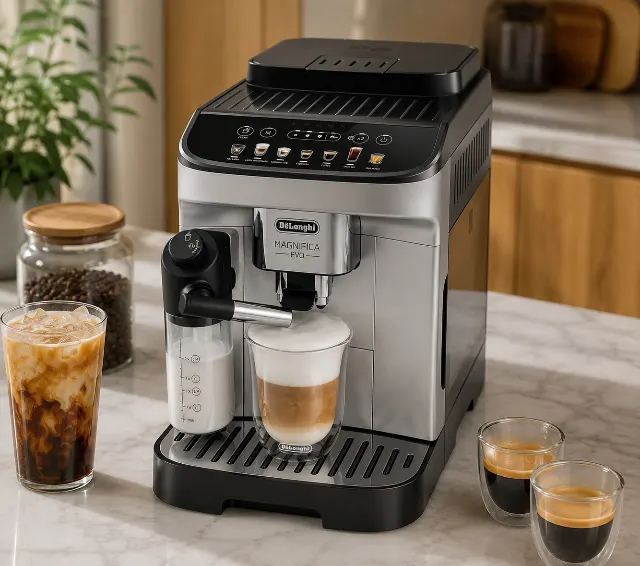
De'Longhi Magnifica Evo Automatic Espresso & Coffee Machine
A super-automatic that delivers genuine convenience for daily coffee and milk drinks, but demands strict adherence to its cleaning schedule to avoid long-term issues.
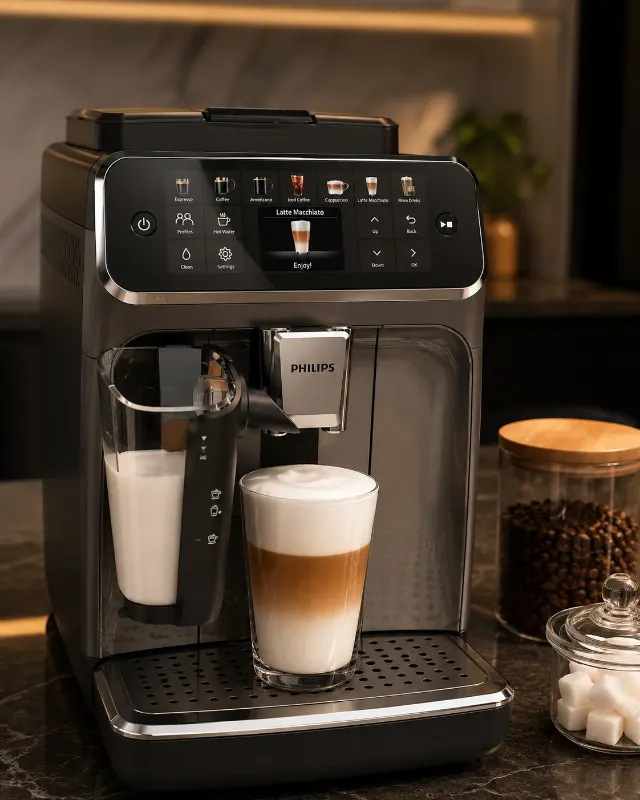
Philips 4400 Series Fully Automatic Espresso Machine
The Philips 4400 LatteGo is a standout super-automatic for its simplicity and consistent espresso, but its milk foam is airy, not true microfoam for latte art.
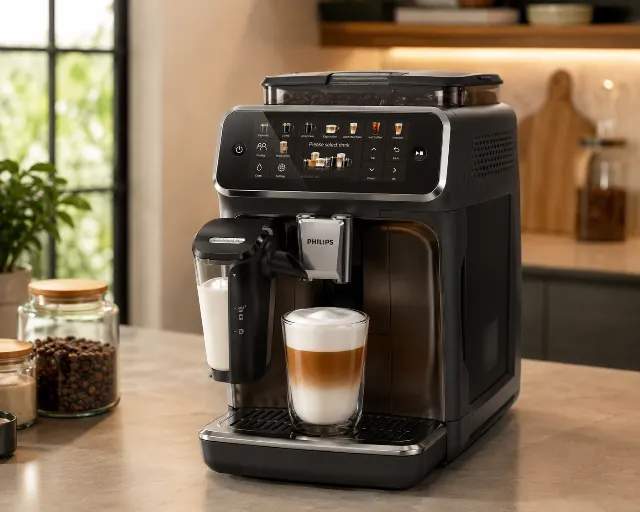
PHILIPS 5500 Series Fully Automatic Espresso
The Philips 5500 LatteGo excels at one-touch milk drinks and user profiles, but its plastic build and limited foam control are real tradeoffs at its price point.