Philips 4400 Series Fully Automatic Espresso Machine Review
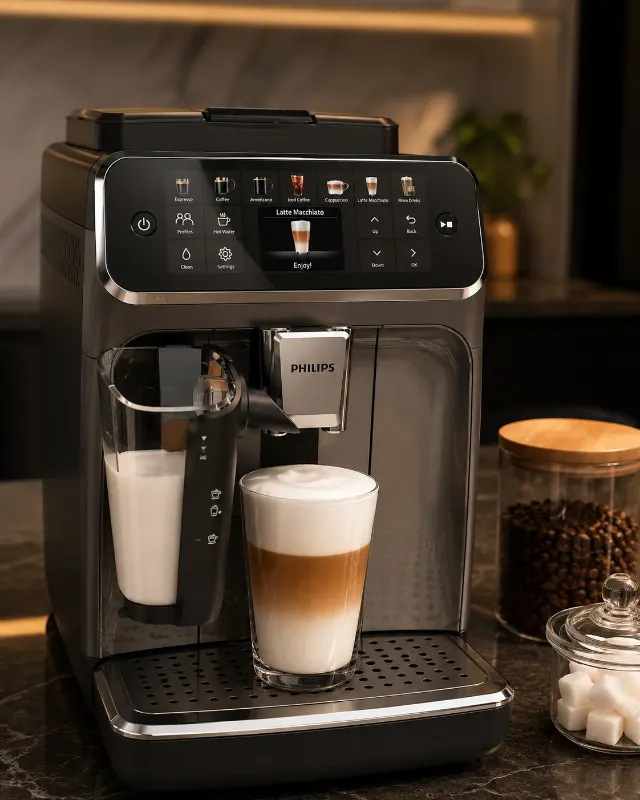
The unexpected edge
The 'Extra Shot' feature is a true ristretto, not just more coffee. It uses less water and a finer grind setting automatically, creating a much more intense, concentrated shot than simply hitting 'Espresso' twice.
How it scores
- Value
- ★★★★★ ★★★★★ 4.0
- Quality
- ★★★★★ ★★★★★ 4.1
- Ease of use
- ★★★★★ ★★★★★ 4.6
- Durability
- ★★★★★ ★★★★★ 4.0
In its favour
- ✓LatteGo system is the easiest to clean in its class; two parts, no tubes, rinses in 15 seconds.
- ✓Intuitive color TFT display allows for easy customization of 12 drink types.
- ✓Ceramic flat burr grinder with 12 settings provides consistent grounds and good durability.
- ✓Removable brew group simplifies weekly maintenance and lubrication.
- ✓AquaClean filter system genuinely reduces descaling frequency to as little as once every 1.5 years.
Trade-offs to weigh
- ✕LatteGo system produces airy, bubbly foam, not the silky microfoam required for latte art.
- ✕Frequent automatic rinse cycles on startup/shutdown fill the drip tray quickly.
- ✕All-plastic construction feels less durable than some metal-bodied competitors.
- ✕Water tank size of 1.8L feels inadequate given the amount of water used for rinsing.
Specifications
| Type | Super-automatic |
|---|---|
| Boiler system | Thermoblock |
| Portafilter size | N/A (internal brew group) |
| Pump pressure | 15 bar (manufacturer claim), regulated to ~9 bar at brew head |
| Steam wand | LatteGo automatic milk frother |
| Built-in grinder | Ceramic flat burr |
| Water tank | 1.8 Liters (60.8 oz) |
| Heat-up time | Approx. 45 seconds |
| Warranty | 2 years |
Your first super-automatic espresso machine is a leap of faith. You're moving past pods, but you aren't ready for the ritual of a semi-automatic machine with a separate grinder. The Philips 4400 Series Fully Automatic Espresso Machine sits squarely in this gap, promising bean-to-cup coffee without the learning curve. It delivers. But it also introduces a tradeoff most first-time buyers don't know to look for: the difference between frothed milk and true microfoam.
The central bargain of the Philips 4400 is this: it exchanges the silky, paint-like milk texture needed for latte art for a cleaning process so simple it feels like a magic trick. The LatteGo system is the star, a two-piece carafe with no tubes that rinses clean in 15 seconds. For anyone who has scrubbed the milk tubes on a competing machine, this is a profound quality-of-life improvement. The espresso it produces is balanced and consistent, far better than any pod system and respectable for its class.
However, the foam it creates is airy and bubbly, perfect for a classic layered cappuccino but incapable of being poured into a rosetta. That is the entire decision in a nutshell. If your goal is a tasty, hot, one-touch latte on a Tuesday morning, the Philips 4400 is one of the most compelling options available. If your dream is to master latte art on the weekend, this machine will frustrate you.
For the right user, this is an excellent appliance that reliably automates a pleasant coffee routine. It is not a stepping stone to a barista hobby.
The basics worth knowing
This is a super-automatic espresso machine. It grinds whole beans, tamps the coffee, brews the espresso, and froths milk, all at the press of a button. Its core design philosophy is minimizing user input and maintenance. The target user is someone who prioritizes speed and convenience over the granular control offered by semi-automatic machines. The color TFT display provides a clear, icon-based menu for its 12 drink recipes, a significant step up from the button-only interfaces on older models.
Inside, a ceramic flat burr grinder offers 12 adjustment steps, and a thermoblock heating system brings it to temperature quickly. The spec sheet claims 15-bar pump pressure, but this is a classic marketing inflation. The machine, like all competent espresso makers, is regulated to extract at the industry-standard 9 bars of pressure. Any more than that creates channeling and bitter espresso. This isn't a flaw; it's just how espresso works. The marketing number is irrelevant to the final taste.
What is the difference between Philips 4300 and 4400? The User Interface.
The Philips 4400 is an iterative update to the 4300, not a revolutionary redesign. The primary distinction is the user interface and a newer feature. The Philips 4400 features a more modern, higher-resolution color TFT display that is more intuitive to navigate than the 4300's slightly dated screen. More importantly, the 4400 introduces SilentBrew technology, which uses acoustic insulation and a lower-speed grinding cycle to reduce noise. While not silent, owner feedback suggests it's a noticeable improvement over the 4300's grinder, especially in the morning. Drink options and the core LatteGo system remain functionally identical.
Construction and longevity
Build Quality: ★★★★☆ (4.1/5)
The machine's chassis is entirely ABS plastic. While it feels solid and well-assembled, it lacks the premium heft of stainless steel-clad competitors like some Gaggia or Jura models in a higher price bracket. The brew group, the heart of the machine, is removable for easy cleaning—a major advantage over Jura machines where it's fixed internally. The ceramic grinder burrs are a highlight, as they run cooler and are more durable than the steel burrs found in many entry-level super-automatics.
Long-term Reliability: ★★★★☆ (4.0/5)
Long-term owner feedback shows the most common failure point after 3-4 years is the brew group drive motor, often signaled by grinding noises or errors. The removable brew group itself is robust, but requires weekly rinsing and monthly re-lubrication with food-safe grease to prevent premature wear. The LatteGo container, despite its simplicity, can develop hairline cracks if dropped. The included AquaClean water filter is critical; using it as directed genuinely extends the time between descaling cycles from monthly to potentially every 18-24 months, which reduces wear on internal components.
Its strongest suit
Convenience is its purpose. From a cold start, it can produce an espresso in about 75 seconds. The LatteGo system is the machine's defining feature and its biggest win. It has no tubes or hidden passages, just two plastic parts that snap together. After making a latte, you unclip it and rinse it under the tap. That’s it. This removes the most dreaded cleaning task associated with automatic machines and makes daily milk drinks a sustainable habit.
The user interface is another strength. The color screen clearly displays options for aroma strength (5 levels), coffee volume, and milk volume, which can be saved to one of two user profiles. This level of customization is a meaningful upgrade over the more basic Philips 3300 Series Fully Automatic Espresso Machine, which relies on a more cryptic button-and-light system. The 'Extra Shot' function is also well-implemented, adding a potent, short shot to any drink without watering it down.
Buy this if: you live in a busy household with multiple coffee drinkers who have different preferences, and the person who cleans the kitchen will revolt if faced with scrubbing milk tubes daily. Its simplicity makes it a better choice than the more complex De'Longhi Magnifica Evo Automatic Espresso & Coffee Machine for those who fear maintenance.
Where it disappoints
The milk foam is the most significant compromise. The LatteGo system is a frother, not a steamer. It injects air into milk to create a light, bubbly foam. It cannot produce the dense, velvety microfoam that a traditional steam wand can, which is essential for latte art and gives drinks a richer mouthfeel. This is a deliberate design tradeoff for cleaning convenience, but it's one many reviews gloss over. The marketing shows perfect lattes; the reality is a cup of nicely separated cappuccino foam.
A recurring complaint in owner reviews is the frequency of the automatic rinse cycles. The machine rinses its spout on startup and shutdown, which fills the drip tray quickly. The 1.8-liter water tank, while average for its class, can feel small when you account for this rinse water. In a two-person household with each having two coffees a day, expect to refill the water tank and empty the drip tray daily. The puck drawer sensor can also be finicky, sometimes demanding to be emptied when it's only half full.
Skip this if: your primary goal is to replicate third-wave coffee shop drinks at home and you enjoy the process of making coffee. The automation here is a barrier, not a feature, for that user. You should be looking at a semi-automatic machine like a Breville Barista Express instead, even if it means a steeper learning curve.
Philips 4400 vs 5500: Drink Options and User Profiles
The core difference between the Philips 4400 and the 5500 is software, not hardware. The 5500 offers more pre-programmed drink recipes (up to 20 vs. the 4400's 12) and supports four user profiles instead of two. The internal mechanics—grinder, brew group, LatteGo—are identical. The 5500 is for a large family or office where four people want to save their exact custom drink settings. For most users, the 12 drinks on the 4400 are more than sufficient, making the price premium for the 5500 hard to justify.
How owners actually use it
After the first month, most users settle into a routine. They find their preferred bean (medium roasts work best; very oily beans will clog the grinder over time), dial in the grind setting (typically between 3 and 5 for good extraction), and save their favorite drink to a profile. The ground coffee bypass chute is a feature that sounds useful but, according to forum discussions, is rarely used. The hassle of spooning in pre-ground coffee defeats the purpose of a bean-to-cup machine for most.
What owners discover after a few months is the importance of maintenance. The weekly brew group rinse is non-negotiable for long-term performance. Many also learn to place a small cup under the spout during the rinse cycles to avoid emptying the main drip tray so often. The best settings for a Philips 4400 espresso often involve using the highest aroma strength, the 'Extra Shot' feature, and a grind setting of 4, which balances body and extraction time well for a wide range of beans.
Can you use oily beans in Philips 4400?
Technically yes, but you shouldn't. Super-automatic machines, including the Philips 4400, use an internal grinder and brew group where coffee oils can build up. Very dark, oily roasts (beans that are shiny) leave a residue that will eventually clog the grinder chute and coat the brew group, leading to performance issues and error codes. Medium roast beans are the ideal choice for longevity and flavor consistency. Using oily beans will dramatically increase the need for deep cleaning with coffee oil remover tablets.
What the years look like
The ongoing cost of ownership is manageable but not zero. The main consumable is the AquaClean water filter, which needs replacement every 3 months or so. Skipping this filter means you must descale the machine with a citric acid solution every 1-2 months, a process that takes about 30 minutes. The long-term cost of the filters is less than the potential cost of repairing scale damage.
The silicone O-rings on the brew group are the first parts to wear out, typically showing signs of drying or cracking after 2-3 years of daily use. They are inexpensive and easy to replace. The ceramic grinder burrs should last for at least 5-7 years in a typical home environment before showing any degradation in grind consistency. A well-maintained Philips 4400, with regular cleaning and lubrication, has a realistic lifespan of 5-8 years before a major component like the thermoblock or main board is likely to fail.
An overlooked detail is that the machine's software tracks filter usage and will eventually lock you out of brewing until you run a descale cycle or install a new, recognized AquaClean filter. There is no permanent override for this, making the consumables a mandatory part of the long-term routine.
Other options on the table
The super-automatic market is crowded. The most direct competitor is the De'Longhi Magnifica Evo Automatic Espresso & Coffee Machine. The Magnifica Evo's traditional steam wand offers superior milk texturing for those who want to practice latte art, but its milk system is far more involved to clean. It's a choice between foam quality and maintenance ease.
Within Philips' own lineup, the choice is about features versus cost. The Philips 3300 Series Fully Automatic Espresso Machine offers a similar LatteGo system and core espresso quality for a lower price, but sacrifices the color display, user profiles, and 'Extra Shot' feature. For a significant budget saving, the Philips 1200 Series Fully Automatic Espresso provides basic espresso and a traditional steam wand, but it's a much more manual experience with no one-touch milk drinks.
An overlooked competitor is the Gaggia Cardona Prestige. It often sits at a slightly higher price point but offers a more robust build, an integrated milk carafe that produces better foam (though it's harder to clean), and more drink variety. For users on the fence about milk quality, the Gaggia is a worthy upgrade.
Philips 4400 vs 3300: Is the Upgrade Worth It?
Yes, for most people. The jump from the Philips 3300 to the 4400 is substantial. The 4400's color TFT display is a massive quality-of-life improvement over the 3300's array of buttons and icons, making it far easier to customize drinks. The addition of two user profiles and the 'Extra Shot' function on the 4400 provides meaningful control that power users will appreciate. While the core espresso and LatteGo systems are similar, the enhanced user experience of the 4400 justifies the difference in cost.
Best suited to
Best for: The household that values convenience above all else. It's for the person who wants a latte, cappuccino, or espresso that is consistently good, available in under two minutes, and requires almost no cleanup. It's a perfect upgrade from a high-end pod machine like a Nespresso Vertuo, offering better coffee and lower long-term cost per cup.
Not ideal for: The coffee hobbyist. Anyone who enjoys the ritual of dialing in a grinder, tamping a portafilter, and steaming their own milk will find the Philips 4400 to be a restrictive black box. It makes the coffee for you, and for this user, that removes the entire point of the exercise.
This machine exists to remove friction from the daily coffee routine. It automates the process to a degree that makes it as easy as a Keurig, but with the superior quality of freshly ground beans. Its success or failure for any given buyer depends entirely on whether they see that automation as a service or a limitation.
In the end
The Philips 4400 Series Fully Automatic Espresso Machine succeeds precisely at what it sets out to do. It makes good, consistent espresso-based drinks with push-button simplicity and features a milk system that is laughably easy to clean. It is a triumph of convenience engineering. Its primary limitation—the airy, cappuccino-style foam—is not a flaw but a conscious design choice that prioritizes ease of maintenance over texture. Owner feedback is mixed on the SilentBrew technology; while quieter than older models, it is by no means silent.
This isn't the machine to buy if you're chasing the perfect god shot or want to pour latte art. It is the machine to buy if you want to replace expensive coffee shop runs with a reliable appliance that delivers a satisfying latte before you rush out the door, without leaving a cleaning project for later.
For maximum convenience with good-enough quality, this is the machine to get.
Is it right for you?
Ideal for the busy household that wants one-touch lattes before the morning commute. It fits well in kitchens where countertop space is moderate and simplicity is valued over manual control. Skip this if you are an aspiring barista who wants to learn the craft of pulling shots and steaming perfect microfoam; the automation that makes it convenient is precisely what will hold you back.
Why it earns a spot
The Philips 4400 LatteGo solves the single biggest friction point of automatic espresso machines: cleaning the milk system. Its two-part, tubeless frother is genuinely effortless to maintain compared to the complex, hose-based systems on many De'Longhi or Gaggia models. For the user who dreads daily disassembly and cleaning, this feature alone justifies its position in the market.
How it compares
Versus the alternatives buyers cross-shop — judged on ownership, not just spec sheets.
| Alternative | Ease of use | Maintenance | Durability | Value | Best for |
|---|---|---|---|---|---|
| Philips 4400 Series Fully Automatic Espresso Machine (this pick) | Color TFT screen with icons is highly intuitive for drink selection and customization. | Easiest in class due to tubeless LatteGo system and removable brew group. | ABS plastic body is durable but lacks a premium feel. Internal mechanics are reliable with care. | Strong price-to-performance for its feature set, especially the simple milk system. | Busy households prioritizing one-touch convenience and minimal cleaning effort. |
| De'Longhi Magnifica Evo Automatic Espresso & Coffee Machine | Button-based interface can be less intuitive than a screen for custom drinks. | Traditional steam wand requires manual cleaning; milk carafe version has tubes to clean. | Similar plastic construction, with a reputation for long-lasting internal components. | Offers better milk texture for a similar price, but demands more cleaning. | Aspiring home baristas who want better foam and don't mind the extra cleanup. |
| Philips 3300 Series Fully Automatic Espresso Machine | Less intuitive button-and-LED interface; harder to customize on the fly. | Identical easy-clean LatteGo system and removable brew group. | Effectively the same build quality and internal components as the 4400. | A more budget-friendly option if you can forego the screen and extra features. | Budget-conscious buyers who want the LatteGo system and don't need user profiles. |
| Philips 1200 Series Fully Automatic Espresso | Most basic interface; requires manual milk frothing with a traditional Panarello wand. | Wand needs wiping/purging after each use; brew group is still removable. | Entry-level build but shares core Philips reliability. | The budget alternative for basic espresso and the ability to control milk texture manually. | Users on a tight budget who want fresh-ground espresso and are willing to froth milk themselves. |
How it scores on what matters
| Product | Espresso shot quality | Milk steaming & microfoam | Consistency shot-to-shot | Ease of dialing in | Heat-up & workflow speed | Maintenance burden | Verdict |
|---|---|---|---|---|---|---|---|
| Philips 4400 Series Fully Automatic Espresso Machine (this pick) | Very good | Fair | Excellent | Very good | Excellent | Excellent | Top marks for convenience, but milk texture is a compromise. |
| De'Longhi Magnifica Evo Automatic Espresso & Coffee Machine | Very good | Good | Very good | Good | Very good | Good | Better milk foam for those willing to clean it. |
| Philips 3300 Series Fully Automatic Espresso Machine | Very good | Fair | Excellent | Good | Excellent | Excellent | Same coffee and cleaning, but a less friendly user interface. |
| Philips 1200 Series Fully Automatic Espresso | Good | Good | Very good | Fair | Very good | Good | Basic but capable; requires the most manual effort. |
Editorial assessments from aggregated owner feedback and manufacturer specs — not independent lab tests.
Frequently asked questions
Is the Philips 4400 coffee machine any good?
Yes, it is a very good machine for its target audience. It excels at producing consistent, quality espresso and milk drinks with maximum convenience, thanks to its intuitive display and the exceptionally easy-to-clean LatteGo milk system. It's a top choice for users who prioritize ease of use over manual control.
What's the difference between Philips 4400 and 5500?
The primary difference lies in software and customization. The Philips 5500 offers more pre-set drink recipes (up to 20 vs. 12) and supports four user profiles instead of the 4400's two. The core brewing hardware, including the grinder and LatteGo system, is identical across both models.
What is the difference between Philips 4300 and 4400?
Upgrading from the 4300 to the 4400 gets you a more refined user experience. The 4400 features a clearer, higher-resolution TFT display and introduces SilentBrew technology for a noticeably quieter grinding process. The fundamental drink quality and LatteGo system performance remain the same.
What is the difference between Philips 3300 and 4400?
Moving to the 4400 from the 3300 is a significant upgrade. The 4400 provides a full-color TFT display versus the 3300's button interface, more drink options, user profiles for saving settings, and the useful 'Extra Shot' function for stronger drinks. It's a more premium and versatile machine.
How do you clean the Philips 4400 LatteGo system?
Cleaning the LatteGo system is its main selling point. It consists of only two parts and has no tubes. After use, you detach the container and rinse both pieces under a running tap for about 15 seconds. They are also top-rack dishwasher safe for a more thorough cleaning.
Can you use oily beans in the Philips 4400?
Using very oily, dark roast beans is not recommended. The oils can build up and clog the internal ceramic grinder and brew group over time, which will impair performance and require intensive cleaning. For best results and machine longevity, stick to medium roast beans that have a dry surface.
People also ask
- Is the Philips 4400 worth it in 2026?
- What's the difference between the Philips 4400 and 5500 series?
- How does the Philips 4400 compare to the 3300 model?
- What kind of maintenance does the Philips 4400 require?
- Is the Philips 4400 worth the money in 2026?
- Can you use oily coffee beans in the Philips 4400?
You might also like
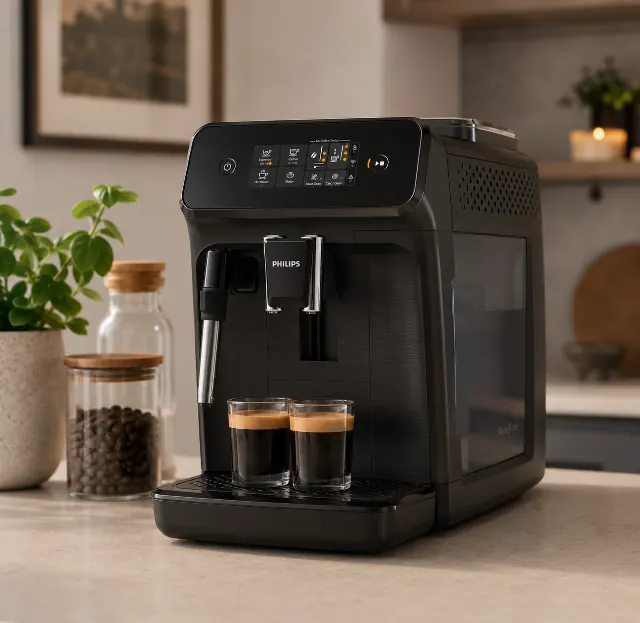
Philips 1200 Series Fully Automatic Espresso
A reliable entry point into one-touch espresso, the Philips 1200 excels at consistency for basic drinks but its manual frother and plastic build create a clear ceiling on its capabilities.
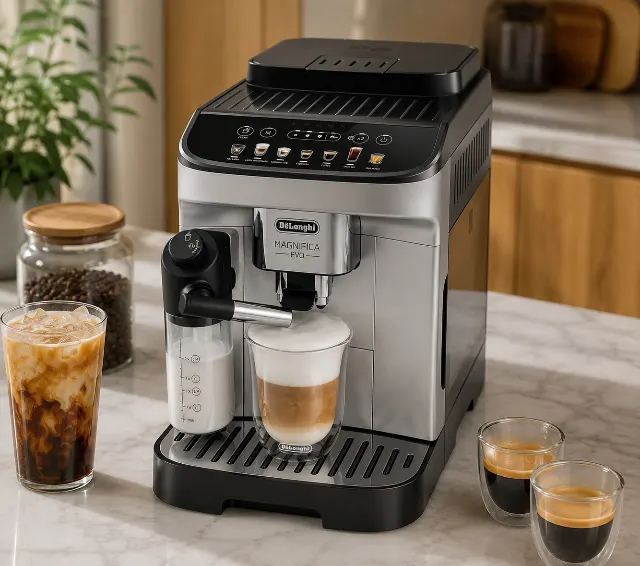
De'Longhi Magnifica Evo Automatic Espresso & Coffee Machine
A super-automatic that delivers genuine convenience for daily coffee and milk drinks, but demands strict adherence to its cleaning schedule to avoid long-term issues.
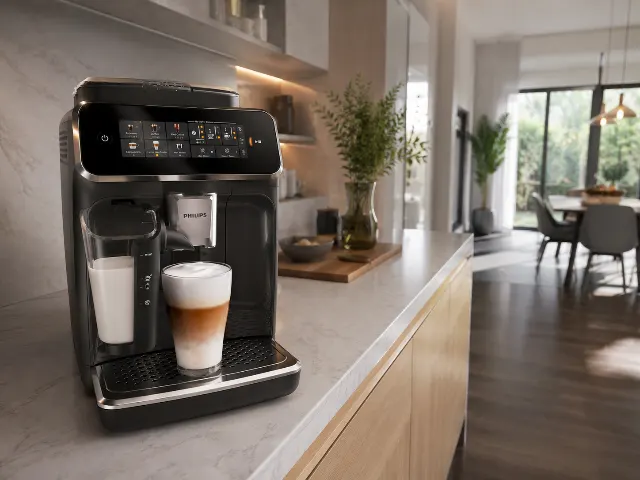
Philips 3300 Series Fully Automatic Espresso Machine
A comprehensive 2026 review of the Philips 3300 Series Fully Automatic Espresso Machine, analyzing its LatteGo system, long-term costs, and espresso quality versus key rivals.