De'Longhi Magnifica Evo Automatic Espresso & Coffee Machine Review
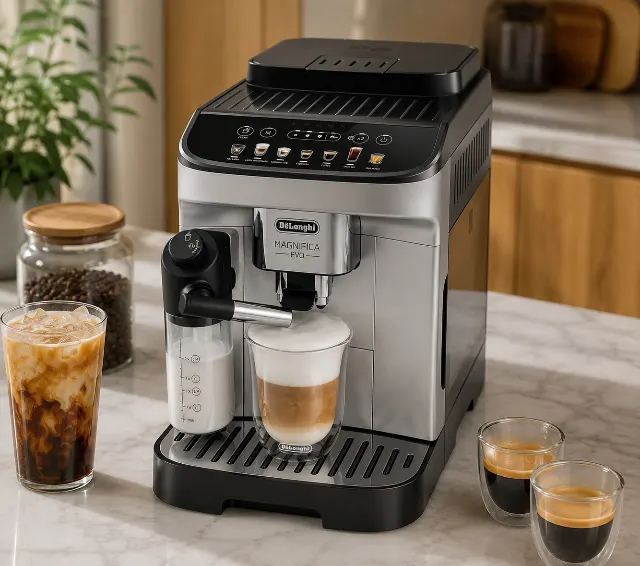
How it compares
Versus the alternatives buyers cross-shop — judged on ownership, not just spec sheets.
| Alternative | Ease of use | Maintenance | Durability | Value | Best for |
|---|---|---|---|---|---|
| De'Longhi Magnifica Evo Automatic Espresso & Coffee Machine (this pick) | Color icon interface is highly intuitive; automatic milk on LatteCrema models. | Requires weekly rinsing of the removable brew unit and a 45-min descale every 2-3 months. | Mostly plastic construction; lifespan is heavily dependent on user maintenance. | Strong price-to-performance ratio for a feature-rich entry-level super-automatic. | Beginners and busy households wanting maximum convenience and drink variety. |
| Philips 1200 Series Fully Automatic Espresso | Simple button interface, but fewer one-touch options than the Evo. | Similar removable brew group, but the Panarello wand requires more cleaning effort. | Comparable plastic build quality and expected lifespan to the Magnifica Evo. | Often positioned as a more budget-friendly alternative with a more basic feature set. | Users on a tighter budget who primarily drink espresso and Americanos and don't need iced coffee. |
How it scores on what matters
| Product | Espresso shot quality | Milk steaming & microfoam | Consistency shot-to-shot | Ease of dialing in | Heat-up & workflow speed | Maintenance burden | Verdict |
|---|---|---|---|---|---|---|---|
| De'Longhi Magnifica Evo Automatic Espresso & Coffee Machine (this pick) | Good | Very good | Excellent | Good | Excellent | Fair | Convenient and consistent, but requires disciplined cleaning. |
| Philips 1200 Series Fully Automatic Espresso | Good | Good | Very good | Good | Very good | Fair | A no-frills workhorse for basic espresso drinks. |
Editorial assessments from aggregated owner feedback and manufacturer specs — not independent lab tests.
What sets it apart
The 'iced coffee' setting isn't a gimmick. It uses a lower-temperature, multi-pulse brew cycle that genuinely reduces ice melt and dilution, a feature absent on many pricier competitors.
The biggest myth about super-automatic espresso machines is that they are maintenance-free appliances. Buyers imagine a magical box that turns beans into lattes with the same effort as a toaster. The reality, after twelve months of ownership, is that these are complex brewing systems that trade the manual labor of a portafilter for the scheduled labor of cleaning cycles, descaling, and infuser rinsing. Ignore that trade, and you buy yourself a very expensive counter ornament inside of three years.
The De'Longhi Magnifica Evo embodies this trade-off perfectly. It is a genuinely capable machine that automates the most tedious parts of making espresso-based drinks. From a cold start, it can produce a surprisingly decent cappuccino or latte before you’ve finished scrolling the morning headlines. The built-in grinder, while loud, is consistent enough for this class of machine, and the one-touch recipes are legitimately useful, especially the dedicated iced coffee function.
But its value proposition hinges entirely on your personality. Are you the kind of person who follows the oil change schedule on your car, or do you wait for the engine to start making funny noises? The De'Longhi Magnifica Evo will relentlessly ask for care—descaling, infuser cleaning, water filter changes. Heed its requests, and it will serve you reliably for years. Ignore them, and you will encounter the litany of problems that fill owner forums: stuck infusers, clogged grinders, and weak, watery coffee.
This is the central bargain of the De'Longhi Magnifica Evo. It offers immense convenience at a mid-range price point, but it demands non-negotiable diligence in return. For the right owner, it's a superb investment in daily routine; for the wrong one, it's a ticking clock.
What this is, in plain terms
This is a bean-to-cup appliance. It is not a hobbyist espresso machine. The De'Longhi Magnifica Evo is designed for one purpose: to remove friction between you and a cup of coffee, espresso, or milk-based drink made from fresh beans. It grinds, tamps, brews, and on some models, froths milk automatically. You press a button. Coffee comes out. The target buyer is someone upgrading from a pod machine or a drip coffee maker who values speed and consistency over the craft and control of traditional espresso.
Its core is a 15-bar pump and a fast-heating thermoblock system. The spec sheet claim of 15 bars is a classic marketing misdirection. The marketing implies more pressure is better, but optimal espresso extraction happens around 9 bars. The extra pressure capability is headroom; the machine self-regulates to the correct pressure. What matters more is the thermoblock, which allows for a heat-up time under 40 seconds, a critical feature for chaotic mornings. You get from power-on to brewing much faster than with a traditional single boiler machine.
The defining design choice is the removable brew group, or 'infuser'. Unlike Jura machines which have a sealed internal brew unit, De'Longhi's can be popped out with one hand and rinsed under a tap. This is both its greatest strength (easy user-led maintenance) and a potential point of failure if neglected. A recurring complaint in owner reviews is the infuser getting stuck, almost always due to a lack of regular cleaning and lubrication.
Magnifica vs. Magnifica Evo: What's the Difference?
The Evo is a significant modernization of the classic Magnifica S. The primary upgrade is the user interface: the Evo uses a color icon display, which is far more intuitive than the cryptic blinking lights of the older Magnifica models. Functionally, the Evo adds new recipes, most notably the 'TrueBrew Over Ice' coffee setting, which is a legitimate improvement for cold coffee drinkers. It also features a sleeker, more contemporary chassis. Internally, the core brewing technology is similar, but the user experience and beverage variety are a full generation ahead on the Magnifica Evo.
Construction and longevity
This is not a machine built to be a family heirloom. Its price-to-performance ratio is achieved through the strategic use of plastics. The chassis, drip tray, and many internal components are ABS plastic. While it feels solid enough, it lacks the reassuring heft of higher-end machines constructed from stainless steel. That said, owner feedback is mixed on whether this truly impacts lifespan. The parts that matter most—the grinder burrs (stainless steel) and the thermoblock—are robust.
Build Quality: ★★★☆☆ (3.8/5)
The fit and finish are adequate for its price tier, but you will notice the plastic construction. The buttons have a satisfying click, but the water tank and drip tray can feel flimsy when handled daily. Overlooked detail: The bean hopper lid does not have a rubber gasket, meaning bean freshness will degrade faster than in hoppers with an airtight seal. This encourages using smaller amounts of beans more frequently, which is better for flavor anyway.
Long-term Reliability: ★★★★☆ (4.1/5)
With proper care, the Magnifica Evo's lifespan is respectable. Long-term owner feedback shows a typical lifespan of 5 to 8 years before a significant component failure. The most common failure points are O-rings in the brew unit drying out (preventable with food-grade silicone grease) and the grinder becoming jammed. The latter is almost always caused by using very oily, dark-roast beans, which the manual explicitly warns against. Sticking to medium roasts dramatically increases the grinder's reliability.
Which De'Longhi Magnifica Evo Model is Right for You?
The Magnifica Evo line includes several model numbers, like the ECAM29043SB and ECAM29084SB, that primarily differ in their milk frothing systems. Models with the manual 'Panarello' steam wand are less expensive but require you to learn how to texture milk yourself. Models equipped with the automatic 'LatteCrema' system feature a carafe that plugs into the machine and delivers frothed milk directly into the cup at the touch of a button. The LatteCrema system produces consistent, if not artisanal, foam and is the better choice for those prioritizing pure convenience. The manual wand offers more control but has a definite learning curve.
How it performs day to day
It excels at speed. The workflow is simple: turn it on, wait 30-40 seconds for the rinse cycle, place your cup, and press a button. The built-in conical burr grinder has 13 settings, which is plenty of range for a super-automatic. Most owners discover after a few weeks that settings 3-5 are the sweet spot for a balanced espresso shot. The machine remembers your last used strength and volume settings for each drink, which is a small but significant quality-of-life feature in a busy household.
Shot quality is good, not great. It cannot compete with a well-dialed-in semi-automatic setup using a high-quality separate grinder. The pucks are often a bit wet, and the crema is more bubbly than the tight, persistent crema of a 9-bar extraction from a 58mm portafilter. But it produces a hot, flavorful, and incredibly consistent shot of espresso that serves as an excellent base for milk drinks. For its target audience, this is more than enough.
Buy this if: you have a busy household with multiple coffee drinkers, your mornings are rushed, and you value speed and consistency above all else. If you're currently spending a fortune on coffee shop lattes, the long-term cost of ownership here is substantially lower. It's a pragmatic upgrade from a pod system.
Honest drawbacks
The noise is significant. The grinder is loud enough to wake a light sleeper in a small apartment. It’s a brief 10-15 second burst of noise, but it is jarring. Second, the water tank (1.8L) and drip tray feel deceptively small because the machine uses a surprising amount of water for its automatic rinse cycles on startup and shutdown. Expect to refill the tank and empty the tray almost daily in a two-person household.
The default espresso temperature is a common complaint. While adjustable through a slightly convoluted button-press sequence, even its highest setting may not satisfy those who prefer their coffee piping hot. What most reviews miss is that this is partly a limitation of thermoblock heaters; they are fast, but they don't have the thermal stability of a heavy brass boiler. Pre-heating your cup with hot water makes a noticeable difference.
Skip this if: you are an aspiring coffee hobbyist who wants to learn the craft of espresso. You will be frustrated by the lack of control. Instead, look at an entry-level semi-automatic machine and a separate grinder. Also, skip this if your kitchen has limited counter space; its depth and height make it a bulky presence.
Common Problems & How to Solve Them
Beyond the oily bean issue, the most frequently cited problem is the 'infuser stuck' error. This happens when coffee grounds build up, preventing the mechanism from returning to its home position. The solution is preventative: remove and rinse the infuser weekly, and apply a thin layer of food-grade silicone lubricant to its tracks every few months. Another issue is weak or watery coffee, which is almost always a sign that either the grinder is set too coarse or the machine is overdue for a descaling cycle. The descaling process itself is a drawback—it's a 45-minute, multi-step affair that can't be rushed.
How it fits your routine
It changes your morning. The first two weeks are spent experimenting with the grinder settings and drink volumes. You'll likely find the default settings produce a slightly weak shot for North American tastes. After dialing in your preferences (a finer grind, a slightly lower volume), the machine fades into the background. It becomes an appliance. You stop thinking about it and just expect coffee on demand.
The feature most likely to go unused is the ground coffee bypass chute. While it seems useful for the occasional decaf, owners consistently report it's finicky and often results in a weak, unsatisfying brew. It's better to commit to one type of bean in the hopper. What owners wish they'd known is the true, non-negotiable frequency of maintenance. The machine's alerts are not suggestions.
Care and running costs
The total cost of ownership is moderate. The main consumables are coffee beans, water filters, and descaling solution. Using the official De'Longhi water filter (replaced every 2 months) and descaler is recommended during the warranty period. Afterward, third-party options can lower the long-term cost. The hidden cost is time: plan for 10 minutes of cleaning per week (infuser rinse, drip tray cleaning) and a 45-minute descaling process every 2-3 months.
Beyond the spec sheet, the real key to longevity is keeping the brew unit clean. Dried coffee oils are the enemy of all super-automatics. A weekly rinse under warm water prevents buildup that can strain the motor and cause premature failure. With this routine, the machine can easily surpass the 5-year mark. Without it, you might be facing repairs after two.
Competitors to consider
The super-automatic market is crowded at this price point. The most direct rival is the Philips 3200 LatteGo. Its key advantage is the milk system—the LatteGo container has no tubes and is brilliantly simple to rinse clean. However, many users find the espresso from the De'Longhi Magnifica Evo to be slightly richer and less watery. The Philips 1200 Series Fully Automatic Espresso is a more budget-oriented alternative, but it lacks the Evo's updated interface and iced coffee feature.
For those willing to spend more, the Gaggia Cadorna Prestige offers a wider variety of drink recipes and user profiles, making it better for households with diverse tastes. An overlooked competitor is a high-end pod machine like a Nespresso Vertuo. While the long-term cost of pods is much higher and the coffee isn't as fresh, the maintenance burden is substantially lower, which might be the right trade-off for some.
Step-by-Step Cleaning & Descaling Guide
Cleaning the Magnifica Evo is a multi-part process. Daily: Empty the drip tray and grounds container. Weekly: Remove the infuser by pressing the two red tabs and rinse it thoroughly under lukewarm water (no soap). Wipe down the area behind the infuser. Monthly (or as needed): Clean the LatteCrema carafe if you have one; it disassembles for easy cleaning. Every 2-3 months (when alerted): Perform the 45-minute descaling cycle using the manufacturer's recommended solution. This involves filling the tank with the solution, running cycles, rinsing, and repeating. The manual provides clear, illustrated instructions that are essential to follow precisely.
Who gets the most out of it
Best for: People who prioritize speed and convenience, households with multiple coffee drinkers with varied tastes (espresso, long coffee, lattes), and anyone looking to switch from expensive daily coffee shop runs to an at-home solution without a steep learning curve.
Not ideal for: Espresso purists, tinkerers who enjoy the process of dialing in a shot, people with very small kitchens, or anyone who finds the idea of a 45-minute descaling routine every few months to be an unbearable chore.
Ultimately, this machine serves the user who wants the result, not the ritual. It automates the craft, delivering a product that is consistently good rather than occasionally perfect. Its value is measured not in the quality of its best possible shot, but in the quality of its average shot on a Tuesday morning when you're 15 minutes late.
Our verdict
The De'Longhi Magnifica Evo is a successful translation of the coffee shop experience into a home appliance for a non-specialist user. It makes good coffee, great milk drinks, and does so with minimal fuss, provided you treat it like the piece of precision equipment it is. The plastic construction is a fair trade for the accessible price point and capable internals.
Its greatest strength is its approachable, all-in-one nature. Its Achilles' heel is the user's own discipline. If you commit to the cleaning schedule, it represents excellent long-term value. If you won't, it's an expensive lesson waiting to be learned.
For a hassle-free entry into bean-to-cup coffee, this is a leading contender.
How it scores
- Value
- ★★★★★ ★★★★★ 4.6
- Quality
- ★★★★★ ★★★★★ 3.8
- Ease of use
- ★★★★★ ★★★★★ 4.1
- Durability
- ★★★★★ ★★★★★ 4.1
What we like
- ✓True one-touch operation for up to 7 drink varieties, including a dedicated iced coffee setting.
- ✓Fast heat-up time of under 40 seconds via the thermoblock system gets you coffee quickly.
- ✓Removable brew unit (infuser) allows for easy weekly rinsing, a key maintenance task users can perform.
- ✓The built-in conical burr grinder with 13 adjustment settings provides meaningful control over shot flavor.
- ✓LatteCrema system (on applicable models) produces consistent and dense milk foam automatically.
Drawbacks
- ✕The ABS plastic body feels less durable and premium than competitors with more metal components.
- ✕Grinder is loud and can wake up a quiet house.
- ✕Water tank and drip tray require frequent attention, often daily, due to rinse cycles.
- ✕The descaling process is mandatory, multi-step, and takes approximately 45 minutes to complete.
Who gets the most from it
Ideal for the busy household that wants to upgrade from pods to fresh beans without learning the craft of espresso. Skip this if you are an espresso hobbyist seeking control over variables like pre-infusion and temperature, or if you refuse to commit to a monthly cleaning routine.
Reasons to pick it
The Magnifica Evo solves the morning rush problem. Where a semi-automatic setup requires 10-15 minutes of active work, the Evo delivers a latte in under two minutes from a cold start. It offers a more integrated and simpler workflow than the <a href="/espresso-machines/philips-1200-series-fully-automatic-espresso/">Philips 1200 Series Fully Automatic Espresso</a>, especially on models with the automatic LatteCrema system.
Specifications
| Type | Super-automatic |
|---|---|
| Boiler system | Single Thermoblock |
| Portafilter size | N/A (Internal Brew Group) |
| Pump pressure | 15 Bar (manufacturer rated) |
| Steam wand | Manual Panarello or Automatic LatteCrema System (model dependent) |
| Built-in grinder | Steel conical burr grinder (13 settings) |
| Water tank | 1.8 L (60 oz) |
| Heat-up time | Approx. 40 seconds |
| Warranty | 2 years standard, extendable to 3 with registration |
Frequently asked questions
Is the De'Longhi Magnifica Evo worth it?
For those seeking bean-to-cup convenience without a premium cost, yes. Its combination of one-touch recipes, including a functional iced coffee setting, and a reliable built-in grinder offers a strong feature set for its price tier, provided you commit to its maintenance schedule.
What is the difference between De'Longhi Magnifica and Evo?
The Magnifica Evo is a newer design featuring a color icon display, more drink presets like iced coffee, and a sleeker chassis. The original Magnifica is a more basic, budget-focused machine with an older button interface and fewer automated options, representing a previous generation of technology.
What is the lifespan of the De'Longhi Magnifica Evo?
Expect a lifespan of 5 to 10 years with diligent care. The key variables are usage frequency and strict adherence to the cleaning and descaling alerts. The removable brew unit, if cleaned weekly, is a major factor in achieving this longevity, as it prevents critical mechanical strain.
What are the common problems with De'Longhi machines?
Frequent issues stem from maintenance neglect. These include the grinder clogging from oily beans, the infuser getting stuck due to lack of rinsing, and weak coffee from a machine needing descaling. Most of these common problems are preventable with the routine care outlined in the manual.
Can the Magnifica Evo make iced coffee?
Yes, its 'TrueBrew Over Ice' recipe is a standout feature. This setting brews a concentrated shot at a slightly lower temperature using multiple pulses of water, which is specifically designed to minimize ice dilution and create a more flavorful cold drink than just pouring hot espresso over ice.
How often should you descale a De'Longhi Magnifica Evo?
The machine automatically prompts you to descale every 2-3 months, based on your water hardness setting and how many drinks you've made. Using the optional De'Longhi water filter can extend this interval, but you should always perform the 45-minute cycle when the machine's alert appears.
People also ask
- Is the De'Longhi Magnifica Evo a good machine?
- What is the difference between the De'Longhi Magnifica and the Magnifica Evo?
- How long does a De'Longhi Magnifica Evo last?
- Can you use oily beans in a De'Longhi Magnifica Evo?
- How loud is the De'Longhi Magnifica Evo grinder?
- Is the Magnifica Evo better than the Philips 3200?
- How often do you have to clean a De'Longhi Magnifica Evo?
- Does the De'Longhi Magnifica Evo make real iced coffee?
- What is the difference between the De'Longhi Magnifica and Magnifica Evo?
- What is the lifespan of a De'Longhi Magnifica Evo?
You might also like
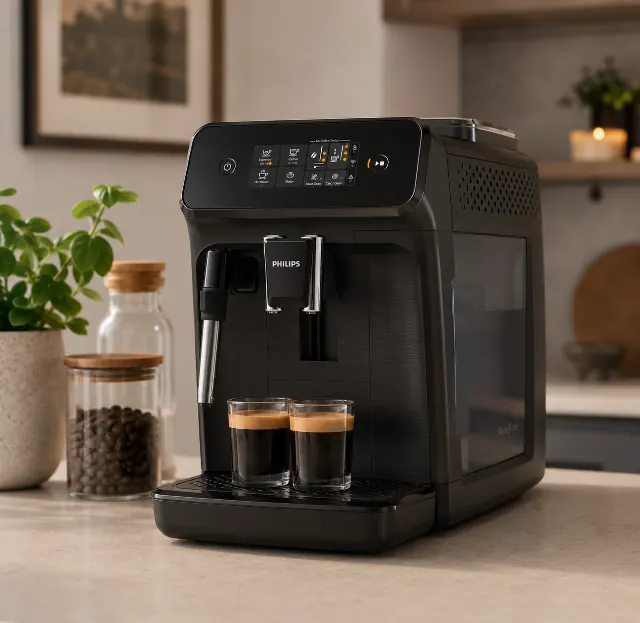
Philips 1200 Series Fully Automatic Espresso
A reliable entry point into one-touch espresso, the Philips 1200 excels at consistency for basic drinks but its manual frother and plastic build create a clear ceiling on its capabilities.