KitchenAid Fully Automatic Espresso Machine KF3 with 15+ Hot and Iced Coffee Options Review
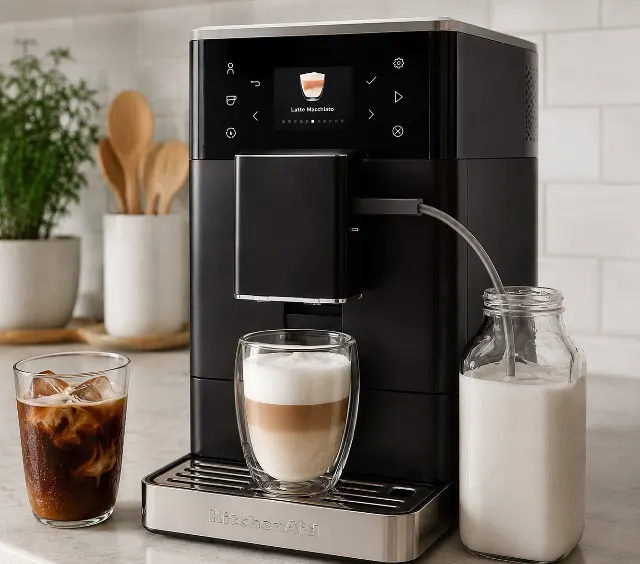
What makes it different
The 'iced coffee' setting isn't just a gimmick; it uses a pulsed, lower-temperature pre-infusion to reduce thermal shock and dilution, a technique not found on most competitors in its price tier.
Where the scores land
- Value
- ★★★★★ ★★★★★ 4.0
- Quality
- ★★★★★ ★★★★★ 4.3
- Ease of use
- ★★★★★ ★★★★★ 4.6
- Durability
- ★★★★★ ★★★★★ 4.2
What we like
- ✓One-touch operation for over 15 recipes, including espresso, cappuccino, and latte.
- ✓Unique iced coffee function uses a lower-temp, concentrated brew to minimize dilution.
- ✓Fast heat-up time of under 45 seconds via its thermoblock system.
- ✓Integrated steel conical burr grinder with 5 settings provides fresh, consistent grounds.
- ✓Removable brew group simplifies weekly cleaning compared to fixed-group machines.
Cons
- ✕Small 1.4L water tank and puck box require frequent refilling and emptying.
- ✕Grinder is noticeably loud during operation compared to premium competitors.
- ✕Automatic milk frother creates stiff foam with limited texture customization for microfoam.
- ✕High-contact components like the drip tray are plastic and can feel less durable over time.
Specifications
| Type | Super-automatic (bean-to-cup) |
|---|---|
| Boiler system | Thermoblock |
| Pump pressure | 15 Bar |
| Steam wand | Automatic pannarello-style frother |
| Built-in grinder | Yes, steel conical burr with 5 settings |
| Water tank | 1.4 Liters (47 oz), removable |
| Heat-up time | Under 45 seconds |
| Warranty | 2-Year Limited Warranty (varies by region) |
What it sets out to do
At its core, the KitchenAid KF3 is an accessibility play. It is engineered for the person who graduates from a Nespresso machine seeking better coffee and lower long-term running costs, but who is intimidated by the complexity of a portafilter and separate grinder. Its entire design philosophy is built around removing user error from the espresso-making process. The built-in steel conical burr grinder, the automated tamping mechanism inside the brew group, and the pre-programmed drink recipes are all there to ensure consistency. KitchenAid's marketing emphasizes the "15+ Hot and Iced Coffee Options." This is the first place to apply some healthy skepticism. Many of these "options" are simply volumetric variations of the same core drinks—a ristretto, an espresso, and a lungo, each available as a single or double. While technically true, it's not the same as 15 fundamentally different brewing methods. The spec sheet implies a vast menu; what owners discover is a solid, but more limited, roster of classics. Still, its key differentiator is the dedicated iced coffee function. This isn't just pouring hot coffee over ice. The machine uses a specific algorithm that delivers a more concentrated 40ml shot using a lower-temperature, pulsed brew cycle to minimize dilution and acidity. For someone whose daily drink is an iced latte, this single feature could justify its position on the countertop over many rivals.How it is built
Build Quality: ★★★★☆ (4.3/5)
KitchenAid built its reputation on the die-cast metal of its stand mixers. The KF3, however, is a product of the modern appliance era: a handsome plastic shell over a metal frame. Available in signature colors like Black Matte and Porcelain White, it looks substantial from a distance. Up close, the reliance on ABS plastic for the drip tray, puck box, and parts of the housing becomes apparent. These are the high-contact parts, and while sturdy enough, they lack the reassuring heft of machines from Jura or higher-end De'Longhi models. The brew group, the heart of the machine, is a durable plastic and metal assembly, which is standard for this category and designed for easy removal and rinsing—a significant maintenance advantage over machines with fixed brew groups.Long-term Reliability: ★★★★☆ (4.1/5)
Long-term owner feedback shows a machine that is generally dependable if meticulously maintained. The most common failure point after two to three years is not the brew group or the pump, but the small sensors that detect the drip tray and puck box. A recurring complaint in owner reviews is the puck box sensor being overly sensitive, demanding to be emptied when it's only half full. The ceramic burr grinder is robust, but can be susceptible to jamming if exceptionally oily beans are used consistently. The hidden cost of ownership is the water filters and descaling solution. The machine's warranty is standard for the category, but claims can be slow, making preventative maintenance critical.KitchenAid KF3 vs KF2: Which to Buy?
The KF2 was KitchenAid's earlier, more stripped-down model. The KitchenAid KF3 is a direct upgrade, adding the iced coffee functionality, a slightly more refined user interface, and a wider range of drink volume customizations. If you find a KF2 at a steep discount, it offers the same core espresso quality. For nearly everyone else, the KF3's added features, particularly the iced coffee mode, make it the more sensible purchase in 2026.Real-world performance
Performance is where the KitchenAid KF3 justifies its existence. It delivers on its core promise of consistent, hands-off espresso. The thermoblock heating system achieves brew-ready temperature in under 45 seconds, a critical metric for busy mornings. Shot-to-shot consistency is very good, a direct result of the automated grinding and tamping process removing human variables. The 15-bar pump is technically overkill—espresso requires only 9 bars of pressure at the group head—but it ensures adequate pressure is always on tap. The resulting espresso has a proper, if not exceptionally thick, crema and a balanced flavor profile when paired with quality medium-roast beans.How the Iced Coffee Feature Actually Works
The iced coffee setting is genuinely effective. By brewing a concentrated shot with less water at a slightly reduced temperature, it avoids the watery, acidic shock of flash-chilling a standard hot espresso shot. The result is a drink that tastes intentional, not like a compromised afterthought. It's a standout feature that the PHILIPS 5500 Series Fully Automatic Espresso, a key competitor, only matches with its LatteGo system on more expensive variants. Milk frothing is the machine's most significant compromise. The automatic pannarello-style wand is designed for convenience, not control. It produces a stiff, cappuccino-style foam reliably but offers little ability to create the silky microfoam required for latte art. You can adjust the foam-to-milk ratio, but the texture itself is largely non-negotiable. This is a common trait in super-automatics, but it's a trade-off prospective buyers must accept. It makes great cappuccinos and lattes, but not café-quality flat whites.Buy this if: you live in a busy household with multiple coffee drinkers who have different tastes (espresso, latte, iced coffee), and no one has the time or interest to learn the craft of a semi-automatic machine. For this user, the KF3 is a better daily driver than a more complex Breville Barista Express.
What owners complain about
No machine is perfect, and theKitchenAid KF3's design choices create predictable annoyances that surface in long-term use. The most frequently cited issue is the small size of the internal drip tray and the used coffee puck container. Both require emptying almost daily in a two-person household, an interruption that detracts from the machine's otherwise seamless convenience. The water tank, at 1.4L, also requires frequent refilling compared to larger machines. The built-in grinder, while convenient, is loud. It's a brief, but jarring, noise, noticeably louder than the grinders in premium machines like the Jura E4 Piano Black Automatic Coffee Machine. Furthermore, while it has 5 adjustment settings, dialing in the perfect grind can be frustrating. What most reviews miss is that adjustments only take effect on the *second* shot after a change, leading many new users to waste beans thinking their changes had no impact. Finally, the reliance on plastic for key touchpoints like the drip tray grille feels like a cost-cutting measure on an otherwise premium-priced appliance. It scratches easily and feels less durable than the stainless steel components found on competitors from De'Longhi. A recurring complaint is that the pucks can be watery and inconsistent, a sign the tamping pressure isn't always perfect, especially with lighter roasts.Skip this if: you are an aspiring coffee hobbyist who wants to perfect latte art and experiment with different brewing variables. The machine's lack of manual control will frustrate you. You would be better served by a semi-automatic machine, or if you want to stay in the automatic world, a machine with a more advanced milk system like the De'Longhi Magnifica Plus Fully Automatic Espresso.
How it fits your routine
Your first week with the KitchenAid KF3 is magical. One button, great coffee. You'll try every drink setting. By week two, you've settled on two or three favorites and the novelty wears off, replaced by an appreciation for the speed. This is also when the maintenance routine begins to assert itself. You'll learn to empty the drip tray and puck box every evening as part of your kitchen cleanup. By month three, you'll have found the perfect grind setting for your favorite beans (likely a '3' for most medium roasts) and you won't touch it again. You'll also have performed your first cleaning cycle for the milk frother. Owners discover after a few months that the auto-purge function for the steam wand is good, but a manual disassembly and soak of the frothing nozzle once a week is necessary to prevent milk residue buildup, a step not heavily emphasized in the manual. After a year, the machine is a trusted appliance. The plastic drip tray might have a few scratches, and you've likely had to troubleshoot a jammed grinder once (usually by vacuuming out the chute). The feature you'll use least is the hot water dispenser; its flow rate is too slow to be practical for a full cup of tea. The machine's rhythm becomes part of your own: fill the water, top up beans, press button, empty tray. It's a predictable and reliable system.Care and running costs
Super-automatic machines trade a learning curve for a maintenance schedule. The KitchenAid KF3 is no exception. Daily tasks include emptying the drip tray and puck box. Weekly, you must remove and rinse the brew group under lukewarm water—no soap. This is a critical step; skipping it leads to coffee oil buildup and, eventually, mold. The automatic milk frother should be disassembled and cleaned weekly as well. Every two to three months, depending on your water hardness setting, the machine will demand a descaling cycle. This is a non-negotiable, 30-minute automated process. Using the included water filter will extend the time between descaling prompts and is a wise investment in the machine's longevity. The long-term cost of ownership is composed entirely of these consumables: water filters and descaling solution. Opting for third-party versions can reduce this cost, but KitchenAid warns it may affect the warranty. What is not on the spec sheet is the lifespan of the brew group's O-rings. These rubber gaskets will perish after 2-3 years of heavy use, leading to leaks. They are inexpensive and user-replaceable, but it's a maintenance task many owners don't anticipate. A well-maintained KF3 should last 5-7 years before requiring a major service, which is typical for this category. The overall cost of ownership is higher than a drip machine but significantly lower than a daily café habit or a pod machine on a per-cup basis.Where rivals do better
Competition is fierce. The KF3 is a strong contender, but specific rivals offer compelling advantages for certain buyers. The De'Longhi Magnifica Evo Next Fully Automatic Espresso often features a more advanced manual steam wand on certain models, giving users who want to learn milk texturing a better tool. Its build can feel less premium, but its core brewing is on par. For those prioritizing espresso purity and build quality above all else, the Jura ENA 4 Full Metropolitan Black is a formidable, though more expensive, alternative. Jura's Pulse Extraction Process (P.E.P.®) is widely regarded as producing a superior espresso shot, and its build quality is in another league. The tradeoff? It's a coffee-only machine with no milk frothing capabilities whatsoever. An often-overlooked detail is the user interface. The Philips 3200 and 5500 series machines use a more intuitive icon-based touchscreen that some users find easier to navigate than the KitchenAid's button-and-screen combination. Owner feedback splits roughly evenly on this; some prefer the tactile certainty of buttons, others the clarity of a modern screen.KitchenAid KF3 vs KF4 and KF8: What are the differences?
The KF4 is an incremental upgrade over the KF3, typically adding a larger color display, a few more drink recipes, and user profiles to save favorite settings. The core brewing mechanism is identical. For most users, the KF4's upgrades do not justify the price increase. The KF8 is a larger, more robust machine aimed at a prosumer or small office environment, featuring a larger water tank, bean hopper, and more durable internal components. It's overkill for the average home.Who should buy it
Best for: People who prioritize speed, convenience, and drink variety above all else. It's for the household that wants push-button lattes, cappuccinos, and legitimate iced coffee without fuss. Its compact, stylish design makes it a strong choice for modern kitchens where counter appeal matters. Not ideal for: The espresso purist, the aspiring barista, or the buyer on a strict budget. Anyone who wants to control brewing variables like temperature, pre-infusion, and pressure, or who dreams of pouring latte art, will be frustrated by this machine's automated nature. Its price point also puts it well above entry-level manual machines that can produce better espresso in skilled hands. This machine occupies a specific niche. It's a significant upgrade in quality and running cost from a Nespresso machine, but a step down in control and peak quality from a proper semi-automatic setup like a Gaggia Classic Pro with a separate grinder. It is for the person who has decided the convenience of automation is worth sacrificing the ceiling of perfection.The takeaway
KitchenAid has built a machine that understands its target user perfectly. The KitchenAid KF3 is for the person who wants to press a single button and receive a very good coffee, consistently, every single time. It succeeds admirably in this mission, and its unique iced coffee feature gives it a legitimate edge over many competitors. The design is a highlight, looking more elegant on the counter than most of its rivals. However, this convenience comes with the non-negotiable pact of regular maintenance and an acceptance of its limitations, particularly the generic milk foam and the small-capacity trays. It is a very good appliance, but not a hobbyist's coffee machine. The value proposition is sound, provided you know exactly what you are buying: an automated convenience that delivers 85% of a café-quality drink with 10% of the effort. For push-button simplicity and excellent iced coffee, the KitchenAid KF3 is a leading contender.Is it right for you?
Ideal for the busy household that wants lattes, Americanos, and iced coffee without a learning curve. Skip this if you are an espresso hobbyist who wants to perfect microfoam or if the thought of daily drip tray emptying is a deal-breaker.
What makes it worth it
The KF3 solves the 'I want a fancy coffee but have 60 seconds' problem better than most. While a semi-automatic like a Breville Barista Express offers more control, it demands skill. The KF3 delivers consistent, good-enough results instantly, a gap many super-automatics fail to fill elegantly.
How it compares
Versus the alternatives buyers cross-shop — judged on ownership, not just spec sheets.
| Alternative | Ease of use | Maintenance | Durability | Value | Best for |
|---|---|---|---|---|---|
| KitchenAid Fully Automatic Espresso Machine KF3 with 15+ Hot and Iced Coffee Options (this pick) | Extremely simple one-touch interface; minimal learning curve. | Requires daily tray emptying and weekly brew group rinsing. | Plastic shell and drip tray over a metal frame; good but not premium. | Good price-to-performance for its feature set, especially the iced coffee mode. | Busy households valuing convenience and drink variety in a stylish package. |
| De'Longhi Magnifica Evo Next Fully Automatic Espresso | Simple color icon interface, very beginner-friendly. | Similar weekly brew group rinse; LatteCrema system requires regular cleaning. | Primarily plastic construction, feels utilitarian. | Often a budget-friendlier alternative with comparable core performance. | Buyers focused on value who want a reliable automatic latte system. |
| Jura E4 Piano Black Automatic Coffee Machine | Minimalist display; focused on black coffee drinks only. | Fixed brew group uses automated cleaning cycles; less hands-on but requires tablets. | Exceptional build quality, feels substantial and built to last. | Premium price for superior espresso shots and longevity; poor value if you want milk drinks. | Espresso and Americano purists who prioritize shot quality and build over all else. |
| PHILIPS 5500 Series Fully Automatic Espresso | Intuitive color TFT display with user profiles is a highlight. | LatteGo milk system is exceptionally easy to clean; brew group requires weekly rinse. | Good plastic build, feels well-assembled for its category. | Competitive; the LatteGo system's ease of cleaning adds significant long-term value. | Users who make milk drinks daily and hate cleaning complex frothing systems. |
| De'Longhi Magnifica Plus Fully Automatic Espresso | Simple button interface, straightforward operation. | Standard De'Longhi maintenance: removable brew group, descaling alerts. | Robust and proven platform, though heavy on plastic. | Excellent value, often providing core features of pricier models. | Budget-conscious buyers seeking a proven, reliable automatic machine. |
How it scores on what matters
| Product | Espresso shot quality | Milk steaming & microfoam | Consistency shot-to-shot | Ease of dialing in | Heat-up & workflow speed | Maintenance burden | Verdict |
|---|---|---|---|---|---|---|---|
| KitchenAid Fully Automatic Espresso Machine KF3 with 15+ Hot and Iced Coffee Options (this pick) | Very good | Fair | Excellent | Good | Excellent | Good | Convenient and consistent, but milk texture is a compromise. |
| De'Longhi Magnifica Evo Next Fully Automatic Espresso | Very good | Good | Very good | Good | Very good | Good | A solid, value-focused performer across the board. |
| Jura E4 Piano Black Automatic Coffee Machine | Excellent | Weak | Excellent | Very good | Excellent | Very good | Unmatched espresso quality; zero milk functionality by design. |
| PHILIPS 5500 Series Fully Automatic Espresso | Very good | Good | Very good | Very good | Excellent | Excellent | Great all-rounder with the easiest milk system to clean. |
| De'Longhi Magnifica Plus Fully Automatic Espresso | Good | Good | Very good | Good | Very good | Good | Proven technology that delivers reliable results for less. |
Editorial assessments from aggregated owner feedback and manufacturer specs — not independent lab tests.
Frequently asked questions
Is the KitchenAid fully automatic espresso machine good?
Yes, the KitchenAid KF3 is a very good machine for users prioritizing convenience and drink variety. Its one-touch operation and unique iced coffee feature are standout strengths, though it trades manual control and milk texture customization for that simplicity, a common trait for super-automatics.
What is the difference between KitchenAid KF3 and KF4?
The primary difference is the interface and customization. The KF4 adds a larger color display and user profiles to save drink preferences. Since the core grinder and brew group are identical, the KF3 offers better price-to-performance for anyone who doesn't need to save multiple user profiles.
Is the KitchenAid KF8 any good?
KitchenAid's KF8 model is a larger, more robust machine designed for higher-volume use, like a small office. It features a bigger water tank and bean hopper. While its performance is excellent, it is overkill and not a cost-effective choice for the typical home kitchen compared to the KF3.
How does the iced coffee feature work on the KitchenAid KF3?
Its iced coffee function brews a concentrated, 40ml espresso shot at a slightly lower temperature using a pulsed infusion. This specialized method is designed to chill rapidly over ice without the excessive dilution or acidity that occurs when pouring a standard hot espresso shot over ice.
Is KitchenAid Nespresso discontinued?
Correct, KitchenAid has stopped producing its line of Nespresso-compatible machines. The company has pivoted its coffee strategy to focus on bean-to-cup automatic machines like the KF3, which offer more variety and use fresh, whole coffee beans rather than the Nespresso pod ecosystem.
How often do you need to descale the KitchenAid KF3?
An automatic alert will prompt you to descale based on usage and your programmed water hardness level. For a typical user with moderately hard water, this occurs every 2-3 months. Using the optional in-tank water filter can noticeably extend the interval between required descaling cycles.
People also ask
- Is the KitchenAid KF3 a good espresso machine?
- What's the difference between the KitchenAid KF3 and KF4 models?
- How does the KitchenAid KF3 iced coffee feature work?
- Is KitchenAid discontinuing its Nespresso machines?
- How often should I descale my KitchenAid KF3?
- What is the difference between the KitchenAid KF3 and KF8?
- Can you use oily coffee beans in the KitchenAid KF3?
- Is the KitchenAid KF3 worth it for beginners?
- What is the difference between the KitchenAid KF3 and KF4?
- Is the KitchenAid KF8 worth the upgrade over the KF3?
- How do you clean the KitchenAid KF3 automatic espresso machine?
You might also like
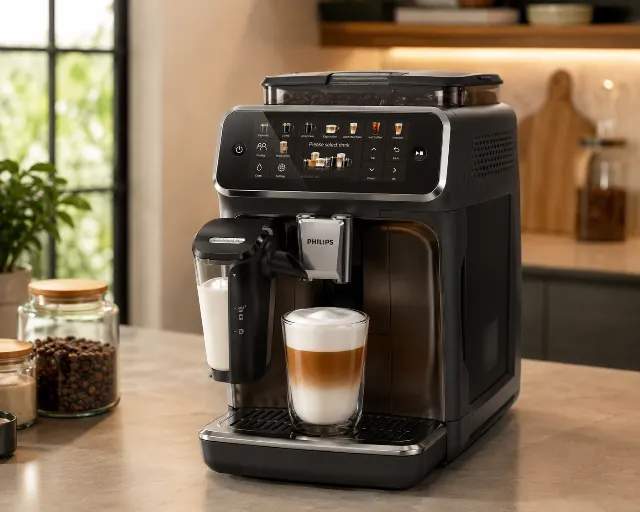
PHILIPS 5500 Series Fully Automatic Espresso
The Philips 5500 LatteGo excels at one-touch milk drinks and user profiles, but its plastic build and limited foam control are real tradeoffs at its price point.
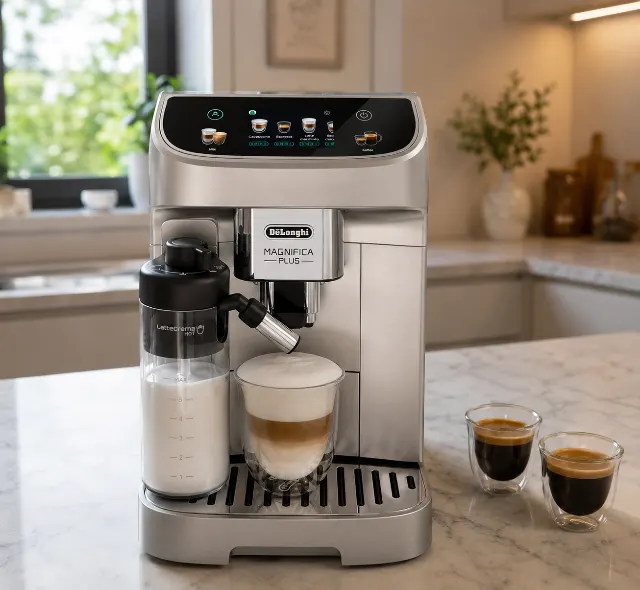
De'Longhi Magnifica Plus Fully Automatic Espresso
The De'Longhi Magnifica Plus delivers an impressive array of one-touch milk drinks with its reliable LatteCrema system, but its plastic-heavy build and noisy operation are notable tradeoffs for the convenience.
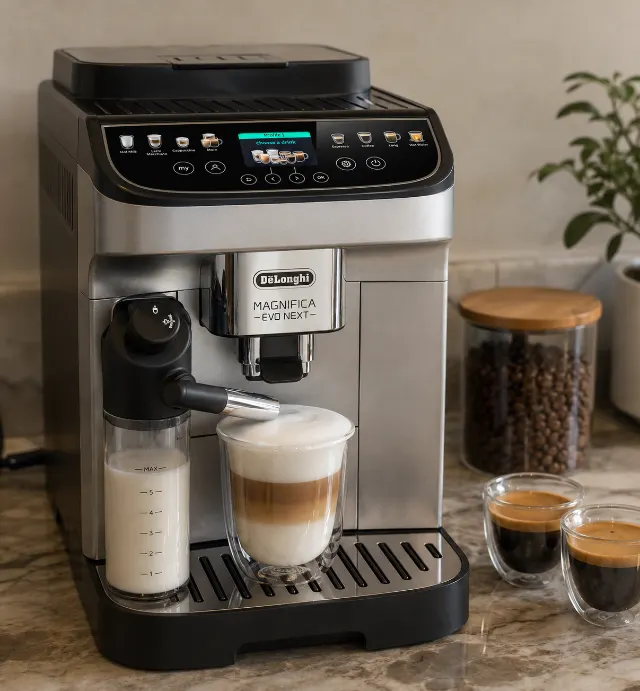
De'Longhi Magnifica Evo Next Fully Automatic Espresso
A deep dive into the De'Longhi Magnifica Evo Next's long-term value, analyzing its one-touch iced coffee feature against its significant maintenance demands.
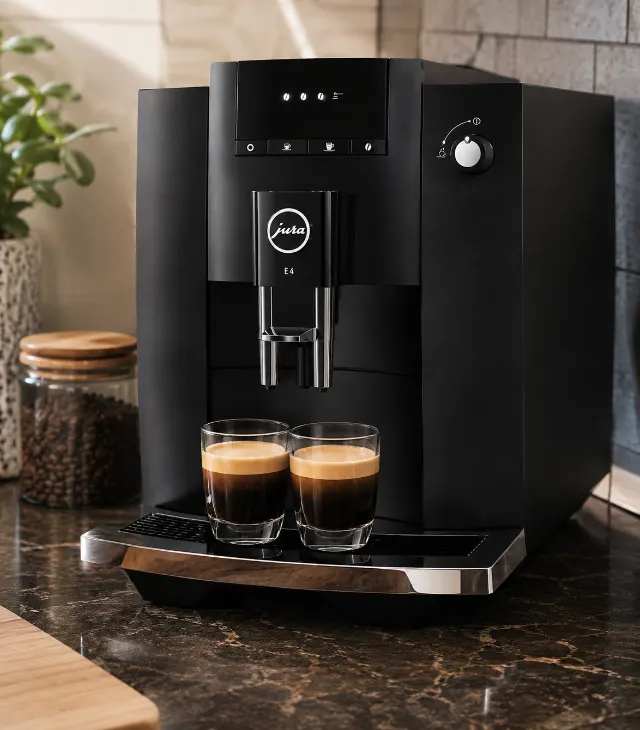
Jura E4 Piano Black Automatic Coffee Machine
The Jura E4 Piano Black is a specialist for black coffee purists, delivering exceptional espresso and Americano-style drinks with its P.E.P. brewing system. It's a poor choice for anyone who wants milk-based drinks without buying a separate frother.
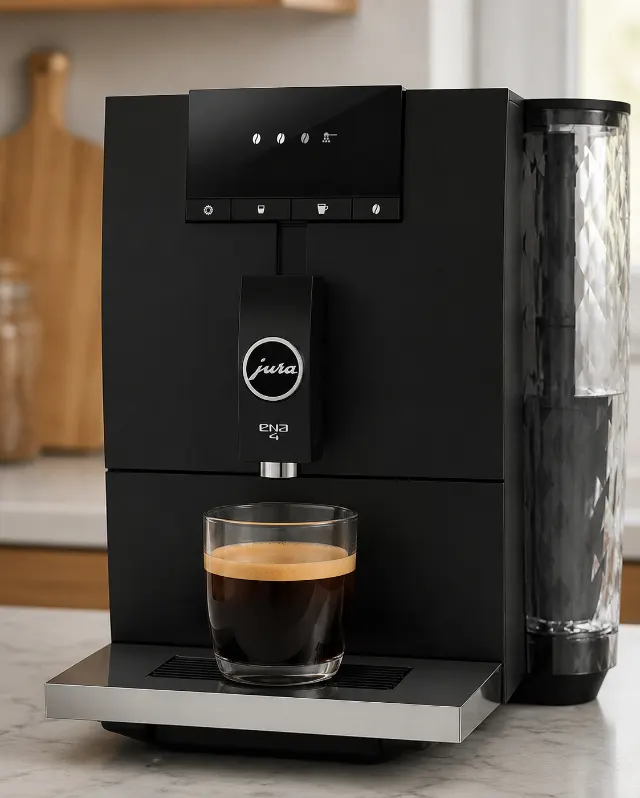
Jura ENA 4 Full Metropolitan Black
The Jura ENA 4 delivers exceptional black coffee with Swiss precision but its black-coffee-only design and proprietary consumables create a specific, narrow appeal.