Jura ENA 4 Full Metropolitan Black Review
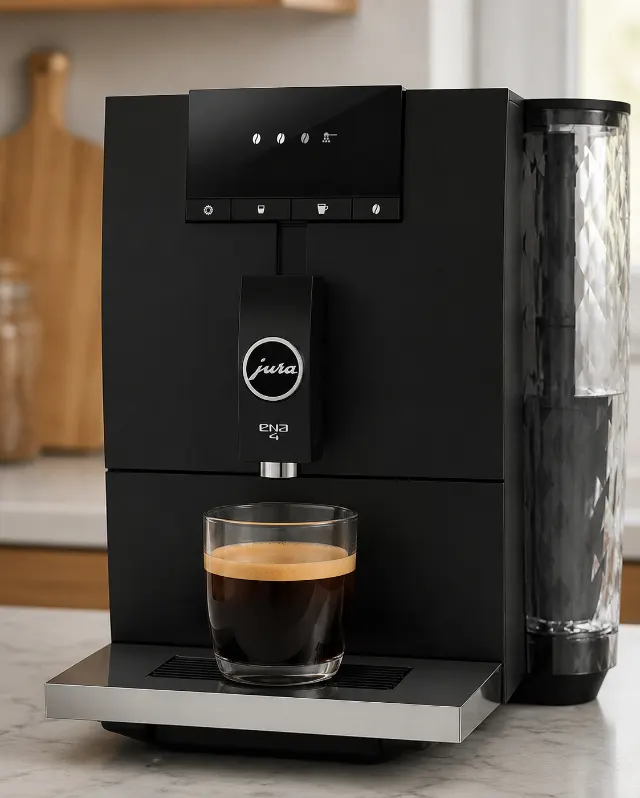
The unexpected edge
The Pulse Extraction Process (P.E.P.) isn't just marketing; it noticeably improves crema and body on short extractions (espresso, ristretto) by pulsing water, but has a negligible effect on the 'Coffee' setting.
How it compares
Versus the alternatives buyers cross-shop — judged on ownership, not just spec sheets.
| Alternative | Ease of use | Maintenance | Durability | Value | Best for |
|---|---|---|---|---|---|
| Jura ENA 4 Full Metropolitan Black (this pick) | Extremely simple symbol-based operation; set-and-forget. | Automated cycles, but requires costly proprietary filters/tablets. Fixed brew group. | High-quality polymer build; Swiss assembly. Expected 9-11 year lifespan with care. | High initial cost and ongoing expenses for a black-coffee-only machine. | The space-constrained coffee purist who values convenience and consistency above all. |
| Jura E6 Platinum | TFT color display is clear; more drink options add slight complexity. | Identical Jura system with proprietary consumables and fixed brew group. | Similar high-quality build to the ENA 4, with a slightly larger chassis. | Higher initial cost, but adds milk frothing, making it a better all-rounder. | The Jura enthusiast who wants the brand's quality with the ability to make cappuccinos. |
| De'Longhi Magnifica S | Dial and button interface is functional but less sleek. Manual steam wand requires practice. | Removable brew group allows for easy manual rinsing. Lower-cost generic descalers can be used. | More plastic feel, but known to be a workhorse. Long-term reliability is well-documented. | Lower initial and long-term costs, offering more features for the money. | The budget-conscious buyer wanting a versatile super-automatic and who prefers a removable brew group. |
| Breville Barista Express | Requires significant user skill to dial in grind, dose, and tamp. Steep learning curve. | Regular backflushing and descaling required. More hands-on than a super-automatic. | Stainless steel construction is robust. Portafilter and steam wand are built to last. | Excellent price-to-performance for those willing to learn the craft of espresso. | The aspiring home barista who wants full control and top-tier milk foam. |
How it scores on what matters
| Product | Espresso shot quality | Milk steaming & microfoam | Consistency shot-to-shot | Ease of dialing in | Heat-up & workflow speed | Maintenance burden | Verdict |
|---|---|---|---|---|---|---|---|
| Jura ENA 4 Full Metropolitan Black (this pick) | Excellent | Weak | Excellent | Very good | Excellent | Fair | Top-tier black coffee, but maintenance costs are high. |
| Jura E6 Platinum | Excellent | Good | Excellent | Very good | Very good | Fair | Same great coffee, adds decent automatic milk frothing. |
| De'Longhi Magnifica S | Good | Fair | Good | Good | Good | Very good | A versatile workhorse with lower running costs. |
| Breville Barista Express | Excellent | Excellent | Fair | Weak | Fair | Good | Highest potential quality but requires significant user skill. |
Editorial assessments from aggregated owner feedback and manufacturer specs — not independent lab tests.
How it scores
- Value
- ★★★★★ ★★★★★ 3.8
- Quality
- ★★★★★ ★★★★★ 4.3
- Ease of use
- ★★★★★ ★★★★★ 4.5
- Durability
- ★★★★★ ★★★★★ 4.1
Where it wins
- ✓Exceptional espresso and coffee quality for an automatic, thanks to the Pulse Extraction Process (P.E.P.).
- ✓Extremely compact footprint (27.1 cm wide) fits in small kitchens where larger machines won't.
- ✓Fast heat-up time of under 60 seconds from cold start via the thermoblock system.
- ✓Highly consistent shot-to-shot quality with minimal user input required.
- ✓Simple, symbol-based interface is intuitive for non-technical users.
The downsides
- ✕No built-in milk frother or steam wand; cannot make lattes or cappuccinos.
- ✕Fixed, non-removable brew group prevents manual deep cleaning.
- ✕High long-term cost of ownership due to mandatory proprietary CLARIS filters and cleaning tablets.
- ✕Small 1.1L water tank and 125g bean hopper require frequent refilling.
Super-automatic espresso machines promise a single button press between you and a perfect coffee. The Jura ENA 4 Full Metropolitan black comes closer to delivering on that promise than most, but only if your definition of “perfect coffee” is exclusively black. This is not an all-in-one café replacement. It is a highly specialized appliance engineered to do one thing—transform whole beans into espresso or coffee—with Swiss precision and minimal user intervention.
Its core tradeoff is clear from the moment you see it: it sacrifices all milk-based drink capability for a compact form factor and simplified operation. Many buyers see the lack of a steam wand and assume it's a budget model. This is a fundamental misunderstanding of Jura's product strategy. The Jura ENA 4 Full Metropolitan black is priced in a tier where milk frothing is standard. Its omission is a deliberate design choice aimed at a purist who would rather have a superior grinder and brew unit than a mediocre, space-consuming milk system they will never use.
This review evaluates the ENA 4 not against do-it-all machines, but on its own terms: as a dedicated instrument for black coffee. We will examine the total cost of ownership, the reality of its maintenance cycle after one year, and where its technology delivers tangible benefits versus where it's just marketing. For the right person, this is a definitive solution. For the wrong person, it is a frustratingly limited and expensive appliance.
The core of it
At its center, the Jura ENA 4 is a compact, bean-to-cup machine built around two key Jura technologies: the Aroma G3 grinder and the Pulse Extraction Process (P.E.P.). The grinder is a multi-level conical burr unit designed for speed and aroma preservation. P.E.P. is a brewing method that pulses hot water through the ground coffee at short intervals, which Jura claims optimizes extraction time for short specialties like espresso. The result is a machine that produces a noticeably richer, more aromatic espresso than many competitors in its price bracket. It operates using a 15-bar pump, though optimal espresso extraction happens around 9 bars, a pressure it maintains consistently.
Jura's marketing frames this as simplicity. That's true, but it's a very expensive simplicity. The user interface consists of symbols, not text, and offers just three coffee strength settings and the ability to adjust volume. This is where we find our first disagreement with the official narrative. While simple, the three strength settings are a coarse level of control. Long-term owner feedback shows many users wish for at least five levels to better dial in different beans, a feature available on the step-up Jura E6 Platinum. The ENA 4 is less for the coffee hobbyist and more for the coffee drinker who wants to set their preference once and never touch it again.
Coffee Quality: Espresso, Coffee, and Americano
The espresso is where the ENA 4 justifies its existence. Thanks to the P.E.P. technology, shots are characterized by a thick, stable crema and a well-balanced body. The machine uses a thermoblock heating system, allowing for a quick heat-up time of under 60 seconds from a cold start. The standard "Coffee" setting produces a result akin to a long black, bypassing the P.E.P. for a more straightforward infusion, delivering a clean cup that avoids the stewed, bitter notes common in less sophisticated automatics. There is no dedicated Americano function, which requires adding hot water separately—a notable omission.
Jura ENA 4 Grinder Adjustment and Settings
The Aroma G3 grinder has seven adjustment settings, accessible via a dial under a cover near the bean hopper. This is a crucial, yet often overlooked, feature. The factory setting is typically in the middle, but to get the best espresso, users should adjust it finer (a lower number) while the grinder is running. A common mistake is adjusting it while stationary, which can damage the burrs. For a rich espresso from medium roast beans, a setting of 3 or 4 is a good starting point. Be warned: this is not a machine for lovers of dark, oily beans. The grinder's geometry can struggle with them, leading to clogs. This is a frequently cited issue in owner forums and a critical piece of information missing from most marketing materials.
Fit, finish and durability
Jura machines are assembled in Switzerland, and the build quality reflects this. The Metropolitan Black finish is a high-quality polymer that resists fingerprints well, and the panel fit is precise. The compact 27.1 x 32.3 x 44.5 cm dimensions make it one of the narrowest premium automatics available, a key selling point for those with limited counter space. The water tank holds 1.1 liters, and the bean hopper holds 125 grams—both are on the small side, necessitating frequent refills in a multi-user household.
Build Quality: ★★★★☆ (4.3/5)
The chassis is robust, and the moving parts feel solid. The drip tray and grounds container click into place satisfyingly. The main point of deduction is the extensive use of plastic. While high-grade, it lacks the premium feel of the stainless steel found on semi-automatic machines like the Breville Oracle Dual Boiler Espresso, which occupies a higher price tier but sets a benchmark for materials.
Long-term Reliability: ★★★★☆ (4.1/5)
The life expectancy of a well-maintained Jura ENA 4 is approximately 9-11 years or 10,000 coffee preparations. The key phrase is "well-maintained." The brew group is fixed and not user-removable, a major point of contention for some. Jura's position is that its automated cleaning cycles are sufficient. Our second disagreement is with this premise. While the cleaning cycles are effective, the inability to manually access and deep-clean the brew group means you are entirely dependent on Jura's system. A recurring complaint in owner reviews is the eventual need for a costly factory service (often outside the 2-year warranty) to address buildup that cleaning cycles couldn't resolve, sometimes manifesting as an Error 8 code. This is a significant factor in the machine's long-term cost of ownership.
Its strongest suit
The ENA 4's primary strength is its shot consistency. From the first cup of the day to the fourth, the temperature, volume, and quality are remarkably stable. This is due to a well-calibrated thermoblock and a software-controlled pre-infusion cycle that wets the coffee puck before applying full pressure. For a busy professional who needs a reliable, high-quality coffee before leaving for work, without any of the ritual or fuss of a semi-automatic machine, this consistency is the core value proposition. It removes the variables that plague manual espresso making.
It is also exceptionally easy for beginners. There is no learning curve for dialing in shots in the traditional sense. You select a strength, select a volume, and press a button. The machine handles the grind, tamp, and extraction. This simplicity is its greatest asset and, for some, its greatest weakness. The machine's intelligent water system, which uses RFID chips in the CLARIS Smart filters, automates filter detection and descaling alerts, further reducing the user's mental load. The process is almost as simple as a pod machine, but with the superior quality of freshly ground beans.
Buy this if: You live in an apartment with a small kitchen, drink exclusively black coffee or espresso, and place the highest value on convenience and repeatable quality. You see coffee as a utility to be perfected and automated, not a hobby to be explored. You would otherwise be considering a high-end Nespresso machine but want to use your own fresh beans. For you, the Jura E4 Piano Black Automatic Coffee Machine offers a similar experience with a slightly larger footprint and updated design.
What owners complain about
The most significant and universal limitation is the lack of any milk frothing capability. It cannot make lattes or cappuccinos. This is not a flaw, but a design choice that buyers must be fully aware of. You can purchase a separate milk frother, but that defeats the purpose of an all-in-one, space-saving device.
Another major point of friction is the proprietary maintenance ecosystem. The Jura ENA 4 is designed to work with CLARIS Smart water filters. Using them eliminates the need for most descaling cycles, but they are a considerable recurring expense. The machine will function without them, but will then require regular descaling with Jura's cleaning tablets, another proprietary consumable. This is a critical factor in the total cost of ownership that is often downplayed. Hidden cost: Over five years, the cost of filters and cleaning tablets can easily add up to a significant fraction of the machine's initial purchase price, a much higher running cost than semi-automatic machines that use generic cleaning products.
Finally, the fixed brew group remains a point of concern for long-term owners. While competitors like De'Longhi and Gaggia feature removable brew groups that can be rinsed under a tap, the ENA 4's is sealed. You must trust the machine's internal cleaning cycle. While generally effective, forum discussions point to instances of mold or buildup discovered only when a machine is sent for service, which is unsettling for many users.
Skip this if: You or anyone in your household drinks milk-based coffee beverages. The cost of adding a separate, quality frother pushes the total investment into the territory of more capable all-in-one machines like the Jura E8 Piano Black. Also, skip it if you enjoy tinkering with extraction variables or prefer using very dark, oily coffee beans, as the grinder is not optimized for them.
Living with it
The first week is about discovery. You find your preferred strength and volume settings. You learn that the machine performs a quick rinse cycle on startup and shutdown, which means keeping a cup under the spout or emptying the drip tray more often than you'd expect. The drip tray is small and will need emptying every 6-8 coffees.
By month one, the routine is set. The machine is part of the morning workflow, as automatic as a toaster. What owners discover after six months is the true cadence of maintenance. The "change filter" notification will appear after approximately 50 liters of water, which can be as frequent as every 6-8 weeks in a two-person household. The "clean machine" prompt appears after 180 preparations. These are not suggestions; the machine will eventually lock you out until the cycle is run. The cleaning cycle is automated and takes about 20 minutes. Descaling, if you don't use the filter, is a 45-minute process. This enforced maintenance is good for the machine's longevity but can be an inconvenient interruption.
Jura ENA 4 vs. Key Competitors (ENA 8, De'Longhi)
Compared to its sibling, the Jura ENA 8, the ENA 4 is stripped down. The ENA 8 adds milk frothing, a color touchscreen display, and more drink specialities, but it's built on a similar compact chassis and commands a much higher price. The ENA 4 is the better choice for the black coffee purist. Against the popular De'Longhi Magnifica series, the ENA 4 generally produces a superior espresso shot due to the P.E.P. system. However, the Magnifica offers a manual steam wand and a removable brew group for a lower initial investment, making it a more versatile, if less specialized, option. The choice depends entirely on whether milk capability is a requirement.
Upkeep over time
The long-term cost of ownership for the ENA 4 is higher than for many semi-automatic machines. The primary drivers are the CLARIS Smart filters and the Jura-branded cleaning tablets. Bypassing the filters to save money is possible, but it shifts the burden to more frequent descaling, which itself requires proprietary tablets. There is no way to escape the consumable ecosystem.
Overlooked detail: The water hardness setting is critical. Out of the box, it's set to a default level. Users must use the included test strip to measure their tap water hardness and program it into the machine. An incorrect setting will lead to either premature descaling notifications or, worse, insufficient descaling and potential damage to the thermoblock from scale buildup. This simple, one-time setup step is frequently skipped and is a root cause of many reported long-term issues.
The grinder burrs are hardened steel and should last for the life of the machine under normal use with non-oily beans. The most likely component to fail first, based on aggregated service data, is a seal or O-ring within the internal brewing mechanism, a repair that requires sending the unit to a service center. This is where the 2-year warranty provides some protection, but failures in year three are not uncommon.
Competitors to consider
For those committed to the Jura ecosystem but wanting more, the Jura E6 Platinum is the logical next step. It adds milk frothing capabilities and more customization options without a massive increase in footprint. If you want to stay in the super-automatic category but require a removable brew group and a lower price point, the Gaggia Cadorna Prestige is a strong contender, offering a wide variety of drinks and more user control.
A fascinating alternative for the user who values shot quality above all else is to abandon super-automatics entirely. For a similar total investment, one could pair a standalone grinder like a Baratza Encore ESP with a semi-automatic machine like a Breville Bambino Plus. This combination requires more skill and effort but offers a significantly higher ceiling for espresso quality and full control over every variable, including proper milk steaming. It's a completely different philosophy of coffee making.
Finally, for those looking at the ENA 4's aesthetics, the Jura ENA 4 Full Nordic White Automatic Coffee Machine offers the exact same functionality in a different colorway. And for those seeking the ultimate in automation, the Breville Oracle Jet automates grinding, tamping, and milk texturing to a degree the ENA 4 cannot match, albeit at a much higher price and with a larger footprint.
Best suited to
Best for: The single person or couple in a modern apartment who prioritizes speed, consistency, and countertop aesthetics for their daily black coffee. They are not coffee hobbyists but connoisseurs of convenience who want an upgrade from pods without the complexity of a semi-automatic machine.
Not ideal for: Families, entertainers, or anyone who enjoys milk-based drinks. The small water tank and grounds container make it tedious for serving multiple guests, and the lack of a steam wand is a non-starter for latte and cappuccino drinkers. It is also a poor fit for anyone who wants to minimize long-term running costs or prefers to perform their own deep-clean maintenance.
The final word
The Jura ENA 4 Full Metropolitan black is an appliance of conviction. It bets everything on the premise that a significant number of people want exceptional black coffee from a beautiful, compact machine and are willing to forego all other functions to get it. It delivers on this promise with impressive consistency and engineering. However, its rigid, proprietary maintenance schedule and high long-term cost of consumables make it a commitment, not a casual purchase.
It succeeds brilliantly within its narrow, self-imposed limits. The question is not whether the machine is good, but whether you are its intended user. For the black coffee purist who values automation over artisanship, it is a definitive choice. For everyone else, there are more flexible, more economical options available.
This is a confident recommendation for the right, very specific user.
Specifications
| Type | Super-automatic |
|---|---|
| Boiler system | Thermoblock |
| Pump pressure | 15 bar high-performance pump |
| Steam wand | None |
| Built-in grinder | Aroma G3 conical burr grinder |
| Water tank | 1.1 Liters (37 oz) |
| Dimensions (W x H x D) | 27.1 x 32.3 x 44.5 cm |
| Warranty | 2 Years or up to 6,000 coffee preparations |
Best-fit buyers
Ideal for the minimalist who values countertop space and wants consistently excellent espresso or black coffee without any learning curve. It fits perfectly in a small kitchen or office. Skip this if you ever want to make a latte or cappuccino, or if the ongoing cost of proprietary filters is a concern.
Why it stands out
The ENA 4 solves the problem of getting high-quality, bean-to-cup coffee from a machine with an exceptionally small footprint (just 27.1 cm wide). Where a machine like the De'Longhi Magnifica S offers more drink options in a bulkier frame, the ENA 4 focuses its entire engineering budget on perfecting its two core functions: grinding and brewing black coffee.
Frequently asked questions
Is the Jura ENA 4 a good coffee machine?
For coffee and espresso purists, the Jura ENA 4 is an outstanding machine. It excels at black coffee drinks using its Aroma G3 grinder and Pulse Extraction Process (P.E.P.). Its compact size and simplicity are ideal for those who prioritize shot quality over drink variety and milk options.
What is the life expectancy of a Jura coffee machine?
A Jura machine like the ENA 4 typically has a life expectancy of 9 to 11 years, or about 10,000 coffee preparations, with proper care. Adhering to the prompted cleaning cycles and using the CLARIS Smart filters are crucial for reaching this lifespan without requiring major service.
Does the Jura ENA 4 make milk drinks like lattes?
No, the Jura ENA 4 is designed exclusively for black coffee specialties like espresso, coffee, and caffè doppio. It does not have a steam wand or any milk frothing system, making it unsuitable for lattes or cappuccinos without buying a separate frothing device.
How often do you need to clean a Jura ENA 4?
The machine automatically prompts you for necessary cleaning. The main cleaning cycle is required after 180 preparations. Descaling is prompted based on water hardness, and the CLARIS Smart filter needs replacement after about 50 liters of water has passed through it, typically every 2-3 months.
What are the common problems with Jura ENA 4?
Frequent issues are maintenance-related, like grinder jams from oily beans or error codes if cleaning cycles are ignored. The most common complaint is its inability to make milk drinks. Its compact 1.1L water tank also requires frequent refilling in households with multiple coffee drinkers.
Can the Jura ENA 4 use oily beans?
Using very dark, oily beans is not recommended. The Aroma G3 grinder is optimized for medium roasts and can clog with excessively oily beans, potentially leading to grinder errors and requiring service. Sticking to dry, non-oily beans is essential for long-term reliability.
People also ask
- How loud is the Jura ENA 4 grinder?
- What is the price of the Jura ENA 4?
- What are the common problems with the Jura ENA 4?
- What is the life expectancy of a Jura coffee machine like the ENA 4?
- Can the Jura ENA 4 make cappuccinos or lattes?
- How does the Jura ENA 4 compare to the Jura ENA 8?
You might also like
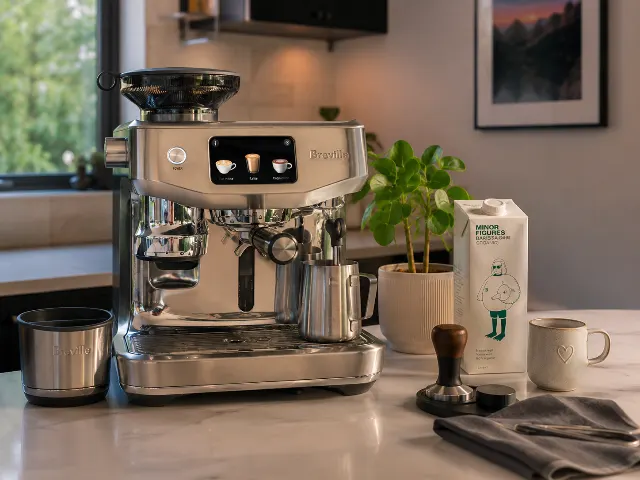
Breville Oracle Jet
The Breville Oracle Jet trades absolute manual control for morning convenience, delivering cafe-quality extraction through automated tamping and precise milk texturing.
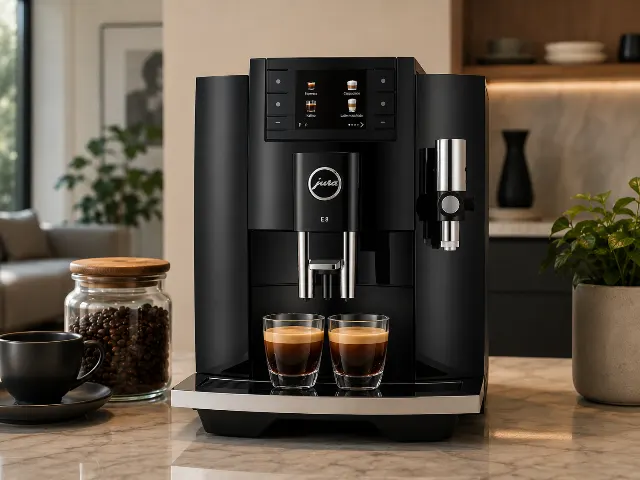
Jura E8 Piano Black
A detailed 2026 review of the Jura E8 Piano Black, focusing on its long-term reliability, true cost of ownership, and espresso quality versus its high price and maintenance demands.
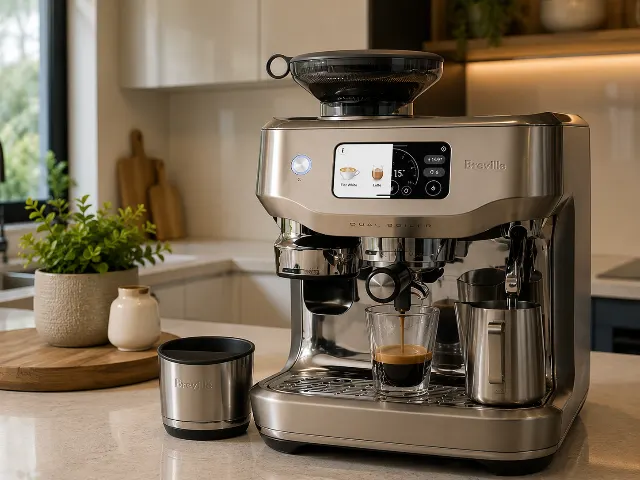
Breville Oracle Dual Boiler Espresso
The Breville Oracle is a super-automatic espresso machine that delivers the shot quality of a semi-automatic. It's built for those who want consistency without the learning curve, but its integrated design limits customization and deep cleaning.
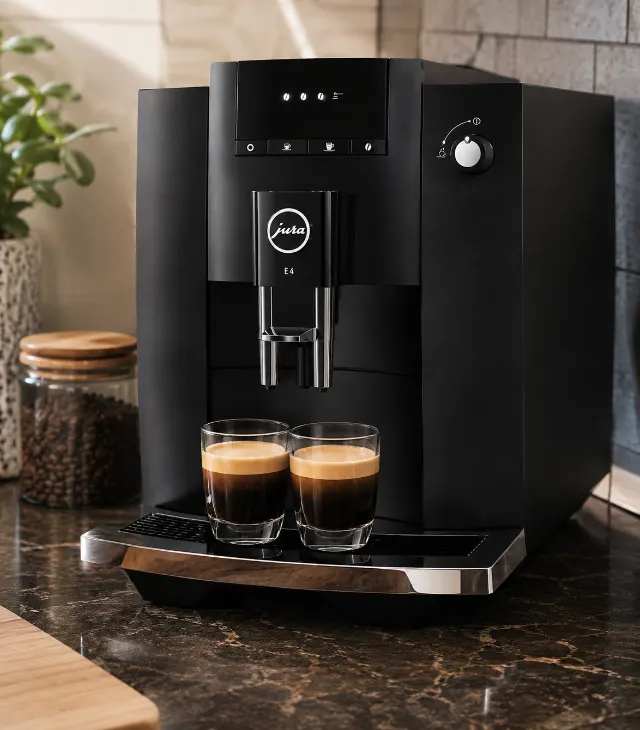
Jura E4 Piano Black Automatic Coffee Machine
The Jura E4 Piano Black is a specialist for black coffee purists, delivering exceptional espresso and Americano-style drinks with its P.E.P. brewing system. It's a poor choice for anyone who wants milk-based drinks without buying a separate frother.
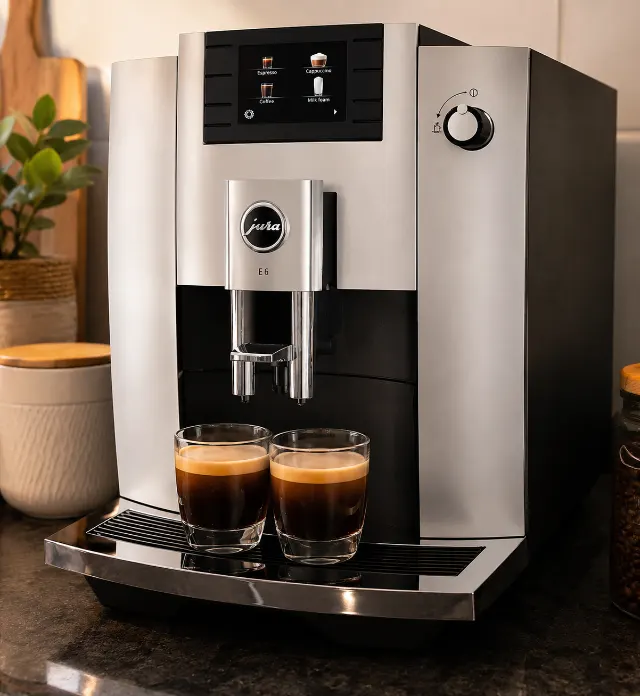
Jura E6 Platinum
The Jura E6 Platinum delivers superb, consistent espresso with minimal effort, but its rigid cleaning system and higher long-term running costs are a significant tradeoff.