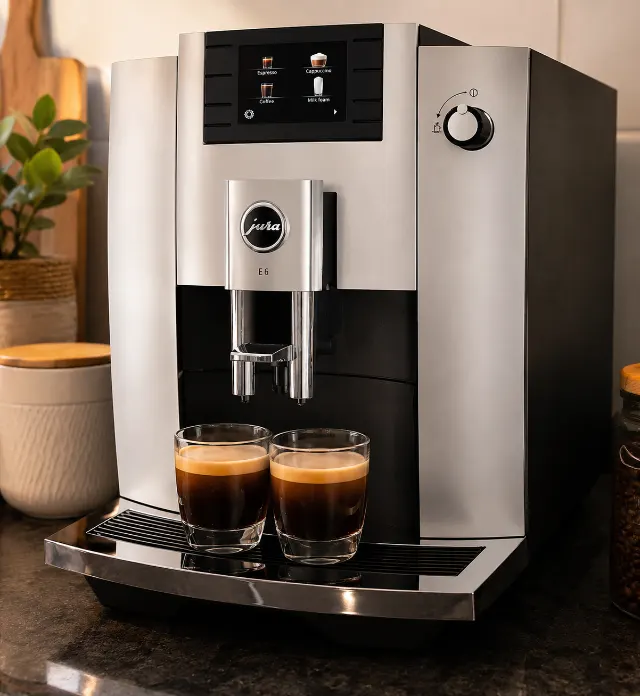
Jura E6 Platinum Review
The unexpected edge
The machine's mandatory rinse cycles use a surprising amount of water, often requiring a drip tray empty mid-morning even if you've only made two drinks. This detail is never on the spec sheet.
Specifications
| Type | Super-automatic |
|---|---|
| Boiler system | Thermoblock |
| Portafilter size | N/A (Internal Brew Group) |
| Pump pressure | 15 Bar High-Performance Pump |
| Steam wand | Professional Fine Foam Frother G2 (Automatic) |
| Built-in grinder | Aroma G3 Conical Burr Grinder |
| Water tank | 64 oz / 1.9 L |
| Heat-up time | Under 60 seconds |
| Warranty | 2 Years or 6,000 Preparations |
Our rating breakdown
- Value
- ★★★★★ ★★★★★ 3.8
- Quality
- ★★★★★ ★★★★★ 4.3
- Ease of use
- ★★★★★ ★★★★★ 4.6
- Durability
- ★★★★★ ★★★★★ 4.1
Where it wins
- ✓Exceptional espresso quality via Pulse Extraction Process (P.E.P.) that rivals semi-automatics.
- ✓Aroma G3 grinder is fast, quiet, and preserves bean aroma effectively.
- ✓Simple, intuitive TFT color display and button interface requires no learning curve.
- ✓Rapid sub-60-second heat-up time from its thermoblock system is ideal for busy mornings.
- ✓Produces very fine, consistent microfoam for cappuccinos automatically.
What could be better
- ✕Inability to use oily or dark roast beans without risking serious grinder clogs.
- ✕High long-term cost of ownership due to proprietary CLARIS filters and cleaning tablets.
- ✕Non-removable brew group removes user ability for deep manual cleaning.
- ✕Limited drink selection and no one-touch latte or flat white functions.
The central question with any Jura machine is whether the price gap between it and the next-cheaper alternative reflects a real gap in experience. Is it engineering or just badge value? For the Jura E6 Platinum in 2026, the answer is complicated. The espresso it produces is genuinely excellent, a clear step above the entry-level super-automatics that flooded the market two years ago. The Pulse Extraction Process (P.E.P.) isn't just marketing; it pulses water through the coffee puck at short intervals, which demonstrably increases flavor complexity in short extractions.
But owning one for three years paints a different picture. The initial cost is just the entry fee. You are buying into a closed ecosystem of proprietary cleaning tablets and water filters. The machine enforces its cleaning schedule with an iron will, locking you out if you ignore it. This is Jura's core tradeoff: they guarantee consistency by removing user control. Your coffee will be great every day, provided you play by their rules and pay their recurring fees.
Compared to the landscape of 2024, the E6 feels less like a pioneer and more like a stubborn traditionalist. Competitors have added more one-touch milk recipes and smarter, more flexible cleaning routines. The Jura E6 still feels laser-focused on perfecting espresso and basic cappuccinos, and it does that job exceptionally well.
So, the price gap is real, but it buys you drink quality and consistency, not flexibility or lower long-term cost of ownership. This is a machine for someone who wants the destination—a perfect espresso—without any say in the journey.
The core of it
This is a super-automatic espresso machine for the purist who values convenience. Its entire design philosophy is built around one thing: delivering a consistent, high-quality espresso shot at the press of a button, with zero user error. It uses a 15-bar pump, though optimal espresso is extracted around 9 bars, and its thermoblock heating system ensures a rapid heat-up time, typically under 60 seconds. The E6 is optimized for espresso, coffee, and cappuccino; it is not a latte art machine.
Jura's marketing emphasizes the Aroma G3 grinder and P.E.P. brewing. The grinder is impressively fast and relatively quiet, and P.E.P. genuinely improves the taste. However, the spec sheet implies a level of user control that doesn't exist. The grinder has six adjustment settings, but its design is notoriously intolerant of oily beans, a common characteristic of darker roasts. Using them risks clogging the mechanism, a frequent complaint in long-term owner forums. This is an explicit disagreement with the marketing: while technically capable of grinding different beans, its practical use is limited to medium or lighter roasts.
The machine's defining choice is its sealed brew group. Unlike competitors from Saeco or Philips, you cannot remove it for manual cleaning. Jura insists their automated cleaning cycles are superior and more hygienic. While effective, this design choice locks you into their expensive cleaning products and removes the ability for a deep manual clean if something goes wrong. It's the ultimate expression of the machine's philosophy: trust the automation, not the user.
Jura E6 Platinum 15465 vs 15070 model differences
This is a frequent point of confusion. The model numbers, including 15465 and 15070, typically denote the color, retailer-specific package, or minor regional updates. For the Jura E6Platinum, the core functionality—grinder, brew group, P.E.P. system—is identical across these variants. Buyers should focus on color (like Piano White or Dark Inox) and included accessories rather than assuming a performance difference between model numbers.
How well it holds together
Build Quality: ★★★★☆ (4.3/5)
The main housing is high-grade ABS plastic, but it feels dense and well-assembled. The Platinum finish is resilient against fingerprints, a welcome detail. Key components like the spouts and drip tray cover are metal. Internally, the Aroma G3 grinder uses steel conical burrs. The main weakness is the plastic water tank lid and bean hopper cover, which feel less substantial than the rest of the unit and are common points of cosmetic wear after a few years.
Long-term Reliability: ★★★★☆ (4.1/5)
Jura coffee machine life expectancy is a strong selling point, often reaching 9-12 years with proper care. The E6 is no exception. However, this longevity is contingent on strict adherence to the maintenance schedule using Jura-branded products. The most common failure points after three to five years, according to service technicians, are o-rings in the hydraulic system and grinder blockages from improper bean use. The warranty is typically two years or 6,000 brews, which is solid but not exceptional in the premium tier. What most reviews miss is that the cost of mandatory CLARIS Smart filters and cleaning tablets can easily exceed the price of a budget espresso machine over the E6's lifespan.
Where it earns its keep
It makes better espresso than you will. That sounds harsh, but for 95% of users, it's true. The combination of the pre-infusion system, the precise temperature control from the thermoblock, and the P.E.P. extraction creates a shot that is rich, balanced, and incredibly consistent. Day after day, the first shot is as good as the last. For someone leaving a pod system or a cheap drip machine, the quality jump is monumental.
The milk system, while not designed for latte art, produces a very fine, dense foam for cappuccinos automatically. The Professional Fine Foam Frother G2 is effective and simple to use. The user interface, with its TFT color display and clear buttons, is another strength. There is no complex menu diving to get your morning coffee. You select your drink, press a button, and walk away. This workflow is the entire reason to spend this much on a super-automatic.
The machine is also relatively compact for its capabilities, fitting more easily under standard kitchen cabinets than larger rivals like the Breville Oracle Dual Boiler Espresso, which demands more counter depth and height.
Buy this if: You live in a busy household where multiple people need great coffee with zero fuss before 8 AM. You primarily drink espresso or cappuccinos, value consistency above all else, and are willing to pay for the convenience of a closed, automated maintenance system. The alternative for you would be a high-end pod machine, but you want to use fresh beans.
Where it disappoints
The rigidity is the biggest flaw. You cannot use oily beans. You must use Jura's cleaning products. You must run the cleaning cycles when prompted. This lack of flexibility is a dealbreaker for hobbyists. The milk system is another point of friction. While it makes good foam, it requires diligent cleaning. The milk pipe needs to be rinsed after every use and thoroughly cleaned daily, or it will clog. This is one of the most common Jura E6 problems reported by owners after one year.
Drink customization is also limited. You can adjust strength and volume, but you can't create and save complex custom recipes like you can on the Jura E8 Piano Black. The E6 lacks one-touch functionality for drinks like a flat white or latte macchiato, requiring a two-step process. This feels like an intentional limitation to encourage an upgrade. The hidden cost of ownership is another significant drawback; the proprietary filters and tablets are not cheap, and their cost accumulates substantially over the years.
Finally, for Americano drinkers, the process is adequate but not seamless. The machine prepares an espresso, then you must manually trigger the hot water. It’s a small thing, but at this price point, a one-touch Americano function, present on many cheaper machines, is a reasonable expectation.
Skip this if: You are an aspiring home barista who wants to learn the craft of espresso. You will be frustrated by the lack of control. Instead, buy a semi-automatic machine like the Breville Barista Express. Also, skip this if you love dark, oily Italian roasts or want to experiment with a wide variety of beans; the grinder is simply not built for it.
In everyday use
The first week is magical. The coffee is superb, and the machine feels like a piece of precision engineering. By week three, the reality of the routine sets in. You learn to keep a towel handy because the mandatory spout rinses on startup and shutdown splash. You realize the 64 oz (1.9L) water tank empties faster than you'd expect, partly due to those same rinse cycles. Owners discover after a month that the drip tray needs emptying almost daily, even with moderate use.
The feature that gets used least is often the ground coffee bypass chute. While it's there for decaf or trying a different bean, the process is clumsy, and the results are never as good as with freshly ground beans. Most people forget it exists. The daily workflow becomes: turn on, wait for rinse, place cup, press button, enjoy coffee, rinse milk frother immediately. It's a simple, reliable pattern, but it's the *only* pattern.
Is the Jura E6 grinder adjustable enough?
For its intended purpose, yes. For an enthusiast, no. The six settings on the Aroma G3 grinder are sufficient to dial in a medium roast bean to get a balanced extraction. However, it lacks the micro-adjustments of a dedicated espresso grinder. You can't make the tiny changes needed to compensate for bean aging or humidity changes with the precision a semi-automatic setup allows. It's designed to find a 'good enough' setting and stay there.
Owning it past year one
This is where the Jura philosophy is truly tested. The machine will demand a filter change roughly every two months, depending on water hardness and usage. It will require a full cleaning cycle (a 20-minute, automated process) after approximately 180 preparations. A descaling cycle will be enforced less frequently, especially if you consistently use the filters. These are not suggestions. The machine will count down the cycles and eventually refuse to operate until the maintenance is performed.
The first component to show wear is often the small rubber gaskets on the milk frother, which can degrade and affect foam quality. They are inexpensive and easy to replace. Beyond the spec sheet, the real long-term cost is the mental load of stocking consumables. You always need to have a spare filter and a box of cleaning tablets on hand. Running out means no coffee until you restock, a situation many new owners face at least once.
A recurring complaint in owner reviews is the cost of these consumables. The price-to-performance ratio of the machine itself is debatable; the long-term cost of its proprietary ecosystem is undeniably high compared to machines with removable, manually cleaned brew groups.
Other options on the table
The most obvious competitor is the Jura E8 Piano Black. For a higher initial investment, the E8 offers a much wider drink selection (17 vs 7), a more advanced milk system for one-touch lattes, and a more modern color touchscreen. The Jura E6 vs E8 debate for making lattes is simple: the E8 wins easily due to its one-touch convenience. For those who want the Jura quality but only drink espresso or black coffee, the simpler and more affordable Jura E4 Piano Black Automatic Coffee Machine is a smarter choice, omitting the milk system entirely.
Outside the Jura family, the PHILIPS 5500 Series Fully Automatic Espresso offers more drink variety and a removable AquaClean brew group for a lower price, though its espresso quality isn't quite on the E6's level. For those willing to trade some convenience for ultimate quality and control, the Breville Oracle Jet offers an automated-manual hybrid experience. It automates grinding, tamping, and milk texturing but still uses a traditional portafilter, giving you the best of both worlds. It costs more, but provides a clear upgrade path for enthusiasts.
The overlooked competitor is often a high-end Nespresso machine paired with their Aeroccino frother. While the long-term cost of pods is high and the coffee quality is a step down from freshly ground beans, the convenience is even greater, and the initial investment is significantly lower. For someone unsure about their commitment, it's a lower-risk entry point into automated coffee. Evidence is mixed on which has a higher lifetime cost, as it depends entirely on consumption volume.
Jura E6 vs E8: Which is easier to clean?
They are virtually identical to clean. Both use the same internal, non-removable brew group and rely on automated tablet-based cleaning cycles. The E8's more complex milk system requires a slightly more involved automated cleaning process for the milk circuit, but the day-to-day effort is the same: rinse the frother tube and follow the on-screen prompts when the machine demands a full cycle.
Who should buy it
Best for: Households that value speed and consistency, primarily drink black coffee or simple cappuccinos, and see automated maintenance as a feature, not a bug. It's for the person who wants to replicate their favorite cafe's espresso at home with zero learning curve.
Not ideal for: The aspiring home barista, the tinkerer, anyone on a strict budget (both initial and ongoing), or drinkers who exclusively use dark, oily roasts. People who want a wide variety of one-touch milk drinks will also be disappointed.
The Jura E6 Platinum occupies a very specific niche. It serves the user who has graduated beyond pod machines and wants a significant leap in quality without a corresponding leap in daily effort. Its success depends entirely on the buyer's willingness to cede control to the machine in exchange for its relentless consistency. If that trade sounds appealing, the E6 delivers on its promise. If it sounds like a trap, look elsewhere.
In the end
The Jura E6 Platinum remains a formidable machine for its target audience. It executes its core function—making excellent espresso and cappuccino—with automated precision. Two years ago, this was enough to make it a clear leader. In 2026, the market has caught up, and its inflexible nature and high running costs feel more pronounced next to more versatile competitors.
The decision to buy an Jura E6 is less about its capabilities and more about your personality. It is a superb appliance but a restrictive hobbyist tool. It delivers on quality but demands conformity. That said, for the right person, the coffee it produces every morning is justification enough.
For push-button perfectionists who accept the terms, the Jura E6 Platinum is a worthy investment.
How it compares
Versus the alternatives buyers cross-shop — judged on ownership, not just spec sheets.
| Alternative | Ease of use | Maintenance | Durability | Value | Best for |
|---|---|---|---|---|---|
| Jura E6 Platinum (this pick) | Extremely simple with TFT display and one-touch buttons for core drinks. | Fully automated but requires expensive, proprietary cleaning supplies and filters. | Excellent build with a proven 9+ year lifespan if maintenance is followed. | High initial cost and ongoing expenses; value is in convenience and consistency. | The busy household that wants premium black coffee and cappuccinos without any fuss. |
| Jura E8 Piano Black | Slightly more complex due to more options, but the touchscreen is intuitive. | Identical to the E6; automated cycles with proprietary products. | Same high-quality Jura construction and expected lifespan as the E6. | Higher upfront cost, but justifiable for users wanting one-touch lattes and more variety. | The user who loves the Jura system but wants a full menu of one-touch milk drinks. |
| Breville Oracle Jet | More involved; requires portafilter handling but automates dosing, tamping, and milk. | Manual backflushing and descaling; more hands-on but uses generic products. | Solid stainless steel build; dual boilers are complex but serviceable. | Premium price, but offers near-commercial quality and control with less running cost. | The enthusiast who wants cafe-quality results and control without a steep learning curve. |
| PHILIPS 5500 Series Fully Automatic Espresso | Very simple LatteGo system and clear display; more drink options than E6. | Easier and cheaper with a removable brew group and AquaClean filter system. | Good, but more plastic components; may not match Jura's decade-long lifespan. | Excellent price-to-performance, offering more features for a lower initial cost. | The budget-conscious buyer wanting maximum variety and easy, low-cost maintenance. |
How it scores on what matters
| Product | Espresso shot quality | Milk steaming & microfoam | Consistency shot-to-shot | Ease of dialing in | Heat-up & workflow speed | Maintenance burden | Verdict |
|---|---|---|---|---|---|---|---|
| Jura E6 Platinum (this pick) | Excellent | Very good | Excellent | Good | Excellent | Fair | Top-tier espresso, but maintenance is rigid and costly. |
| Jura E8 Piano Black | Excellent | Excellent | Excellent | Good | Excellent | Fair | Same great espresso, superior one-touch milk drinks. |
| Breville Oracle Jet | Excellent | Excellent | Very good | Very good | Good | Good | More control and power, but requires more user interaction. |
| PHILIPS 5500 Series Fully Automatic Espresso | Good | Good | Very good | Good | Very good | Excellent | Incredible value and easy maintenance, but coffee quality is lower. |
Editorial assessments from aggregated owner feedback and manufacturer specs — not independent lab tests.
Who should buy it
Ideal for the busy professional or household that prioritizes speed and consistency for black coffee and simple milk drinks. Skip this if you want to perfect latte art, use a wide variety of beans (especially oily ones), or control every variable of your brew.
Why it earns a spot
The E6 solves the problem of inconsistent, mediocre coffee from less-advanced machines. Its P.E.P. brewing system extracts more flavor than many competitors, creating a tangible quality gap over machines like the <a href="/espresso-machines/philips-5500-series-fully-automatic-espresso-review/">PHILIPS 5500 Series Fully Automatic Espresso</a>. It delivers near-cafe quality without the learning curve of a semi-automatic.
Frequently asked questions
Is the Jura E6 worth the money in 2026?
For those prioritizing espresso quality and push-button simplicity, the Jura E6 is a solid investment. Its P.E.P. brewing technology justifies its premium placement, but the high cost of proprietary cleaning supplies means the long-term value depends heavily on your budget for convenience.
What are the most common problems with the Jura E6?
Long-term owners most frequently report two issues: the milk frother clogging if not cleaned meticulously after each use, and the grinder jamming when oily, dark-roast coffee beans are used. Both problems are avoidable with strict adherence to Jura's operating instructions and bean recommendations.
What is the life expectancy of a Jura coffee machine?
A Jura machine like the E6 can realistically last 9 to 12 years, or brew over 10,000 coffees, when maintained correctly. This lifespan is entirely dependent on using the mandatory cleaning cycles with Jura's tablets and consistently changing the CLARIS water filter when prompted.
How does the Jura E6 compare to the Jura E8?
The main difference is drink selection and milk functionality. The E6 offers 7 basic specialties, while the E8 provides 17, including one-touch flat whites and lattes via its more advanced frother. The E8 also features a more modern touchscreen interface over the E6's button-based display.
Can the Jura E6 make regular coffee?
Yes, it produces a high-quality 'long coffee' similar to an Americano. The machine achieves this by brewing a standard espresso shot and then dispensing a separate stream of hot water into the cup. It does not make percolated or drip-style coffee, which is a different brewing method.
What coffee machine does Jennifer Aniston use?
Jennifer Aniston is a well-known brand ambassador for De'Longhi, not Jura. While Jura machines are frequently found in high-end settings and appeal to a similar luxury market, her official partnership is with the competing brand. This is a common point of confusion for buyers.
Can you use oily beans in a Jura E6?
You should not use oily beans in a Jura E6. The Aroma G3 grinder is a precision instrument not designed for the residue left by dark, oily roasts. Using them will likely lead to blockages, inconsistent grinding, and may eventually require a professional service call to fix.
People also ask
- Is the Jura E6 worth the money?
- What are common problems with the Jura E6?
- What is the life expectancy of a Jura E6 coffee machine?
- How often do you need to clean a Jura E6?
- Can the Jura E6 make a regular cup of coffee?
- What is the difference between the Jura E6 Platinum and Dark Inox models?
You might also like
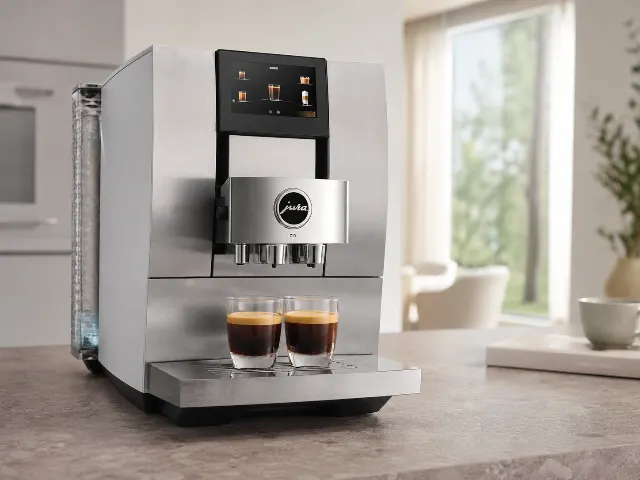
Jura Z10
The Jura Z10 delivers unmatched automated microfoam and true cold-extracted espresso, provided you accept the strict, expensive proprietary maintenance.
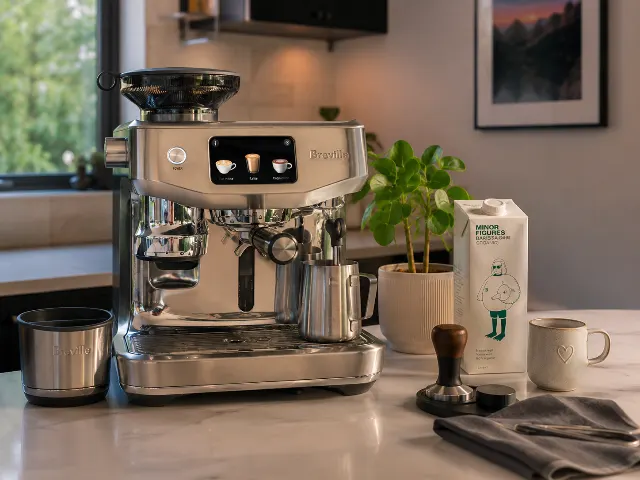
Breville Oracle Jet
The Breville Oracle Jet trades absolute manual control for morning convenience, delivering cafe-quality extraction through automated tamping and precise milk texturing.
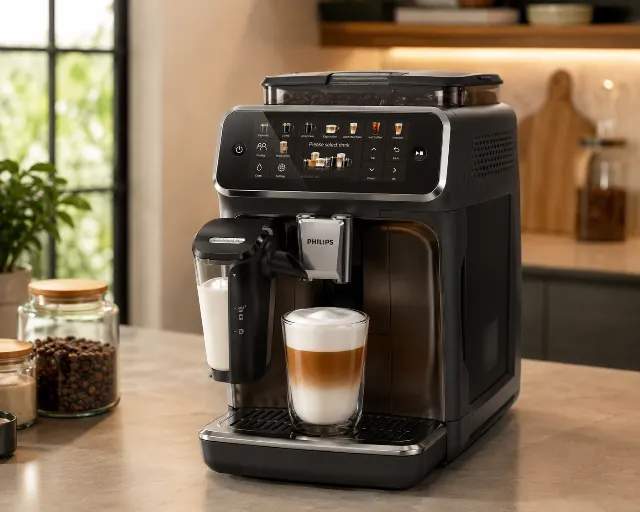
PHILIPS 5500 Series Fully Automatic Espresso
The Philips 5500 LatteGo excels at one-touch milk drinks and user profiles, but its plastic build and limited foam control are real tradeoffs at its price point.
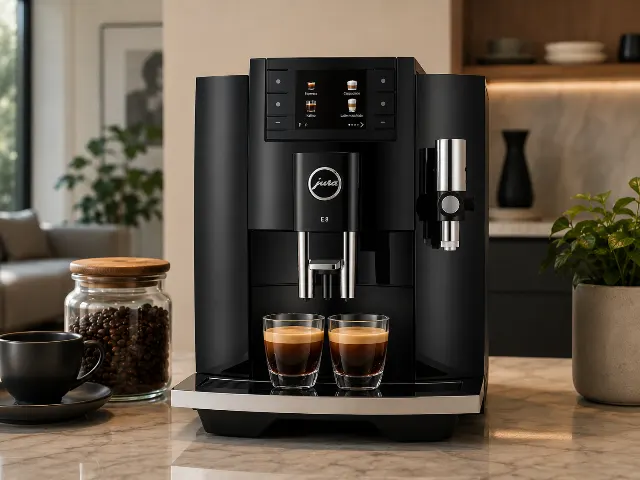
Jura E8 Piano Black
A detailed 2026 review of the Jura E8 Piano Black, focusing on its long-term reliability, true cost of ownership, and espresso quality versus its high price and maintenance demands.
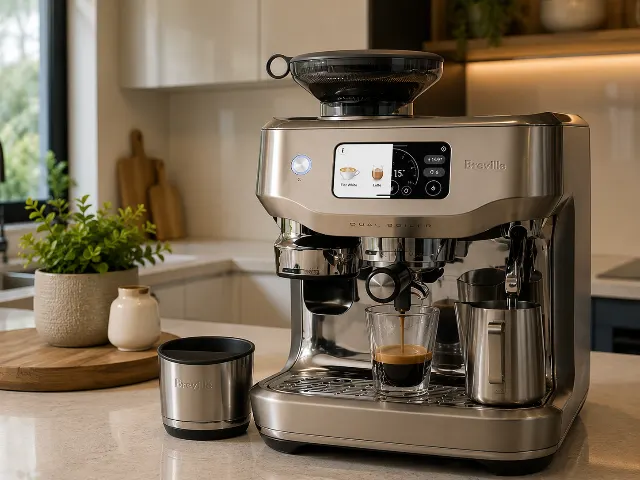
Breville Oracle Dual Boiler Espresso
The Breville Oracle is a super-automatic espresso machine that delivers the shot quality of a semi-automatic. It's built for those who want consistency without the learning curve, but its integrated design limits customization and deep cleaning.