Breville Oracle Dual Boiler Espresso Review
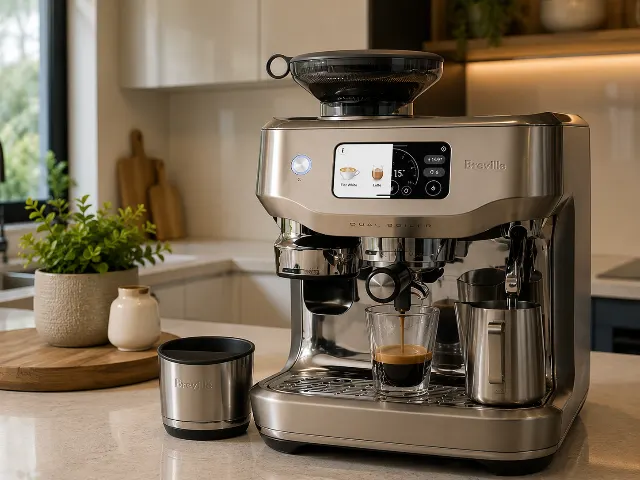
How it compares
Versus the alternatives buyers cross-shop — judged on ownership, not just spec sheets.
| Alternative | Ease of use | Maintenance | Durability | Value | Best for |
|---|---|---|---|---|---|
| Breville Oracle Dual Boiler Espresso (this pick) | Automated grinding and tamping create a very low barrier to entry for consistent shots. | Daily cleaning is simple, but deep cleaning and descaling are multi-step processes prompted by the machine. | Good, but reliant on strict maintenance. Plastic grinder gears can be a long-term failure point. | Premium initial cost for an all-in-one system. Value depends on prioritizing convenience over flexibility. | The busy professional in a multi-user household who wants excellent lattes without the learning curve. |
| Breville Dual Boiler (BES920) + Separate Grinder | Steep learning curve. Requires manual grinding, dosing, and tamping skills to achieve good results. | Machine itself is similar to the Oracle, but a separate grinder is easier to clean and service. | Slightly higher, as there is no integrated grinder to fail. Simpler electronics. | Higher potential cost of ownership depending on grinder choice, but offers a better performance ceiling. | The aspiring espresso hobbyist who wants full control and the ability to upgrade components over time. |
| Breville Oracle Jet | Fully automated one-touch system for various drinks. Simpler than the standard Oracle. | Similar descaling process but with an automated milk frothing system that requires daily cleaning. | More complex electronics and automated frother introduce more potential points of failure. | A premium price for the ultimate convenience, but with less control over the final shot than the standard Oracle. | The user who prioritizes a one-touch, bean-to-cup latte experience above all else. |
How it scores on what matters
| Product | Espresso shot quality | Milk steaming & microfoam | Consistency shot-to-shot | Ease of dialing in | Heat-up & workflow speed | Maintenance burden | Verdict |
|---|---|---|---|---|---|---|---|
| Breville Oracle Dual Boiler Espresso (this pick) | Very good | Excellent | Excellent | Good | Very good | Fair | Unbeatable consistency and steam power for an automated machine. |
| Breville Dual Boiler (BES920) + Separate Grinder | Excellent | Excellent | Good | Fair | Very good | Good | Higher potential quality but requires significant user skill. |
| Breville Oracle Jet | Good | Good | Excellent | Excellent | Excellent | Fair | Maximum convenience, but a step down in shot quality. |
Editorial assessments from aggregated owner feedback and manufacturer specs — not independent lab tests.
What sets it apart
THE X-FACTOR: The automatic tamping fan, while brilliant for consistency, is also a magnet for fine coffee grounds. Overlooked detail: it requires periodic deep cleaning with compressed air, a step not mentioned in the standard manual.
The Breville Oracle Dual Boiler Espresso exists to solve a specific, expensive problem. It promises the shot quality of a high-end semi-automatic setup—the kind that requires a separate, costly grinder and a barista’s touch—but with the push-button simplicity of a super-automatic. This is its central tradeoff: it offers profound convenience by taking away control. The entire machine is a bet that you’d rather have a consistently great shot you didn’t work for than a potentially perfect shot you have to master.
For many, that bet pays off. The Oracle automates the three most frustrating variables in espresso: grinding, dosing, and tamping. It’s a closed system designed for repeatability. But that system is also a gilded cage. You can’t upgrade the grinder if your tastes evolve. You can’t easily switch to a different tamping style. You are buying into Breville’s philosophy of espresso, from start to finish.
So, is the Breville Oracle worth it in 2026? It depends entirely on whether you see that lack of control as freedom or a limitation. This review will dissect that tradeoff, piece by piece, to determine if this machine’s specific brand of automated excellence is right for your kitchen counter.
What this is, in plain terms
This is a hybrid. Breville calls it an automatic, but it sits in a strange middle ground between semi-automatic machines, which demand user skill, and super-automatics, which often compromise on shot quality for convenience (like you'd find in an office). The Oracle automates the messy, skill-based parts of puck preparation but leaves the extraction in your hands. You still lock in the 58mm commercial-size portafilter and start the shot, but the machine handles the grinding, dosing, and tamping with its integrated conical burr grinder and patented tamping fan system.
Its core is a true dual boiler system, a feature usually reserved for prosumer machines that cost significantly more when paired with a comparable grinder. This means it has one boiler dedicated to brewing espresso at a precise temperature (managed by a PID controller) and a separate, larger boiler for producing steam. You can pull a shot and steam milk simultaneously without any temperature loss, a workflow impossibility on single boiler or thermoblock machines. The marketing materials often focus on the automation, but the dual boiler heart is what gives it serious performance credentials.
One common misconception needs correcting. The spec sheet implies total automation, but what owners report is closer to assisted consistency. You still have to dial in the grind size for new beans, and you still control pre-infusion time and shot volume. The Oracle doesn’t eliminate the need for knowledge; it just eliminates the physical variables of tamping pressure and distribution, which are huge hurdles for beginners.
Breville Oracle vs. The Breville Oracle Dual Boiler Espresso (BES920)
People often ask about the Breville Oracle vs Dual Boiler, and the choice is fundamental. The standalone Breville Oracle Dual Boiler Espresso (BES920) is just the espresso-making half of the Oracle. It has the same commercial-grade group head, the same PID temperature control, and the same powerful steam boiler. What it lacks is the built-in grinder and the automatic tamping mechanism. Choosing the BES920 means you are committing to buying a separate, high-quality grinder and learning the manual skills of dosing and tamping. This path offers more control and a higher potential ceiling for shot quality, but the cost of ownership for a comparable setup is often higher, and the learning curve is substantially steeper. The Oracle is the integrated, convenient package; the BES920 is the enthusiast’s component system.
Breville Oracle vs. The Oracle Touch: What's the Difference?
The primary difference is the interface. The standard Breville Oracle (including the BES980XL and newer BES995 models) uses buttons and an LCD screen for adjustments. The Oracle Touch replaces this with a color touchscreen. The Touch offers pre-programmed drink recipes (latte, flat white, etc.) that you can select and customize with a swipe. Functionally, the core mechanics—the dual boilers, grinder, and auto-tamping—are identical. The Touch is for the user who wants a smartphone-like experience and is willing to pay a premium for it. The standard Oracle is for the user who is comfortable with a more traditional button-and-dial interface and prefers to save the cost. For beginners, the Touch can feel more approachable, but the standard Oracle offers the exact same level of performance.
How it is built
Build Quality: ★★★★☆ (4.3/5)
The machine makes a strong first impression with its brushed stainless steel housing. Key components feel substantial: the 58mm portafilter is hefty and commercial-grade, the steam lever has a satisfying action, and the knobs and buttons provide solid tactile feedback. Internally, it uses brass and copper tubing for its water paths, a mark of quality over the plastic tubing found in many lower-end machines. However, some critical internal components, like the gears in the grinder assembly, are plastic. Long-term owner feedback shows these can be a failure point after five or more years of heavy use, requiring a service center repair.
Long-term Reliability: ★★★★☆ (4.1/5)
For a complex appliance, the Oracle has a decent track record. Most units will perform reliably for years if maintained properly. The most common failure points are not the main boilers but the supporting components: the three-way solenoid valve can get stuck if descaling is neglected, and the water pump can lose pressure over time. The warranty is typically two years, which is good but not exceptional for a premium-tier appliance. Breville’s repair network is extensive, but out-of-warranty repairs can be costly. Its lifespan is directly tied to your water hardness and cleaning diligence.
Where it shines
Its primary strength is consistency. Shot after shot, the Oracle delivers a precisely measured dose of 19-22 grams of coffee, tamped with consistent pressure. This removes the single greatest source of user error in home espresso. For a household with multiple users or for someone rushing to make a latte before work, this is a massive advantage. You get the benefits of freshly ground coffee and proper 9-bar extraction pressure without the morning ritual of weighing beans and perfecting your tamp.
Second, the steam power is immense. The dedicated steam boiler produces thick, creamy microfoam capable of high-quality latte art, rivaling machines that cost much more. The steam wand is powerful and fast, bringing a pitcher of milk to temperature in under a minute. This is a significant step up from the thermoblock-powered steam wands on machines like the Barista Express, which have less sustained pressure and produce thinner foam.
Finally, the workflow is brilliantly designed. From a cold start, it's ready to pull a shot in about 5-7 minutes, thanks to its actively heated group head. The front-fill water tank is a thoughtful touch, as is the hidden tool tray for cleaning accessories. Everything is designed to minimize friction in the daily process of making coffee.
Buy this if: you live in a busy household where multiple people will use the machine, and you value repeatable, cafe-quality results over the hobbyist aspect of espresso. If you want to walk up, push a button, and get a great latte without a 15-minute ritual, and you're considering a super-automatic, the Oracle is a massive quality upgrade.
Where it disappoints
The biggest drawback is the integrated grinder. While convenient, it’s not on par with standalone grinders in the same price class. Owner feedback splits roughly evenly on this; many find it perfectly adequate, but a recurring complaint in owner reviews is that it can struggle to grind fine enough for very light roast coffees. This forces users to increase the dose to slow the shot, which isn't ideal. The spec sheet implies a pro-level grinder, but what owners report is closer to a very good mid-range one that is permanently attached to your machine.
Another frustration is the cleaning process. While daily maintenance is simple, the full descaling cycle is a multi-step, 20-minute affair that can be confusing. More importantly, the internal grinder and the auto-tamping fan are difficult to clean thoroughly. Coffee grounds and oils build up in the chute and on the fan, which can affect dose consistency over time. This is a hidden cost of the all-in-one design; separate components are always easier to clean.
Some users also report consistently wet, soupy espresso pucks after extraction. This is often due to the headspace created by the Oracle's dosing system and the pressure release from the solenoid valve. While it doesn’t necessarily mean the shot was bad, it’s messy to clean up and can be disconcerting for those used to the dry, knock-out pucks from semi-automatic machines.
Skip this if: you are an aspiring espresso hobbyist who wants to experiment with different grinders, portafilters, and puck prep techniques. The Oracle’s closed system will frustrate you. For a similar total investment, you could pair the standalone Breville Oracle Dual Boiler Espresso (BES920) with a separate grinder like a Niche Zero or Baratza Sette and have a much higher ceiling for control and quality.
What ownership looks like
The first two weeks are about calibration. You’ll burn through a bag of beans dialing in the grind setting for your preferred coffee. The factory setting is rarely correct. You’ll learn that the Oracle is sensitive to bean freshness; a coffee that’s three weeks post-roast will require a much finer grind setting than one that’s five days post-roast. This initial learning curve surprises people who expect a purely push-button experience.
After a month, you settle into a rhythm. The machine tells you when to run a cleaning cycle (every 200 shots or so), and you learn to keep the water filter and cleaning tablets on hand. The cost of these official Breville consumables is a factor in the long-term cost of ownership. Many owners eventually ignore the built-in hot water spout for Americanos, finding it splashes too much, and just use a kettle instead. This is one feature that looks better on paper than it performs in a busy kitchen.
What most reviews miss is the impact of the automatic tamping on your choice of beans. The system works best with medium to medium-dark roasts that are not oily. Very oily beans can clog the grinder and the tamping fan, leading to inconsistent dosing and a required deep clean. This subtly pushes you toward a specific type of coffee profile, limiting experimentation.
What the years look like
This is not a machine you can neglect. A consistent maintenance schedule is crucial for its longevity. You will replace the group head silicone seal every 12-18 months; it’s an inexpensive part, but critical for preventing leaks from the group head. The water filters need replacing every 2-3 months, depending on usage and water hardness. Descaling prompts should never be ignored, especially in hard water areas, as scale buildup is the leading cause of pump and solenoid failure.
Beyond the spec sheet, the real long-term experience involves listening to the machine. After three to four years, you might notice the pump sounds different or takes longer to reach pressure. This is often the first sign that an internal seal or the pump itself is wearing out. Owners who are proactive about group head seal replacements and regular descaling report getting 7-10 years of service from their Oracle. Those who neglect it often face a costly repair bill around the 5-year mark.
A hidden cost is the eventual need for a professional service. The integrated nature of the grinder and brewer means that if one major component fails, the entire 70-pound machine needs to go to a repair center. This is a significant logistical challenge compared to servicing a separate grinder or a simpler espresso machine.
Step-by-Step Cleaning and Descaling Guide
Daily cleaning is straightforward: purge and wipe the steam wand after every use, and flush the group head by running a single shot cycle with no portafilter. For the deeper cleaning cycle prompted by the machine, you insert a silicone cleaning disc into the portafilter with a cleaning tablet. The machine then runs a pressurized backflush sequence for about 5 minutes. The full descaling process is more involved. It requires emptying the water tank, adding Breville's descaling solution, and then running a 20-minute cycle that flushes the solution through both the coffee and steam boilers. Afterwards, you must rinse the tank and run two full tanks of fresh water through the system to purge any remaining solution. It's not difficult, but it does require setting aside about 30 minutes.
How it compares to the field
The Oracle's competition comes from two different directions. From the super-automatic side, you have machines like the Breville Oracle Jet or models from Jura and De'Longhi. These machines offer one-touch lattes and cappuccinos, grinding and brewing directly into the cup. They are more convenient than the Oracle but use different brewing mechanisms (not a 58mm portafilter) that generally produce a less authentic, weaker style of espresso. The Oracle’s shot quality is substantially better.
From the semi-automatic side, its main rival is a component system. For a similar total price, you could buy the standalone Breville Oracle Dual Boiler Espresso (BES920) and a high-quality grinder. This setup gives you far more control and the ability to upgrade your grinder later, which is the single biggest factor in improving espresso quality. The trade-off is the steep learning curve and the manual, often messy, process of puck prep.
An overlooked competitor is a high-end single-boiler machine like a Rancilio Silvia Pro X paired with a good grinder. While it lacks the simultaneous brew/steam capability of the Oracle's dual boilers, its build quality is more robust, with more metal components and a simpler design that is easier for a user to service. This path is for the buyer who prioritizes durability and repairability over automated convenience.
Who it is right for
Best for: The household that wants consistently high-quality lattes and flat whites with minimal fuss. It's for the person upgrading from a pod machine or an entry-level Breville Barista Express who loves the coffee but hates the inconsistent results and messy workflow. If your goal is speed and repeatability, the Oracle is designed for you.
Not ideal for: The aspiring coffee hobbyist, the tinkerer, or anyone who already owns a premium espresso grinder. The integrated systems that make it so convenient are also its biggest limitations. If you want to explore the nuances of espresso extraction and have full control over every variable, this machine will feel restrictive.
Bottom line
The Breville Oracle Dual Boiler Espressosuccessfully bridges the gap between usability and quality, delivering on its core promise of semi-automatic results with super-automatic ease. It automates the most difficult parts of the process, making it a powerful tool for achieving consistency. However, this convenience comes at the cost of control and long-term flexibility, locking you into its integrated grinder and workflow.
For the right person, it is the best espresso machine on the market; for the wrong person, it's a frustratingly limited appliance.
How it scores
- Value
- ★★★★★ ★★★★★ 3.8
- Quality
- ★★★★★ ★★★★★ 4.3
- Ease of use
- ★★★★★ ★★★★★ 4.6
- Durability
- ★★★★★ ★★★★★ 4.1
The upsides
- ✓Dual stainless steel boilers with PID control allow for simultaneous brewing and steaming with precise temperature stability.
- ✓Automated grinding, dosing, and tamping system removes the main variables for shot-to-shot consistency.
- ✓Commercial-grade 58mm group head ensures even water distribution and optimal extraction, a feature shared with professional machines.
- ✓Powerful dedicated steam boiler produces high-quality microfoam for latte art, a significant step up from thermocoil systems.
- ✓Thoughtful workflow features like a front-fill water tank and a 5-7 minute heat-up time make daily use convenient.
Where it falls short
- ✕Integrated conical burr grinder is not on par with standalone grinders in a similar price tier and can struggle with very light roasts.
- ✕The automatic tamping fan and internal grinder chute are difficult to access for deep cleaning, leading to potential clogs.
- ✕Consistently wet, soupy pucks are a common complaint, making cleanup messier than with traditional semi-automatic machines.
- ✕Long-term reliability is dependent on a strict descaling and maintenance schedule, with out-of-warranty repairs being costly.
Who it is for
Ideal for the busy professional in a household with multiple coffee drinkers who values speed and repeatable results over the hobby of espresso. Skip this if you already own a premium grinder or enjoy the ritual and control of manual puck preparation; the built-in system is a feature, not an option.
Why buy it
The Oracle solves the single biggest source of inconsistency for newcomers: puck prep. By automating the grind, dose, and tamp, it eliminates variables that frustrate users upgrading from a machine like the Breville Barista Express. It delivers a better, more consistent shot than you can get from most super-automatics, without the steep learning curve of a true semi-automatic setup.
Specifications
| Type | Automatic (Hybrid Super/Semi-Automatic) |
|---|---|
| Boiler System | Dual Boiler (Stainless Steel) |
| Portafilter Size | 58mm (Commercial Size) |
| Pump Pressure | 15 Bar Italian Pump (Extraction limited to 9 Bar) |
| Steam Wand | Manual, 360-degree swivel |
| Built-in Grinder | Integrated Steel Conical Burr Grinder |
| Water Tank | 84 oz (2.5L), Removable, Top-fill from front or rear |
| Heat-up Time | Approx. 5-7 minutes |
| Warranty | 2-Year Limited Product Warranty (varies by region) |
Frequently asked questions
Is the Breville Oracle worth it in 2026?
For those prioritizing convenience and consistency over manual control, yes. Its automatic grinding, dosing, and tamping system justifies the premium cost by removing the steepest parts of the espresso learning curve, making it ideal for busy households that still demand high-quality coffee.
What's the difference between the Breville Oracle and the Dual Boiler?
The key difference is integration. The Oracle (BES980/BES995) is an all-in-one unit with a built-in grinder and auto-tamping. In contrast, the standard Dual Boiler (BES920) is a standalone machine, requiring you to purchase a separate grinder and tamp manually, offering more control for enthusiasts.
How long does a Breville Oracle espresso machine last?
A Breville Oracle can last from 5 to 10 years, but its lifespan is heavily dependent on maintenance. Regular descaling, consistent cleaning cycles, and replacing the group head seal every 12-18 months are crucial for reaching the upper end of that range, especially in hard water areas.
Is the Breville Dual Boiler discontinued?
While the standalone Breville Dual Boiler (BES920) has faced intermittent stock shortages and has been discontinued in some markets, it's not globally defunct. The Oracle line, which is built upon the same dual boiler platform, remains a flagship product for Breville and is actively produced for 2026.
Can you make regular coffee with a Breville Oracle?
Yes, by making an Americano. The Oracle has a dedicated hot water spout next to the group head. You can dispense hot water directly into a cup with a freshly pulled shot of espresso to create a beverage similar in size and strength to a regular drip coffee.
Is the Breville Oracle hard to clean?
Daily cleaning is easy, but the deeper maintenance is more involved. The machine prompts you for a 5-minute backflush cycle with a tablet every few hundred shots. The full descaling process is a 20-minute, multi-step procedure that requires more attention than the simple daily wipe-downs.
People also ask
- Is the Breville Oracle a good machine?
- What is the difference between Breville Oracle and Dual Boiler?
- How many years does a Breville Oracle last?
- Can you manually tamp on a Breville Oracle?
- Is the Breville Oracle hard to maintain?
- What is the best grind setting for Breville Oracle?
- Is the Breville Oracle Dual Boiler worth the money?
- What is the difference between the Breville Oracle and the Dual Boiler?
- How long does a Breville Oracle last?
- Is the Breville Dual Boiler being discontinued?
- Can you use the Breville Oracle without the automatic tamper?
You might also like
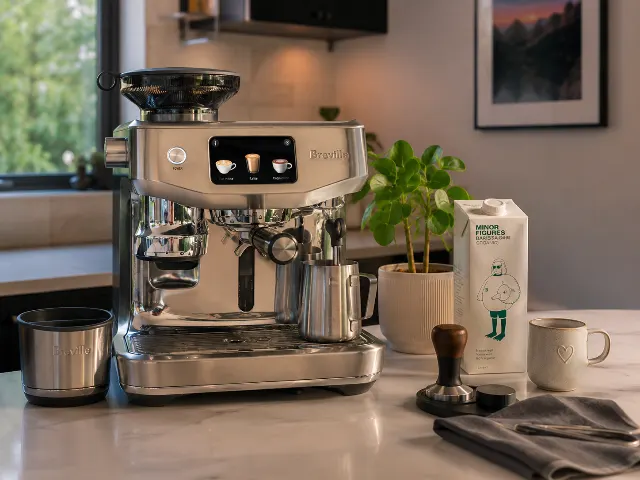
Breville Oracle Jet
The Breville Oracle Jet trades absolute manual control for morning convenience, delivering cafe-quality extraction through automated tamping and precise milk texturing.