De'Longhi Dedica Duo Compact Espresso Machine - Cold Brew Coffee Maker with Milk Frother Wand Review
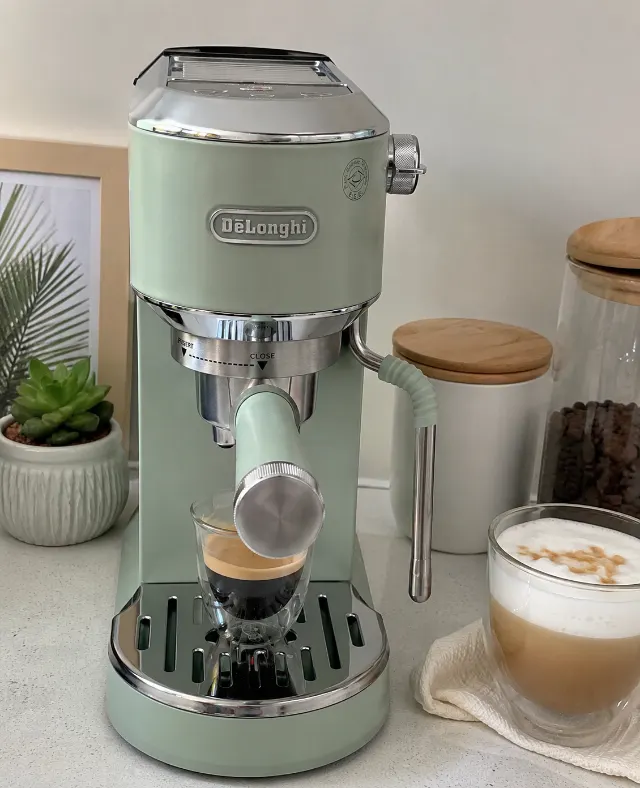
Is it right for you?
Ideal for the kitchen-space-constrained user who wants both passable espresso and legitimate cold brew without two separate appliances. It serves the apartment dweller or student who values versatility over singular excellence. Skip this if you already own a quality grinder and plan to dive deep into espresso as a hobby; the ceiling is too low.
Why it earns a spot
The Dedica Duo solves the 'one machine, two cravings' problem. No other machine in its class offers a dedicated, non-heated cold brew extraction. While a <a href="/espresso-machines/breville-bambino/">Breville Bambino</a> produces slightly better espresso shots faster, it cannot make cold brew, forcing a user to buy another device or resort to immersion methods that take 12-24 hours.
If you’ve already decided that a compact, dual-function machine is your only path forward, this review will just confirm your choice. Stop reading. For everyone else, the undecided buyer weighing counter space against capability, this analysis exists to answer one question: does the De'Longhi Dedica Duo's clever cold brew feature compensate for the compromises it makes on espresso?
The answer is not simple. This machine occupies a strange, self-created niche. It promises the convenience of a Nespresso Vertuo Up Coffee and Espresso with the craft of a traditional semi-automatic. It's an ambitious pitch.
Long-term owner feedback reveals a sharp divide. One group loves the space-saving versatility, happily trading top-tier espresso for the all-in-one design. The other group, often those upgrading from the original De'Longhi Dedica , feels the espresso performance hasn't evolved enough to justify the price jump. This review will dissect that tension, focusing on where the machine's performance genuinely lands in 2026, beyond the marketing copy. The De'Longhi Dedica Duo Compact EC890M isn't a straightforward upgrade; it's a different proposition entirely.
What you're really getting
This is a convenience machine disguised as a hobbyist machine. Its core design principle is cramming maximum functionality into minimum width, and every performance characteristic stems from that choice. The spec sheet highlights a 15-bar pump, but this is a classic marketing misdirection. Optimal espresso extraction happens around 9 bars of pressure; the higher number is for marketing, not performance, and the machine's over-pressure valve regulates it down. The real story is the thermoblock heating system, which delivers a rapid 40-second heat-up time at the cost of the temperature stability found in larger single-boiler machines.
The defining feature, of course, is the cold brew function. It's not iced coffee. It uses a low-pressure, ambient temperature water delivery that pulses over the grounds for several minutes to create a concentrate. This works surprisingly well and is the machine's single most compelling feature. The spec sheet implies a machine that does two things equally well. What owners report is closer to a machine that makes good cold brew and acceptable, beginner-friendly espresso. That distinction is critical.
Dedica vs. Dedica Duo: What's the Real Difference?
The primary difference is the cold brew function. That's the headline. But a few other changes separate the Dedica Duo Compact from its predecessor, the Dedica EC685. The steam wand is an improved Panarello-style wand, designed to make frothing easier for novices by injecting more air. While it won't produce the silky microfoam a pro-level wand can, it's a noticeable step up for making lattes and cappuccinos. The Duo's interface is slightly refined, and the build feels a touch more solid, though the core internals and the 51mm portafilter system remain the same. If cold brew holds zero appeal for you, the original Dedica offers a similar espresso experience for a lower cost.
How well it holds together
Its construction is a mix of metal and plastic. The outer shell feels sturdy, but key internal components and the small drip tray are plastic. It’s built to a price point, and that becomes apparent over time.
Build Quality: ★★★★☆ (4.3/5)
The stainless steel body looks sharp and is responsible for the machine's premium appearance, especially in models like the De'Longhi Dedica Duo Compact Pink. However, the machine is very lightweight. Owners consistently report needing to hold the machine with one hand while locking the portafilter in with the other to prevent it from sliding across the counter. The portafilter itself is a 51mm unit with a plastic insert, a common point of failure after a year or two of heavy use. The buttons provide decent tactile feedback, and the water tank, while small at 1.1 liters, is easy to remove and fill.
Long-term Reliability: ★★★★☆ (4.1/5)
The Dedica line has a reputation for decent longevity if maintained properly. The most common failure point, according to owner forums, is the thermoblock calcifying due to infrequent descaling, leading to temperature and pressure issues. The descaling process itself can be confusing, and many De'Longhi Dedica Duo Compact problems stem from users not following the manual's specific sequence of button presses. The silicone group head gasket is the primary consumable that will need replacement, typically every 18-24 months. De'Longhi's warranty service is standard, but proving a fault wasn't caused by lack of maintenance can be a hurdle.
Where it earns its keep
This machine wins on versatility and footprint. Nothing else combines these two specific functions—espresso and true cold brew—into a chassis that is barely six inches wide. For anyone in a small apartment, dorm room, or crowded kitchen, that space-saving is a powerful argument. The 40-second heat-up time means it’s ready to pull a shot before you’ve even finished grinding your beans, a major advantage on busy mornings over traditional boiler machines that can take 15 minutes or more.
The espresso it produces with the stock pressurized baskets is forgiving. It's designed to work with pre-ground coffee or a less-than-perfect grind, producing a crema-topped shot with minimal effort. This is a significant benefit for beginners who are not ready to invest in a high-quality burr grinder. While hobbyists will scoff, this accessibility is precisely what makes it appealing to a large segment of the market. The improved steam wand, while not perfect, is capable of producing foam for lattes that will satisfy anyone not competing in a latte art competition.
Performance: Shot Quality, Steam Power, and Cold Brew Speed
Shot quality with the included 51mm pressurized baskets is consistent but lacks depth. The pressure artificially generates crema, which looks nice but doesn't have the complex flavor of a shot pulled at a perfect 9-bar extraction from a non-pressurized basket. Upgrading to a bottomless, non-pressurized 51mm portafilter is the single best accessory for the De'Longhi Dedica Duo Compact , but it also exposes the machine's temperature inconsistencies. Steam power is adequate for a single latte; steaming milk for two back-to-back drinks will test your patience as the small thermoblock struggles to recover. The cold brew, however, is the surprise performer. It delivers a smooth, low-acid concentrate in about five minutes, a process that traditionally takes half a day.
Buy this if: you live in a small apartment with limited counter space, you drink both espresso-based drinks and cold brew regularly, and you prioritize convenience and speed over the pursuit of the perfect espresso shot. For you, the space saved by not needing a separate cold brew maker is worth more than the incremental shot quality offered by the slightly larger Breville Bambino.
Common problems
No machine is perfect. The Dedica Duo's issues are direct consequences of its compact design and price point. The most frequent complaint is the small, shallow drip tray, which requires emptying almost daily. Compounding this is the machine's tendency to purge water after steaming, which can overflow the tray if you're not paying attention. Another common issue is the limited clearance between the portafilter spout and the drip tray, which prevents the use of taller mugs. You will be brewing into a shot glass and transferring.
Beyond the physical design, performance quirks are common. Owners discover after a few months that shot temperature can be inconsistent. The best workaround is to run a blank shot of hot water through the portafilter right before brewing to preheat the group head and the basket. The lightweight body, as mentioned, moves when locking in the portafilter. Finally, the stock 51mm pressurized baskets are a crutch; they make it easy to get a decent-looking shot, but they make it impossible to get a truly great one, as they mask issues with grind size and puck prep.
Common Dedica Duo Problems & How to Solve Them
Many reported De'Longhi Dedica Duo problems are user-solvable. If your espresso shot is pulling too fast and tastes weak, your grind is likely too coarse for the pressurized basket. If the machine is leaking water from the bottom, check that the 1.1L water tank is seated correctly before suspecting a serious leak. If the steam wand is not frothing milk properly, it's almost certainly clogged with dried milk; purge it with steam for 10 seconds after every use and wipe it clean. The dreaded De'Longhi Dedica Duo Compact error lights often indicate a need to run the descaling cycle, a process that requires strict adherence to the manual's instructions regarding water hardness settings and button sequences.
Skip this if: you are an aspiring espresso hobbyist who wants to learn the craft of dialing in a shot. The limitations of the 51mm ecosystem and the thermoblock's temperature surfing will frustrate you. You should instead invest in a machine with a more standard 54mm or 58mm portafilter and better thermal stability, like the Breville Barista Express Espresso, even if it means sacrificing counter space and the cold brew feature.
How it fits your routine
The first week is exciting. The machine heats up fast, the buttons are simple, and you get coffee quickly. By week three, the routine settles in. You learn to preheat the portafilter. You learn to empty the tiny drip tray after every two or three uses. You master the timing of the steam wand to get the foam you like. You start eyeing a non-pressurized portafilter online.
What most reviews miss is the psychological effect of the dual-functionality. The cold brew feature, which seems like a novelty, often becomes a core part of the workflow, especially in warmer months. It’s so much faster than traditional methods that it encourages experimentation. The espresso side, meanwhile, settles into a comfortable mediocrity for many users unless they actively invest in accessories like a better tamper, a WDT tool, and the aforementioned bottomless portafilter. The feature marketed as a convenience—the ESE pod compatibility—is almost universally ignored by owners after the first try, as the resulting coffee is consistently reported as weak and underwhelming.
Care and running costs
Maintenance is not optional. The machine will force a descale cycle on you based on a programmed shot count and your initial water hardness setting. Using filtered water is non-negotiable to prolong the life of the thermoblock. The descaling process itself takes about 20 minutes. Beyond that, daily care involves wiping the steam wand, rinsing the portafilter, and emptying the drip tray. A weekly backflush (with water, not chemicals) is good practice, especially if you upgrade to a non-pressurized basket.
The hidden cost is the potential for upgrades. The stock plastic tamper is inadequate. The pressurized baskets will eventually leave you wanting more. A proper 51mm tamper and a non-pressurized basket are almost essential additions to unlock the machine's potential, adding to the initial investment. Overlooked detail: the shower screen can get clogged with fines over time, requiring removal with a screwdriver for a deep clean every six months to prevent channeling and ensure even water distribution. This is a step many owners miss, leading to a gradual decline in shot quality they can't diagnose.
Competitors to consider
The Dedica Duo's main rival is the Breville Bambino. The Bambino is faster, heating up in a mere 3 seconds, and its 54mm portafilter offers a better pathway for learning real espresso technique. It lacks the cold brew function but excels at its primary job. For those wanting more control and better steam power, the Breville Bambino Plus Espresso Machine BES500BSS adds automatic milk frothing and a 3-way solenoid valve, which makes cleanup much tidier. It also costs significantly more.
On the all-in-one front, the Breville Barista Express Espresso includes a built-in grinder, which simplifies the setup for a beginner, but it takes up much more counter space. Its single boiler system with PID temperature control offers more stability than the Dedica's thermoblock. An often overlooked competitor is the Gaggia Classic Pro. It's a true single-boiler machine with a commercial-style 58mm portafilter and a powerful steam wand, beloved by hobbyists for its durability and mod-ability. It has a much steeper learning curve, takes longer to heat up, and has zero cold brew functionality, but it offers a much higher ceiling for espresso quality.
Who should pick it up
Best for: The coffee generalist living in a compact space who values having both espresso and cold brew options in one slim, attractive package and is willing to accept good-enough performance from both.
Not ideal for: The aspiring home barista focused solely on mastering the art and science of espresso extraction, who will be better served by a machine with a more standard portafilter size and greater thermal stability.
This machine is built for a specific compromise. It bets that for a certain user, the convenience of its dual-functionality and tiny footprint outweighs the superior espresso-only performance of its direct competitors. If your morning routine involves a coin flip between a latte and a cold brew, and your kitchen counter is measured in inches, not feet, the De'Longhi Dedica Duo EC890M is one of the only machines that understands your dilemma.
Our verdict
The De'Longhi Dedica Duo is a clever and well-executed solution to a problem that most espresso machine manufacturers ignore. It successfully delivers on its promise of both hot espresso and true cold brew from a single, impossibly narrow device. However, this versatility comes at the cost of mastery; it is a jack of two trades, master of none.
Its espresso is limited by its 51mm portafilter and thermoblock heater, and its steam power is merely adequate. The cold brew is genuinely impressive and fast. The decision to buy this machine in 2026 hinges entirely on how much you value that specific combination of features. If the cold brew function is a must-have, it stands alone. If it's merely a nice-to-have, your money is better spent on an espresso-focused machine.
For the space-conscious coffee drinker who wants it all, this is a compellingly unique choice.
The unexpected edge
The cold brew function uses an ambient-temperature, pulsating water flow, creating a true concentrate in minutes—not just chilled espresso. This is a genuinely distinct feature, not a marketing gimmick.
Strengths
- ✓Unique dual-functionality offers both espresso and true cold brew extraction.
- ✓Extremely compact 6-inch width fits in the tightest kitchen spaces.
- ✓Fast 40-second thermoblock heat-up time is ideal for busy mornings.
- ✓Forgiving pressurized baskets make it accessible for absolute beginners.
- ✓Improved Panarello steam wand is easier to use than the original Dedica's.
Drawbacks
- ✕Limiting 51mm portafilter ecosystem offers fewer upgrade options than 54mm or 58mm.
- ✕Lightweight body moves on the counter when locking in the portafilter.
- ✕Very small drip tray requires constant emptying.
- ✕Thermoblock heating can lead to temperature inconsistency between shots.
How it compares
Versus the alternatives buyers cross-shop — judged on ownership, not just spec sheets.
| Alternative | Ease of use | Maintenance | Durability | Value | Best for |
|---|---|---|---|---|---|
| De'Longhi Dedica Duo Compact Espresso Machine - Cold Brew Coffee Maker with Milk Frother Wand (this pick) | Very beginner-friendly with pressurized baskets; descaling is complex. | Requires frequent drip tray emptying and disciplined descaling. | Metal exterior with plastic internals; reliable with proper care. | Unique value for those who need both espresso and cold brew functions. | Apartment dwellers wanting maximum versatility in minimum space. |
| Breville Bambino | Extremely simple interface and fast 3-second heat-up time. | Simple cleaning cycles; 3-way solenoid valve keeps pucks dry. | Solid construction, though some plastic parts feel less premium. | Excellent performance-per-dollar for espresso-only users. | Beginners focused solely on learning espresso with a standard 54mm portafilter. |
| Breville Bambino Plus Espresso Machine BES500BSS | Automatic milk frothing makes lattes effortless for novices. | Auto-purge function for steam wand simplifies cleaning. | Higher-quality components and finish than the standard Bambino. | A premium price for automation and convenience features. | Users who prioritize convenience and consistent milk drinks above all else. |
| Breville Barista Express Espresso | Integrated grinder adds a learning curve but simplifies workflow. | Requires cleaning both the espresso machine and the grinder. | A proven workhorse with years of owner data supporting its reliability. | Strong all-in-one value, saving the cost of a separate grinder. | Beginners wanting a complete bean-to-cup setup without separate components. |
How it scores on what matters
| Product | Espresso shot quality | Milk steaming & microfoam | Consistency shot-to-shot | Ease of dialing in | Heat-up & workflow speed | Maintenance burden | Verdict |
|---|---|---|---|---|---|---|---|
| De'Longhi Dedica Duo Compact Espresso Machine - Cold Brew Coffee Maker with Milk Frother Wand (this pick) | Good | Good | Fair | Fair | Excellent | Fair | Versatile and fast, but requires workarounds for consistency. |
| Breville Bambino | Very good | Good | Good | Good | Excellent | Very good | Superior espresso quality and workflow in a similar footprint. |
| Breville Bambino Plus Espresso Machine BES500BSS | Very good | Excellent | Very good | Good | Excellent | Excellent | Unbeatable convenience with automated milk frothing. |
| Gaggia Classic Pro | Excellent | Very good | Good | Weak | Fair | Good | Highest potential for quality, but demands the most skill. |
Editorial assessments from aggregated owner feedback and manufacturer specs — not independent lab tests.
Ratings at a glance
- Value
- ★★★★★ ★★★★★ 4.0
- Quality
- ★★★★★ ★★★★★ 4.3
- Ease of use
- ★★★★★ ★★★★★ 4.7
- Durability
- ★★★★★ ★★★★★ 4.1
Specifications
| Type | Semi-automatic |
|---|---|
| Boiler system | Thermoblock |
| Portafilter size | 51mm |
| Pump pressure | 15 Bar (regulated to ~9 Bar) |
| Steam wand | Panarello-style wand |
| Built-in grinder | No |
| Water tank | 1.1 L (37 oz) |
| Heat-up time | Approx. 40 seconds |
| Warranty | 1 year (2 years with registration in some regions) |
Frequently asked questions
Is the De'Longhi Dedica Duo worth it?
For users who will consistently use both the espresso and the unique cold brew functions in a small kitchen, its value is unmatched. If you only need espresso, the Breville Bambino offers better performance for a similar cost.
What is the difference between the De'Longhi Dedica and Dedica Duo?
The key difference is the Dedica Duo's dedicated cold brew function, which uses an ambient-temperature extraction. The Duo also features an upgraded Panarello steam wand for easier milk frothing compared to the original Dedica EC685.
What are common problems with the De'Longhi Dedica Duo?
Recurring complaints include a small drip tray that needs frequent emptying, inconsistent shot temperature without preheating, and the lightweight body sliding on the counter. Most issues are manageable with routine adjustments and proper maintenance.
What size portafilter does the De'Longhi Dedica Duo use?
The Dedica Duo uses a 51mm portafilter, which is smaller than the 54mm or 58mm standard on many enthusiast machines. While it ships with pressurized baskets, many owners upgrade to a 51mm bottomless portafilter for better control.
How does the cold brew feature work on the Dedica Duo?
It uses a unique process that pulses room-temperature water through the coffee grounds for about five minutes. This is not just chilled espresso; it's a true, low-acid cold brew concentrate made rapidly, a feature exclusive to this machine.
Is the Dedica Duo a good machine for making lattes and cappuccinos?
Yes, it is quite capable for beginners. Its updated Panarello steam wand is designed to easily create the thick foam needed for cappuccinos and lattes, though it struggles to produce the true microfoam required for detailed latte art.
People also ask
- What is the difference between the De'Longhi Dedica and the Dedica Duo?
- What are the common problems with the De'Longhi Dedica Duo?
- What size is the portafilter on the De'Longhi Dedica Duo?
- How does the cold brew function work on the Dedica Duo?
- Is the De'Longhi Dedica Duo good for beginners?
- Can you use a non-pressurized basket with the Dedica Duo?
You might also like
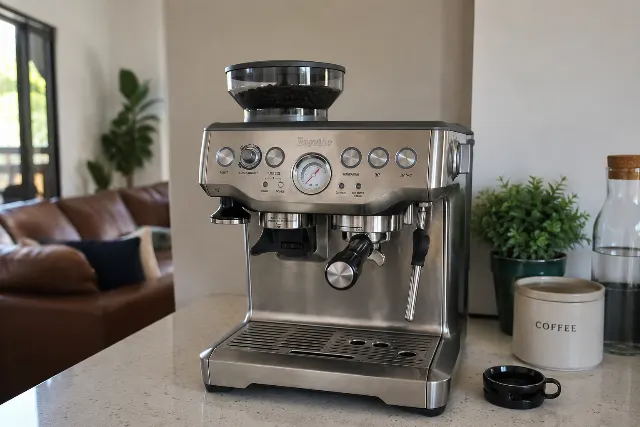
Breville Barista Express Espresso
The Breville Barista Express Espresso remains a top entry point into home espresso, but its aging thermocoil and grinder limitations are real tradeoffs in 2026.
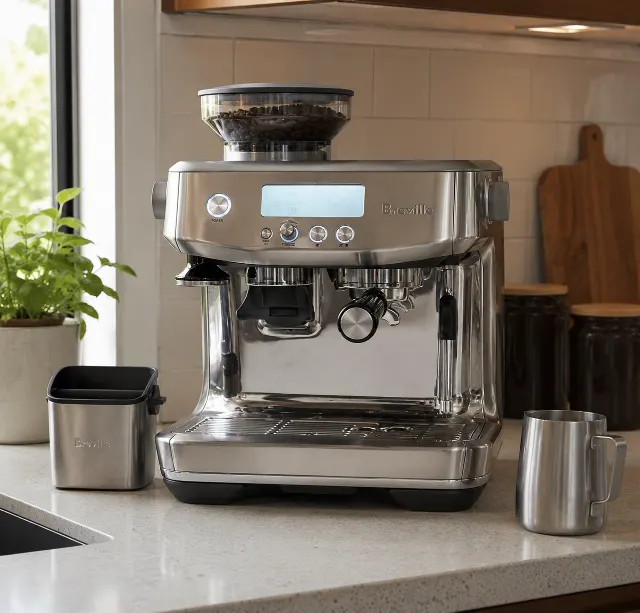
Breville Barista Pro
The Breville Barista Pro is an all-in-one espresso machine that excels at speed, thanks to its ThermoJet heating. It's a significant workflow upgrade over the Barista Express, but the integrated grinder remains its biggest long-term limitation for enthusiasts.
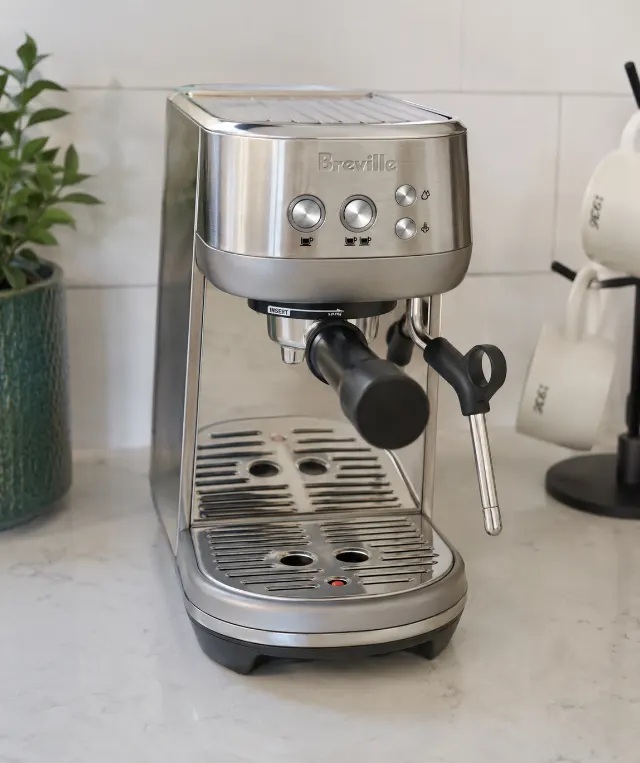
Breville Bambino
Our 2026 review of the Breville Bambino finds it's still the fastest entry-level espresso machine, but its long-term durability hinges on diligent cleaning.
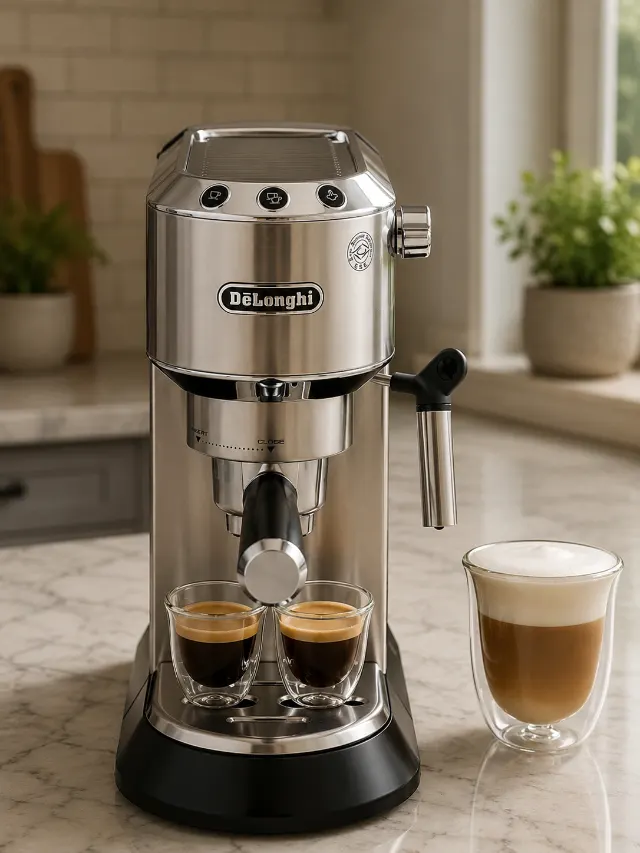
De'Longhi Dedica
The De'Longhi Dedica is a compact, fast-heating espresso machine ideal for small kitchens, but its pressurized system and weak steam wand limit true espresso hobbyists.
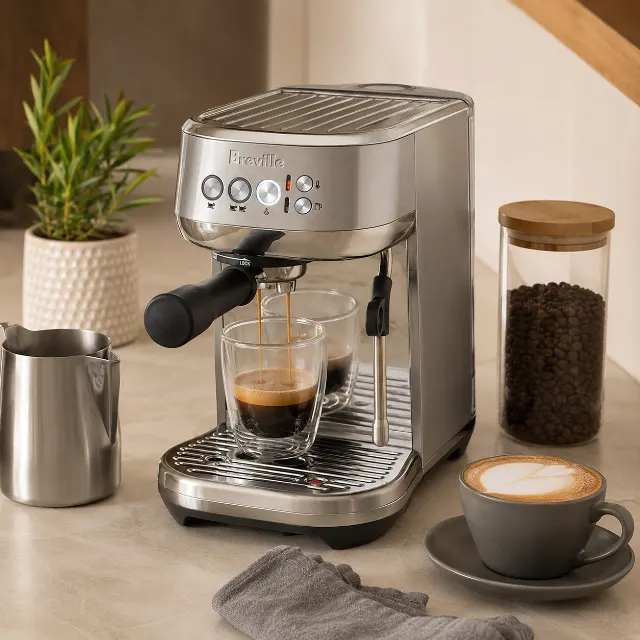
Breville Bambino Plus Espresso Machine BES500BSS
A compact espresso machine that nails speed and convenience, the Breville Bambino Plus is ideal for beginners but its 54mm group head limits advanced users.