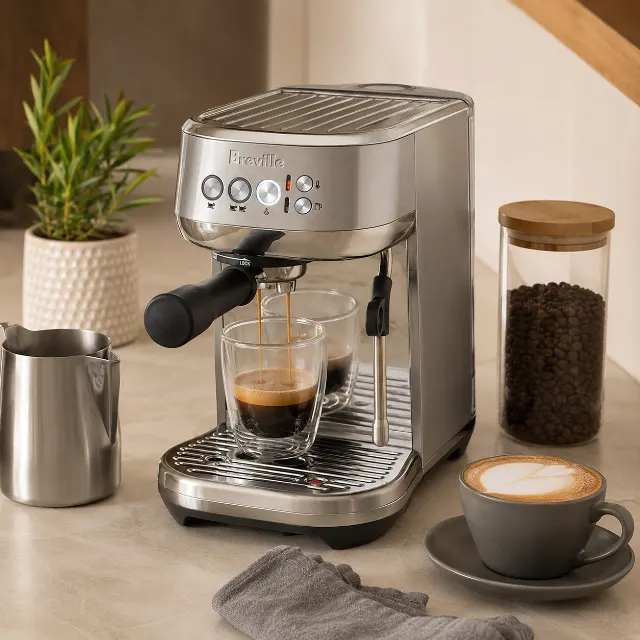
Breville Bambino Plus Espresso Machine BES500BSS Review
How it compares
Versus the alternatives buyers cross-shop — judged on ownership, not just spec sheets.
| Alternative | Ease of use | Maintenance | Durability | Value | Best for |
|---|---|---|---|---|---|
| Breville Bambino Plus Espresso Machine BES500BSS (this pick) | Extremely easy; automatic milk frothing and volumetric shots remove guesswork. | Automated cleaning/descaling cycles; daily drip tray emptying required. | Good for 5-7 years; plastic internals are a long-term weak point. | High initial value for features, but limited lifespan and repairability. | Beginners in small apartments who prioritize speed for morning lattes. |
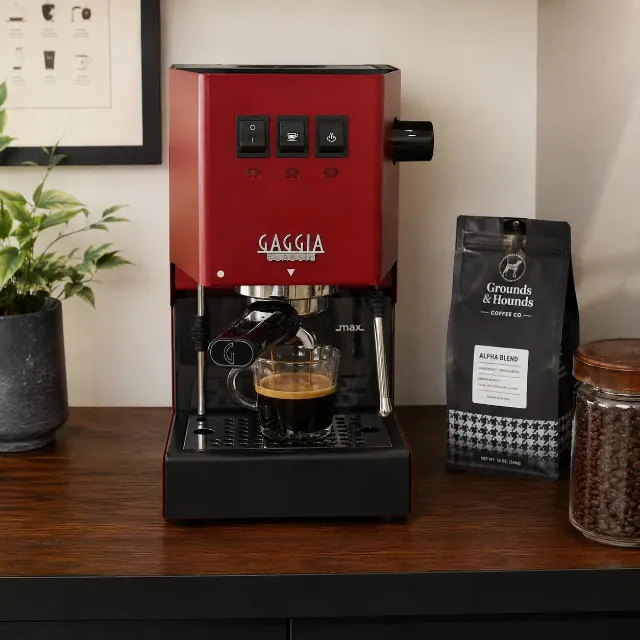
| Gaggia Classic Pro | Steep learning curve; requires manual skill for both espresso and milk. | Requires manual backflushing and descaling; more hands-on. | Built like a tank with commercial parts; can last for decades with repairs. | Excellent long-term value; low upfront cost and highly repairable/moddable. | Hobbyists on a budget who want to learn espresso theory and value longevity. |
| De'Longhi Dedica | Simple operation, but panarello steam wand is difficult to get good microfoam from. | Simple descaling process; smaller drip tray needs frequent attention. | Mixed reports; feels less substantial than the Bambino Plus. | Budget-friendly entry point, but performance limitations are quickly apparent. | Espresso-only drinkers in extremely tight spaces looking for the lowest cost of entry. |
| Breville Bambino | Simple volumetric controls, but fully manual steam wand requires practice. | Similar to the Plus, but lacks the 3-way solenoid, resulting in messy pucks. | Similar build to the Plus, with a 5-7 year expected lifespan. | Slightly cheaper, but the lack of the solenoid valve is a significant downgrade. | Users who want the fast heat-up but are confident in their manual steaming skills. |
| De'Longhi La Specialista Maestro Espresso | Semi-automated with a built-in grinder and smart tamping station; simplifies workflow. | More complex due to integrated grinder; requires regular cleaning of both systems. | Complex electronics can be costly to repair outside of warranty. | High all-in-one cost; good for those wanting an integrated solution. | Users who want an all-in-one machine with guided controls without going full super-automatic. |
How it scores on what matters
| Product | Espresso shot quality | Milk steaming & microfoam | Consistency shot-to-shot | Ease of dialing in | Heat-up & workflow speed | Maintenance burden | Verdict |
|---|---|---|---|---|---|---|---|
| Breville Bambino Plus Espresso Machine BES500BSS (this pick) | Very good | Excellent | Excellent | Good | Excellent | Good | Unbeatable speed and automated milk for beginners. |
| Gaggia Classic Pro | Excellent | Good | Good | Fair | Weak | Fair | Higher shot potential, but requires patience and skill. |
| De'Longhi Dedica | Good | Weak | Good | Good | Very good | Good | Fast and compact but weak for milk drinks. |
| Breville Bambino | Very good | Good | Excellent | Good | Excellent | Fair | Same speed, but messier and requires manual steaming. |
| De'Longhi La Specialista Maestro Espresso | Very good | Very good | Very good | Excellent | Good | Fair | All-in-one convenience with a higher price tag. |
Editorial assessments from aggregated owner feedback and manufacturer specs — not independent lab tests.
The thing owners notice
The automatic steam wand's temperature sensor is on the drip tray, not the wand. If the tray isn't perfectly dry and clean, milk temperature becomes wildly inconsistent—a detail missing from every manual.
The biggest myth about entry-level espresso machines is that they are all frustrating, underpowered toys. That you’ll spend six months wrestling with them only to produce sour, thin shots before giving up. Two years ago, that was largely true for anything in this size and price bracket. The expectation was a long, slow heat-up, weak steam, and a learning curve like a vertical cliff.
The Breville Bambino plus Espresso Machine BES500BSS was supposed to fix that. It promised a 3-second heat-up, automatic milk frothing that actually worked, and real 9-bar extraction pressure. It looked like the perfect appliance to bridge the gap between capsule convenience and hobbyist-grade espresso.
After years on the market, the reality is more complicated. The machine does deliver on its core promises of speed and automation. It is, without question, the fastest and easiest entry into making legitimate milk-based espresso drinks at home. But what owners discover after twelve months is that the very features that make it so accessible in the beginning become its primary limitations. The convenient guardrails that help a beginner start also form the walls of a playground you can't easily leave. This isn't a starter machine you grow with; it’s a self-contained system you eventually grow out of.
What it actually is
This is a speed-and-convenience appliance, not a hobbyist's first machine. Breville's marketing frames it as a compact version of their larger machines, implying a shared DNA of pro-level performance. I disagree with this framing. The Bambino Plus is an entirely different proposition, engineered around its ThermoJet heating system. This isn't a traditional boiler; it's an on-demand water heater that flashes a small amount of water to temperature in just 3 seconds. That’s its defining feature and the source of all its strengths and weaknesses.
It's optimized for the person making one or two lattes or flat whites before leaving for work. Everything from the automatic milk frothing to the volumetric shot control is designed to minimize thinking and maximize speed. The target buyer is someone who sees a manual machine like the Gaggia Classic Pro and thinks “I don’t have time for that.” They are correct, and this machine is for them. It is not for the person who wants to endlessly tweak variables to chase the perfect shot. Its internal PID temperature control is pre-set and non-adjustable, a clear signal of its intended user.
Breville Bambino vs. Bambino Plus: Key Differences Explained
The standard Breville Bambino is cheaper, but the Breville Bambino plus model (the BES500BSS reviewed here) is the one to get. The key difference is the automatic milk frothing wand on the Plus, which offers three settings for temperature and three for texture. This is the machine's party trick. The Breville Bambino plus also includes a 3-way solenoid valve, a component found in much more expensive machines. This valve releases pressure from the group head after pulling a shot, resulting in a dry, easy-to-dispose-of coffee puck. The standard Bambino lacks this, leaving you with a messy, wet puck. The Plus also has a slightly larger 1.9L water tank versus the Bambino's 1.4L. For the small price difference, the solenoid valve alone makes the upgrade worthwhile.
How well it holds together
It’s built for its price point. The stainless steel finish looks premium from a distance, but the machine's light weight (under 5 kg) means it can slide around the counter when you're locking in the portafilter. The portafilter itself is a 54mm proprietary size, a departure from the 58mm commercial standard, which limits third-party accessory options.
Build Quality: ★★★★☆ (4.1/5)
Externally, it’s solid. The buttons have a satisfying click and the drip tray is well-designed. Internally, however, there are plastic components in the water path, including the connectors to the ThermoJet system. This is a common tradeoff for heat-up speed and cost, but it's a point of failure that all-metal machines don't have. The included 54mm tamper is plastic and feels like an afterthought; it’s also slightly undersized for the basket, leading to channeling if you’re not careful. This is a hidden cost, as a proper metal tamper is a necessary immediate upgrade.
Long-term Reliability: ★★★★☆ (4.0/5)
Owner feedback shows the ThermoJet system is generally reliable, but the machine is sensitive to scale buildup. If you have hard water, expect to run a descaling cycle every 2-3 months or risk performance degradation. The most common failure point reported after 3-4 years is the pump, which can lose pressure. The group head gasket is a standard consumable that will need replacing every 12-18 months with daily use. Breville's one-year warranty is standard, but repairs outside of that period can be costly, often approaching the price of a remanufactured unit.
How it performs day to day
Its speed is its greatest asset. From a cold start to being ready to pull a shot takes literally three seconds. This cannot be overstated. For a busy morning, it feels revolutionary compared to the 15-20 minute warmup of a traditional single-boiler machine. The espresso quality, when paired with a capable grinder, is excellent. The low-pressure pre-infusion wets the puck evenly, and the ramp-up to 9 bars of pressure is consistent, producing balanced shots with good crema. The PID controller keeps the temperature stable shot-to-shot, a feature once reserved for much more expensive hardware.
Performance: Espresso Quality and Milk Frothing
The automatic steam wand is the main draw for many, and it performs better than expected. You select your desired temperature and foam level, place the jug, and it does the rest, stopping automatically. It can produce silky microfoam suitable for latte art, though it struggles to create the ultra-dry foam needed for a traditional cappuccino. One thing most reviews miss: the temperature sensor is a small button on the drip tray that the milk jug rests on. If this sensor or the bottom of your jug is wet or dirty, the temperature reading will be inaccurate, leading to lukewarm or scalded milk. This is the source of 90% of the complaints about milk temperature inconsistency.
Buy this if: You live in an apartment with limited counter space, you prioritize speed and convenience for your morning latte, and you want to spend your effort on learning about beans, not machine mechanics. For you, the time saved over a De'Longhi Dedica is worth the extra cost.
The annoyances
This machine has clear limits. The biggest recurring complaint in owner reviews is the soupy, wet pucks that sometimes occur even with the 3-way solenoid valve. This is often a result of using the included double-wall (pressurized) baskets, which are designed for pre-ground coffee and are very forgiving but messy. Switching to the single-wall baskets and a good grinder helps, but doesn't completely solve it. The light weight is also a genuine daily frustration; you need to hold the machine with one hand while locking in the portafilter with the other to prevent it from spinning on the counter.
Common Problems and How to Solve Them
Many new users report the Breville Bambino plus not reaching pressure. This is almost never the machine's fault. It's a grind size issue. The 54mm basket is less forgiving of a poor grind than a 58mm one. If your coffee is too coarse, water flows through too quickly, creating no pressure. The solution is a finer grind. Another common issue is water leaking. This is usually from an overfilled drip tray or a water tank that isn't seated perfectly. The space between the portafilter spouts and the drip tray is also quite limited, so fitting a larger mug or a scale requires removing the tray grate. Beyond the spec sheet, owners discover that the auto-purge function for the steam wand, while great for cleanliness, dumps a significant amount of water into the drip tray, requiring it to be emptied almost daily.
Skip this if: You are a tinkerer who wants to experiment with flow control, pressure profiling, or temperature surfing. You will hit the ceiling of this machine in six months. Get the Gaggia Classic Pro instead; it has a massive modding community and uses standard 58mm parts, offering a much longer runway for growth.
Using it for real
Here is the workflow you settle into. Power on, and by the time you've grabbed your portafilter, it's ready. You dose and tamp your coffee, lock it in, and press the two-cup button. While the shot pulls, you fill your milk jug and place it under the steam wand. The shot finishes, you press the steam button, and while the milk is automatically frothing, you knock out your used coffee puck and rinse the portafilter. By the time that's done, the milk is ready. The entire process, from start to a finished latte in hand, can be under two minutes.
How to Use the Bambino Plus: A Beginner's Guide
For a beginner, the process is straightforward. Use the double-wall (pressurized) filter basket and the included Razor dosing tool. This setup is forgiving and works even with supermarket pre-ground coffee. Once you buy a quality burr grinder, switch to the single-wall (non-pressurized) basket. This is where you start learning to “dial in”—adjusting your grind size so that a double shot (e.g., 18g of coffee in, 36g of liquid out) takes about 25-30 seconds. The feature owners wish they’d known about sooner is the manual shot volume programming. You can override the pre-set volumes by holding down the one- or two-cup button to start the flow, and pressing it again to stop. The machine will remember this volume for next time.
What the years look like
The Breville Bambino plus is not a buy-it-for-life machine. Its lifespan, with proper care, is realistically 5-7 years. The cost of ownership is low initially, but you must be diligent with maintenance. The cleaning cycle prompt is not a suggestion; when it blinks, run the cycle with a cleaning tablet. Descaling frequency depends entirely on your water hardness; in London, you might descale every two months, while in Vancouver, it might be once a year. The silicone group head gasket will be the first part to fail, typically hardening after about 18 months of daily use and causing leaks around the portafilter. It's a cheap and easy part to replace yourself.
Cleaning and Maintenance: Descaling Your Machine
Descaling a Breville Bambino plus is a simple, if slightly tedious, process outlined in the manual. You dissolve a descaling solution in the water tank and run a specific button combination that cycles the solution through the machine's internals. It takes about 10 minutes. What most reviews miss is that failing to descale regularly doesn't just risk a breakdown; it directly impacts performance. Scale buildup in the ThermoJet can cause temperature instability and reduced steam power long before the machine gives you an error. Think of it like changing the oil in a car: essential for long-term health. The long-term cost of ownership is mainly these cleaning supplies and the occasional gasket replacement, which is far cheaper than the maintenance on a complex machine like a De'Longhi La Specialista Maestro Espresso.
How it stacks up to rivals
Its competitive set has changed. A few years ago, it had no real rivals for speed and features at its price point. Now, the landscape is more crowded. The Gaggia Classic Pro remains the hobbyist's choice. It’s built like a tank with commercial-grade parts, but it’s slow to heat up and requires manual skill to get the most from it. For someone who values durability and control over convenience, the Gaggia is the better long-term investment.
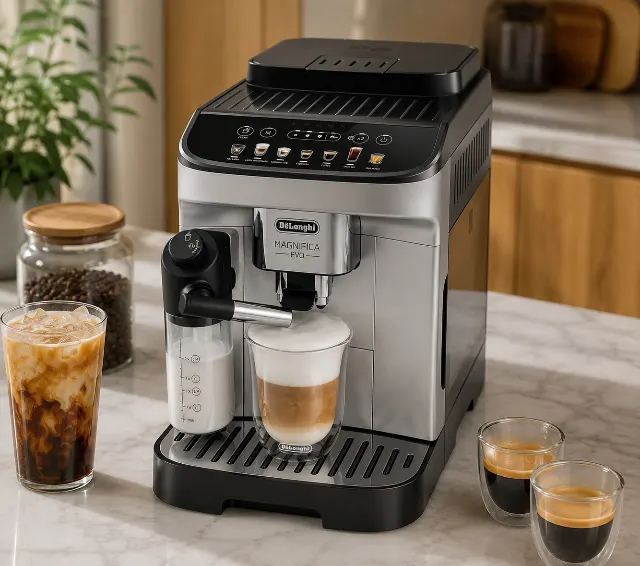
The De'Longhi Dedica is a cheaper, slimmer alternative. It also heats up quickly but has a much weaker steam wand and feels less substantial. It's a good budget option for straight espresso but falls short for milk drinks. On the other end, you have super-automatic machines like the De'Longhi Magnifica Evo Automatic Espresso & Coffee Machine, which grind, brew, and steam at the touch of a single button. They offer more convenience but less control over the final product and come at a significantly higher price.
The overlooked detail is that the Bambino Plus, despite its automation, still teaches you the fundamentals of puck prep (distribution and tamping), a skill that is lost with a super-automatic. It occupies a unique middle ground.
Best suited to
Best for: Newcomers to espresso, people with small kitchens, and anyone who values speed above all else for their morning coffee routine.
Not ideal for: Aspiring home baristas, tinkerers, anyone who prioritizes build quality and longevity over features, or those who drink mostly straight espresso and don't need the advanced milk frothing.
This machine is for the person who wants to graduate from a pod system but is intimidated by the complexity and time commitment of traditional semi-automatic machines. It automates the two most difficult parts of the process—temperature stability and milk frothing—allowing the user to focus on the basics of grinding and tamping. It is a purpose-built appliance for making good lattes and flat whites, fast.
Is the Breville Bambino plus a Good Investment?
As an appliance, yes. As a long-term hobbyist machine, no. Its value is front-loaded. It provides an excellent experience out of the box with a minimal learning curve. However, its proprietary 54mm ecosystem and non-serviceable design mean that when you outgrow its capabilities or when it eventually fails after 5-7 years, you are replacing the entire unit. A machine like the Gaggia Classic Pro costs less upfront and can be repaired and upgraded for decades. The investment in the Bambino Plus is in convenience and time saved today, not in an asset that will last a generation. Owner feedback splits roughly evenly on this; about half are happy to replace it after 5 years, while the other half wish they'd bought a more durable, standard machine from the start.
The takeaway
The Breville Bambino plus remains one of the smartest entry points into home espresso in 2026, but only if you understand exactly what you're buying. It is an exceptional convenience appliance that makes very good coffee. It is not, and was never intended to be, a scaled-down version of a professional machine. Its speed is its defining characteristic, and its automatic milk frothing is genuinely effective. The compromises are in its light construction, proprietary parts, and a performance ceiling that a dedicated enthusiast will hit within a year.
It successfully solved the problem of making home espresso fast and accessible. The spec sheet implies it's a do-it-all machine, but what owners report is that it's a specialist for milk-based drinks. That said, one thing the spec sheet doesn't resolve is just how much of a difference a quality grinder makes; pairing this machine with a capable burr grinder elevates it from a good appliance to a great one.
For the right person, this is the perfect machine. For the wrong person, it's a frustratingly limited one.
Where the scores land
- Value
- ★★★★★ ★★★★★ 4.0
- Quality
- ★★★★★ ★★★★★ 4.1
- Ease of use
- ★★★★★ ★★★★★ 4.6
- Durability
- ★★★★★ ★★★★★ 4.0
In its favour
- ✓ThermoJet system heats water to a stable 93°C in just 3 seconds, a speed unmatched by any traditional boiler machine.
- ✓Automatic steam wand with adjustable temperature and texture settings consistently produces quality microfoam.
- ✓Includes a 3-way solenoid valve, which creates dry, easy-to-clean pucks—a feature usually found on more expensive machines.
- ✓Extremely compact footprint (under 8 inches wide) fits easily in small kitchens where counter space is at a premium.
- ✓Low-pressure pre-infusion function improves extraction consistency, reducing channeling for more balanced shots.
What could be better
- ✕The 54mm portafilter size limits the availability of quality third-party accessories like tampers and baskets.
- ✕Lightweight construction causes the machine to slide on the counter when locking in the portafilter.
- ✕Internal water path uses some plastic components, raising long-term durability concerns compared to all-metal machines.
- ✕Drip tray fills quickly due to the automatic steam wand purge cycle, requiring daily emptying.
Who it is for
Ideal for the apartment dweller or couple who wants a latte before work without a 20-minute ritual. It's for the person upgrading from a pod machine who values convenience over ultimate control. Skip this if you plan to experiment with advanced techniques or want a machine that will last a decade; its plastic internals and 54mm ecosystem are limiting.
The case for it
The Bambino Plus solves the 'no time in the morning' problem. A <a href="/espresso-machines/gaggia-classic-pro/">Gaggia Classic Pro</a> makes a marginally better shot but requires a 15-minute warmup and manual steaming skills. The Bambino Plus is ready in 3 seconds and froths milk for you, delivering a drink that is 90% as good in 10% of the time.
Specifications
| Type | Semi-automatic with automatic milk frothing |
|---|---|
| Boiler system | ThermoJet (thermoblock) |
| Portafilter size | 54mm |
| Pump pressure | 9 bar (via 15 bar Italian pump with over-pressure valve) |
| Steam wand | Automatic with adjustable temperature and texture |
| Built-in grinder | No |
| Water tank | 1.9 L (64 oz) |
| Heat-up time | 3 seconds |
| Warranty | 1 Year Limited Product Warranty (US/Canada), 2 Year Repair, Replace or Refund Guarantee (UK) |
Frequently asked questions
Is the Breville Bambino Plus any good?
Yes, it is excellent for beginners who want cafe-quality drinks without a steep learning curve. Its main strengths are the 3-second heat-up time and the reliable automatic milk frothing system, making it incredibly fast and convenient for daily use in a home setting.
What is the difference between Breville Bambino and Bambino Plus?
The Bambino Plus model has three key upgrades over the standard Bambino: an automatic steam wand with adjustable settings, a 3-way solenoid valve for drier coffee pucks, and a larger 1.9L water tank. The automatic frothing and cleaner pucks make it a significant step up.
What are the common problems with the Breville Bambino Plus?
Common issues often relate to user error, such as using the wrong grind size, which prevents the machine from reaching pressure. Other reported problems include the machine's light weight causing it to move on the counter and the need for frequent descaling in hard water areas.
What is the lifespan of a Breville Bambino Plus?
With consistent cleaning and maintenance, the expected lifespan of a Breville Bambino Plus is between 5 and 7 years. Its longevity is highly dependent on regular descaling, as scale buildup in the ThermoJet system is the most common cause of performance issues over time.
What is the Bambino Plus BES500?
The model number BES500 identifies the Breville Bambino Plus espresso machine. The letters that follow, such as 'BSS' for Brushed Stainless Steel, indicate the color or finish. Using the BES500 model number ensures you are looking at the 'Plus' version, not the standard Bambino (BES450).
What size portafilter does the Breville Bambino Plus use?
The Breville Bambino Plus uses a 54mm portafilter, which is a proprietary size for most of Breville's consumer machines. This is smaller than the 58mm commercial standard, which limits options for third-party accessories like tampers, baskets, and funnels.
People also ask
- Is the Breville Bambino Plus good for beginners?
- What is the difference between the Bambino and Bambino Plus?
- What are the most common issues with the Breville Bambino Plus?
- How long does a Breville Bambino Plus typically last?
- What is the portafilter size for the Breville Bambino Plus?
- Can you pull a shot and steam milk at the same time on the Bambino Plus?
- How long does the Breville Bambino Plus take to heat up?
- Is the Breville Bambino Plus any good for beginners?
- What is the difference between the Breville Bambino and the Bambino Plus?
- What are the most common problems with the Breville Bambino Plus?
- What is the expected lifespan of a Breville Bambino Plus?
- What size is the portafilter on the Breville Bambino Plus?
You might also like
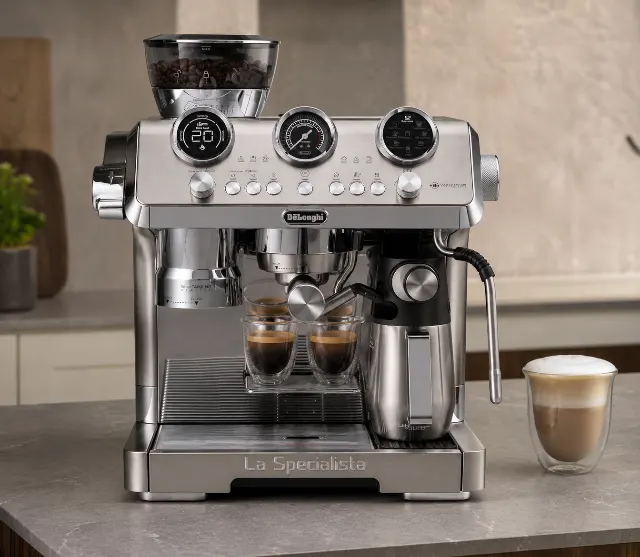
De'Longhi La Specialista Maestro Espresso
The De'Longhi La Specialista Maestro excels at convenient, repeatable espresso with a built-in tamper, but its grinder and plastic components betray its premium price point for purists.
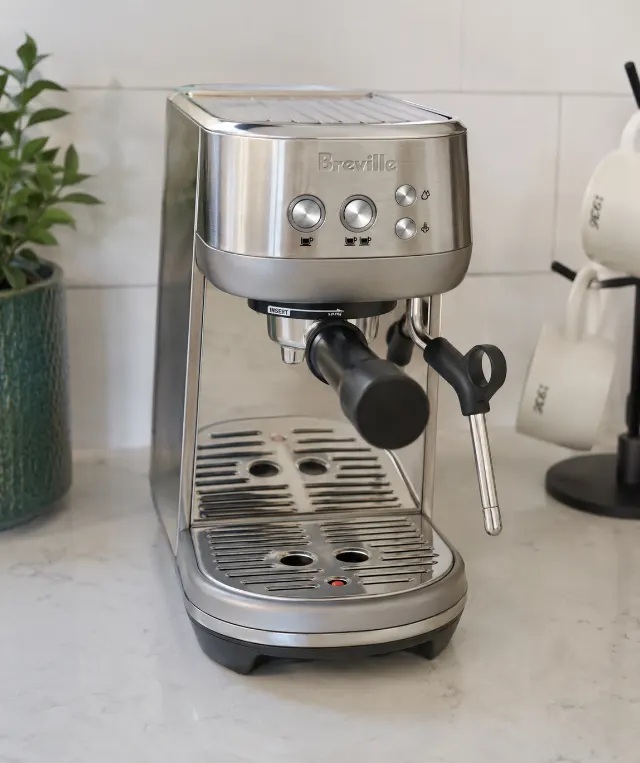
Breville Bambino
Our 2026 review of the Breville Bambino finds it's still the fastest entry-level espresso machine, but its long-term durability hinges on diligent cleaning.
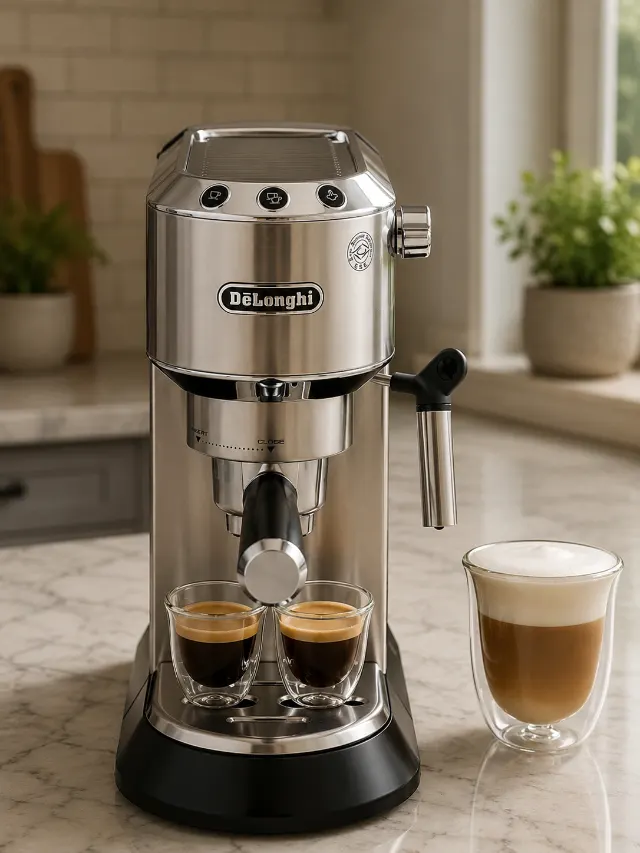
De'Longhi Dedica
The De'Longhi Dedica is a compact, fast-heating espresso machine ideal for small kitchens, but its pressurized system and weak steam wand limit true espresso hobbyists.
Gaggia Classic Pro
A durable, mod-friendly espresso machine for hobbyists, the Gaggia Classic Pro demands a learning curve but rewards with true café-quality potential.
De'Longhi Magnifica Evo Automatic Espresso & Coffee Machine
A super-automatic that delivers genuine convenience for daily coffee and milk drinks, but demands strict adherence to its cleaning schedule to avoid long-term issues.