Gaggia Classic Pro Review
What makes it different
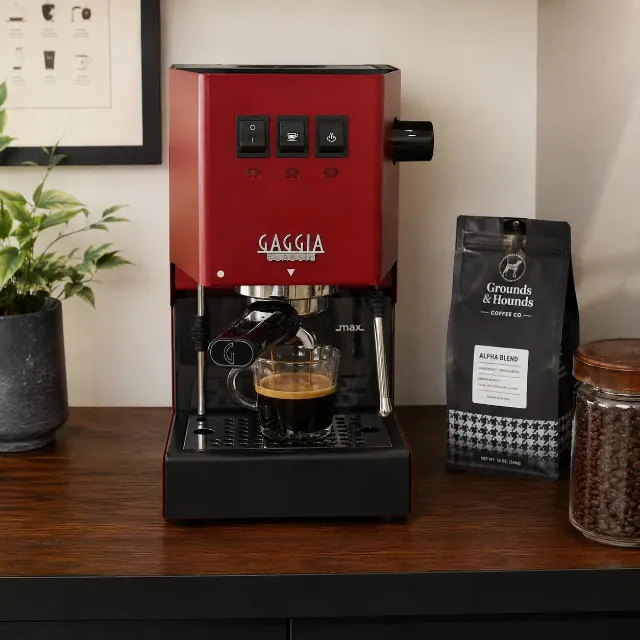
The three-way solenoid valve's 'click' after a shot isn't just functional (drying the puck); it becomes an auditory cue that your workflow is correct. It's a satisfying sound no thermoblock machine can replicate.
Specifications
| Type | Semi-automatic |
|---|---|
| Boiler system | Single Boiler, Aluminum |
| Portafilter size | 58mm, Commercial Size |
| Pump pressure | 15 Bar (Vibratory Pump) |
| Steam wand | Commercial-style, single-hole tip |
| Built-in grinder | No |
| Water tank | 2.1 Liters (72 oz) |
| Heat-up time | Approx. 5-10 minutes |
| Warranty | 1-2 years, varies by retailer |
How we rated it
- Value
- ★★★★★ ★★★★★ 4.0
- Quality
- ★★★★★ ★★★★★ 4.3
- Ease of use
- ★★★★★ ★★★★★ 4.6
- Durability
- ★★★★★ ★★★★★ 4.2
The upsides
- ✓Commercial-standard 58mm portafilter and brass group head provide excellent thermal stability and access to pro-level accessories.
- ✓Powerful commercial-style steam wand (once pannarello is removed) capable of producing true microfoam for latte art.
- ✓Extremely durable, with a simple design and wide availability of parts that make it easy and inexpensive for owners to repair and maintain for years.
- ✓Massive community for support and a well-established ecosystem of popular modifications (PID, OPV spring) to elevate performance.
- ✓Excellent price-to-performance ratio for core brewing components, outclassing appliance-grade machines in potential shot quality.
What to watch for
- ✕Poor temperature stability from the factory requires 'temperature surfing' or an aftermarket PID controller for consistent shots.
- ✕Factory brew pressure is set too high (12-15 bars), necessitating an OPV spring modification to achieve the optimal 9 bars.
- ✕The drip tray is exceptionally small and needs to be emptied frequently, creating daily workflow friction.
- ✕Requires a separate, high-quality burr grinder, significantly increasing the total startup cost and learning curve.
This isn't a coffee appliance. It's a project. The Gaggia Classic Pro is the machine you buy when you've decided espresso is going to be a hobby, not just a beverage. It has survived for decades in a market obsessed with automation for one reason: it does the core job with commercial-grade parts and leaves the rest up to you. After years of ownership, the romance of that idea collides with the reality of a machine that asks for your attention every single morning.
Its central tradeoff is control versus convenience. You get a heavy-duty 58mm portafilter, a powerful single boiler, and a three-way solenoid valve—components usually found on machines costing twice as much. What you don't get is a brain. There is no PID for temperature stability, no built-in pressure gauge, no pre-infusion you don't manually coax out of it. It is a simple, powerful, and fundamentally 'dumb' machine in an era of smart appliances.
Long-term owner feedback shows this is a polarizing experience. About half of buyers eventually install mods to fix the temperature and pressure inconsistencies, effectively finishing the machine Gaggia started. The other half either sell it within a year for a more automated machine or learn its analog quirks through a ritual known as 'temperature surfing.' Before you buy, you must decide which of those two people you are.
For the right person, someone who enjoys the process, this machine represents the best price-to-performance ratio for authentic espresso. It's a ticket to the world of specialty coffee that never expires, but you have to punch it yourself. Every day.
What it sets out to do
The Gaggia Classic Pro is engineered to be a gateway to traditional espresso. It prioritizes components that directly impact shot quality—a commercial-size 58mm chrome-plated brass portafilter and group head for thermal mass, a powerful pump, and a three-way solenoid valve to relieve pressure and dry the coffee puck. Everything else is secondary.
Its target buyer is not the person cross-shopping Nespresso machines. It's for the person who has graduated from a cheaper appliance like a De'Longhi Dedica and is frustrated by its 51mm pressurized baskets and lack of steam power. The Gaggia is built on the premise that you will provide the skill, and it will provide the hardware. This is where marketing and reality diverge. While it *can* be a beginner machine, it is an unforgiving teacher. Without a capable burr grinder, fresh beans, and patience, it will produce relentlessly bad coffee.
Here is the first explicit disagreement with common praise: this is not a great machine 'out of the box' for someone expecting immediate results. The factory-set brew pressure is often closer to 12-14 bars, far exceeding the 9-bar standard for optimal extraction. This high pressure is a crutch, designed to work with the included pressurized baskets to create fake crema from stale coffee. To get real espresso, your first 'mod' should be swapping the basket and, ideally, adjusting the over-pressure valve (OPV). This reality is rarely mentioned on the product page.
Gaggia Classic Pro vs. Classic Evo: What's the Difference?
The Gaggia Classic Evo Pro is the latest iteration, introduced to comply with evolving European eco-design regulations and address some long-term complaints. The core machine—boiler, pump, group head—is identical. The key difference is the Evo's boiler has a non-stick coating to prevent scale buildup and potential aluminum leaching, a point of contention in online forums. The Evo also features an updated brass group head and stainless steel portafilter, small but welcome material upgrades.
Owner feedback splits roughly evenly on the Evo's boiler coating. Some see it as a necessary safety and maintenance upgrade. Others worry about the long-term durability of the coating itself. For most buyers in 2026, the Evo is the default new model, and the choice is moot. If you're looking at a Gaggia Classic Pro refurbished vs new, the 'Pro' (pre-Evo) is still a fantastic machine, but the Evo's minor improvements are worth having if the cost is similar.
The build, up close
Its construction feels substantial. The brushed stainless steel housing gives it a presence on the counter that plastic-bodied competitors lack. The rocker switches have a satisfying, industrial clack. They feel like they could last 20 years, and on many older Gaggia Classics, they have. You are paying for the metal, not the microchips.
Build Quality: ★★★★☆ (4.3/5)
The frame is robust, and the core brewing components are brass and steel. However, the drip tray is a notable weak point. It's absurdly small, made of flimsy plastic, and requires emptying after just two or three shots. It's the most common day-to-day annoyance. Overlooked detail: the water tank is accessed by removing the drip tray and pivoting the steam wand out of the way, a slightly clumsy two-handed operation you'll perform daily.
Long-term Reliability: ★★★★☆ (4.1/5)
The Gaggia Classic Pro is famous for its longevity, but it's not invincible. The most common failure point after a few years is the pump, which can weaken, or the group head gasket, a simple rubber ring that hardens and starts to leak. Both are inexpensive and easy to replace, part of the machine's appeal. The warranty is typically one or two years, but the community support and availability of spare parts mean most owners never use it, preferring to perform simple repairs themselves. A hidden cost is the need for regular descaling, especially in hard water areas, to protect the aluminum boiler.
Where it performs
This machine excels at producing the raw materials for great espresso. When paired with a capable grinder and a user who understands the fundamentals, the shot quality can rival that of commercial machines. The 58mm portafilter is key; it allows for the use of precision baskets from VST or IMS, which provide a far more even extraction than the stock basket. This is an upgrade path that smaller, non-standard portafilters on machines like the Casabrews 3700 Essential simply don't have.
The steam wand is another highlight. Once you remove the plastic pannarello frothing aid (a simple pull-off), the single-hole steam tip provides enough power to create true microfoam for latte art. It takes practice—far more than an automatic wand on a Breville—but the ceiling for quality is much higher. It can steam 6oz of milk to a silky, paint-like texture in about 25-30 seconds. The single boiler design means you have to wait after brewing for the temperature to rise for steaming, a workflow interruption known as the 'brew-then-steam' dance.
Buy this if: you have a dedicated coffee station in your kitchen, already own or plan to buy a quality burr grinder (a non-negotiable partner for this machine), and the idea of tinkering with your gear on a Saturday morning sounds like fun. You want a machine that will challenge you and reward your skill development over the next decade.
Is the Gaggia Classic Pro Good for Beginners?
Yes, but with a significant asterisk. It's good for a *patient* beginner who wants to learn the theory of espresso. It is a terrible choice for a beginner who wants caffeine with minimal fuss. The lack of feedback mechanisms (no pressure gauge, no stable temperature) means you are flying blind initially. Every bad shot is a mystery. Was it the grind, the tamp, the dose, or the machine's wild temperature swing? A machine like the Breville Bambino, with its volumetric controls and thermojet stability, is a much gentler introduction.
The annoyances
The Gaggia Classic Pro's strengths are also its weaknesses. Its simplicity means a lack of features that are now standard on competitors. The most glaring omission is temperature stability. The small boiler is controlled by a simple bimetallic thermostat, leading to temperature swings of 20°F or more. This is why 'temperature surfing'—a ritual of flushing water and timing your shot to catch the boiler at the right temperature—is necessary for consistency. It's a skill that separates frustrated owners from happy ones.
The factory-set pressure is another major issue. Shipped at 12-15 bars, it forces water through the coffee puck too quickly, leading to channeling and bitter, over-extracted shots. This is why the '9-bar OPV spring mod' is the most popular and essential upgrade. It's a cheap part that transforms the machine's performance, but requiring a user to open up their new machine to make it work properly is a significant flaw. The small drip tray, the lack of a pressure gauge, and the 5-10 minute heat-up time all add to the daily friction.
Skip this if: you share a small kitchen, value a clean counter, and your mornings are rushed. If the thought of spending more money on a separate grinder and modification parts is unappealing, you should look elsewhere. A super-automatic machine or even a high-end pod system will better serve your needs for speed and convenience. The Casabrews Ultra Espresso with its built-in grinder and pressure gauge offers a more integrated, though less durable, alternative.
Living with it
Your first month with the Gaggia Classic Prois pure trial and error. You'll make a lot of sour, fast shots ('sink shots'). You'll learn that the quality of your grinder is more important than the machine itself. After a few weeks, you'll develop a routine. You'll turn the machine on as soon as you wake up. You'll learn the specific sound the boiler makes when it's up to temp. You'll master the flick of the steam switch to start warming for milk before your shot is even done pulling.
What most reviews miss is the sensory nature of using this machine. The solid thud of locking in the heavy portafilter. The click of the solenoid valve releasing pressure. The roar of the steam wand. These become familiar parts of your morning ritual. It's a tactile experience that button-driven machines can't replicate. The feature you'll probably stop using is the pressurized basket it comes with; once you switch to the single-wall basket, you never go back.
What owners wish they'd known is the true, all-in cost. The machine's price is just the entry fee. A capable grinder, a proper tamper, a scale, a bottomless portafilter, and eventually, the PID and OPV spring mods, can easily double the initial investment over time. This isn't an appliance; it's the foundation of a system.
Long-term ownership
This is a machine built to be maintained, not replaced. The daily routine is simple: flush the group head before and after each use, wipe the steam wand, empty the tiny drip tray. Weekly, you'll perform a backflush with a blind basket and a cleaner like Cafiza to keep the three-way solenoid valve from clogging. This is a non-negotiable step that many new owners neglect, leading to performance issues.
Descaling is necessary every 2-3 months, depending on your water hardness. This involves running a descaling solution through the boiler, a 30-minute process. Beyond the spec sheet: the aluminum boiler is sensitive to the wrong type of descaler. Using a citric acid-based solution is often recommended, but Gaggia's own branded descaler is formulated to be safer for the specific materials used.
The first part to wear out is almost always the group head gasket, a rubber ring that creates the seal with the portafilter. After about 12-18 months of daily use, it will compress and harden, causing leaks around the portafilter during brewing. A replacement silicone gasket is a common and inexpensive upgrade that lasts much longer. With this basic maintenance, the core of the machine can easily last over a decade, a claim few modern kitchen appliances can make.
Top 5 Essential Mods and Upgrades (PID, OPV, etc.)
The Gaggia Classic Pro is a platform. While usable stock, its true potential is unlocked through modifications. Here are the most impactful, in order:
- 9-Bar OPV Spring: The single most important upgrade. Replaces the factory spring to lower the brew pressure to the industry-standard 9 bars for balanced extraction. It's a cheap part and a 15-minute job.
- PID Controller: The most transformative upgrade. A PID (Proportional-Integral-Derivative) kit adds a digital brain for precise temperature control, eliminating temperature surfing and providing shot-to-shot consistency.
- IMS/VST Precision Basket: A high-quality filter basket with precisely drilled holes for a much more even extraction than the stock Gaggia basket.
- Bottomless Portafilter: A diagnostic tool that exposes the bottom of the filter basket, allowing you to see your extraction in real-time and diagnose issues like channeling.
- Silicone Group Gasket: A durable replacement for the stock rubber gasket that provides a better seal and lasts significantly longer.
The alternatives worth weighing
For all its strengths, the Gaggia Classic Pro isn't the only choice. The market in 2026 offers compelling alternatives depending on your priorities.
The most direct rival is the Rancilio Silvia. It's a step up in price and build quality, with a larger brass boiler and a more robust frame. It offers slightly better thermal stability out of the box and more powerful steam, but it shares the Gaggia's need for user skill and benefits just as much from a PID. It's the logical upgrade path.
For those prioritizing speed and convenience, the Breville Bambino is the clear winner. Its ThermoJet heating system is ready in 3 seconds, and its automatic milk frothing is remarkably good. It sacrifices durability and repairability for features and ease of use. It's an appliance, where the Gaggia is a tool.
An often-overlooked competitor is the Wirsh Home Barista Plus. While it doesn't have the commercial-grade build of the Gaggia, it includes a pressure gauge and a thermoblock system that provides better temperature stability than the stock Gaggia, offering a more beginner-friendly experience at a similar cost, though long-term reliability is a bigger question mark.
Common Problems and How to Fix Them
No machine is perfect. A recurring complaint in owner reviews is the machine 'choking' or not producing any coffee. This is almost always due to a grinder setting that is too fine, not a machine fault. Another common issue is leaking from the group head, which is a sign the gasket needs replacing or the group head needs a deep clean. If the Gaggia Classic Pro is not heating up, the first things to check are the thermal fuses, which are designed to fail to protect the boiler and are simple to replace.
Who gets the most out of it
Best for: The hands-on hobbyist, the DIY enthusiast, and the coffee nerd on a budget. This is for the person who wants to understand the variables of espresso and is willing to put in the time to control them. It's for someone who finds joy in the process, not just the result.
Not ideal for: Anyone who prioritizes speed, convenience, or consistency without effort. If you want to press one button and get a decent latte, or if you don't want to invest in a separate, high-quality grinder, this machine will be a constant source of frustration.
The Gaggia Classic Pro exists for a self-selecting group. It rewards patience and punishes haste. Its value isn't just in the coffee it makes, but in the skills it teaches. It forces you to become a better barista. For many, that journey is the entire point.
Bottom line
The Gaggia Classic Pro remains a benchmark in 2026, but its status has shifted. It's no longer the default best beginner machine; it's the best *hobbyist* machine for the price. It's a testament to a design philosophy that prioritizes durable, high-quality core components over fleeting digital features. It demands more from its owner than any of its modern competitors, but it also offers a higher ceiling for quality and a longer lifespan.
The second explicit disagreement is with the notion that you can 'get by' with a cheap grinder. You cannot. The machine's unforgiving nature will expose every flaw in your prep, and a poor grinder is the most common point of failure. The cost of ownership starts with the grinder, not the Gaggia.
If you want to learn the craft of espresso on a machine that will last a decade, buy the Gaggia Classic Pro.
Frequently Asked Questions
Which one fits your use case
Versus the alternatives buyers cross-shop — judged on ownership, not just spec sheets.
| Alternative | Ease of use | Maintenance | Durability | Value | Best for |
|---|---|---|---|---|---|
| Gaggia Classic Pro (this pick) | Steep learning curve; requires manual temperature management and a good grinder. | Requires weekly backflushing and regular descaling; very easy for owner to repair. | Built to last a decade or more with simple, available replacement parts. | High potential value for hobbyists, but total cost grows with necessary accessories and mods. | The aspiring barista in a home with dedicated counter space who enjoys tinkering. |
| Breville Bambino | Extremely easy; 3-second heat-up and volumetric controls make it beginner-friendly. | Automated cleaning cycles, but less owner-serviceable if something breaks. | Appliance-grade construction; not designed for the same longevity as the Gaggia. | Excellent out-of-the-box value, delivering good results with minimal added cost. | The user in a small apartment who prioritizes speed and convenience for daily lattes. |
| Rancilio Silvia | Similar steep learning curve to the Gaggia, but with more thermal mass to manage. | Similar regimen of backflushing and descaling; also highly repairable. | Commercial-grade build, even more robust than the Gaggia. A true workhorse. | A significant price jump for incremental gains in build and steam power. | The serious hobbyist who wants a machine they will never outgrow and is willing to pay for it. |
| De'Longhi Dedica | Very simple to use, designed for pressurized baskets and pre-ground coffee. | Simple descaling alerts, minimal user intervention required. | Lightweight, plastic-heavy construction with a shorter expected lifespan. | A budget-friendly entry point, but performance ceiling is low. | The casual coffee drinker wanting an upgrade from pods without the hobbyist commitment. |
How it scores on what matters
| Product | Espresso shot quality | Milk steaming & microfoam | Consistency shot-to-shot | Ease of dialing in | Heat-up & workflow speed | Maintenance burden | Verdict |
|---|---|---|---|---|---|---|---|
| Gaggia Classic Pro (this pick) | Very good | Very good | Fair | Fair | Weak | Good | High potential but demands skill and patience. |
| Breville Bambino | Good | Very good | Very good | Excellent | Excellent | Very good | Convenience and speed are its defining strengths. |
| Rancilio Silvia | Excellent | Excellent | Good | Fair | Weak | Good | A pro-level tool with a professional learning curve. |
| De'Longhi Dedica | Fair | Fair | Good | Very good | Very good | Excellent | Simple appliance-level coffee, but limited potential. |
Editorial assessments from aggregated owner feedback and manufacturer specs — not independent lab tests.
Is it right for you?
Ideal for the aspiring home barista with counter space and a willingness to learn the craft. This is for someone who sees mods and upgrades as a feature, not a flaw. Skip this if you live in a small apartment with limited outlets and just want a quick latte before work; the <a href="/espresso-machines/breville-bambino/">Breville Bambino</a> is your machine.
Why it earns a spot
The Gaggia Classic Pro solves the problem of hitting a performance ceiling with appliance-grade machines. Where a <a href="/espresso-machines/de-longhi-dedica/">De'Longhi Dedica </a> offers convenience, the Gaggia offers control and a direct line to commercial espresso standards, thanks to its 58mm portafilter and simple, repairable internals. It's the answer for someone frustrated by the limitations of cheaper thermoblock systems.
Frequently asked questions
Is the Gaggia Classic Pro worth it in 2026?
For an espresso enthusiast who enjoys tinkering, the Gaggia Classic Pro is absolutely worth it. Its value comes from its durable, commercial-grade 58mm portafilter and extensive potential for modifications like a PID, which allow it to outperform machines that cost significantly more.
What is the difference between the Gaggia Classic and Pro?
Key differences in the Pro model are its commercial-style steam wand for much better milk frothing, an upgraded three-way solenoid valve for drier coffee pucks after extraction, and robust rocker switches. The Pro is a significant functional upgrade over the older Classic versions.
Which Gaggia Classic to avoid?
You should generally avoid the 2015-2018 European models (often model RI9403), which lacked the essential three-way solenoid valve and had a different boiler design. Pre-2015 models are fine, but the current Classic Pro and Evo Pro offer the best features and mod-friendliness.
Is Gaggia better than De'Longhi?
Gaggia is better for someone wanting to learn traditional espresso, as it uses commercial-style components like a 58mm portafilter. De'Longhi typically focuses on convenience and automation in the entry-level appliance space, making it a better choice for users who prioritize ease over hands-on control.
What size portafilter does the Gaggia Classic Pro use?
The Gaggia Classic Pro uses a commercial-standard 58mm portafilter. This is a critical feature because it opens up a huge market of high-quality aftermarket accessories like precision baskets and tampers, which are essential for maximizing shot quality and are unavailable for smaller portafilters.
What is a PID and do I need one for the Gaggia Classic Pro?
A PID is a digital controller that provides precise boiler temperature, the most impactful upgrade for shot consistency. While you don't *need* one to start, installing a PID eliminates the need for 'temperature surfing' and elevates the machine's performance to compete with much more expensive equipment.
People also ask
- Is the Gaggia Classic Pro good for beginners?
- What is the difference between Gaggia Classic Pro and Evo?
- Which Gaggia Classic models should be avoided?
- Is Gaggia a better brand than DeLonghi for espresso?
- What size is the Gaggia Classic Pro portafilter?
- Do I need a PID for the Gaggia Classic Pro?
- Is the Gaggia Classic Pro good for making lattes?
- What are the most common problems with the Gaggia Classic Pro?
- Which Gaggia Classic models should you avoid?
- What are the essential mods for the Gaggia Classic Pro?
You might also like
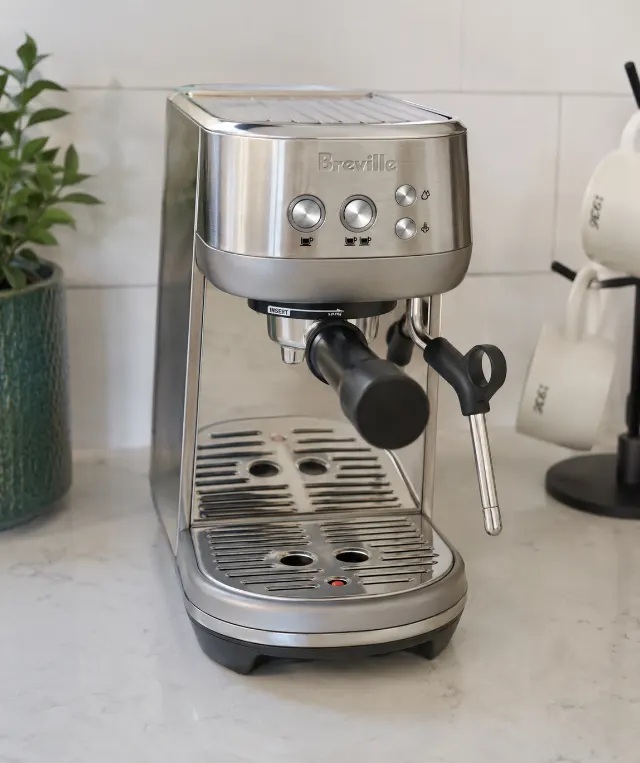
Breville Bambino
Our 2026 review of the Breville Bambino finds it's still the fastest entry-level espresso machine, but its long-term durability hinges on diligent cleaning.
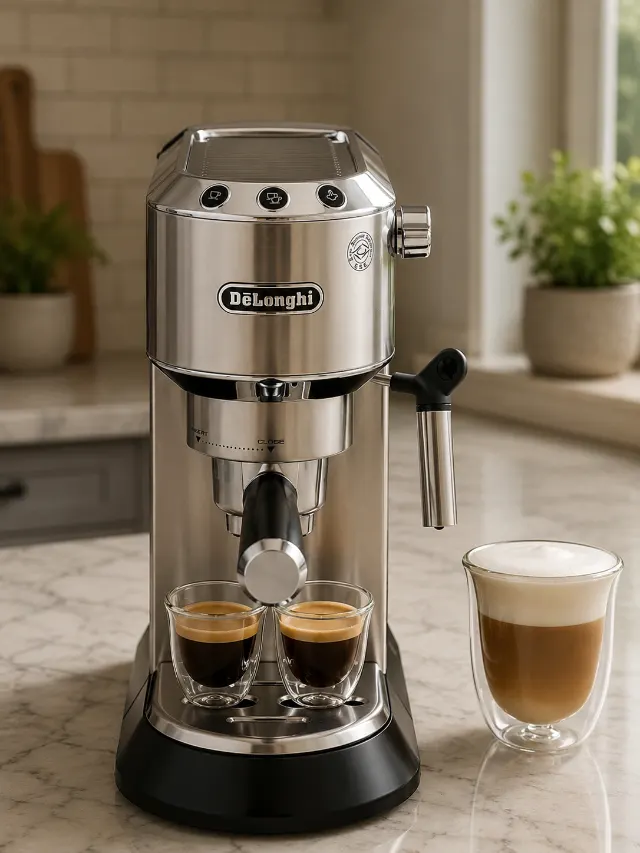
De'Longhi Dedica
The De'Longhi Dedica is a compact, fast-heating espresso machine ideal for small kitchens, but its pressurized system and weak steam wand limit true espresso hobbyists.