De'Longhi Dedica Review
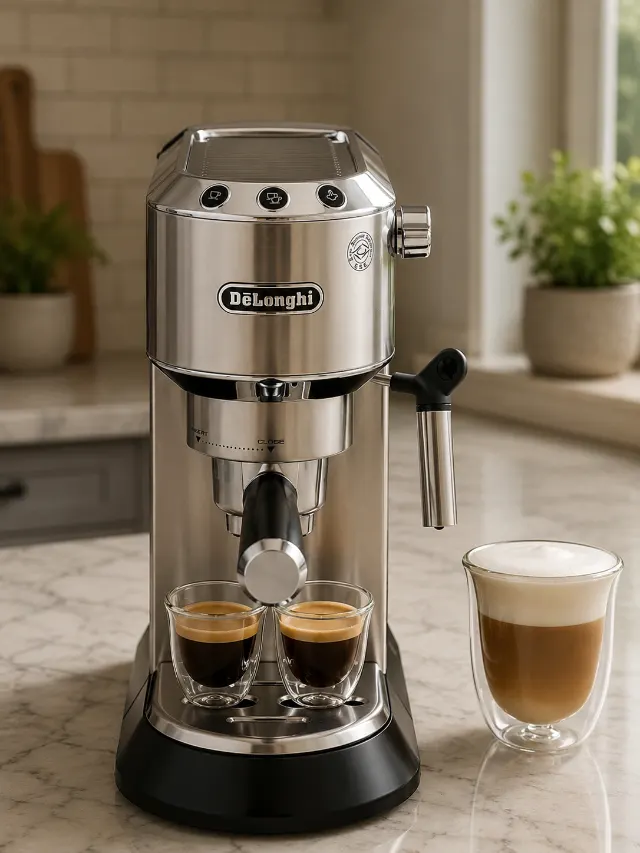
The biggest myth about entry-level espresso machines is that a high bar pressure number on the box equals better coffee. De’Longhi stamps “15 BAR PUMP” on the Dedica’s box, and a new buyer assumes that’s the key to café-quality shots. It isn't. The reality, after a year of ownership, is that the machine is fighting to get *down* to the ideal 9-bar extraction pressure, and the component that makes this possible—the pressurized filter basket—is the very thing you'll want to replace first.
This basket has a single tiny hole on the bottom, artificially creating resistance to build pressure, even if your coffee grind is wrong. It produces a thick, bubbly, but ultimately one-dimensional “crema.” It’s a brilliant training wheel. It guarantees a decent-looking result from pre-ground coffee. But it also masks the nuances of fresh beans and a good grinder, which is the entire point of this hobby. Living with a Dedica is a journey of realizing the machine’s greatest strength for a beginner (foolproof shots) is its greatest weakness for an enthusiast.
The De'Longhi Dedica Espresso Machine is not a smaller version of a professional setup. It is a cleverly engineered appliance designed to deliver espresso-like drinks with maximum convenience in a minimal footprint. For many, that is exactly what they need. For others, it’s a frustrating gateway. This review is for both groups.
What this is, in plain terms
This is a compact, thermoblock-powered semi-automatic espresso machine. That means it uses a flash-heating element (a thermoblock) to get water to temperature quickly, rather than heating a large reservoir of water in a boiler. You grind and tamp the coffee yourself, lock in the portafilter, and press a button to start and stop the shot. It is optimized for speed and space-saving above all else. Its 6-inch width is its defining feature.
The target buyer is someone upgrading from a pod machine or a drip coffee maker who wants to make lattes and cappuccinos at home without dedicating significant counter space or learning the deep science of espresso. De'Longhi's marketing suggests a premium Italian coffee experience. The spec sheet implies this with its 15-bar pump, but what owners report is closer to a very competent appliance for making coffee-shop-style drinks. The distinction is crucial. This is not the machine for someone chasing the perfect, syrupy god-shot of straight espresso.
De'Longhi Dedica Models Compared: EC680 vs EC685 vs Arte vs Maestro Plus
Navigating the Dedica lineup is confusing. The core machine is largely the same across versions. The EC680 is the original model. The De'Longhi Dedica EC685 is the most common version, with minor internal tweaks and the ability to adjust water temperature. The key difference is the steam wand. The standard EC685 has an automatic cappuccino system (a Panarello wand) that injects air for you, making big, stiff foam easy but silky microfoam nearly impossible.
The De'Longhi Dedica Arte (EC885M) is the one to get if you care about milk texture. It includes a proper single-hole steam wand that allows for manual control to create the fine-textured microfoam needed for latte art. The newest De'Longhi Dedica Maestro Plus adds an auto-tamping function and a slightly more robust build, but at a price that puts it in direct competition with more capable machines. For most buyers, the Arte hits the sweet spot of features and cost.
How well it holds together
Build Quality: ★★★★☆ (4.1/5)
The stainless steel body looks sharp and feels more substantial than its low weight suggests. However, this lightness is a double-edged sword. You must hold the machine with one hand while locking the 51mm portafilter into the group head, or the whole unit will slide across the counter. Internals are a mix of metal and plastic tubing, typical for this price tier. The drip tray is small and feels flimsy, requiring frequent emptying.
Long-term Reliability: ★★★☆☆ (3.8/5)
Long-term owner feedback shows a pattern of issues after 18-24 months. The most common De'Longhi Dedica problems are leaking from the group head gasket—a cheap and easy fix—or a more serious internal leak from a hose connection. The pump and thermoblock are generally reliable, but shot temperature consistency can degrade over time, a sign of scale buildup. The warranty is typically one year, so failures after that are an out-of-pocket expense. This is not a machine you buy for a decade of service; it's a 3-5 year appliance.
Where it performs
It is fast. The thermoblock heating system brings the machine to a ready state in about 40 seconds, a massive quality-of-life win on a busy morning. For someone coming from a pod machine, the ability to use any coffee bean you want is the biggest upgrade. The programmable shot buttons, once you figure out the slightly arcane process of setting them, are consistent. Hold down the button until you have your desired volume, then let go to save it. It's a simple volumetric system that works.
Its compact size cannot be overstated. At just 15cm (6 inches) wide, it fits in kitchens where no other semi-automatic machine would. This is its single greatest advantage over every competitor. For apartment dwellers or those with cluttered countertops, this feature alone can make it the only viable choice. The espresso it produces with the stock pressurized basket is forgiving and produces a crema-like foam that works perfectly well when buried under steamed milk.
Buy this if: You live in a small apartment, primarily drink milk-based espresso drinks like lattes, and value speed and counter space above perfect shot quality. Your alternative would be a Nespresso machine, and you want a tangible upgrade in coffee quality and choice without the complexity of a Gaggia Classic Pro.
The annoyances
The tradeoffs are real. The biggest frustration for anyone trying to advance their skills is the pressurized portafilter system. While you *can* buy a non-pressurized basket for the 51mm portafilter, the machine struggles to provide the consistent temperature and pressure needed to make it work well without modification. This is a hidden cost; to get the most from the machine, you need a better basket, a bottomless portafilter to diagnose shots, and a capable espresso grinder that costs more than the Dedica itself.
Another recurring complaint in owner reviews is the steam wand. On the standard EC685, it's weak. It can heat milk, but creating silky, pourable microfoam is a battle. The Arte model's wand is a significant improvement, but it still lacks the power of competitors. The small drip tray fills up after just three or four shots, and the machine's light weight makes the entire experience feel less robust than heavier machines. Finally, the shot temperature can be inconsistent. The thermoblock is fast but lacks the thermal stability of a larger boiler, leading to occasional sour shots if you don't run a blank shot first to preheat everything.
Skip this if: Your primary goal is to learn to make high-quality, straight espresso and master latte art. You will quickly hit the Dedica's ceiling. You should stretch your budget for the Breville Bambino, which offers vastly superior temperature control and steam power, making the learning process far more rewarding.
De'Longhi Dedica vs. Breville Bambino: Head-to-Head
This is the critical comparison. The Dedica is narrower and often less expensive. The Bambino is better at making coffee. The Bambino's ThermoJet system heats up in a staggering 3 seconds. Its 54mm portafilter is a more standard size, and it includes both pressurized and non-pressurized baskets in the box. Most importantly, its steam wand is powerful enough to create true microfoam consistently. The Bambino also includes a form of pre-infusion, which gently wets the coffee puck before applying full pressure, leading to more even extractions. The Dedica has no pre-infusion. For anyone serious about the hobby, the Bambino is the clear winner on performance. The De'Longhi Dedica wins only on size and initial cost.
In everyday use
Here is the workflow you settle into. Turn it on, and by the time you've ground your beans, it's ready. You place a cup under the portafilter and run a blank, water-only shot to heat the portafilter, the group head, and the cup. You dry the basket, add your coffee, tamp, and lock it in (while holding the machine steady). You press the button for your shot. If you're making a milk drink, you'll immediately switch to steam mode, wait about 15 seconds for it to heat up, steam your milk, and then—critically—you must purge the steam wand and cool the thermoblock back down to brewing temperature before you can pull another shot. This temperature surfing is the reality of a single-heater system.
What most reviews miss is the impact of the 51mm portafilter size. It's a non-standard size, meaning the market for high-quality accessories like tampers, distribution tools, and precision baskets is much smaller and often more expensive than for the 54mm or 58mm standards. After a few weeks, you'll stop using the included plastic tamper and realize you need a proper metal one. That's your first unplanned purchase.
Care and running costs
Maintenance is straightforward. You'll need to descale the machine every 2-3 months, depending on your water hardness. The machine has an orange light that blinks to tell you when it's time. The descaling process is a bit fussy, involving a sequence of button presses and waiting for the tank to empty, then rinsing. It’s about a 30-minute job. The shower screen should be wiped down after each session, and the drip tray needs daily emptying and cleaning.
The primary running cost beyond coffee beans is descaling solution. You don't need the branded De'Longhi EcoDecalk; any generic descaler for espresso machines will work. The silicone group head gasket is the part most likely to fail. It can wear out after 2-3 years, causing leaks around the portafilter. It's an inexpensive part that is simple to replace yourself. The long-term cost of ownership is low, but the machine's lifespan is finite. Expect to replace it, not repair it, if a major component like the pump fails after the warranty period.
Essential Accessories and Upgrades
To elevate the De'Longhi Dedica , three purchases are non-negotiable. First, a capable burr grinder. The best grinder for the De'Longhi Dedica is one that can produce a consistent, fine grind suitable for espresso, like a Baratza Encore ESP. Second, a De'Longhi Dedica bottomless portafilter. This allows you to see your extraction in real-time, diagnosing issues like channeling. Third, a non-pressurized 51mm filter basket. This trio of upgrades transforms the Dedica from an appliance into a true, if limited, espresso machine. For those with the Arte model, a smaller milk pitcher (around 12 oz / 350 ml) will make steaming small quantities of milk much easier.
Where rivals do better
Competitors offer more performance for those with more space or a slightly larger budget. The Breville Bambino is the most obvious upgrade, offering superior temperature stability via its PID controller and much greater steam power. It’s the better machine for learning and growth.
For those who want a more durable, repairable machine and don't mind a slower heat-up time, the Gaggia Classic Pro is a legendary choice. It uses a commercial-style 58mm portafilter and has a simple, robust build that can last for decades with proper care. It requires more skill to use well but has a much higher performance ceiling.
On the budget end, machines like the Casabrews 3700 Essential offer a similar feature set for a lower price, though often with more plastic in the construction. The overlooked detail here is that while these budget alternatives exist, none match the Dedica's ultra-slim profile, which remains its unique selling proposition.
Who it is right for
Best for: The style-conscious beginner with a tiny kitchen who wants a simple, fast machine for daily lattes and is upgrading from a pod system.
Not ideal for: The aspiring home barista who wants to explore different beans, perfect extraction, and pour latte art. The machine's limitations will become a source of frustration rather than a tool for learning.
This machine sits in a specific niche. It serves the person who wants to say “I made this espresso” without needing to understand concepts like pre-infusion or PID temperature control. It’s for the user who values the morning ritual but prioritizes speed and simplicity over perfection. If the process is as important to you as the result, you need a different machine.
Bottom line
The De'Longhi Dedica is a masterclass in design and compromise. It delivers on its promise of espresso in a slim, attractive package, but it achieves this by using pressurized baskets that limit the ultimate quality of the coffee. It remains a valid choice in 2026 for a specific user, but the existence of the slightly more expensive but significantly more capable Breville Bambino makes the decision harder than ever.
For the space-constrained beginner, the Dedica Arte is a confident first step into the world of espresso.
The thing owners notice
THE X-FACTOR: The Dedica's thermoblock allows it to switch from brewing to steaming in under 20 seconds, a speed that beats many single-boiler machines that cost twice as much.
Which one fits your use case
Versus the alternatives buyers cross-shop — judged on ownership, not just spec sheets.
| Alternative | Ease of use | Maintenance | Durability | Value | Best for |
|---|---|---|---|---|---|
| De'Longhi Dedica (this pick) | Very easy with stock baskets; moderate learning curve with upgrades. | Requires regular descaling every 2-3 months; simple daily cleanup. | Appliance-grade; expect 3-5 years of regular use before issues arise. | Excellent entry-level price, but factor in cost of necessary upgrades. | Beginners in small apartments who prioritize space and speed for milk drinks. |
| Breville Bambino | Slightly more involved but yields far better results once dialed in. | Similar descaling, but backflushing is also required for long-term health. | Comparable build quality, but superior internals (PID, ThermoJet). | Higher initial cost but better long-term value as it doesn't need replacing as skills grow. | Aspiring hobbyists who want to learn proper technique from the start. |
| Gaggia Classic Pro | Steepest learning curve; fully manual and requires temperature surfing. | More involved, but highly repairable with huge community support. | Built like a tank; can last for decades with proper care and mods. | Excellent long-term value for tinkerers, but higher barrier to entry. | The hands-on enthusiast who values repairability and performance potential. |
| Casabrews 3700 Essential | Very similar to Dedica, with a simple interface and pressure gauge. | Standard descaling and cleaning for a thermoblock machine. | More plastic components; long-term owner data is less established. | Lower entry price, but brand reputation and support are less proven. | The budget-first buyer willing to trade brand history for a lower initial cost. |
How it scores on what matters
| Product | Espresso shot quality | Milk steaming & microfoam | Consistency shot-to-shot | Ease of dialing in | Heat-up & workflow speed | Maintenance burden | Verdict |
|---|---|---|---|---|---|---|---|
| De'Longhi Dedica (this pick) | Fair | Fair | Good | Fair | Excellent | Good | Fast and simple, but shot quality is limited. |
| Breville Bambino | Very good | Very good | Very good | Good | Excellent | Good | Superior performance makes the learning process rewarding. |
| Gaggia Classic Pro | Excellent | Good | Fair | Weak | Weak | Fair | Highest potential quality but requires the most skill. |
| Casabrews 3700 Essential | Fair | Fair | Good | Fair | Very good | Good | A budget alternative with a similar performance profile. |
Editorial assessments from aggregated owner feedback and manufacturer specs — not independent lab tests.
Where it wins
- ✓Ultra-slim 6-inch (15cm) width fits in almost any kitchen.
- ✓Thermoblock heater is ready to brew in under 40 seconds.
- ✓Simple push-button operation with programmable shot volumes.
- ✓Arte (EC885M) model includes a capable manual steam wand for microfoam.
- ✓Pressurized baskets are very forgiving for beginners using pre-ground coffee.
The downsides
- ✕Stock pressurized baskets limit espresso quality and nuance.
- ✕Weak steam power on non-Arte models makes good milk texture difficult.
- ✕Lightweight body moves around when locking in the portafilter.
- ✕Inconsistent shot temperature without pre-heating flush.
- ✕Non-standard 51mm portafilter limits accessory options.
The right buyer
Ideal for the apartment dweller with minimal counter space who wants to upgrade from pods to real espresso for milk drinks. Skip this if your goal is to master straight espresso shots and latte art; the investment in a Breville Bambino is justified for that path.
Why buy it
The Dedica solves the space and speed problem for casual espresso drinkers. It's significantly narrower than almost any competitor and heats up in under 40 seconds. For someone who just wants a decent latte without a huge machine or long wait, it beats the more complex <a href="/espresso-machines/gaggia-classic-pro/">Gaggia Classic Pro</a> on convenience alone.
The scorecard
- Value
- ★★★★★ ★★★★★ 4.6
- Quality
- ★★★★★ ★★★★★ 4.1
- Ease of use
- ★★★★★ ★★★★★ 4.8
- Durability
- ★★★★★ ★★★★★ 3.9
Specifications
| Type | Semi-automatic |
|---|---|
| Boiler system | Thermoblock |
| Portafilter size | 51mm |
| Pump pressure | 15 Bar (rated) |
| Steam wand | Panarello (standard/EC685) or Manual (Arte/EC885M) |
| Built-in grinder | No |
| Water tank | 1.1 L (37 oz) |
| Heat-up time | Approx. 40 seconds |
| Warranty | 1 year (US/Canada), 2 years (UK) |
Frequently asked questions
Is the De'Longhi Dedica worth it in 2026?
For those with severe space constraints who primarily make milk drinks, yes. However, the Breville Bambino offers substantially better performance for a modest price increase, making it a better long-term investment for anyone looking to grow their skills.
What are common De'Longhi Dedica problems?
The most frequent complaints from owners include the machine leaking from the group head gasket over time, inconsistent shot temperatures, a weak steam wand on non-Arte models, and the lightweight body sliding on the counter when attaching the portafilter.
Does the De'Longhi Dedica make real espresso?
Yes, it uses a pump to force hot water through finely-ground coffee, which is the definition of espresso. Out of the box, it uses pressurized baskets to ensure a crema-like foam, but it can be upgraded with non-pressurized baskets for more traditional espresso.
What is better, the Breville Bambino or De'Longhi Dedica?
The Breville Bambino is the better machine for espresso quality and milk frothing, thanks to its superior PID temperature control and more powerful steam wand. The Dedica's main advantages are its ultra-compact 6-inch width and typically lower initial cost.
What is the main difference between the Dedica Arte and the standard Dedica?
The key difference is the steam wand. The Dedica Arte (EC885M) has a proper, single-hole manual steam wand for creating latte art-quality microfoam. The standard Dedica (EC685) uses a Panarello-style wand that auto-froths milk into a stiffer, less integrated foam.
Can I use my own coffee grinder with the Dedica?
Absolutely, and you should. Using a quality burr grinder is the single biggest improvement you can make. To take full advantage of a good grinder, you will also need to purchase a separate non-pressurized filter basket for the 51mm portafilter.
People also ask
- How do you program the shot volume on a De'Longhi Dedica?
- Is the De'Longhi Dedica good for beginners?
- Is the De'Longhi Dedica worth it?
- What are common Dedica problems?
- What is better, Breville or De'Longhi?
- How long does a De'Longhi Dedica last?
You might also like
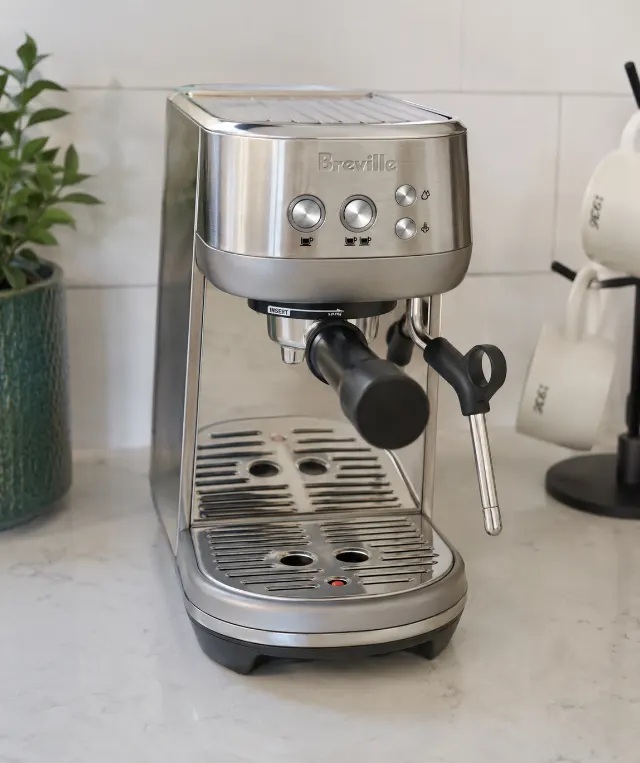
Breville Bambino
Our 2026 review of the Breville Bambino finds it's still the fastest entry-level espresso machine, but its long-term durability hinges on diligent cleaning.
De'Longhi Dedica
The De'Longhi Dedica is a compact, fast-heating espresso machine ideal for small kitchens, but its pressurized system and weak steam wand limit true espresso hobbyists.
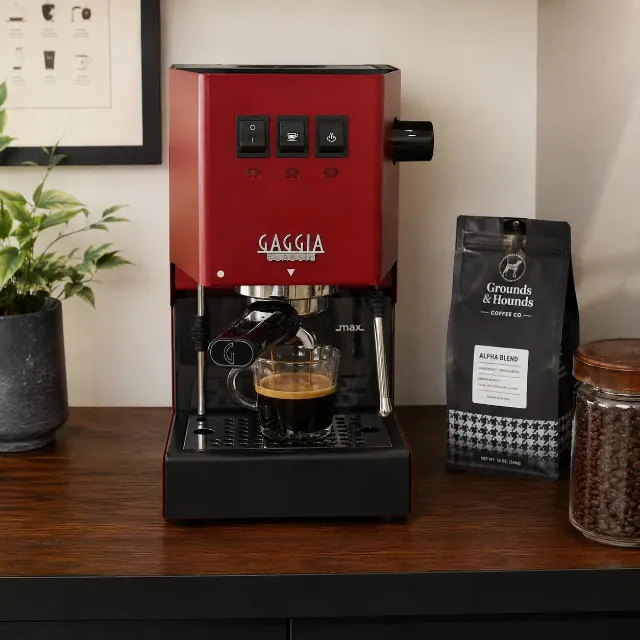
Gaggia Classic Pro
A durable, mod-friendly espresso machine for hobbyists, the Gaggia Classic Pro demands a learning curve but rewards with true café-quality potential.