Breville Bambino Review
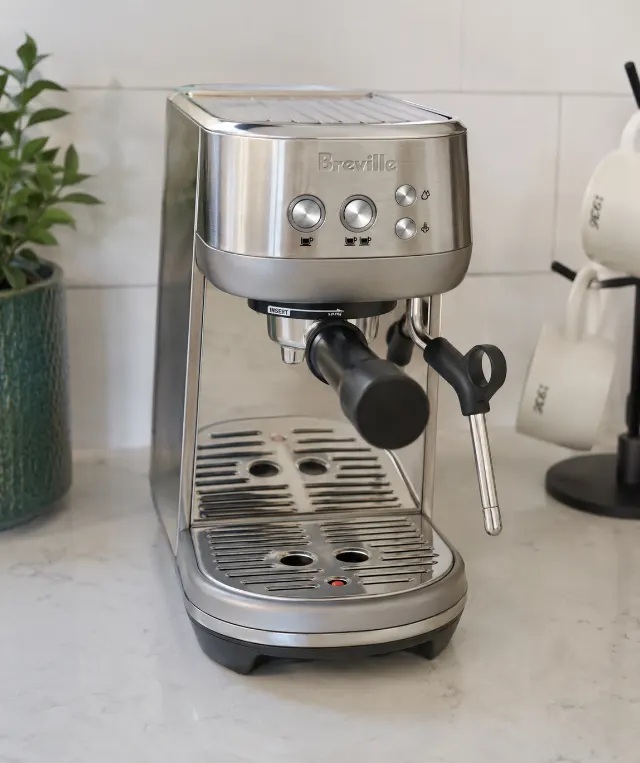
What sets it apart
The Bambino's ThermoJet system is so fast that it requires a 'pre-flush' of the group head not for heat, but to clear residual water, a counter-intuitive step for users coming from traditional boiler machines.
The right buyer
Ideal for the aspiring home barista in an apartment or with limited counter space. You want to learn the fundamentals of espresso without a huge initial investment or long morning waits. Skip this if you primarily make milk drinks and want automation, or if you value all-metal construction; the Bambino Plus or a <a href="/espresso-machines/gaggia-classic-pro/">Gaggia Classic Pro</a> would serve you better.
Why buy it
The Breville Bambino solves the single biggest barrier for new espresso makers: time. Its 3-second heat-up is not an exaggeration. It delivers legitimate 9-bar espresso with pre-infusion, features usually found in more expensive machines. It occupies a space that pod machines can't match for quality and traditional machines like the Gaggia can't match for speed and convenience.
Score by category
- Value
- ★★★★★ ★★★★★ 4.5
- Quality
- ★★★★★ ★★★★★ 3.8
- Ease of use
- ★★★★★ ★★★★★ 4.6
- Durability
- ★★★★★ ★★★★★ 3.9
The single most defining feature of the Breville Bambino isn't its shot quality or its diminutive size. It's the sound. Specifically, the loud, vibrating shudder of its pump echoing through a lightweight plastic chassis. This is the sound of its core tradeoff: incredible speed and thermal performance, achieved by shedding the weight, metal, and mass that traditionally defined a “proper” espresso machine. It’s a compromise that shapes every single day of ownership.
After three years, the Bambino owner is either delighted or disillusioned. The delighted owner has mastered the art of holding the machine steady with one hand while locking in the 54mm portafilter with the other. They’ve perfected the angle for the manual steam wand and accepted the ritual of emptying the tiny drip tray every two days. They value the three-second heat-up time above all else, pulling a morning shot before a traditional machine would even be warm.
The disillusioned owner is tired of the noise. They’ve had a scale buildup issue that required a frustrating descaling cycle, and they’re eyeing machines with more heft and quieter operation. The plastic tamper that came in the box was replaced long ago. They’ve learned that the price of entry was just the beginning, and the cost of ownership includes patience. This review is for the person deciding which of those two owners they will become.
For its price tier, the v offers a level of thermal accuracy and speed that remains unmatched. It makes genuine espresso accessible, fast.
What it actually is
The Breville Bambino is a compact, entry-level semi-automatic espresso machine engineered for speed. Its entire design philosophy is built around Breville's ThermoJet heating system, a proprietary thermoblock that pushes water to a stable 93°C (200°F) in a claimed three seconds. This is its reason for being. It’s for the person who wants to graduate from pods or a drip machine but is intimidated by the ritual and warmup time of traditional single-boiler machines.
Breville markets this as a café-quality experience at home. That's a stretch. What most reviews miss is that while the ThermoJet provides PID-level temperature stability for the shot, its steam power is less consistent. It can produce fine microfoam for latte art, but it requires more technique and produces less steam pressure than a dedicated boiler. This is the first disagreement with the marketing: it’s a brilliant shot-pulling machine with a capable, but not exceptional, steam wand.
It is optimized for a workflow using pre-ground coffee with the included dual-wall (pressurized) filter baskets. These baskets artificially create pressure, ensuring a decent-looking crema even if your grind is inconsistent. This makes it incredibly forgiving for beginners. The machine is a gateway, designed to get you hooked before you realize you need a better grinder, a non-pressurized basket, and a heavier tamper to unlock its full potential.
Bambino vs. Bambino Plus: Key Differences Explained
The choice is simple. It comes down to milk. The standard Bambino has a manual, single-hole steam wand that gives you full control but has a steep learning curve. The Bambino Plus features an automatic steam wand with adjustable temperature and texture settings, plus a 3-way solenoid valve. That valve is a critical upgrade; it releases pressure from the group head after a shot, leaving a dry, easy-to-knock-out puck of coffee. The base Bambino leaves a soupy, wet puck that’s messier to clean. The Plus also has a slightly larger water tank (1.9L vs 1.4L). If you make lattes or cappuccinos more than 50% of the time, the Plus model justifies its higher cost.
Materials & durability
This is where the Bambino's budget-conscious design shows its seams. The chassis is predominantly plastic, with a stainless steel wrap that gives it a premium look from a distance. Up close, the seams, the lightweight feel, and the plastic drip tray reveal its price point.
Build Quality: ★★★★☆ (3.8/5)
The machine is so light (4.9 kg / 10.9 lbs) that it will slide across the counter when you try to lock in the portafilter. This is the most common complaint from new owners, and it never goes away. You must hold the machine. The portafilter itself is a 54mm steel model with a plastic handle, which feels adequate. The included tamper, however, is a flimsy piece of plastic that is borderline unusable for proper tamping; plan on replacing it immediately. Beyond the spec sheet, the internal tubing is a mix of silicone and plastic, a common point of failure in many entry-level appliances after 3-5 years of heat cycles.
Long-term Reliability: ★★★★☆ (3.9/5)
Long-term owner feedback shows a pattern of pump failures or ThermoJet blockages, almost always linked to infrequent descaling, especially in hard water areas. The machine is insistent with its cleaning alerts for a reason. A recurring complaint in owner reviews is the steam wand tip clogging if not purged and wiped immediately after every single use. The warranty is typically one year (two in the UK/EU), and post-warranty repairs can be costly relative to the machine's initial price. A remanufactured Breville Bambino from a certified seller can be a good deal, but check that it comes with at least a 6-month warranty. Buying a used Breville Bambino from eBay is riskier; ask for video proof of it pulling a shot and steaming milk before purchasing.
Its strongest suit
Speed. Nothing else in this price bracket comes close. From a cold start to being ready to pull a shot takes literally three seconds. A traditional machine like the Gaggia Classic Pro needs 10-15 minutes to properly heat stabilize. This speed fundamentally changes your morning routine and lowers the barrier to making a quick espresso. The Bambino makes espresso an impulse, not a project.
The second strength is shot quality, specifically the pre-infusion. The Bambino uses low-pressure water at the start of the extraction to gently saturate the coffee puck. This helps prevent channeling—where water punches a hole through the puck—and results in a more balanced, even extraction. For a machine at this entry-level price, having programmable pre-infusion is a significant feature that directly contributes to better-tasting espresso.
Performance: Espresso Quality & Milk Frothing
With a capable grinder and a single-wall (non-pressurized) basket, the Bambino produces espresso that is genuinely excellent. The PID temperature control, a digital controller that keeps water at a precise temperature, is working behind the scenes within the ThermoJet. The result is shot-to-shot consistency that can be elusive even on some more expensive Italian machines. The pressure is regulated to the ideal 9 bars during extraction, even though the pump is rated for 15 bars. This is a crucial detail many brands obscure with marketing; 9 bars is the gold standard, and the Bambino hits it.
Milk frothing on the base model is a learned skill. The single-hole steam wand has enough power to create silky microfoam, but it's unforgiving. Bad technique results in bubbly, useless foam. The Bambino Plus, with its auto-frothing, is a far better choice for latte lovers who don't want to practice. Owner feedback splits roughly evenly on the manual wand: half find it a rewarding challenge, the other half wish they'd bought the Plus.
Buy this if: you live in a small apartment, your mornings are rushed, and you want to learn the core mechanics of espresso without a huge initial outlay. You drink mostly espresso or Americanos and see milk drinks as an occasional treat. You've budgeted for a separate, quality burr grinder, as that is non-negotiable for getting the most out of this machine.
What owners complain about
The complaints are consistent and predictable. First, the lightweight body. Everyone mentions having to brace the machine to engage the portafilter. Second, the tiny drip tray. It fills up incredibly fast, partly due to the machine's auto-purge function that releases hot water after steaming. Expect to empty it every 3-4 drinks. If you don't, Breville Bambino leaking water from bottom is a common search query, and 90% of the time the cause is an overflowing or improperly seated drip tray.
The noise is another factor. The vibration pump is loud, noticeably more so than in heavier machines that dampen the sound. The stock tamper is universally criticized as cheap plastic. Finally, while the ThermoJet is fast, some users report temperature control issues during back-to-back milk steaming, where it can struggle to recover temperature quickly. This is a limitation of a thermoblock versus a traditional boiler.
Common Problems & Long-Term Durability
After two years, the most likely failure point is scale. The narrow channels inside the ThermoJet are susceptible to mineral buildup. If the 'descale' light comes on, do not ignore it. The second issue is the group head gasket, a rubber ring that creates a seal with the portafilter. It's a consumable part that will need replacing every 12-18 months with daily use, a hidden cost of ownership. Some long-term Reddit threads on this product surface a pattern of solenoid or pump failures around the three-year mark, though this is not universal. It’s a reminder that this is a consumer appliance, not a commercial machine built to last a decade.
Skip this if: you want a quiet, substantial machine that feels like a tank on your counter. You primarily make milk drinks for multiple people and need strong, repeatable steam power. You should look at the Bambino Plus for its automation or consider a machine with a larger boiler like the Gaggia Classic Pro, accepting the much longer heat-up time as the trade-off.
How it fits your routine
Your first week is excitement. The speed is intoxicating. You use the included pressurized baskets and pre-ground coffee, and you get decent results. By week three, you notice the limitations. You buy a proper grinder. You order a bottomless 54mm portafilter and a single-wall basket to diagnose your shots. You start weighing your beans and timing your extractions. The Bambino becomes your espresso lab.
What owners discover after a year is that the volumetric shot buttons (one-cup, two-cup) are rarely used. Once you learn to dial in your grind, you use the manual mode—holding the button to start pre-infusion, releasing to start the full pressure pull, and pressing again to stop—for full control. The machine that seemed so simple becomes a tool for a much more involved hobby.
The machine's small 1.4L water tank on the base model means you're refilling it often, especially with the amount of water it purges. This, combined with the small drip tray, makes the workflow feel a bit fussy. It's a machine that demands your attention.
Care and running costs
Maintenance is not optional. You must run a cleaning cycle with a tablet when the machine prompts you, typically every 200 shots. You must descale it based on your water hardness, which could be every 2-3 months. Backflushing with a blind basket (an accessory not included with the base model) is crucial for keeping the group head clean. The ongoing costs are cleaning tablets, descaling solution, and eventually a new group head gasket. These are modest but add to the long-term cost of ownership.
A hidden cost is water quality. Using highly filtered or softened water will dramatically extend the life of the ThermoJet heater and pump. The included water filter helps, but starting with good water is the best preventative maintenance you can do. The realistic lifespan for a well-maintained Bambino is likely 4-6 years of daily use before a significant component fails. For an appliance at this price, that's a reasonable expectation.
Setup, Cleaning, and Maintenance Guide
First-time setup is straightforward: wash all parts, soak the water filter, and run several cycles of plain water through the group head and steam wand. To descale a Breville Bambino, you'll follow a specific sequence of button presses to enter the descale mode, using a Breville-approved descaling solution. The manual is clear, but the process takes about 20 minutes. Regular cleaning involves wiping the steam wand after every use, purging it, and wiping down the shower screen. It's a daily 30-second commitment that prevents bigger problems.
Where rivals do better
The Bambino's speed is its unique selling proposition, but competitors offer different strengths. The Gaggia Classic Pro is the classic alternative. It’s built like a tank with a commercial-size 58mm portafilter and a simple, repairable design. It offers far more powerful steam but requires a 15-minute warmup and is less forgiving for beginners. For those wanting a more all-in-one approach, the Casabrews Ultra Espresso integrates a grinder and pressure gauge, offering more feedback for a similar countertop footprint.
At the lower end of the budget spectrum, the De'Longhi Dedica is even more compact and less expensive, but its 15-bar pump struggles to produce true 9-bar espresso consistently, and its Panarello-style steam wand is poor for microfoam. It’s a step down in performance. An overlooked competitor is the Wirsh Home Barista Plus, which often includes more accessories like a proper tamper and milk pitcher out of the box, though its long-term reliability is less documented than Breville's. The Casabrews 3700 Essential offers a similar feature set with a visible pressure gauge, which the Bambino lacks, appealing to users who want that visual feedback during extraction.
Is it for you?
Best for: The beginner who values speed and convenience over all else. The coffee enthusiast in a small kitchen. The person who wants to learn the craft of espresso on a forgiving machine before considering a major upgrade. The Breville Bambino is an excellent entry point.
Not ideal for: The tinkerer who wants to modify and upgrade their machine (the Gaggia Classic Pro is better for this). The person who hosts and needs to make several milk drinks back-to-back. The buyer who equates weight with quality and wants a machine that feels substantial and permanent.
Ultimately, the decision rests on your priorities. The Bambino is an appliance-first approach to a hobbyist-dominated category. It automates the most difficult part—temperature stability—and leaves the manual skills of grinding, tamping, and (on the base model) steaming to you. It's a thoughtfully designed starting line.
Where it leaves us
The Breville Bambino remains one of the smartest buys in entry-level espresso for one simple reason: it respects your time. The ThermoJet heating system is a genuine advantage that reshapes the daily workflow of making coffee at home. It successfully delivers the two most critical elements for good espresso—precise temperature and stable 9-bar pressure—in a package that is compact and approachable.
However, that performance comes encased in a shell of compromises. The lightweight plastic construction, the noisy pump, and the small drip tray are constant reminders of its price point. It's a machine that performs far better than it feels. That said, I'm not entirely convinced a heavier build would be better if it meant sacrificing the three-second heat-up. The speed is the magic.
For a beginner focused on espresso, the standard Bambino is the correct choice.
What we like
- ✓Unbeatable 3-second heat-up time via ThermoJet system.
- ✓Excellent shot consistency from PID temperature control and low-pressure pre-infusion.
- ✓Extremely compact footprint fits easily in small kitchens.
- ✓Delivers true 9-bar extraction pressure for authentic espresso.
- ✓Very forgiving for beginners when using the included pressurized filter baskets.
Cons
- ✕Lightweight plastic body slides on the counter when locking the portafilter.
- ✕Very small drip tray requires emptying almost daily.
- ✕Vibration pump is noticeably loud during operation.
- ✕Included plastic tamper is inadequate and needs immediate replacement.
Specifications
| Type | Semi-Automatic |
|---|---|
| Boiler system | ThermoJet (thermoblock) |
| Portafilter size | 54mm |
| Pump pressure | 15 Bar (delivers 9 Bar at group head) |
| Steam wand | Manual, single-hole tip |
| Built-in grinder | No |
| Water tank | 1.4 L (47 oz) |
| Heat-up time | 3 seconds |
| Warranty | 1 year (US/Canada), 2 years (UK/EU) |
Which one fits your use case
Versus the alternatives buyers cross-shop — judged on ownership, not just spec sheets.
| Alternative | Ease of use | Maintenance | Durability | Value | Best for |
|---|---|---|---|---|---|
| Breville Bambino (this pick) | Very easy for beginners with pressurized baskets; manual steaming has a learning curve. | Requires diligent daily wiping and prompted descaling; small drip tray is fussy. | Plastic-heavy build requires care; ThermoJet sensitive to scale buildup. | High performance-for-price, but factor in the cost of a good grinder and tamper. | Beginners in small apartments who prioritize speed and espresso quality over build feel. |
| Gaggia Classic Pro | Steeper learning curve; less forgiving of bad puck prep but highly rewarding. | Simpler internals make for easier repairs; requires regular descaling. | Commercial-grade build with heavy-duty components; built to last and be repaired. | Excellent long-term value and mod-friendly, but requires a 15-minute warmup. | The hobbyist who wants a durable, repairable machine and enjoys the tinkering process. |
| De'Longhi Dedica | Extremely simple, almost appliance-like operation. Very beginner friendly. | Straightforward cleaning cycles, similar to other entry-level machines. | Lightweight build, not intended for heavy daily use over many years. | A budget-friendly entry point, but performance is a clear step below the Bambino. | The absolute beginner on a tight budget who is unsure if espresso is a long-term hobby. |
| Casabrews 3700 Essential | Similar to Bambino, but the included pressure gauge provides helpful visual feedback. | Standard for thermoblock machines; requires routine cleaning and descaling. | Mixed reports; newer brand without Breville's long-term track record. | Competitive feature set for its price, often bundled with more accessories. | The data-driven beginner who wants a pressure gauge without a major price jump. |
| Wirsh Home Barista Plus | Simple controls and clear instructions make it accessible for newcomers. | Follows a standard cleaning protocol; parts are generally easy to access. | A lesser-known brand, so long-term parts availability and support are uncertain. | Often positioned as a value bundle with included tamper, pitcher, and baskets. | The gift-buyer or beginner looking for an all-in-one box to get started immediately. |
How it scores on what matters
| Product | Espresso shot quality | Milk steaming & microfoam | Consistency shot-to-shot | Ease of dialing in | Heat-up & workflow speed | Maintenance burden | Verdict |
|---|---|---|---|---|---|---|---|
| Breville Bambino (this pick) | Very good | Good | Excellent | Very good | Excellent | Fair | Top-tier shots and speed, but fussy daily maintenance. |
| Gaggia Classic Pro | Excellent | Very good | Good | Fair | Weak | Good | Pro-level potential but demands patience and skill. |
| De'Longhi Dedica | Fair | Weak | Fair | Excellent | Very good | Very good | Simple and fast, but espresso quality is limited. |
| Casabrews 3700 Essential | Good | Good | Good | Very good | Very good | Good | A solid, balanced performer with a useful pressure gauge. |
| Wirsh Home Barista Plus | Good | Fair | Good | Good | Very good | Good | Good value package, though steam performance is a weak point. |
Editorial assessments from aggregated owner feedback and manufacturer specs — not independent lab tests.
Frequently asked questions
Is a Breville Bambino worth it in 2026?
Yes, for beginners prioritizing speed and a small footprint, its value is still strong. The 3-second heat-up and PID-controlled temperature offer performance that rivals more expensive machines, making it a smart investment for those new to home espresso who have a quality grinder.
What's the real difference between the Bambino and the Bambino Plus?
The critical difference is the steam wand and a key internal part. The Plus has an automatic, hands-free steam wand for milk, while the standard is manual. The Plus also adds a 3-way solenoid valve, which makes cleaning up coffee pucks much tidier after every shot.
Do Breville Bambino machines ever go on sale?
They certainly do. Breville products, including the Bambino line, are frequently discounted during major retail holidays like Black Friday and Prime Day. These sales events are the most predictable times to find a significant reduction in price from major authorized retailers.
What are the common problems with the Breville Bambino?
Owner reports consistently cite three main issues: the machine is so lightweight it slides on the counter when attaching the portafilter, the small drip tray overflows quickly, and the steam wand can clog if not purged and wiped immediately after every single use.
Is the Breville Bambino good for beginners?
It's one of the best for beginners. The combination of a rapid heat-up time and the forgiving nature of its pressurized filter baskets removes common frustrations. It allows newcomers to get good results immediately while offering a high ceiling for improvement with better accessories.
What size portafilter does the Breville Bambino use?
The Bambino and Bambino Plus both use a 54mm portafilter. This is Breville's standard for its consumer-grade machines. It ships with four filter baskets: single and double shot sizes, in both pressurized (dual-wall) and non-pressurized (single-wall) versions for different skill levels.
Can you use ESE pods in a Breville Bambino?
No, the Breville Bambino is not designed for and does not have an adapter for Easy Serving Espresso (ESE) pods. It is engineered exclusively for use with ground coffee in its 54mm portafilter baskets, and attempting to use pods could damage the machine's group head.
People also ask
- What's the difference between the Bambino and the Bambino Plus?
- How often should I descale my Breville Bambino?
- Is a Breville Bambino worth it?
- How long does a Breville Bambino last?
- What grinder should I use with a Breville Bambino?
- Can you make lattes with the regular Breville Bambino?
You might also like
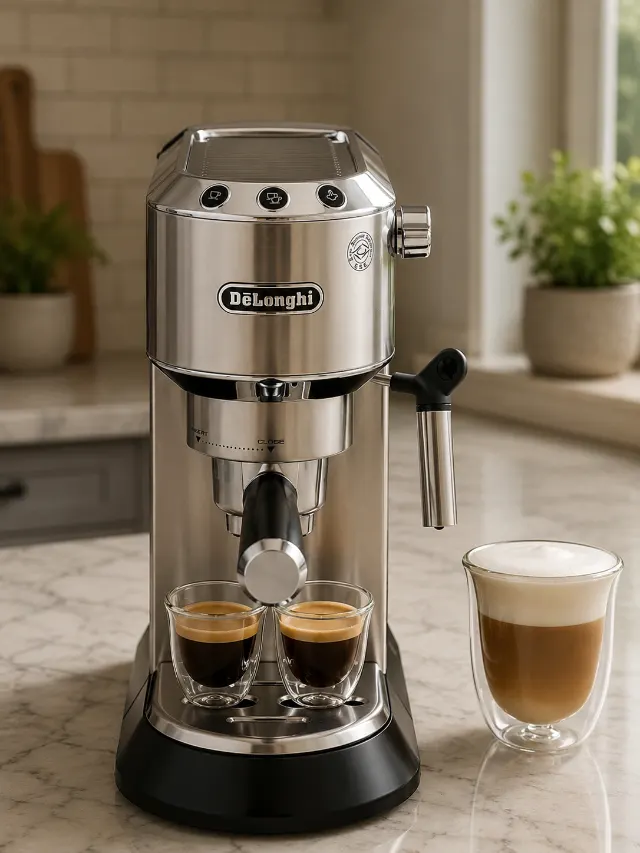
De'Longhi Dedica
The De'Longhi Dedica is a compact, fast-heating espresso machine ideal for small kitchens, but its pressurized system and weak steam wand limit true espresso hobbyists.
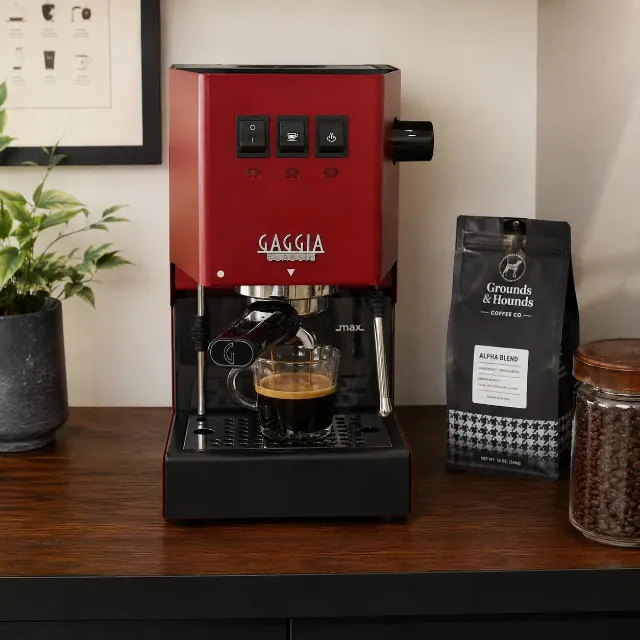
Gaggia Classic Pro
A durable, mod-friendly espresso machine for hobbyists, the Gaggia Classic Pro demands a learning curve but rewards with true café-quality potential.