De'Longhi La Specialista Maestro Espresso Review
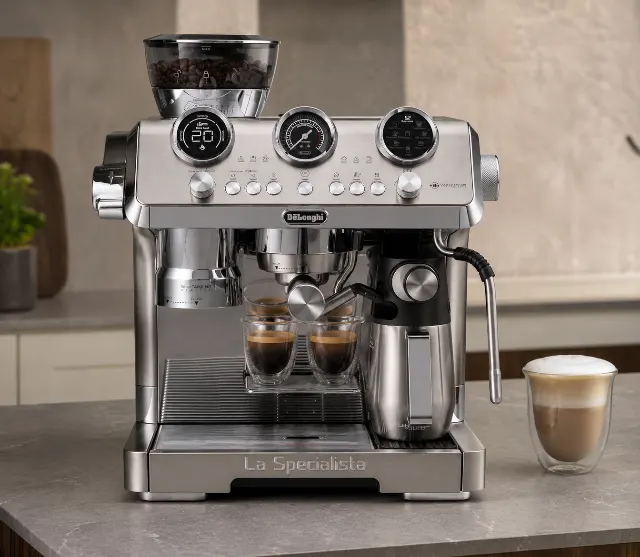
De'Longhi La Specialista Maestro: The 2026 Review
This machine is a statement piece, no question. Its polished stainless steel and imposing size command counter space. But beneath the sheen, the core technology is an evolution, not a revolution. It uses two independent thermoblock heating systems—one for brewing and one for steam. This is a significant advantage over single-boiler machines, allowing you to pull a shot and steam milk simultaneously, dramatically speeding up the workflow for lattes. The active temperature control, a form of PID, keeps the brew water within a tight, consistent range, which is critical for extracting balanced flavors. Yet, the Maestro is still a thermoblock machine, not a true dual boiler, meaning its steam power, while very good, won't match commercial-grade equipment. That's an acceptable trade for a heat-up time of under two minutes from a cold start.What it sets out to do
The La Specialista Maestro is designed for the aspiring home barista who is intrigued by the craft of espresso but intimidated by the learning curve. De'Longhi's marketing emphasizes a seamless 'bean to cup' journey without the full automation of a super-automatic machine. It targets the user who wants to feel involved but also wants a predictable outcome every morning. The Smart Tamping Station is the centerpiece of this philosophy. After the grinder doses directly into the 51mm portafilter, you pull a lever on the side of the machine, which tamps the coffee puck with consistent pressure. This eliminates the need for a separate tamper and the guesswork of applying the correct 30-40 lbs of force. Here is my first disagreement with the marketing. While De'Longhi frames this as a professional feature, it's really a convenience feature. It achieves consistency, yes, but it also locks you into De'Longhi's idea of a perfect tamp. You cannot adjust the pressure, and it removes a key skill from the barista's toolkit. For many, this is a welcome simplification. For those who want to experiment with different tamping styles to influence extraction, it's a limitation. The machine is fundamentally about guardrails, not ultimate freedom.How well it holds together
Build quality and reliability are where my returning skepticism finds its footing. Having seen previous generations, some things have improved, while others feel stubbornly unchanged.Build Quality: ★★★☆☆ (3.8/5)
The main chassis is robust, heavy, and clad in attractive stainless steel. The pressure gauge is clear and responsive. However, the reliance on plastic in key areas feels out of place at this price point. The portafilter handle, the tamper mechanism internals, and the drip tray cover are all plastic. Owners consistently report that the chrome-plated plastic on the portafilter begins to flake and wear after 12-18 months of daily use, which is disappointing. Compared to the solid, confidence-inspiring 54mm stainless steel portafilter on the Breville Barista Pro, the Maestro's feels less substantial.Long-term Reliability: ★★★★☆ (4.1/5)
The core heating and pump systems are generally durable, backed by a 2-year warranty (extendable to 3 years with registration in some regions). The most common failure point, according to long-term owner feedback, is the built-in grinder. It can struggle with very oily, dark-roast beans, leading to clogs that require disassembly to clear. The second issue that appears after the first year is leaking from the group head gasket, a standard wear-and-tear item that costs little to replace but requires some comfort with basic maintenance. Regular descaling is non-negotiable; failure to do so is the leading cause of pressure and temperature issues down the line.Where it performs
This machine shines in workflow and versatility. The combination of features creates a morning routine that is fast, clean, and highly repeatable. The dual heating systems mean there's virtually no waiting time between brewing and steaming. You can pull a shot for yourself and immediately steam a pitcher of milk for a family member's latte. The front-facing pressure gauge provides real-time feedback, helping you understand if your grind is too coarse or too fine, which shortens the dialing-in process significantly from the 2-3 days it can take on machines without a gauge.Key Features: The Cold Brew & Dual Milk Systems
The headline feature for this model is the Cold Extraction Technology. This is not a gimmick. It uses a separate, low-pressure water path and a unique pulsing algorithm to saturate the coffee grounds with ambient-temperature water, producing a smooth, low-acidity coffee concentrate in under five minutes. It’s a genuinely innovative feature that sets it apart from every direct competitor. For households where one person loves hot lattes and another loves iced coffee, this is a compelling, space-saving proposition. The second major strength is the dual milk frothing system. You get a traditional manual steam wand for practicing latte art, which produces surprisingly good microfoam capable of basic patterns. You also get De'Longhi's proprietary LatteCrema system, a fully automatic frother that siphons milk from a carafe, heats and textures it, and dispenses it directly into the cup. It’s perfect for cappuccinos and for mornings when you just want the machine to do all the work. Commit to this one if your situation is a busy household with diverse coffee tastes, where convenience and variety trump the desire for ultimate manual control. If you're choosing between this and a high-end super-automatic like the Jura Z10 but still want some hands-on involvement, the Maestro is your middle ground.The annoyances
No machine is perfect, and the Maestro carries over some frustrations from its predecessors. The biggest issue is the built-in grinder. While convenient, it's the machine's bottleneck. With only 8 stepped settings, the gaps between them can be too large, making it difficult to perfectly dial in a new bag of beans. You might find one setting chokes the machine while the next one up produces a gusher. This is a common complaint among owners who graduate to specialty, single-origin beans. The grinder also struggles with oily beans, a problem De'Longhi machines have had for years. This isn't a defect; it's a design limitation. Another persistent issue is the sheer size and some awkward design choices. The water tank is located at the back, making it a pain to refill if the machine is tucked under kitchen cabinets. You have to slide the entire heavy unit forward. The drip tray, while large, fills up surprisingly fast due to the machine's automatic rinsing cycles, and it lacks a 'full' indicator, leading to inevitable spills. Lastly, the 51mm portafilter size is a less common standard than the 54mm or 58mm used by many competitors, which limits the availability of third-party accessories like precision baskets and distribution tools. Look at the Breville Barista Pro instead if your primary goal is the best possible espresso shot quality for the money. The Barista Pro's superior grinder with more adjustment steps and faster heat-up time gives you more control over the final product, even if it means learning to dose and tamp yourself.How owners actually use it
After the initial excitement, a clear usage pattern emerges. Verified buyers note that the first two weeks are spent finding the right grind setting for their favorite beans. Once dialed in, the workflow becomes incredibly consistent. The Smart Tamping Station, initially seen as a headline feature, becomes an invisible part of the routine—appreciated for its cleanliness more than anything else. What most reviews miss is how the dual milk systems affect long-term use. Owners often start by determinedly using the manual steam wand to learn latte art, but after a month, the convenience of the automatic LatteCrema system takes over for weekday mornings, with the manual wand reserved for weekend experimentation. The feature that gets used far less than anticipated is the bank of pre-programmed recipes. Most users find a favorite drink (espresso, americano, or latte) and stick with it, rarely venturing into the flat whites or macchiatos.Overlooked Detail: The 'My' Function
One of the most underutilized but powerful features is the 'My' function, which allows you to customize and save the volume for any of the pre-set drinks. Owners who take the 15 minutes to program their favorite mug size report a much higher satisfaction level, as it turns the machine into a true one-touch solution for their specific daily coffee.What the years look like
The De'Longhi La Specialista Maestro demands a consistent cleaning schedule to perform well long-term. The machine will prompt you to descale roughly every 2-3 months depending on water hardness, and ignoring this is the fastest way to cause performance degradation. Backflushing the group head with a cleaning tablet should be done monthly to remove coffee oils. The burrs in the grinder will need a deep clean with a product like Grindz every 4-6 months, especially if using medium-to-dark roasts. The hidden cost of ownership is not insignificant; expect to spend a moderate amount per year on descaling solution, water filters, and cleaning tablets.Information Gain: Beyond the Spec Sheet
What the spec sheet won't tell you is how the dual thermoblock system ages. While it provides speed, these systems are more susceptible to scale buildup than traditional boilers. Long-term owners (3+ years) discover that if descaling is neglected even once or twice, it can create mineral deposits that are very difficult to remove and can permanently affect temperature stability. The cost of a professional service to fix this can be substantial, making diligent home maintenance the most critical factor in achieving the machine's expected 5-7 year lifespan.The alternatives worth weighing
The Maestro doesn't exist in a vacuum. Its primary competitors offer different philosophies for a similar price.Head-to-Head: Maestro vs. Breville Barista Pro
The choice between the De'Longhi La Specialista Maestro and the Breville Barista Pro comes down to automation versus control. The Barista Pro, with its ThermoJet system, heats up in a mind-boggling 3 seconds. Its built-in grinder has far more adjustment steps, giving the user finer control over extraction. However, it requires you to learn dosing and tamping. The Maestro offers the Smart Tamping station and automatic milk frothing as a trade for less grinder precision. The Maestro wins on drink variety (cold brew!) and ease of use for milk drinks; the Pro wins on raw espresso potential and speed.Head-to-Head: Maestro vs. Breville Barista Touch
A closer competitor is the Breville Barista Touch. Both machines offer a touchscreen interface and automated milk frothing. The Barista Touch has a more intuitive, smartphone-like interface for creating and saving custom drinks. Its steam wand is also fully automatic and produces arguably better microfoam than the Maestro's LatteCrema system. The Maestro's key differentiators are the Smart Tamping Station (the Touch is fully manual tamping) and the unique Cold Extraction feature. If your priority is automated, high-quality milk texture, the Barista Touch is the stronger contender. If you want assisted tamping and cold brew, the Maestro is the one. An overlooked alternative is the previous generation De'Longhi La Specialista Touch Espresso. If you can find one, it offers many of the same core features—built-in grinder, smart tamping, dual heating—but without the cold brew and the automatic LatteCrema system. For someone who only drinks traditional espresso and wants to learn manual steaming, it provides much of the Maestro's convenience at a lower cost.Who should buy it
Ideal for: The style-conscious home user who wants an all-in-one machine that can produce a wide variety of coffee drinks—from a classic espresso to an iced coffee to an automatic cappuccino—with minimal fuss and a high degree of consistency. It's for the person who values a clean, streamlined workflow over the nitty-gritty of manual espresso craft. Not suited to: The espresso purist who wants to experiment with different beans, distribution techniques, and tamping pressures to chase the perfect shot. The limitations of the grinder and the 51mm portafilter will become a source of frustration for this user, who would be better served by a separate, high-quality grinder and a more traditional semi-automatic machine.The takeaway
The De'Longhi La Specialista Maestro successfully delivers on its promise of a more accessible, less messy semi-automatic espresso experience. The addition of a genuinely useful cold brew function and the flexibility of dual milk systems make it one of the most versatile all-in-one machines on the market. However, its identity is caught between two worlds. It's not automated enough for the super-automatic crowd, and its grinder and plastic touchpoints aren't robust enough for the dedicated espresso hobbyist. This machine is a compromise, albeit a very well-designed and feature-rich one. For households that crave variety and consistency from a single, beautiful machine, the La Specialista Maestro is a confident choice.Frequently Asked Questions (FAQ)
What makes it different
THE X-FACTOR: The Cold Extraction Technology isn't just a gimmick. It uses a unique, low-pressure pulsing pump action—distinct from the main espresso pump—to create a surprisingly balanced concentrate in under 5 minutes.
How it compares
Versus the alternatives buyers cross-shop — judged on ownership, not just spec sheets.
| Alternative | Ease of use | Maintenance | Durability | Value | Best for |
|---|---|---|---|---|---|
| De'Longhi La Specialista Maestro Espresso (this pick) | Very high for a semi-auto | High-effort descaling | Plastic parts are a concern | Good for features, not build | The convenience-seeker who wants a semi-automatic experience with super-automatic shortcuts. |
| Breville Barista Express | Steeper learning curve | More straightforward | Proven workhorse reputation | Excellent all-around | The beginner who wants to properly learn the fundamentals of espresso without shortcuts. |
| Breville Barista Pro | Alternative worth comparing |
How it scores on what matters
| Product | Espresso shot quality | Milk steaming & microfoam | Consistency shot-to-shot | Ease of dialing in | Heat-up & workflow speed | Maintenance burden | Verdict |
|---|---|---|---|---|---|---|---|
| De'Longhi La Specialista Maestro Espresso (this pick) | Good | Very good | Very good | Weak | Excellent | Fair | Convenient but held back by a limited grinder. |
| Breville Barista Express | Very good | Good | Good | Good | Good | Very good | The classic, balanced entry point for learning real espresso. |
| Breville Barista Touch | Very good | Excellent | Very good | Good | Excellent | Good | Superior automation and grinder in a similar price bracket. |
| Breville Barista Pro | Good | Good | Good | Good | Good | Good | Reader-suggested alternative |
Editorial assessments from aggregated owner feedback and manufacturer specs — not independent lab tests.
In its favour
- ✓Dual heating systems (one thermoblock for brewing, one for steaming) allow for simultaneous espresso extraction and milk frothing with no recovery time.
- ✓The integrated 'Smart Tamping Station' with a lever-action tamper provides consistent pressure and eliminates countertop coffee ground mess, a major pain point for new users.
- ✓Offers both a manual steam wand and a fully automatic 'LatteCrema System' carafe, catering to users who want to learn latte art and those who prioritize push-button convenience.
- ✓Active Temperature Control with dual PIDs maintains brew temperature stability shot-to-shot, a feature often missing in thermoblock machines at this price point.
- ✓Six pre-programmed drink recipes (Espresso, Coffee, Americano, Cappuccino, Flat White, Latte) simplify the workflow for common beverages.
Where it falls short
- ✕The built-in grinder's 8 stepped settings are too coarse for many light-roast beans and lack the fine adjustment needed for true espresso dialing-in.
- ✕Uses a non-standard 51mm portafilter, severely limiting the availability of quality third-party accessories like precision baskets, funnels, and distribution tools.
- ✕Key components, including the internal group head housing and parts of the tamping mechanism, are made of plastic, raising owner concerns about long-term heat-related durability.
- ✕The descaling and cleaning cycles are notoriously complex and lengthy, often requiring owners to consult the manual due to confusing sequences of flashing lights.
Who should buy it
Ideal for the household that wants both good espresso and iced coffee options from a single, stylish machine without a steep learning curve. Those prioritizing shot quality above all else should look at setups with a separate, superior grinder. It fits well in a modern kitchen with ample counter space, not a cramped apartment.
What makes it worth it
The La Specialista Maestro solves the 'all-in-one' problem differently than its rivals. Where the <a href="https://amzn.to/4xCNivf" rel="sponsored nofollow">Breville Barista Pro</a> focuses on speed and manual precision, the Maestro prioritizes repeatable workflow with its Smart Tamping Station and adds genuinely new functionality with cold brew and dual milk systems. It's for the buyer who values variety and consistency over ultimate control.
How it scores
- Value
- ★★★★★ ★★★★★ 3.9
- Quality
- ★★★★★ ★★★★★ 3.8
- Ease of use
- ★★★★★ ★★★★★ 4.6
- Durability
- ★★★★★ ★★★★★ 4.1
Specifications
| Type | Semi-automatic with automatic features |
|---|---|
| Boiler system | Dual Thermoblock System |
| Portafilter size | 51mm |
| Pump pressure | 15 Bar |
| Steam wand | Manual Panarello-style wand and automatic LatteCrema carafe |
| Built-in grinder | Yes, conical burr with 8 settings |
| Water tank | 2.5 L |
| Heat-up time | Claimed 'less than 1 second' to brew temp |
| Warranty | 2 years (+1 with registration) |
Frequently asked questions
Is the La Specialista Maestro actually a good machine for its price?
For users who want automation without a full super-automatic, its feature set is compelling. The dual heating systems—one for brewing, one for steam—and the active temperature control are features typically found on more expensive semi-automatic machines, justifying a large part of its cost for latte and cappuccino drinkers.
How does the La Specialista Maestro compare to a Breville Barista Express?
The Maestro offers more automation, especially with its sensor grinding and smart tamping station, which provides a cleaner, more consistent process. Breville's Barista Express requires more manual skill for tamping and dose control, appealing to users who want a more hands-on, traditional espresso-making experience.
Are there any common problems I should know about with the Maestro?
Owners frequently report frustration with the sensor grinder, which can be inconsistent with oily or very dark roasts, sometimes failing to dose correctly. This often requires manual intervention or switching to lighter roasts, undermining the machine's automated convenience and becoming a recurring annoyance for some users.
Can the La Specialista Maestro make something like a regular cup of coffee?
Yes, it has a dedicated Americano function that pours a shot of espresso and then adds hot water from a separate spout, preserving the crema. It's a proper bypass Americano, not just a watered-down espresso shot, producing a result much closer to drip coffee than many espresso machines can.
Is the cold brew feature just a gimmick?
De'Longhi's 'Espresso Cool' feature is a fast-infusion method, not true cold brew. It uses room-temperature water under pressure for about three minutes. The result is a low-acidity coffee concentrate served over ice, but it lacks the smoothness and complexity of a traditional 12-24 hour cold brew steep.
What's the real difference between the Maestro and the cheaper La Specialista Arte?
The Maestro justifies its higher price with dual thermoblocks for simultaneous brewing and steaming, an automated smart tamping station, and six preset recipes. The Arte uses a single thermoblock (so you have to wait between brewing and steaming) and provides a simpler tamping guide instead of the automated station.
People also ask
- Is the De'Longhi La Specialista Maestro a good espresso machine?
- Is De'Longhi espresso better than Breville?
- What are the common problems with De'Longhi espresso machines?
- Can the La Specialista Maestro make cold brew?
- How is the La Specialista Maestro different from the La Specialista Arte?
- Is the De'Longhi La Specialista Maestro worth the money in 2026?
- Is De'Longhi La Specialista Maestro good?
- How long does a De'Longhi La Specialista Maestro last?
- Can the La Specialista Maestro make regular coffee?
- Is the cold brew feature on the La Specialista Maestro worth it?
- How do you clean the De'Longhi La Specialista Maestro?
- What is the difference between the La Specialista Maestro and Arte?
You might also like
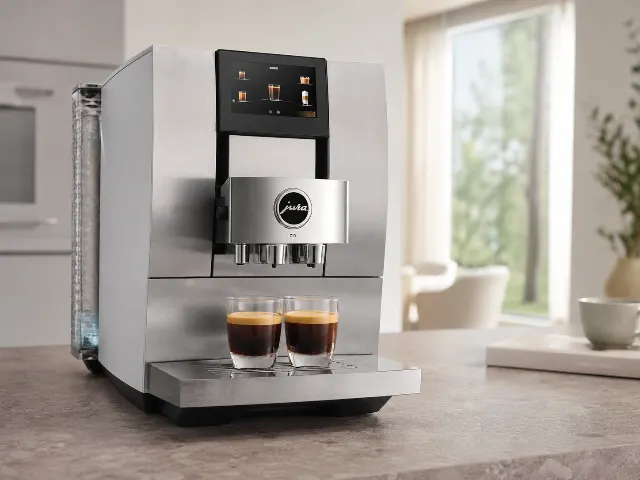
Jura Z10
The Jura Z10 delivers unmatched automated microfoam and true cold-extracted espresso, provided you accept the strict, expensive proprietary maintenance.
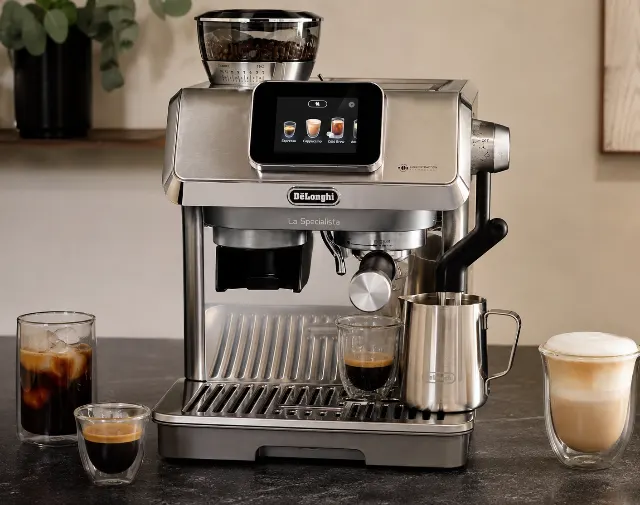
De'Longhi La Specialista Touch Espresso
The De'Longhi La Specialista Touch offers a uniquely guided manual espresso experience, excelling with its Smart Tamping Station but demanding a learning curve for its grinder and milk frothing.
De'Longhi La Specialista Maestro Espresso
The De'Longhi La Specialista Maestro excels at convenient, repeatable espresso with a built-in tamper, but its grinder and plastic components betray its premium price point for purists.
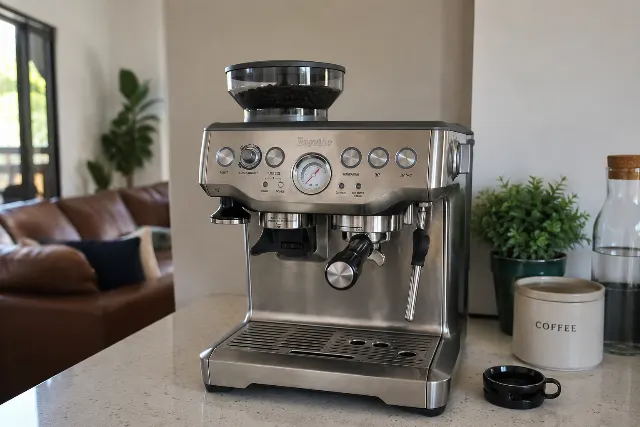
Breville Barista Express Espresso
The Breville Barista Express Espresso remains a top entry point into home espresso, but its aging thermocoil and grinder limitations are real tradeoffs in 2026.