Breville Barista Express Espresso Review
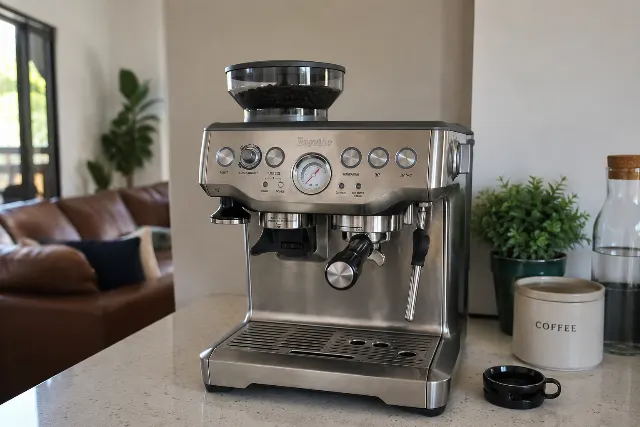
The standout detail
THE X-FACTOR: The pressure gauge is more of a training tool than a diagnostic instrument. After six months, most owners stop looking at it, relying on shot timing and taste, which is the real skill it teaches.
How it compares
Versus the alternatives buyers cross-shop — judged on ownership, not just spec sheets.
| Alternative | Ease of use | Maintenance | Durability | Value | Best for |
|---|---|---|---|---|---|
| Breville Barista Express Espresso (this pick) | Moderate learning curve; requires practice to dial in. | Regular backflushing and descaling required. | Good, but internal plastic parts can wear over 5+ years. | Excellent entry-point value due to integrated grinder. | Aspiring baristas in smaller kitchens wanting an all-in-one learning tool. |
| De'Longhi La Specialista Maestro Espresso | Steeper learning curve with more variables and settings. | Similar to Breville, requires consistent cleaning. | Comparable build; robust but with complex electronics. | Higher upfront cost for more advanced features like dual heating. | The enthusiast who wants to steam milk and pull shots simultaneously. |
| De'Longhi La Specialista Touch Espresso | Easier for beginners due to touchscreen presets. | Slightly more complex with more automated parts to clean. | Good, but touchscreen is a potential long-term failure point. | Premium-priced for its automated convenience features. | The user who wants consistent results with less manual input. |
| Philips 1200 Series Fully Automatic Espresso | Extremely easy; one-touch operation for espresso and coffee. | Requires regular brew group rinsing and descaling. | High-quality plastic construction, designed for convenience. | Different value proposition; trades control for absolute ease. | Someone who wants a good coffee drink with zero effort or learning. |
How it scores on what matters
| Product | Espresso shot quality | Milk steaming & microfoam | Consistency shot-to-shot | Ease of dialing in | Heat-up & workflow speed | Maintenance burden | Verdict |
|---|---|---|---|---|---|---|---|
| Breville Barista Express Espresso (this pick) | Very good | Good | Good | Fair | Fair | Good | Excellent shot potential, but workflow is slow. |
| De'Longhi La Specialista Maestro Espresso | Very good | Excellent | Very good | Fair | Very good | Good | Superior steaming power and speed for milk drinks. |
| De'Longhi La Specialista Touch Espresso | Very good | Good | Excellent | Very good | Very good | Good | Unbeatable consistency thanks to automation. |
| Philips 1200 Series Fully Automatic Espresso | Good | Fair | Excellent | Excellent | Excellent | Very good | Effortless operation but less capable espresso. |
Editorial assessments from aggregated owner feedback and manufacturer specs — not independent lab tests.
Our rating breakdown
- Value
- ★★★★★ ★★★★★ 4.0
- Quality
- ★★★★★ ★★★★★ 4.3
- Ease of use
- ★★★★★ ★★★★★ 4.6
- Durability
- ★★★★★ ★★★★★ 4.2
Where it wins
- ✓Integrated conical burr grinder saves significant cost and counter space over buying separates.
- ✓Pressure gauge provides essential real-time feedback for learning to dial in shots.
- ✓Includes both pressurized and non-pressurized 54mm filter baskets, accommodating both beginners and advancing users.
- ✓PID temperature control delivers consistent water temperature for brewing, a feature often missing at this price point.
- ✓Solid stainless steel build and hefty portafilter provide a premium feel and user experience.
Drawbacks
- ✕The built-in grinder's 16 stepped settings can make it difficult to find the perfect 'in-between' grind size.
- ✕Thermocoil heating system is slow to heat up and recover, especially between brewing and steaming.
- ✕The 54mm portafilter limits options for higher-quality aftermarket accessories compared to the 58mm standard.
- ✕Internal plastic components, like the pump impeller, are known long-term failure points.
If you've already decided the Breville Barista Express Espresso is the machine for you, this review will only frustrate you. Close the tab. This is for the person caught between this machine, a newer Breville, or a completely different setup, wondering if this decade-old design is still the benchmark it once was.
You've seen it everywhere. It's the default recommendation. But what you need to know is what ownership actually looks like past the honeymoon phase, after the marketing copy fades and it's just you, the machine, and a bag of expensive beans on a Tuesday morning.
Here's the truth. The Breville Barista Express (also known by its model number, BES870XL) is an exceptional teaching tool. It forces you to learn the relationship between grind size, dose, and extraction time. It has just enough manual control to make you feel like a barista and just enough automation to prevent total disaster. Its integrated grinder saves counter space and a significant upfront cost compared to buying separates.
The central tradeoff, however, is the integrated grinder itself. It's good enough to start, but its stepped adjustments and retention issues will eventually become the limiting factor in your espresso journey. The Barista Express is the right first machine for many, but it is rarely the last. This is a foundational purchase, not a final one.
What you're really getting
The Breville Barista Express is a semi-automatic espresso machine with a built-in conical burr grinder and a single thermocoil heating system. It’s designed to be an all-in-one gateway from appliance-grade coffee into the world of specialty espresso. Its entire workflow—from grind to tamp to brew—is consolidated into one compact chassis. This is its core appeal.
Its feature set is built around learning. The prominent pressure gauge gives you immediate visual feedback on your extraction, showing if your shot is choking (too fine a grind) or gushing (too coarse). It includes both pressurized (dual-wall) baskets for beginners using pre-ground coffee and non-pressurized (single-wall) baskets for when you graduate to fresh beans and your own grind settings. This is a thoughtful inclusion that many competitors skip.
Breville's marketing emphasizes its "4 Keys Formula," which includes precise PID temperature control. This is technically true; a Proportional-Integral-Derivative controller does manage the thermocoil's temperature. But one thing the spec sheet doesn't resolve is the thermocoil's slow recovery time between brewing and steaming. The spec sheet implies consistent temperature, but what owners report is a mandatory 30-60 second wait after pulling a shot before the steam wand is ready. This is a fundamental limitation of single-boiler/thermocoil systems that no amount of PID tuning can erase.
Is the Barista Express Worth It? An Honest Verdict
For the right person, absolutely. If your alternative is a pod machine like a Nespresso or a super-automatic that removes all skill, the Breville Barista Expressoffers a massive leap in quality and engagement for a moderate increase in effort. It produces genuine espresso that can be truly excellent once dialed in. The price-to-performance ratio, even in 2026, is potent because it includes a grinder that, while flawed, is far superior to cheap blade grinders. The question isn't just its cost, but the cost of the alternative. A comparable entry-level setup with a separate grinder would cost significantly more.
Materials & durability
This machine looks the part. The brushed stainless steel housing gives it a premium appearance that punches above its price tier. Key touchpoints like the 54mm portafilter are reassuringly hefty. But beneath the surface, the story is more mixed, a common theme with Breville appliances designed to hit a specific consumer price point.
Build Quality: ★★★★☆ (4.3/5)
The exterior is solid, but crucial internal components are plastic. The most cited point of failure in long-term owner feedback is the water pump's plastic impeller, which can crack or wear out after a few years of heavy use, leading to the common "Breville Barista Express pressure gauge not working" issue. The group head collar is also plastic, a cost-saving measure compared to the all-metal components found in more traditional Italian machines. These choices are understandable for the price, but they define the machine's lifespan.
Long-term Reliability: ★★★★☆ (4.1/5)
With proper care, a Breville Barista Express can last five to eight years. Regular descaling and backflushing are not optional; they are mandatory for longevity. The solenoid valve, which releases pressure after a shot, is prone to clogging if backflushing is neglected. The built-in grinder's burrs will dull over time, typically requiring replacement after 3-5 years of daily use, a hidden cost many first-time buyers don't anticipate. Breville's one-year warranty is standard, but repairs outside of that period can be costly, often approaching the price of a remanufactured Breville Barista Express.
Its strongest suit
The integrated experience is seamless. You are not buying an espresso machine; you are buying a complete espresso-making station. The workflow is logical and contained. Grind directly into the portafilter from the built-in cradle, tamp, move a few inches to the group head, and brew. For anyone with limited counter space, this consolidation is a massive win.
The learning curve is its other key strength. Breville provides the tools to understand cause and effect. If your shot runs too fast, you can adjust the grind size finer or increase your dose. The machine doesn't hide these variables behind a button. This hands-on process is what separates a semi-automatic like the Express from a super-automatic like the Philips 1200 Series Fully Automatic Espresso, which trades control for convenience. The Express teaches you the craft.
Finally, it can produce genuinely delicious espresso. The machine maintains a stable enough brew temperature and can achieve the 9 bars of pressure needed for proper extraction. When paired with fresh, quality beans and a user who has taken the time to dial it in, the shot quality can easily rival what you'd get from a local café. The ceiling is high enough to keep you engaged for years.
Buy this if you live in an apartment with a small kitchen, want to get into espresso as a genuine hobby, and your budget accommodates one mid-range appliance, not two. It's the perfect launchpad.
Where it disappoints
Its biggest weakness is the grinder. While convenient, it lacks the fine-grained control of a dedicated espresso grinder. With only 16 main adjustment settings, you'll often find the perfect grind is somewhere *between* two clicks. This is a recurring complaint in owner reviews. Furthermore, the grinder retains a non-trivial amount of coffee grounds, meaning your first shot of the day might contain some stale grounds from yesterday unless you purge it first.
The thermocoil heating system is another significant compromise. It's slow. Heat-up time from a cold start is over a minute, and the recovery time between brewing and steaming can feel like an eternity during a busy morning routine. Newer Breville models like the Barista Pro, with its ThermoJet system, heat up in 3 seconds. That's a material difference in daily use. The steam wand itself is adequate for learning, but its power is modest. Creating silky microfoam for latte art is possible but requires more technique and patience than with more powerful machines. You'll struggle to steam enough milk for more than one latte at a time.
Lastly, the 54mm portafilter is a non-standard size. The professional standard is 58mm. This limits your choice of aftermarket accessories like tampers, distribution tools, and precision baskets. While the ecosystem for 54mm accessories has grown due to this machine's popularity, it's still more constrained than the 58mm world. This is an overlooked detail that can frustrate enthusiasts looking to upgrade their kit down the line.
Skip this if your primary goal is perfect latte art, you drink more than two milk-based drinks back-to-back each morning, or you know you'll want to upgrade to a specialized grinder within a year. You'd be better served by saving for a machine with a more powerful steam wand and buying a separate, superior grinder from the start.
What ownership looks like
Getting Started: A Beginner's Guide to Your First Shot
Your first week will be a mix of excitement and frustration. Use the included dual-wall baskets first; they're more forgiving. Start with the grinder on setting 8. Dose until the included "Razor" tool scrapes the top level. Pull a double shot. It will probably be drinkable, but not great. This is the baseline.
After a few days, switch to the single-wall basket and fresh beans (roasted within the last month). Now the real work begins. The pressure gauge becomes your teacher. If the needle doesn't reach the "Espresso Range," your grind is too coarse. If it shoots past it and the coffee drips slowly, it's too fine. This process of "dialing in" is the core skill the Breville Barista Expressteaches.
Dialing In: Finding the Perfect Grind Size
Finding the best grind size for the Breville Barista Express is an ongoing process, not a one-time setting. It changes with every new bag of coffee beans. Most owners discover after a few months that they live in the 4-10 range on the dial. The key is to ignore the number and use time and taste as your guide. Aim for a double shot (around 36-40 grams of liquid espresso) in 25-30 seconds from the moment you press the button. That's your target. Adjust the grind size to hit that window.
Owning it past year one
Once you've mastered the basics, a new routine emerges. You'll backflush the machine with a blind basket and a cleaning tablet every 200 shots or so—the machine's "Clean Me" light will tell you when. You'll descale it every 2-3 months, depending on your water hardness. You'll also replace the charcoal water filter in the tank every two months. These are the non-negotiable costs of ownership.
What most reviews miss is the gradual degradation of the group head gasket. This rubber ring that seals the portafilter will become hard and brittle after 12-18 months of daily use. You'll notice the portafilter locking in further to the right than it used to, or even a bit of water leaking from the group head during an extraction. This is a simple and inexpensive part to replace yourself, but it catches many off guard. It's the most common maintenance task outside of regular cleaning.
The long-term cost of ownership is modest, mainly consisting of cleaning tablets, water filters, and eventually, a new set of burrs for the grinder. But the real question after a year or two is whether you've hit the machine's ceiling. Many users who get serious about the hobby start eyeing a separate, more capable grinder at this point, which can feel like a sunk cost given the integrated nature of the Express.
Common Problems & Easy Fixes
Many apparent breakdowns have simple solutions. If the Breville Barista Express is not pulling a full shot, the issue is almost always a grind that is too fine, choking the machine. Go coarser. If the pressure gauge isn't moving, it's often due to a grind that's too coarse or an insufficient dose in the basket. If water is leaking, check that group head gasket. A lot of troubleshooting comes back to mastering the dial-in process.
Competitors to consider
The landscape has changed since the Barista Express was the undisputed king of its category. Breville itself is its own stiffest competition. The Barista Pro offers a much faster ThermoJet heating system and a digital interface for a higher price. The Barista Express Impress adds an assisted tamping system, which is great for consistency but removes a key skill from the learning process.
Beyond Breville, the De'Longhi La Specialista Maestro Espresso is a direct rival. It offers a more robust dual heating system for simultaneous brewing and steaming and a sensor-based grinder, though its workflow is more complex. For those seeking even more automation, the De'Longhi La Specialista Touch Espresso provides a touchscreen interface that simplifies the process further, blurring the line with super-automatics.
A genuine uncertainty for buyers is whether to stick with an all-in-one or go with separates. A setup like a Gaggia Classic Pro paired with a Baratza Encore ESP grinder offers a higher performance ceiling, particularly for the grinder, for a comparable total cost. The tradeoff is the loss of the integrated workflow and a larger counter footprint. This is the fundamental choice a prospective Barista Express buyer must make.
Barista Express vs. Pro vs. Impress: Which Breville is Right for You?
The choice is about workflow and speed. Get the Express if you value the analog, hands-on experience and aren't in a rush. Choose the Pro if morning speed is critical; its 3-second heat-up is a tangible daily benefit. Pick the Impress if you want to eliminate tamping as a variable and prioritize shot-to-shot consistency above all else. The core espresso quality from all three is very similar when dialed in correctly; you're paying for features that refine the process.
Who should pick it up
Best for: The curious beginner who wants to learn the art of espresso from the ground up on a single, compact machine. It's for the person who finds joy in the ritual and the process of tweaking variables to achieve the perfect shot.
Not ideal for: The person who just wants a latte button and doesn't care about the 'why' behind it. Also not for the established hobbyist who already owns a quality grinder or the latte artist who needs powerful, consistent steam on demand.
This machine occupies a unique space. It's more involved than a pod system, more affordable than a prosumer setup, and more rewarding than a super-automatic. It's the definitive entry point for the hands-on learner. It forces you to build good habits that will serve you well on any machine you might use in the future.
Where it leaves us
The Breville Barista Express Espresso is no longer the automatic, unqualified recommendation it was five years ago. Newer machines, including from Breville, are faster and offer more refined features. Yet, it endures for a simple reason: it provides a complete and competent education in espresso for a fair price. It remains one of the most effective ways to go from zero to sixty in home espresso.
The machine's limitations—the grinder's step-based adjustment and the thermocoil's slowness—are real and will eventually chafe an advancing user. But those limitations are precisely what teach you to work around your equipment, to listen to the machine, and to trust your palate over a digital readout. It's a journey in a box.
If you want to learn the craft, not just drink the coffee, this is still where you start.
Specifications
| Type | Semi-Automatic |
|---|---|
| Boiler system | Thermocoil |
| Portafilter size | 54mm |
| Pump pressure | 15 Bar (delivers ~9 Bar at group head) |
| Steam wand | Manual, single-hole tip |
| Built-in grinder | Integrated conical burr grinder |
| Water tank | 67 oz (2L), removable |
| Heat-up time | Approximately 60-90 seconds |
| Warranty | 1 Year Limited Product Warranty |
Is it right for you?
Ideal for the aspiring home barista in a smaller kitchen who wants to learn the fundamentals of espresso without buying two separate appliances. Skip this if you demand perfect microfoam for latte art or plan to upgrade your grinder within two years; the bundled grinder becomes redundant.
Why buy it
The Barista Express solves the paralysis of choice for newcomers. It bundles a decent grinder with a capable machine, getting you from bean to cup immediately. A separate setup offers a higher performance ceiling but costs more and requires more research, a barrier this machine effectively removes.
Frequently asked questions
Is the Breville Barista Express still a good choice in 2026?
For those wanting to learn the craft of espresso without buying separate components, its value proposition holds up. The integrated grinder and manual controls offer a complete learning package, though faster, more modern alternatives like the Barista Pro now exist for a higher cost.
How do you make great espresso with the Barista Express?
Use fresh beans and the single-wall basket. Start with the grinder at setting 8 and adjust until a double shot yields about 38g of liquid in 25-30 seconds. This process, called dialing in, is the key skill the machine teaches you for achieving café-quality results.
Can the Breville Barista Express make regular coffee?
It makes an Americano, which is very similar. You pull a single or double shot of espresso, then dispense hot water from the dedicated spout directly into the cup. The machine does not brew drip-style coffee, as its mechanism is designed for high-pressure extraction.
What is the best grind size for the Barista Express?
There is no single best setting; it changes with every coffee bean. However, most users find their ideal grind size falls between settings 4 and 10 on the built-in grinder. Use shot timing, not the number on the dial, as your primary guide for adjustments.
How long will a Breville Barista Express typically last?
With diligent maintenance—regular backflushing, descaling, and filter changes—owners report a lifespan of 5 to 8 years. The most common failure points after several years are the internal plastic pump components and the group head gasket, which are often user-replaceable.
What's the main difference between the Barista Express and the Barista Pro?
The key difference is the heating system. The Pro uses a ThermoJet system that heats up in 3 seconds, while the Express uses a slower thermocoil. The Pro also features an LCD screen for more precise control and a grinder with more adjustment steps.
People also ask
- Is the Breville Barista Express worth it?
- How to make espresso with the Breville Barista Express?
- Does the Breville Barista Express make coffee or just espresso?
- What is the best grind size for espresso Breville Barista Express?
- How long does a Breville Barista Express last?
- What is the difference between the Barista Express and the Barista Pro?
- Is the Breville Barista Express worth it for a beginner?
- How long does the Breville Barista Express typically last?
- What is the best grind size for the Breville Barista Express?
- How often do you need to clean the Breville Barista Express?
- What are the most common problems with the Barista Express?
You might also like
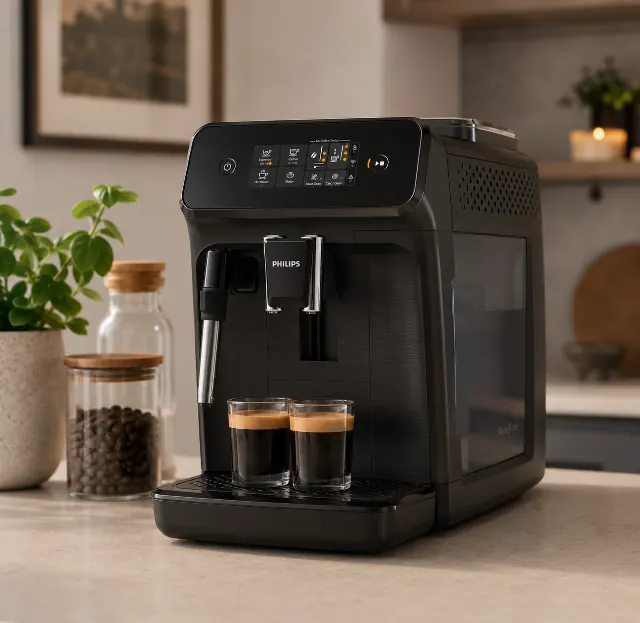
Philips 1200 Series Fully Automatic Espresso
A reliable entry point into one-touch espresso, the Philips 1200 excels at consistency for basic drinks but its manual frother and plastic build create a clear ceiling on its capabilities.
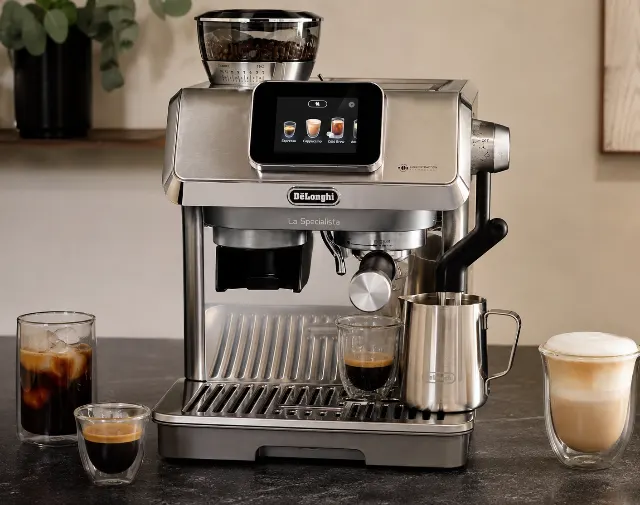
De'Longhi La Specialista Touch Espresso
The De'Longhi La Specialista Touch offers a uniquely guided manual espresso experience, excelling with its Smart Tamping Station but demanding a learning curve for its grinder and milk frothing.
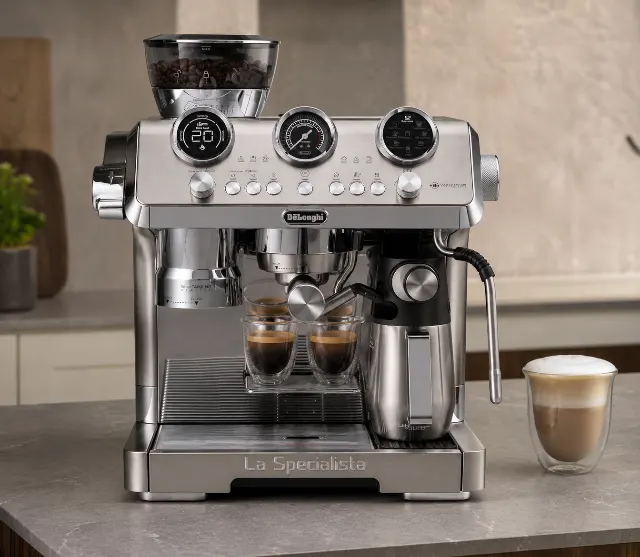
De'Longhi La Specialista Maestro Espresso
The De'Longhi La Specialista Maestro excels at convenient, repeatable espresso with a built-in tamper, but its grinder and plastic components betray its premium price point for purists.