Nespresso Essenza Mini Espresso Machine by Breville, Piano Black Review
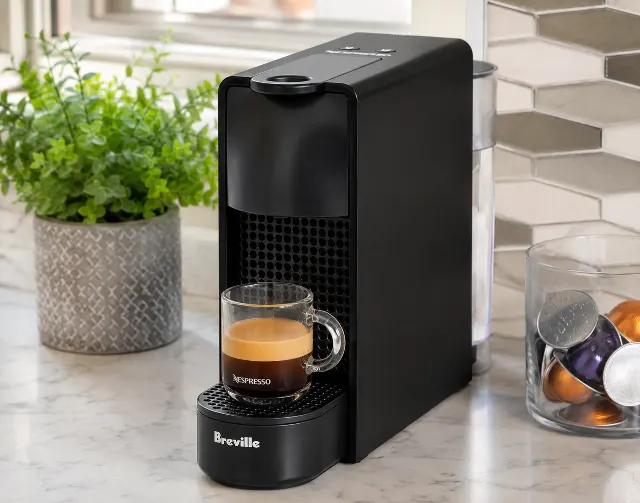
You bought the fancy French press. You tried the Moka pot. But every morning, the ritual of grinding, tamping, and cleaning feels like a chore standing between you and caffeine. All you want is a real, potent shot of espresso, not a watery cup of coffee-flavored drink, and you want it now. This is the moment of friction that leads countless people to the Nespresso Essenza Mini Espresso Machine by Breville, Piano Black. It promises authentic espresso without the fuss.
After years of daily use, the promise holds, but with caveats that don't appear in week-one reviews. The Nespresso Essenza Mini is an appliance of extremes. It is exceptionally small and brutally fast. It is also exceptionally needy, demanding daily attention to its water tank and capsule bin. It makes no attempt to be a do-it-all coffee center; it is a specialist tool honed for a single purpose.
Its core function—producing a 1.35 oz espresso or 3.7 oz lungo shot from a Nespresso Original pod—is executed with relentless consistency. The tradeoff is clear: you are exchanging the craft and flexibility of traditional espresso for speed and a footprint that can fit nearly anywhere. For the right person, this is a perfect exchange. For the wrong one, it's a source of daily annoyance.
What it actually is
This is Nespresso's most distilled expression of an espresso machine. It is a thermoblock heater and a 19-bar pressure pump wrapped in the smallest possible plastic shell. Nothing more. Its entire design philosophy is subtractive: remove every feature not essential to putting hot, high-pressure water through a capsule of ground coffee. There is no steam wand, no complex user interface, and no space for a travel mug.
Its purpose is to serve the person who values counter space and speed above all else. With a heat-up time of under 25 seconds, it is ready to brew before you've even selected a pod. The marketing often frames this as a machine for everyone, but that's a stretch. In practice, it is for the solo user. Its 0.6L (20.3 oz) water tank and a used capsule container that holds just 5-6 pods mean that making drinks for guests requires a mid-session pit stop to refill and empty.
One common misconception is that its small size implies a weaker extraction. This is incorrect. The Nespresso Essenza Mini contains the same 19-bar pump and core heating technology found in larger, more expensive Nespresso Original models like the Nespresso CitiZ Coffee and Espresso Machine by De'Longhi with Milk Frother. The shot quality is identical. You are not paying less for worse espresso; you are paying less for a smaller chassis and fewer conveniences.
Essenza Mini by Breville vs. De'Longhi: What's the Difference?
So, is Nespresso by Breville the same as Nespresso? Essentially, yes. Nespresso designs the internal brewing system—the pump, the thermoblock, the piercing mechanism—and licenses the technology to manufacturing partners. Breville and De'Longhi are the most common. While the core components responsible for the espresso are identical, the partners differentiate with external design. The Breville Nespresso Essenza Mini has a rectangular, minimalist body, while the De'Longhi version has a more triangular shape with rounded edges. Functionally, they are the same. The choice is purely aesthetic.
How it is built
Here's how its construction holds up over time.
Build Quality: ★★★★☆ (4.3/5)
The entire outer casing is plastic, which is the primary reason for its accessible price point. The Piano Black finish looks sharp out of the box but is a magnet for fingerprints and fine scratches. The lever mechanism for inserting and ejecting pods feels surprisingly robust, with a solid metallic clunk that has not loosened after thousands of cycles. The drip tray and water tank are functional but feel thin. Overlooked detail: the power cord is quite short (around 0.8 meters), which severely limits placement options without an extension cord.
Long-term Reliability: ★★★★☆ (4.1/5)
Long-term owner feedback shows the Essenza Mini to be one of Nespresso's most durable models, precisely because of its simplicity. Fewer electronic components mean fewer points of failure. The most common issue, emerging after 2-3 years, is a gradual weakening of the pump, leading to slower, sputtering shots. This is almost always a result of infrequent descaling. The silicone gaskets around the brewing chamber can also wear out after 5+ years, causing minor leaks into the drip tray, but this is a rare complaint. With a descaling cycle every 3-6 months, a lifespan of 5 to 10 years is a realistic expectation.
Where it shines
This machine excels in specific environments. Its most significant strength is its size-to-performance ratio. At just 3.3 inches wide, it occupies a sliver of counter space, making it viable for even the most cramped apartment kitchen or office desk. This is a machine you can genuinely tuck behind a canister set. Despite its size, it delivers the full 19 bars of pressure needed for proper crema and flavor extraction, a feat budget espresso makers like the Mr. Coffee Café Barista often struggle to achieve consistently.
Speed is its other defining virtue. From a cold start, it is ready to brew in under 30 seconds. The entire process—turning it on, inserting a pod, brewing a shot, and ejecting the capsule—takes less than a minute. For a rushed morning routine, this speed is transformative. The auto-off function, which powers the machine down after 9 minutes of inactivity, is also a welcome feature that many owners come to appreciate.
Finally, its commitment to the Nespresso Original pod ecosystem is a massive advantage. Unlike the patent-protected Vertuo line, the Original line is open to a vast market of third-party capsules. This means you can use pods from Starbucks, Peet's, Lavazza, and countless other brands, often at a lower cost-per-shot. This variety keeps the experience interesting and helps manage the long-term cost of ownership.
Buy this if you live in a small apartment, need a machine for a personal office, and prioritize speed and simplicity over all else. If you just want a great espresso shot without a learning curve, and you mostly drink for yourself, this is your machine.
Where it frustrates
The Essenza Mini's greatest strengths are also the source of its biggest frustrations. That tiny footprint comes at the cost of capacity. The 0.6L water tank needs refilling after just 5-6 lungos or about 15 espresso shots. In practice, this means you're refilling it every day or two, which becomes a noticeable chore. The used capsule container is even smaller, holding a maximum of six spent pods before it's full and blocks the mechanism. Forgetting to empty it is a common source of jammed pods.
Noise is another recurring complaint in owner reviews. During extraction, the machine vibrates significantly. On a resonant countertop, it's loud enough to be disruptive in a quiet morning household. This vibration can cause lightweight espresso cups to slowly slide across the drip tray, a startling discovery the first few times it happens. The drip tray itself is also tiny and requires frequent emptying to prevent overflows.
The spec sheet implies it's a versatile espresso maker, but what owners report is that it's a single-task machine. There is no room under the spout for a standard coffee mug, let alone a travel tumbler. You are limited to small espresso and lungo cups. And, of course, there is no integrated steam wand for making lattes or cappuccinos. You must purchase the Aeroccino milk frother bundle or have a separate device, adding to the cost and counter clutter.
Skip this if you regularly make drinks for more than one person, want to use your own travel mugs, or desire an all-in-one latte and cappuccino solution. You would be better served by the larger tank and capsule bin of the Nespresso Pixie Original Espresso Machine by Breville, Titan.
Common Problems & How to Fix Them
Owners discover after a year or two that most issues stem from two sources: scale buildup or a full pod bin. If your machine is blinking an orange light, it's the descaling alert. If water flow seems weak or the machine is sputtering, it's almost certainly time to descale. For Nespresso Essenza Mini troubleshooting when no water comes out, first check that the tank is seated correctly, then run a cleaning cycle without a pod. If that fails, a descale is the next step. A jammed lever is nearly always caused by a full used capsule container preventing the new pod from seating correctly.
How it fits your routine
Your first week is magical. Perfect espresso in 30 seconds feels like a life hack. By week three, the reality of the routine sets in. You learn to 'top off' the water tank every evening and empty the pod bin as part of your morning cleanup. It becomes second nature, a small tax paid for the convenience. You stop thinking about it.
You also quickly find your favorite one or two pods and stick with them. The initial excitement of trying dozens of third-party capsules fades, and you settle into a comfortable, consistent rhythm. What most reviews miss is how the machine's limitations simplify your choices. You don't agonize over grind size or tamping pressure; you just pick your pod and press a button.
The two programmable buttons—for espresso (1.35 oz) and lungo (3.7 oz)—are easy to customize. Holding one down during brewing sets a new default volume. Many long-term owners reprogram the lungo button to a slightly shorter volume (around 3 oz) to get a less watery, more concentrated shot, finding the factory setting a bit too diluted for most Original line pods. This small adjustment significantly improves the daily experience.
Care and running costs
Maintenance is simple but non-negotiable. A cleaning cycle (running a lungo shot with no pod) should be done weekly to flush out coffee oils. The critical task is descaling. Depending on your water hardness, the machine will prompt you every 300 capsules or so, roughly every 3-6 months for a typical user. Ignoring this is the number one cause of performance degradation and eventual failure.
Hidden cost: the descaling solution. While you can use third-party descalers, Nespresso's own kits are formulated to be gentle on the machine's aluminum thermoblock and internal silicone tubing. The long-term cost of ownership is entirely dependent on pod choice. Using Nespresso-brand pods exclusively places it in a premium tier for running costs. Opting for compatible third-party pods, especially when bought in bulk, can cut this cost significantly, making it more competitive with buying coffee from a cafe.
Beyond the spec sheet, the plastic drip grid is the part that shows wear first. It scratches easily from ceramic cups. While purely cosmetic, it's something to be aware of if you value a pristine appearance. The machine itself, if cared for, is a workhorse.
Cleaning and Descaling Your Essenza Mini
The process is straightforward. To descale your Nespresso Essenza Mini Breville, fill the water tank with one unit of descaling solution and the specified amount of water. Place a large container under the spout. Press both the espresso and lungo buttons simultaneously for 3 seconds to enter descaling mode. Press the lungo button to start. The machine will run the solution through. Once done, rinse the tank, refill with fresh water, and press the lungo button again to run a rinse cycle. Exit descaling mode by pressing both buttons for 3 seconds again.
Where rivals do better
The Essenza Mini is a specialist, and rivals thrive by being better generalists. The aforementioned Nespresso Pixie Original Espresso Machine by Breville, Titan offers a slightly larger 0.7L water tank and a bigger 10-capsule bin in a still-compact, more premium metal-clad body. For those who make two or three drinks at a time, the Pixie's larger capacity is a meaningful quality-of-life upgrade.
For users who want an integrated milk solution without a huge jump in size, the Nespresso CitiZ Coffee and Espresso Machine by De'Longhi with Milk Frother is a compelling alternative. It incorporates the Aeroccino frother into its base, creating a more cohesive unit for latte and cappuccino lovers, though it occupies more counter space.
An overlooked competitor is the Philips Baristina Espresso Machine+Milk Frother Bundle. It uses loose grounds rather than pods, offering far lower running costs and less environmental waste. While it demands more user involvement (grinding, tamping), it provides a bridge between pod convenience and the craft of manual espresso, a path many Nespresso owners eventually explore. Owner feedback splits roughly evenly on whether the extra effort is worth the savings and control.
Essenza Mini vs. The Competition (Pixie, Inissia, Vertuo)
Against its direct Nespresso Original siblings, the Nespresso Essenza Mini wins on size and price, period. The Inissia is its closest cousin, with similar specs but a slightly bulkier, more rounded plastic design. The Pixie is the direct step-up, offering metal side panels and a larger capacity for a higher cost. The shot quality between these three is identical. The choice is about aesthetics, build materials, and tank size. Against the Nespresso Vertuo line, it's a different contest. The Nespresso Essenza Mini makes traditional espresso. Vertuo machines use a different, patent-protected pod to make espresso and larger coffee-style drinks. If you want classic espresso and pod variety, the Nespresso Essenza Mini (and the Original line) is the clear choice. Many people are getting rid of Nespresso Vertuo machines due to the high, non-competitive cost of its exclusive pods.
Who should pick it up
Best for: The solo coffee drinker in a space-starved environment. Think studio apartments, dorm rooms, home offices, or as a secondary machine for a quick shot without firing up a large semi-automatic.
Not ideal for: Families, couples who drink coffee at the same time, or anyone who wants to make milk-based drinks without a separate device. Its constant need for refilling and emptying will quickly become tiresome in a multi-user household.
This machine serves a very specific niche with precision. It's for the person who has decided that the convenience of a pod system and the space savings of an ultra-compact design outweigh the limitations of small capacity and a plastic build. It is an appliance of intentional compromise.
Final judgement
The Nespresso Essenza Mini by Breville remains one of the best entry points into the Nespresso ecosystem for a reason. It makes no false promises. It delivers fast, consistent, high-pressure espresso from a device that almost disappears on your counter. Its flaws—the tiny tank, the small pod bin, the plastic feel—are not defects but direct consequences of its core design goal: to be as small as physically possible.
After years of service, its character is clear. It is a reliable, single-purpose tool that demands a small, daily ritual of care. If you can accept that pact, it will serve you well for a very long time. That said, one thing the spec sheet doesn't resolve is the long-term cost of pods, which remains the most significant financial commitment.
For the right user, this is the most sensible Nespresso machine you can buy.
The detail spec sheets miss
The machine's vibration is strong enough to 'walk' lightweight espresso cups off the drip tray during brewing. You learn to hold the cup or use heavier ceramic.
Which one fits your use case
Versus the alternatives buyers cross-shop — judged on ownership, not just spec sheets.
| Alternative | Ease of use | Maintenance | Durability | Value | Best for |
|---|---|---|---|---|---|
| Nespresso Essenza Mini Espresso Machine by Breville, Piano Black (this pick) | Push-button simple; two programmable shot sizes. Easiest possible workflow. | Daily emptying of pod bin/drip tray. Descaling required every 3-6 months. | High-impact plastic body. Simple internals lead to good long-term reliability. | Low upfront cost for the machine, but ongoing pod costs are the main expense. | The solo drinker in a tiny apartment or office needing maximum convenience. |
| De'Longhi Stilosa Manual Espresso | Requires grinding, tamping, and shot timing. Significant learning curve. | Daily cleaning of portafilter and group head. Less frequent descaling. | Stainless steel boiler and components offer robust, long-lasting performance. | Higher initial effort but much lower long-term cost using whole bean coffee. | The hobbyist on a budget who wants to learn the craft of espresso. |
| Mr. Coffee Café Barista | Semi-automatic with one-touch buttons for latte/cappuccino. Simpler than manual. | Requires regular cleaning of the automatic milk frother components. | Plastic build with more complex parts that can be prone to failure. | An all-in-one budget option, but pump pressure and consistency are weaker. | Beginners wanting an all-in-one milk drink machine at a very low entry price. |
| Nespresso CitiZ Coffee and Espresso Machine by De'Longhi with Milk Frother | Same simple pod operation as the Essenza Mini, with an integrated milk frother. | Requires cleaning the Aeroccino frother after each use, plus machine descaling. | Similar internal reliability to Essenza, with a slightly more premium feel. | Higher upfront cost for an integrated, space-saving milk drink solution. | Nespresso fans who primarily drink lattes and want a cohesive single unit. |
| Nespresso Pixie Original Espresso Machine by Breville, Titan | Identical push-button operation to the Essenza Mini. No learning curve. | Slightly less frequent emptying/refilling due to larger tank and bin. | Metal side panels feel more substantial and resist wear better than plastic. | A premium over the Essenza for better build and slightly larger capacity. | Users who want the Nespresso experience but need to serve 2-3 people at once. |
How it scores on what matters
| Product | Espresso shot quality | Milk steaming & microfoam | Consistency shot-to-shot | Ease of dialing in | Heat-up & workflow speed | Maintenance burden | Verdict |
|---|---|---|---|---|---|---|---|
| Nespresso Essenza Mini Espresso Machine by Breville, Piano Black (this pick) | Very good | Weak | Excellent | Excellent | Excellent | Fair | Fast, consistent shots, but high daily maintenance. |
| De'Longhi Stilosa Manual Espresso | Good | Good | Fair | Weak | Weak | Good | Capable but inconsistent without significant user skill. |
| Mr. Coffee Café Barista | Fair | Fair | Fair | Good | Good | Weak | Convenient but produces mediocre espresso and foam. |
| Nespresso CitiZ Coffee and Espresso Machine by De'Longhi with Milk Frother | Very good | Very good | Excellent | Excellent | Excellent | Fair | Same great espresso with excellent integrated milk frothing. |
| Nespresso Pixie Original Espresso Machine by Breville, Titan | Very good | Weak | Excellent | Excellent | Excellent | Good | Identical shot quality with a less demanding workflow. |
Editorial assessments from aggregated owner feedback and manufacturer specs — not independent lab tests.
Strengths
- ✓Ultra-compact footprint (3.3" W x 8" H x 12.8" D) fits in the smallest kitchens.
- ✓Fast 25-second heat-up time delivers espresso almost instantly from a cold start.
- ✓Full 19-bar pressure pump extracts flavor and crema on par with larger Nespresso models.
- ✓Access to the wide Nespresso Original pod ecosystem, including many third-party options.
- ✓Simple two-button operation (Espresso & Lungo) with programmable shot volumes.
What could be better
- ✕Tiny 0.6L water tank requires refilling almost daily in typical use.
- ✕Used capsule container fills after only 5-6 pods, demanding frequent emptying.
- ✕Loud vibration during brewing can move lightweight cups on the drip tray.
- ✕Plastic construction feels less durable than metal-bodied alternatives like the Pixie.
The right buyer
Ideal for students, apartment dwellers, or office workers who need one or two excellent espresso shots fast. Its footprint is smaller than a toaster. Skip this if you make more than two drinks back-to-back or can't be bothered to refill a water tank daily.
What makes it worth it
It solves the space problem without compromising on the core 19-bar extraction of the Nespresso Original system. Where a manual machine like the <a href="/espresso-machines/de-longhi-stilosa-manual-espresso/">De'Longhi Stilosa Manual Espresso</a> requires a learning curve and a separate grinder, the Essenza Mini delivers a consistent shot 25 seconds after you press a button.
How it scores
- Value
- ★★★★★ ★★★★★ 4.0
- Quality
- ★★★★★ ★★★★★ 4.3
- Ease of use
- ★★★★★ ★★★★★ 4.6
- Durability
- ★★★★★ ★★★★★ 4.2
Specifications
| Type | Pod (Super-automatic) |
|---|---|
| Boiler system | Thermoblock |
| Portafilter size | N/A (Uses Nespresso Original Capsules) |
| Pump pressure | 19 Bar |
| Steam wand | No (Available with Aeroccino bundle) |
| Built-in grinder | No |
| Water tank | 0.6 Liters / 20.3 oz (Removable) |
| Heat-up time | Under 25 seconds |
| Warranty | 1 Year (Varies by retailer) |
Frequently asked questions
Is the Nespresso Essenza Mini worth it?
Yes, for those who prioritize a tiny footprint and speed. It delivers authentic 19-bar espresso from Nespresso Original pods in under 30 seconds. Its compact size is perfect for small kitchens, though the 0.6L water tank requires frequent refilling.
What pods can be used in Nespresso Essenza Mini?
This machine uses Nespresso's Original line capsules, not the larger Vertuo pods. This gives you access to a huge variety of espresso blends from Nespresso and third-party brands like Starbucks and Peet's, which are widely available in Canada, the US, and the UK.
Is Nespresso by Breville the same as Nespresso?
Fundamentally, yes. Nespresso designs the internal 19-bar pump and brewing technology, while partners like Breville and De'Longhi manufacture the machine's exterior. The core performance is identical; only the shell design and spout shape differ slightly.
Why are people getting rid of Nespresso Vertuo?
Many users switch from Vertuo to an Original line machine like the Essenza Mini because of pod cost and variety. Vertuo pods are patent-protected, which limits third-party options and keeps prices high. The Original line has a much more competitive and diverse capsule market.
What kind of pods does the Nespresso Essenza Mini use?
It exclusively uses the smaller, dome-shaped Nespresso Original capsules designed for traditional espresso and lungo shots. It is not compatible with the larger, rounder Nespresso Vertuo pods, which use a completely different centrifugal brewing system.
How long will a Nespresso Essenza Mini last?
A Nespresso Essenza Mini can easily last for 5 to 10 years with proper care. Its longevity is due to its simple mechanical design and the critical habit of regular descaling every 3-6 months to protect the thermoblock heater and pump.
People also ask
- What is the difference between Breville and De'Longhi Nespresso?
- Can you use Starbucks pods in Nespresso Essenza Mini?
- What pods can be used in the Nespresso Essenza Mini?
- How long does the Nespresso Essenza Mini last?
- Can you make a latte with the Nespresso Essenza Mini?
- What is the difference between the Essenza Mini and the Pixie?
You might also like
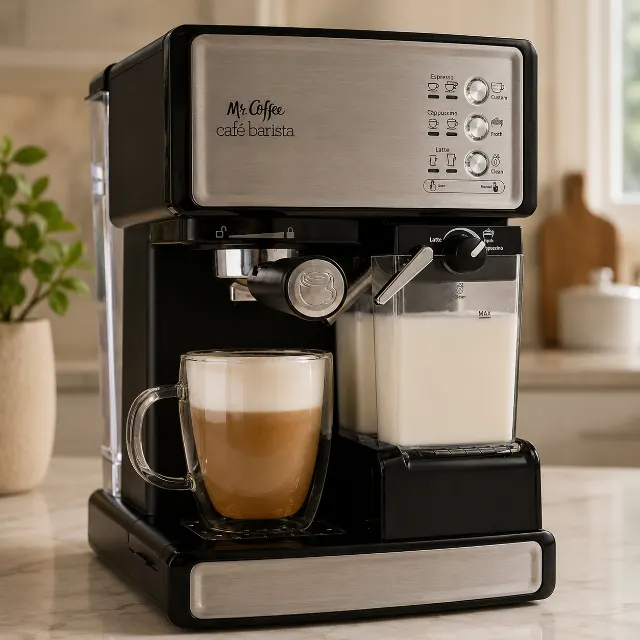
Mr. Coffee Café Barista
A detailed 2026 review of the Mr. Coffee Café Barista, an automatic milk frothing espresso machine for beginners who prioritize convenience over craft.
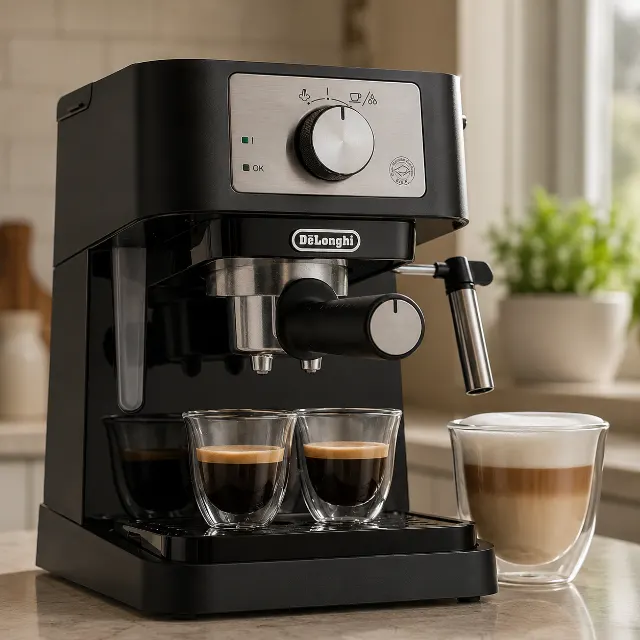
De'Longhi Stilosa Manual Espresso
The De'Longhi Stilosa Manual Espresso is a capable entry point for learning manual espresso, but its long-term cost of ownership and required upgrades make it a calculated risk for beginners.
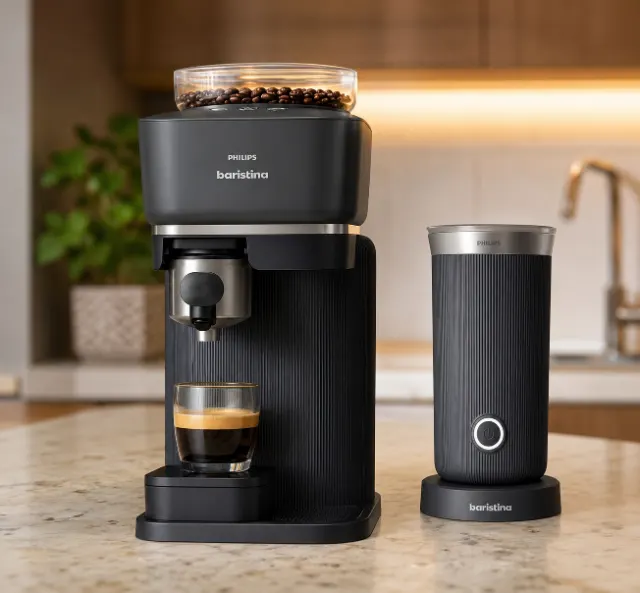
Philips Baristina Espresso Machine+Milk Frother Bundle
A beginner-friendly semi-automatic that pulls surprisingly good shots, but its long-term value hinges on buying a separate, capable grinder.
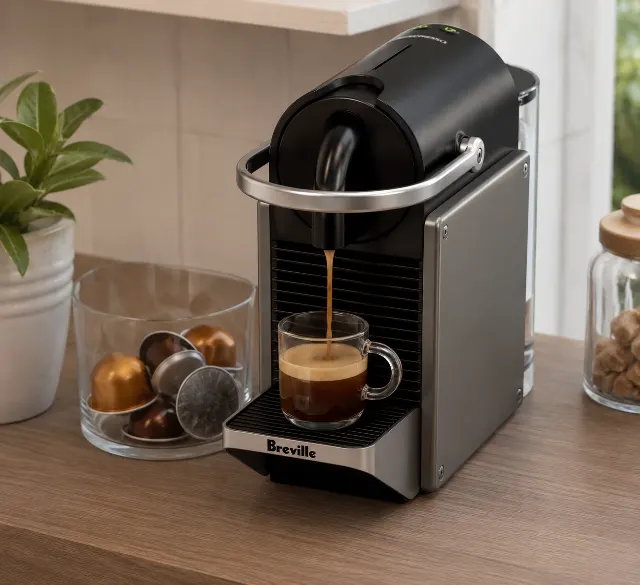
Nespresso Pixie Original Espresso Machine by Breville, Titan
A compact, lightning-fast espresso maker for small spaces, the Nespresso Pixie by Breville excels at speed and consistency but demands constant refilling of its tiny water tank and drip tray.
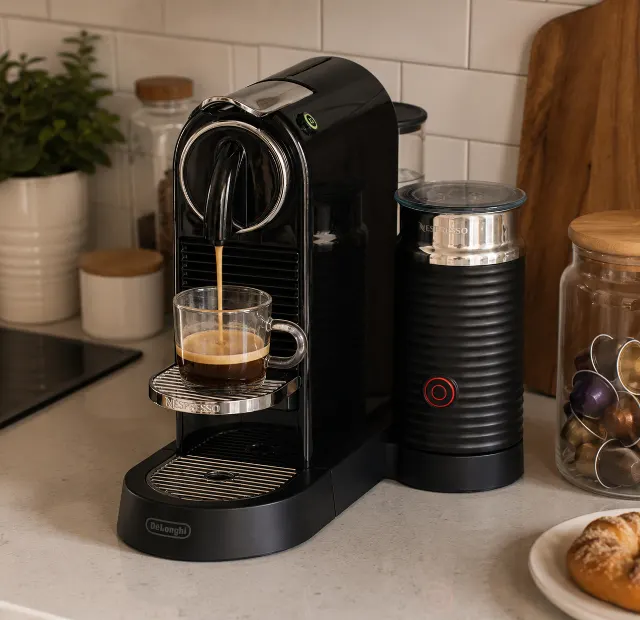
Nespresso CitiZ Coffee and Espresso Machine by De'Longhi with Milk Frother
The Nespresso CitiZ & Milk by De'Longhi delivers fast, consistent espresso-style drinks for users prioritizing speed and a small footprint, but its long-term value is challenged by pod costs and a build that shows its age.