Mr. Coffee Café Barista Review
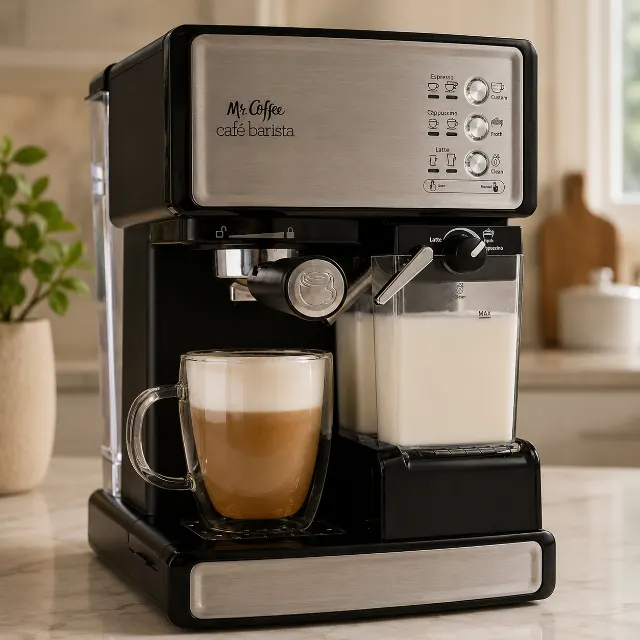
What makes it different
The automatic milk frother's cleaning cycle uses a surprising amount of water from the main reservoir, not a separate channel. This can lead to unexpectedly running the tank dry mid-brew if you don't top it off frequently.
Score by category
- Value
- ★★★★★ ★★★★★ 4.5
- Quality
- ★★★★★ ★★★★★ 3.6
- Ease of use
- ★★★★★ ★★★★★ 4.4
- Durability
- ★★★★★ ★★★★★ 3.8
Strengths
- ✓Unmatched convenience with one-touch, automatic latte and cappuccino functions.
- ✓Fast 40-second heat-up time via the thermoblock system is ideal for quick morning routines.
- ✓Very accessible for absolute beginners due to the forgiving pressurized portafilter.
- ✓Removable 18oz milk reservoir is easy to fill, clean, and store in the refrigerator.
- ✓Compact footprint fits well in smaller kitchens where counter space is at a premium.
The downsides
- ✕Pressurized 51mm portafilter limits espresso quality and prevents true dialing-in.
- ✕Significant use of plastic in the chassis and portafilter raises long-term durability concerns.
- ✕Milk frother creates bubbly foam, not the silky microfoam required for latte art.
- ✕Prone to clogging and requires diligent, immediate cleaning after every use to function reliably.
Specifications
| Type | Semi-Automatic with Automatic Milk Frother |
|---|---|
| Boiler system | Thermoblock |
| Portafilter size | 51mm (Pressurized) |
| Pump pressure | 15 Bar |
| Steam wand | Automatic Frothing Arm |
| Built-in grinder | No |
| Water tank | 55 oz / 1.6 L |
| Heat-up time | Approx. 40 seconds |
| Warranty | 1-Year Limited |
After three months, the novelty of the Mr. Coffee Café Barista fades. What remains is a countertop appliance defined by a single, stark tradeoff: push-button convenience for fundamental espresso quality. The automatic milk frother still delivers a passable latte, but the limitations of its pressurized portafilter and thermoblock heating system become daily realities. You are not pulling café-level shots. You are operating a highly specialized beverage automaton.
Its entire design philosophy hinges on removing the user from the equation. This is its strength and its fatal flaw. For the person who wants a hot, milky coffee drink before their morning commute without thinking, it succeeds. For anyone hoping this machine is a stepping stone to the hobby of espresso, it is a dead end. The parts that matter for genuine quality—the portafilter, the group head, the lack of temperature control—are engineered for simplicity, not excellence.
Long-term owner feedback shows a clear pattern: satisfaction is directly proportional to pre-purchase expectations. Buyers who understood they were purchasing a sophisticated coffee appliance, not a true espresso machine, report high levels of satisfaction for two to three years. Those who expected it to compete with machines from Breville or Gaggia on shot quality inevitably express disappointment. The price-to-performance calculation here is not about the quality of the espresso, but the cost of automating the milk frothing.
This is a machine for outcomes, not process. It delivers a finished beverage with minimal input, and for its intended user, that is precisely the point.
What it sets out to do
The Mr. Coffee Café Barista is a semi-automatic espresso machine engineered for one purpose: to produce lattes and cappuccinos with the least possible user effort. Its defining feature is the integrated, automatic milk frother connected to a removable milk reservoir. Unlike machines with a manual steam wand that require user skill to texture milk, this unit does it automatically at the press of a button. It is a 3-in-1 Latte, Espresso and Cappuccino Maker designed for the user who wants the drink, not the hobby.
Its technical specifications support this goal. The machine uses a 15-bar pump and a thermoblock heating system. The marketing heavily emphasizes the 15-bar pressure rating, but this is a classic misdirection in the budget espresso market. True espresso extraction requires approximately 9 bars of pressure at the group head; the higher pump rating is mostly irrelevant and does not equate to better shots. The key component is the pressurized, double-wall filter basket inside the portafilter, which artificially creates crema and compensates for imperfect grind size or tamping. This makes it forgiving for beginners but prevents the extraction of nuanced flavors from high-quality coffee beans.
One thing the spec sheet doesn't resolve is the actual temperature stability. Lacking any form of PID temperature control, the thermoblock's output can vary, leading to inconsistent espresso shots—sometimes balanced, sometimes sour or bitter. The machine is optimized for dark roasts and pre-ground coffee, which are more tolerant of temperature swings. Using light roast, single-origin beans is an exercise in frustration.
Key Features: One-Touch Controls & Automatic Frother
The control panel is the machine's centerpiece. Three buttons allow you to select Espresso, Cappuccino, or Latte. For each, you can choose a single or double shot size. Once you've added coffee to the portafilter and filled the water and milk reservoirs, the process is fire-and-forget. The machine pulls the espresso shot and dispenses the frothed milk into the same cup. This level of automation in a machine at this price point is its primary market differentiator.
The milk frother has an adjustable knob to control the foam level, from steamed milk for a latte to a stiffer foam for a cappuccino. What most reviews miss is that the frothing mechanism is sensitive to the milk's temperature and fat content. For consistent results, the milk must be very cold, and whole dairy milk or a high-quality barista-blend oat milk will always produce better texture than skim or standard almond milk. The system is effective, but it does not create true microfoam; the texture is more bubbly and less silky than what is achievable with a manual steam wand.
Construction and longevity
This is where the budget-tier price becomes most apparent. The exterior shell is a mix of stainless steel fascia and black plastic, which looks presentable on a counter. However, the critical internal components and accessories betray its cost-conscious engineering.
Build Quality: ★★★☆☆ (3.6/5)
The portafilter is lightweight, featuring a significant amount of plastic in its construction, and holds a 51mm pressurized basket. The locking mechanism into the group head can feel stiff and is a common point of failure over time. The drip tray and water reservoir are made of thin plastic. While adequate, they require careful handling. Compared to the all-metal construction of a Gaggia Classic Pro, the Café Barista feels like an appliance, not a durable piece of equipment. The most robust part is, surprisingly, the milk reservoir, which is well-designed for easy removal and refrigeration.
Long-term Reliability: ★★★☆☆ (3.8/5)
The life expectancy of a Mr. Coffee maker like this one is a subject of much debate. With meticulous, consistent cleaning, owners consistently report getting two to four years of regular use. The most common failure points are the pump weakening, leading to low pressure, and the milk frother mechanism clogging internally. A recurring complaint in owner reviews is the machine simply ceasing to turn on after 18-24 months, often just outside the standard one-year warranty period. Finding Mr. Coffee Café Barista parts, particularly the specific gaskets or frothing tubes, can be difficult, often leading users to replace the entire unit. The long-term cost of ownership is low in terms of consumables, but the probability of total unit replacement is higher than in more serviceable machines.
How it performs day to day
It is fast. From a cold start, the thermoblock is ready to brew in under 40 seconds, a significant advantage for busy mornings. The workflow is streamlined: fill, load, press a button. The resulting espresso is consistent in its mediocrity—it produces a thick, bubbly crema thanks to the pressurized basket, but lacks the body and flavor clarity of a shot from a non-pressurized system. It makes a perfectly acceptable base for a milk drink, which is its intended function.
The automatic milk frother is the main event. It delivers hot, frothed milk directly into the cup with respectable speed. For a latte, it produces a decent volume of heated milk with a thin layer of foam. On the cappuccino setting, it creates a much stiffer, drier foam. The process is loud, a common complaint, but effective. The convenience of not having to steam milk manually cannot be overstated for its target audience. It turns a multi-step, skilled process into a single button press.
Espresso, Cappuccino, Latte: Drink Quality & Taste Test
The espresso, judged on its own, is weak. Using the same beans, a machine like the Breville Bambino with its 54mm non-pressurized basket produces a shot with vastly more complexity and body. The Café Barista's shots are often thin and lack sweetness. However, when mixed with the automatically frothed milk, these flaws are largely masked. The cappuccino is airy and foam-forward; the latte is milky and hot. They are beverage equivalents of a coffee shop chain's automated machine—predictable and satisfying, if not inspiring.
Buy this if: You live in a small apartment, value countertop space, and your primary goal is to replace a daily coffee shop latte habit with a simple, automated home alternative. You prioritize speed and convenience above all else and have no desire to learn manual espresso techniques. Your alternative is a pod machine, not a more complex semi-automatic.
The annoyances
The machine's simplicity creates its own set of frustrations. The number one issue cited by long-term owners is the portafilter becoming clogged. The small exit hole in the pressurized basket is easily blocked by fine coffee grounds, especially if using a blade grinder. This leads to the machine choking, with no espresso coming out, and can cause the Mr. Coffee Café Barista to start leaking water from around the group head or from the bottom as pressure backs up. Regular, thorough portafilter cleaning is not optional; it's a requirement for basic function.
Another significant issue is the inconsistency of the milk frother over time. If the frothing tube and milk reservoir are not cleaned immediately after every single use, milk residue builds up and the frother stops working or produces poor foam. The 'clean' cycle helps, but manual disassembly and washing are essential. Overlooked detail: the machine does not have a dedicated pressure gauge, so troubleshooting is a guessing game. When a shot fails, you don't know if the cause is a clog, a bad tamp, or a failing pump. This lack of feedback is maddening for anyone trying to diagnose why their Mr. Coffee Cafe Barista is not brewing espresso correctly.
Skip this if: You are detail-oriented and want control over your coffee's variables. The lack of a manual steam wand, a non-pressurized basket option, and any temperature control will frustrate you. If your goal is to make true, café-quality microfoam for latte art, this machine is physically incapable of it. You would be better served by the Breville Bambino.
Living with it
The daily routine settles quickly. You learn to rinse the portafilter and milk frother tube the moment you finish your drink. You learn to keep the 55-ounce (1.6-liter) water tank topped up, because the frother's cleaning cycle uses more water than you'd expect and can empty it surprisingly fast. You find the best coffee for the Mr. Coffee Barista is a medium-dark or dark roast espresso blend, often pre-ground, as it's the most forgiving of the machine's temperature and pressure inconsistencies.
Owners discover after a month that the drip tray is deceptively small and fills up quickly, partly due to the volume of water purged during the heating and cleaning cycles. Forgetting to empty it after two or three drinks guarantees a puddle on the counter. The feature that gets used least is the manual espresso mode; the entire reason for buying this machine is its automated drink functions, so pulling shots manually feels redundant.
How to Use Your Café Barista: A Step-by-Step Guide
For a first-time user, the process is straightforward. First, prime the machine by running a brew cycle with only water. Then, fill the rear water reservoir and the side milk reservoir. Add finely ground coffee to the portafilter basket, level it, and tamp down with firm pressure. Lock the portafilter into the group head, turning it to the right until it's secure. Place your cup under the spout, adjust the milk frother tube over your cup, and press the button for your desired drink (latte or cappuccino) and size (single or double). The machine will do the rest.
Living with it long term
The true cost of ownership for the Mr. Coffee Café Barista is measured in cleaning and eventual replacement. The weekly routine involves a deeper clean of the portafilter, soaking it to dissolve oils, and fully disassembling and washing the milk reservoir and frothing tube. Descaling is the most critical maintenance task. The machine's blinking lights will indicate when it's time, typically every 40-80 cycles depending on your water hardness. Ignoring this is the fastest way to kill the thermoblock or pump.
The first parts to show wear are the silicone gaskets in the group head and the milk frother assembly. These can dry out or crack after a couple of years, leading to leaks. Finding official Mr. Coffee Café Barista replacement parts can be a challenge. Hidden cost: a proper burr grinder is still recommended. While the pressurized basket is forgiving, a blade grinder produces too many fine particles that lead to frequent clogging. Factoring in the cost of a separate entry-level burr grinder closes the price gap to more capable machines.
Common Problems & Troubleshooting Fixes
Many common issues can be resolved at home. If the machine stops working, first check the power and water level. If it won't brew, the portafilter is almost certainly clogged; a thorough cleaning with a pin to clear the basket's exit hole usually fixes this. If the Mr. Coffee Cafe Barista is not frothing milk properly, the frothing tube is blocked; disassemble and soak it in hot, soapy water. Leaking water from the bottom often points to a full internal drip tray or a failing connection from the water reservoir. These troubleshooting steps are essential knowledge for any owner.
How it compares to the field
The Café Barista exists in a competitive space. Its direct rival is often a machine like the De'Longhi Stilosa, which is a more traditional manual machine. The Stilosa offers better potential for espresso quality if you are willing to learn, but lacks the one-touch convenience of the Mr. Coffee. The Café Barista wins for anyone who fears the learning curve of a manual steam wand.
Moving up in the price bracket, the Breville Bambino offers vastly superior performance. Its ThermoJet system heats up in 3 seconds, and its 54mm portafilter and powerful manual steam wand can produce genuine café-quality espresso and microfoam. It costs more and requires skill, but the ceiling on quality is much higher. For a similar price to the Café Barista, the Casabrews 3700 Essential offers a more robust build with a 20-bar pump and a more capable, if still manual, steam wand. It's a better choice for those willing to trade a bit of convenience for durability.
An overlooked competitor is the Casabrews Ultra Espresso, which often includes a built-in grinder for a slightly higher investment, representing a more complete, albeit still entry-level, setup. The Café Barista's unique selling proposition remains its fully automatic milk system; no direct competitor at its price point offers the same level of automation. Owner feedback splits roughly evenly on whether this single feature is worth the compromises in build quality and espresso potential.
Who it is right for
Best for: The coffee drinker who wants to upgrade from a pod system to using real ground coffee for lattes and cappuccinos without any new skills required. It's for the person who values speed and automation over craft and control, and who lives in a home with limited counter space.
Not ideal for: Anyone with a genuine interest in the hobby of espresso. The machine's limitations—the pressurized basket, lack of temperature control, and artificial foam texture—will quickly become frustrating. It is also not for those who prioritize longevity and repairability in their appliances.
Ultimately, this machine serves a transitional user. It's a step up from Keurig or Nespresso in terms of flavor potential and a step down from any serious semi-automatic machine in terms of quality and user control. It occupies its niche effectively, but it's crucial for a buyer to know that the niche is narrow.
In the end
The Mr. Coffee Café Barista is an appliance of convenience. It successfully automates a process that is typically complex and skill-based, making home lattes accessible to absolutely anyone. It executes its primary function—combining coffee and frothed milk in a cup—with dependable, if uninspired, results. The machine's value proposition is strong for the right user, but its lifespan is finite and its ceiling on quality is low.
Its construction and reliance on a pressurized system mean you are buying a beverage maker, not a true espresso machine. That distinction is critical. If you understand and accept that, you will likely be satisfied for a few years. If you are looking for a machine to grow with, look elsewhere.
For push-button lattes on a budget, it remains a compelling option.
Best-fit buyers
Ideal for the aspiring home barista who wants lattes and cappuccinos without a learning curve. It fits well in small kitchen spaces. Skip this if you want to learn the craft of espresso, demand high-quality microfoam, or prioritize build materials that will last beyond a few years.
The case for it
This machine solves the intimidation factor of manual espresso. Where a <a href="/espresso-machines/gaggia-classic-pro/">Gaggia Classic Pro</a> demands skill to steam milk, the Café Barista does it automatically. It fills the gap between pod machines and more serious semi-automatics, offering a tangible step up in freshness without the operational complexity.
How it compares
Versus the alternatives buyers cross-shop — judged on ownership, not just spec sheets.
| Alternative | Ease of use | Maintenance | Durability | Value | Best for |
|---|---|---|---|---|---|
| Mr. Coffee Café Barista (this pick) | Extremely simple one-touch operation for lattes and cappuccinos. No skill required. | High frequency; requires immediate cleaning of milk parts after each use to prevent clogs. | Fair; plastic components and portafilter are common points of failure after 2-3 years. | Excellent for automated convenience at its price point, but poor for espresso quality. | The beginner who wants an automated latte maker for a small apartment and has no hobbyist ambitions. |
| Breville Bambino | Moderate learning curve for milk steaming and dialing in shots with non-pressurized baskets. | Standard; regular backflushing and descaling required. More forgiving than the Café Barista. | Good; better quality components and a more robust 54mm stainless steel portafilter. | Excellent price-to-performance for true espresso quality, but costs more upfront. | The aspiring home barista who wants to learn the craft and achieve café-quality results. |
| Casabrews 3700 Essential | Requires manual operation for both brewing and steaming, similar to traditional machines. | Standard semi-automatic cleaning routine. Less prone to the specific clogging of the Café Barista. | Good; more metal in the construction and a sturdier feel than the Mr. Coffee. | Strong value for a more traditional espresso experience without the automation. | The budget-conscious buyer who prefers durability and manual control over one-touch drinks. |
| Gaggia Classic Pro | High learning curve; requires practice to master. Fully manual operation. | Involved; requires regular cleaning and maintenance but is highly serviceable with available parts. | Excellent; commercial-grade components and a heavy-duty build designed to last for many years. | A long-term investment that holds its value and offers superb performance for the price. | The dedicated hobbyist who wants a machine they can repair, modify, and grow with over a decade. |
How it scores on what matters
| Product | Espresso shot quality | Milk steaming & microfoam | Consistency shot-to-shot | Ease of dialing in | Heat-up & workflow speed | Maintenance burden | Verdict |
|---|---|---|---|---|---|---|---|
| Mr. Coffee Café Barista (this pick) | Fair | Fair | Good | Weak | Excellent | Fair | Convenient and fast, but espresso quality is a clear compromise. |
| Breville Bambino | Very good | Very good | Good | Good | Excellent | Good | Superior drink quality and speed justify its higher cost. |
| Casabrews 3700 Essential | Good | Good | Fair | Good | Good | Good | A solid manual alternative with better build quality. |
| Gaggia Classic Pro | Excellent | Excellent | Fair | Very good | Fair | Good | Unmatched potential for quality but demands significant user skill. |
Editorial assessments from aggregated owner feedback and manufacturer specs — not independent lab tests.
Frequently asked questions
How do you use the Mr. Coffee Cafe Barista machine?
To use it, fill the water and milk tanks, add ground espresso to the portafilter and tamp it, then lock it in. From there, simply select your drink—espresso, latte, or cappuccino—and the machine automatically brews the coffee and froths the milk directly into your cup.
Why won't my Mr. Coffee Cafe Barista work?
Most failures to brew are due to a clogged portafilter. Remove the metal basket and use a pin to clear the tiny exit hole. For frothing issues, the milk tube is likely blocked; disassemble and soak it. Also, always confirm the water tank is full and properly seated.
What is the life expectancy of a Mr. Coffee maker?
The functional life expectancy of a Café Barista is typically 2 to 4 years with diligent daily cleaning and regular descaling. The lifespan is shorter than more robust machines like a Gaggia, as key components are plastic and difficult to replace, often leading to full unit replacement.
Is the Mr. Coffee Cafe Barista good for beginners?
Yes, it is one of the most accessible machines for beginners who want milk drinks. Its one-touch operation and automatic frother eliminate the steep learning curve of manual steaming, making it a straightforward entry point over more complex semi-automatic machines like the Breville Bambino.
How often should I clean my Mr. Coffee Cafe Barista?
Critical milk components—the reservoir and frothing tube—must be rinsed after every single use to prevent clogs. A deeper weekly cleaning is advised. The machine will signal when to descale with blinking lights, typically every 40 to 80 brew cycles, depending on your water hardness.
Can I use any kind of milk in the Café Barista?
The frother works with dairy and non-dairy milks, but results vary. For the best foam, use very cold whole dairy milk or a barista-blend oat milk. Skim and standard almond milks tend to produce thinner, less stable foam due to lower fat and protein content.
What does a cafe barista coffee mean?
The term 'Café Barista' is a marketing name for this specific Mr. Coffee 3-in-1 model. It implies the machine can create barista-style drinks like lattes and cappuccinos at home. It refers to the drink-making capability, not a specific type of coffee bean or brewing standard.
Can you use ESE pods in Mr. Coffee Cafe Barista?
No, the Mr. Coffee Café Barista is not designed to be compatible with Easy Serving Espresso (ESE) pods. The included 51mm portafilter baskets are engineered specifically for use with loose ground coffee, and there is no adapter available from the manufacturer to accommodate pods.
People also ask
- Is the Mr. Coffee Cafe Barista a good espresso machine for beginners?
- Why is my Mr. Coffee Cafe Barista not working or turning on?
- What is the life expectancy of a Mr. Coffee Cafe Barista?
- Can you use regular coffee in a Mr. Coffee Cafe Barista?
You might also like
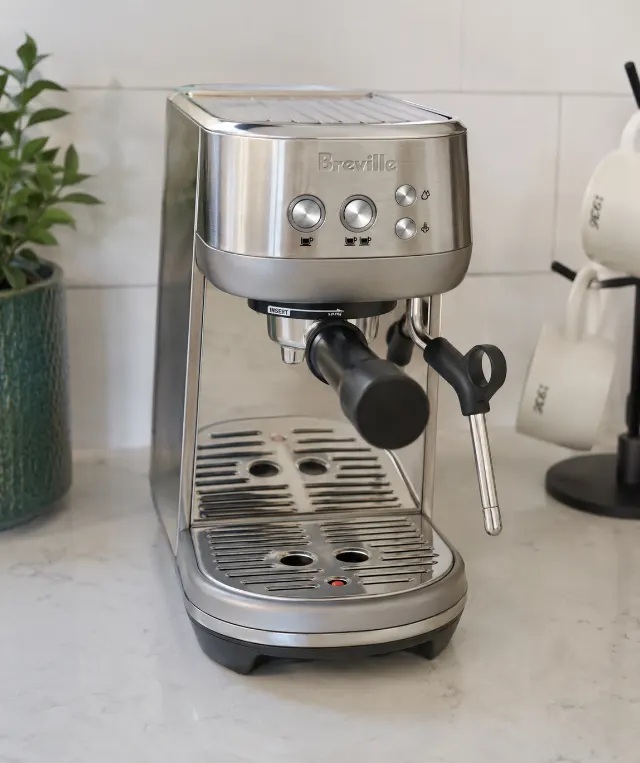
Breville Bambino
Our 2026 review of the Breville Bambino finds it's still the fastest entry-level espresso machine, but its long-term durability hinges on diligent cleaning.
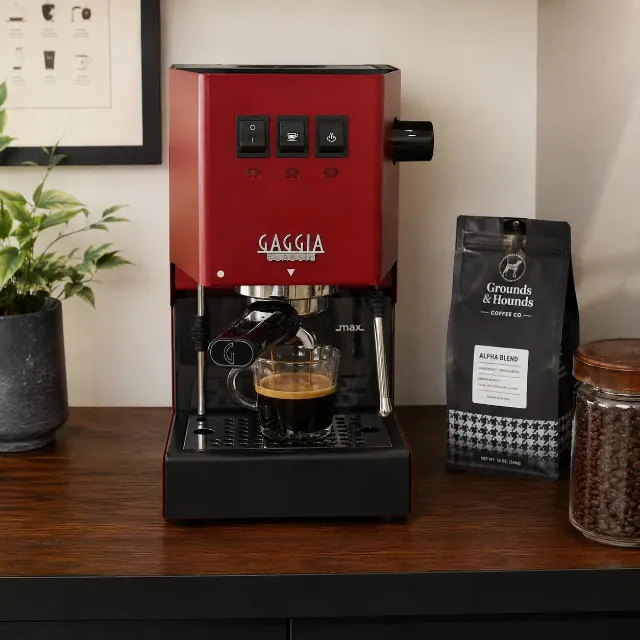
Gaggia Classic Pro
A durable, mod-friendly espresso machine for hobbyists, the Gaggia Classic Pro demands a learning curve but rewards with true café-quality potential.