Nespresso CitiZ Coffee and Espresso Machine by De'Longhi with Milk Frother Review
The detail spec sheets miss
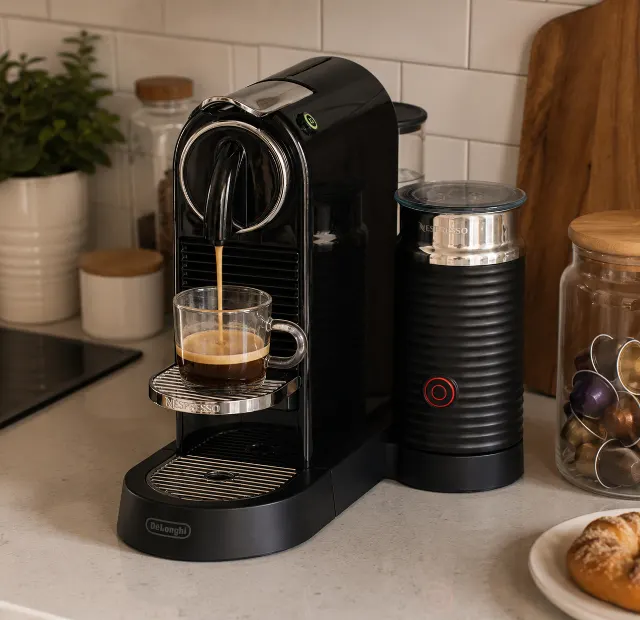
THE X-FACTOR: The machine's vibration is significant enough to cause lightweight espresso cups to 'walk' across the drip tray during extraction, a phenomenon owners call 'cup creep' that is never mentioned in marketing.
Specifications
| Type | Pod (Super-automatic) |
|---|---|
| Boiler system | Thermoblock |
| Portafilter size | N/A (Uses Nespresso OriginalLine capsules) |
| Pump pressure | 19 Bar |
| Steam wand | No (Bundled with separate Aeroccino3 milk frother) |
| Built-in grinder | No |
| Water tank | 34 oz / 1.0 L, removable |
| Heat-up time | 25 seconds |
| Warranty | 1 year (US/Canada), 2 years (UK) |
Score by category
- Value
- ★★★★★ ★★★★★ 3.9
- Quality
- ★★★★★ ★★★★★ 4.1
- Ease of use
- ★★★★★ ★★★★★ 4.6
- Durability
- ★★★★★ ★★★★★ 4.2
What it gets right
- ✓Extremely fast 25-second heat-up time via its thermoblock system, enabling a coffee-in-hand workflow in under 90 seconds.
- ✓Ultra-slim 5.1-inch width fits on countertops where most espresso machines cannot.
- ✓Highly consistent shot-to-shot temperature and volume, removing user error from the brewing process.
- ✓Bundled Aeroccino3 frother produces good quality hot or cold milk foam with one-touch operation.
- ✓Access to the vast Nespresso OriginalLine ecosystem, including a growing market of compatible third-party pods.
Where it falls short
- ✕Small 34 oz (1L) water tank and 10-capsule bin require near-daily maintenance, undercutting convenience.
- ✕Loud pump vibration can cause cups to shift on the drip tray during brewing.
- ✕The Aeroccino frother is a separate appliance requiring its own power outlet and cleaning routine.
- ✕Primarily plastic construction feels less durable than its price point suggests, especially the drip tray and lever.
The pod machine landscape of 2026 is not what it was. For years, the Nespresso Citizwas the default recommendation for anyone wanting espresso-style coffee without the expense and ritual of a semi-automatic machine. That advice is now obsolete. The proliferation of high-quality, third-party OriginalLine pods and the simultaneous rise of surprisingly capable, compact bean-to-cup machines like the Philips Baristina Espresso Machine+Milk Frother Bundle have squeezed the CitiZ from both ends. It is no longer the undisputed value leader for convenient espresso.
This review re-evaluates the Nespresso Citiz Coffee and Espresso Machine by De'Longhi with Milk Frother not against its past reputation, but against its current rivals and the total cost of ownership after the first year. We will focus on the factors that emerge after the initial purchase: the true cost of consumables, the most common failure points reported by long-term owners, and the practical workflow limitations that are not apparent from a spec sheet. The central question is no longer just “does it make good coffee?” but “does its convenience justify its compromises and running costs in today’s market?”
The calculus has changed. While the CitiZ's speed and footprint remain compelling, its value proposition is contingent on a very specific user profile. This machine is a solution for a particular problem, not a universal upgrade for every kitchen.
What it sets out to do
The CitiZ & Milk is engineered for speed and spatial efficiency. Its core design brief is to deliver a consistent espresso or lungo shot from a cold start in under a minute, occupying a minimal countertop footprint. The entire system—a 19-bar pressure pump, a rapid-heating thermoblock, and two programmable buttons for espresso (1.35 oz / 40 ml) and lungo (3.7 oz / 110 ml)—is optimized for this single task. The bundled Aeroccino3 milk frother operates as a separate, powered appliance, reinforcing the modular, task-specific nature of the setup.
Its target buyer is someone who views coffee preparation as a necessary, time-sensitive step in their morning, not a hobby. Unlike traditional machines with portafilters and steam wands that require skill to produce microfoam, the CitiZ is about eliminating variables. The machine dictates the temperature and pressure; the pod dictates the grind and dose. The user’s only inputs are capsule selection and button-pressing. This is its primary function: radical simplification of the espresso-making process.
Here is where we must disagree with the marketing. The emphasis on “19-bar pressure” is largely a red herring for consumers. While traditional espresso extraction requires around 9 bars of pressure at the group head, the physics of a sealed pod system are different. The high pressure is necessary to pierce the aluminum capsule and force water through the compacted grounds, but it is not an indicator of superior shot quality compared to a 15-bar competitor. In this system, it is a functional necessity, not a mark of professional-grade extraction.
Nespresso CitiZ Platinum vs original CitiZ comparison
A key decision for buyers is choosing between the classic CitiZ and the newer CitiZ Platinum. The Platinum model introduces four coffee sizes instead of two, adding Americano and Americano XL options, plus a dedicated hot water function. Its construction also incorporates more stainless steel, giving it a more premium feel. For users who frequently make Americanos, the Platinum is a clear functional upgrade. However, for those who primarily drink espresso or milk-based drinks, the original CitiZ's core brewing mechanism is identical, and it often represents a better price-to-performance ratio.
Fit, finish and durability
This machine’s design is its most enduring asset. The slim, architectural profile, inspired by New York City skyscrapers, has aged remarkably well and allows it to fit into tight kitchen spaces where other machines cannot. The De'Longhi CitiZ EN267BAE model, specifically, features a sturdy plastic housing that resists fingerprints better than the chrome variants.
Build Quality: ★★★★☆ (4.1/5)
While the exterior is well-conceived, the primary materials are ABS plastic. The drip tray, capsule container, and parts of the lever mechanism feel less substantial than the machine's price tier might suggest. The metal components are largely cosmetic. A recurring complaint in owner reviews is the vibration during brewing, which is significant enough to move lighter cups on the drip grid. This points to a chassis that lacks the mass and dampening of more robustly built machines.
Long-term Reliability: ★★★★☆ (4.2/5)
The CitiZ’s thermoblock heating system is a known quantity and generally reliable. Most long-term issues do not stem from the core brewing components but from the parts that handle water and coffee grounds. The most common failure point, typically emerging after two to three years of daily use, is leaking from the base. This is often caused by a worn internal O-ring or a crack in the plastic tubing from heat and pressure cycles. Regular descaling is non-negotiable for preventing blockages that lead to pump strain and eventual failure. The Aeroccino frother's non-stick coating is its weak point; using only soft cloths for cleaning is critical to prevent scratches that lead to burnt milk residue.
Its strongest suit
Speed is the defining advantage. From a cold start, the CitiZ is ready to brew in 25 seconds. A complete latte, including frothing milk in the Aeroccino, can be prepared in under two minutes. This workflow speed is simply unattainable with any traditional single-boiler or even many thermoblock semi-automatic machines, which require several minutes to heat up and then additional time to switch from brewing to steaming temperature. For a user on a tight morning schedule, this is the single most compelling feature.
Consistency follows closely. Shot after shot, the CitiZ delivers nearly identical volume and temperature, removing the variables of tamping, grind size, and water temperature that plague novice espresso makers. This reliability makes it an excellent platform for exploring the nuances of different Nespresso OriginalLine pods, as the machine itself is a constant. The compact 5.1-inch width also makes it uniquely suited for small kitchens, dorm rooms, or office environments.
Buy this if you live in a small apartment, your mornings are measured in seconds, and you want a consistent latte or espresso with zero learning curve. If you value speed and simplicity above all else, and are choosing between this and the even smaller Nespresso Essenza Mini Espresso Machine by Breville, Piano Black, the CitiZ's larger 34 oz water tank and more substantial build are worth the extra counter space.
Where it disappoints
The machine's limitations are inherent to its design. The 34 oz (1 liter) water tank requires frequent refilling, often daily in a two-person household. The used capsule container holds only 9-11 pods, and the drip tray is similarly small, demanding constant emptying. This high-touch maintenance cadence undermines the machine's core promise of convenience. Verified buyers frequently note that while making one drink is fast, making three or four drinks for guests is a tedious process of refilling water, emptying pods, and clearing the drip tray.
A significant drawback is the noise. The vibration pump is loud, noticeably more so than the quieter centrifugal system in Vertuo machines. This is not a machine you can use discreetly while others are sleeping nearby. Furthermore, the inability to fit taller travel mugs under the spout without removing the drip tray is a persistent annoyance. A common owner complaint involves the separate power cord for the Aeroccino frother, which adds to counter clutter and uses a second outlet—an often-overlooked detail until you get it home.
Skip this if you want to brew full-sized mugs of coffee or serve multiple people at once. The system is fundamentally designed for small, single servings. A much better fit for those needs would be the Nespresso Vertuo Next Coffee and Espresso Machine, which is built around coffee volume and variety, even if its espresso is a different, crema-heavy style.
Nespresso CitiZ vs. Vertuo: Which Line is Right for You?
This is the critical decision point. Choose the CitiZ and the OriginalLine system for espresso-centric drinks. It uses a 19-bar pressure pump to create a beverage that is closer in texture and intensity to traditional espresso. It’s the superior choice for lattes, cappuccinos, and straight shots. Choose the Vertuo line if your household drinks more large coffees than espresso. Vertuo's Centrifusion technology spins the capsule to produce a different style of coffee with a thick, foamy head, and it offers pod sizes up to a full carafe. The cost per pod for Vertuo is also generally higher.
What ownership looks like
The first week with theNespresso Citizis about speed and simplicity. The process is straightforward: turn on, wait for the lights to stop blinking, insert pod, press button. After a month, the maintenance rhythm becomes clear. You will be emptying the 10-capsule bin every 3-4 days and refilling the 34 oz water tank almost daily. This is the reality of its compact design.
Owners discover after a few months that the Aeroccino frother requires immediate, careful cleaning after every use. Any delay allows milk protein to cook onto the non-stick surface, and aggressive scrubbing will destroy the coating. This separate cleaning step adds a minute to the workflow that isn't immediately obvious. Many users also report settling on just a few favorite pods, which makes the long-term cost of ownership highly predictable. The promise of exploring a vast world of coffee often narrows to a routine purchase of Arpeggio or Ristretto.
What most reviews miss is the subtle difference between the De'Longhi and Breville manufactured versions of the CitiZ. While internally identical, De'Longhi models often feature a more rounded, flowing spout design, while Breville versions tend to be more angular and squared-off. This is purely aesthetic, but it's a detail that can matter when matching kitchen decor. The De'Longhi EN267BAE model reviewed here has the classic, slightly curved spout.
Care and running costs
Proper maintenance is the single biggest factor in determining how long a Nespresso CitiZ will last. The primary task is descaling, which Nespresso recommends every 3 months or 300 capsules. This process involves running a descaling solution through the machine to remove mineral buildup from the thermoblock and pump. Ignoring this, especially in hard water areas, is the fastest way to a dead machine.
A hidden cost is the descaling solution itself. While Nespresso sells its own kits, many third-party solutions are available for less. The long-term cost of ownership is dominated by the pods. Even at the lower end for third-party capsules, the per-cup cost is significantly higher than brewing from whole beans. Over a five-year lifespan, the cost of capsules will dwarf the initial price of the machine itself. The first part to show wear is typically the rubber gasket around the brewing chamber, which can harden and fail to seal properly, causing leaks into the capsule bin.
Expected Lifespan: How Many Years Will a CitiZ Last?
With diligent descaling and regular cleaning, a Nespresso Citiz machine has an expected lifespan of 5 to 7 years for an average user making 1-2 coffees per day. Forum discussions point to many units lasting up to 10 years, but performance often degrades, with shots becoming less hot or the pump becoming weaker. The most critical factor is adherence to the descaling schedule. Machines that are not descaled rarely make it past the 2-3 year mark without issues like partial blockages, slow flow, or pump failure.
Competitors to consider
The competitive set for the Nespresso Citiz has expanded significantly. Within the Nespresso ecosystem, the most direct rival is the Nespresso Pixie Original Espresso Machine by Breville, Titan. The Pixie is even more compact, has a slightly faster 25-second heat-up time, and features metal side panels that feel more premium. It is a better choice for those with the absolute minimum amount of counter space, though its water tank is smaller at 24 oz.
For those willing to trade pod convenience for beverage quality and lower long-term costs, an entry-level semi-automatic like the Mr. Coffee Café Barista is a compelling upgrade alternative. It includes a portafilter and a proper steam wand, allowing for true microfoam and the use of any coffee bean. The trade-off is a significant learning curve and a much slower, more involved workflow.
An overlooked detail is that the market for compact, convenient machines is no longer owned by Nespresso. The Philips Baristina Espresso Machine+Milk Frother Bundle offers a bean-to-cup experience in a similar footprint. It grinds fresh beans for every shot, offering superior flavor potential and lower running costs, though its initial purchase price is higher.
Troubleshooting Common CitiZ Problems
Owners frequently encounter a few solvable issues. If no coffee is coming out, an air bubble may be trapped in the pump, often after the tank has run dry. Running the machine without a capsule for 2-3 lungo cycles usually purges the air. A blinking orange light is the descaling indicator; following the descaling procedure outlined in the manual will fix this. If the Nespresso Citiz is leaking water from the bottom, it often points to a full internal drip tray (a small reservoir behind the main drip tray) or, in older machines, a failing internal seal requiring service.
Is it for you?
Best for: The time-poor individual or couple in a compact living space who prioritizes speed and consistency for espresso and lattes above all else.
Not ideal for: Anyone who regularly makes coffee for more than two people, desires large mug-sized coffees, or is sensitive to the long-term cost of coffee pods.
The decision to buy a Nespresso Citiz & Milk in 2026 hinges on a clear-eyed assessment of your priorities. It is a specialist tool. It executes a narrow range of tasks—espresso, lungo, and frothed milk—with exceptional speed and minimal user input. If your daily routine demands this specific functionality, and you accept the financial and environmental calculus of a pod-based system, the CitiZ remains a valid, if aging, contender. Its proven reliability and classic design still hold appeal. However, it is no longer the default choice for kitchen convenience it once was.
The final word
The Nespresso Citiz& Milk by De'Longhi is a product of its time—a brilliant solution to a problem that has since been addressed by a wider array of competitors. It still performs its core function well, delivering fast, consistent espresso-style drinks from a stylish, compact body. But its value is eroded by a high-maintenance workflow for its small capacity and a cost-of-ownership model that looks increasingly steep next to modern bean-to-cup alternatives.
For the right user, it's a reliable workhorse; for most others, better options now exist.
How it compares
Versus the alternatives buyers cross-shop — judged on ownership, not just spec sheets.
| Alternative | Ease of use | Maintenance | Durability | Value | Best for |
|---|---|---|---|---|---|
| Nespresso CitiZ Coffee and Espresso Machine by De'Longhi with Milk Frother (this pick) | Extremely simple two-button operation for espresso and lungo. | Frequent (daily) emptying of drip tray and capsule bin required. | Reliable thermoblock but plastic body and vibration are concerns. | Moderate initial cost, but high long-term running costs due to pods. | The space-constrained user who needs maximum speed for 1-2 drinks daily. |
| Nespresso Vertuo Next Coffee and Espresso Machine | One-touch operation with automatic pod recognition. | Similar to CitiZ but with larger pods and container. | Owner reports suggest a higher rate of early-life failures than the CitiZ. | Higher cost per pod, but offers greater beverage size versatility. | Households that drink more full-size coffee mugs than espresso shots. |
| Nespresso Pixie Original Espresso Machine by Breville, Titan | Identical two-button operation to the CitiZ. | Even more frequent refilling due to a smaller 24 oz water tank. | Feels more robust with metal side panels, despite smaller size. | Similar running costs to CitiZ, often at a slightly lower purchase price. | The absolute smallest kitchens or offices where every inch counts. |
| Mr. Coffee Café Barista | Requires learning to dose, tamp, and steam. Not for beginners. | Daily cleaning of portafilter and steam wand is necessary. | Basic construction; longevity depends heavily on user care. | Low initial cost and much cheaper per-cup cost using ground coffee. | The budget-conscious user willing to trade convenience for control and savings. |
| Philips Baristina Espresso Machine+Milk Frother Bundle | Bean-to-cup simplicity; press a button for fresh ground coffee. | Requires regular emptying of pucks and refilling of beans. | More complex internal mechanics could mean more failure points. | Higher upfront cost but significant long-term savings over any pod system. | The user who wants fresh bean quality with pod-like convenience. |
How it scores on what matters
| Product | Espresso shot quality | Milk steaming & microfoam | Consistency shot-to-shot | Ease of dialing in | Heat-up & workflow speed | Maintenance burden | Verdict |
|---|---|---|---|---|---|---|---|
| Nespresso CitiZ Coffee and Espresso Machine by De'Longhi with Milk Frother (this pick) | Good | Good | Excellent | Excellent | Excellent | Fair | Fast and consistent, but requires frequent attention. |
| Nespresso Vertuo Next Coffee and Espresso Machine | Fair | Good | Very good | Excellent | Very good | Fair | Best for large coffees, not true espresso. |
| Nespresso Pixie Original Espresso Machine by Breville, Titan | Good | Good | Excellent | Excellent | Excellent | Weak | Same performance as CitiZ, but even higher maintenance. |
| Mr. Coffee Café Barista | Very good | Fair | Fair | Fair | Weak | Good | Capable of better espresso, but requires user skill. |
| Philips Baristina Espresso Machine+Milk Frother Bundle | Very good | Good | Very good | Very good | Good | Good | Superior coffee quality with minimal user effort. |
Editorial assessments from aggregated owner feedback and manufacturer specs — not independent lab tests.
The right buyer
Ideal for the urban dweller with limited counter space who needs a fast, no-fuss espresso or latte before a morning commute. It suits users who value consistency over customization and have accepted the ecosystem's running costs. Skip this if you regularly host guests or prefer larger coffee volumes; the small water tank and single-serving nature become tedious quickly.
Why it earns a spot
The CitiZ solves the 'I need a decent latte in 90 seconds' problem better than almost anything at its price point. While a semi-automatic like the <a href="/espresso-machines/mr-coffee-cafe-barista/">Mr. Coffee Café Barista </a> offers more control, it demands a learning curve. The CitiZ eliminates that friction entirely, delivering a predictable result from a 25-second heat-up time that even premium machines struggle to match.
Frequently asked questions
Is the Nespresso CitiZ worth it in 2026?
For those prioritizing speed and a compact design for espresso and lattes, the CitiZ remains a solid choice. Its value diminishes if you desire larger coffee sizes or are concerned with the high long-term cost of OriginalLine pods compared to fresh beans.
What are the pros and cons of the Nespresso CitiZ?
Primary advantages are its 25-second heat-up time and slim, stylish design. Key disadvantages include the small 34 oz water tank requiring frequent refills, loud operation, and a reliance on the expensive Nespresso pod ecosystem for best results.
What's the lifespan of a Nespresso CitiZ?
A CitiZ machine can last 5 to 7 years with average use, provided it is descaled every 3-6 months. Failure to descale, especially in hard water areas, is the most common reason for premature failure of the thermoblock heating element or pump.
Which is better, Nespresso Vertuo or CitiZ?
The CitiZ is superior for traditional espresso-based drinks like lattes, using 19-bar pressure for an intense shot. The Vertuo line excels at producing a wider variety of coffee sizes, from single espresso to 18 oz carafes, using its Centrifusion brewing method.
Can the Nespresso CitiZ make regular coffee?
Not directly. The CitiZ brews small Espresso (1.35 oz) and Lungo (3.7 oz) shots. To approximate a regular coffee, you can brew a Lungo and add hot water to create an Americano. It does not brew a standard 8 oz cup like a drip machine.
How often should you descale a Nespresso CitiZ?
Nespresso's official guidance is to descale after every 300 capsules or at least every 3 months, whichever comes first. In regions with very hard water, owners report better longevity by descaling more frequently to prevent mineral buildup inside the machine.
Can you use third party pods in Nespresso CitiZ?
Yes, the CitiZ is compatible with a wide range of third-party Nespresso OriginalLine pods. However, performance can be inconsistent; aluminum pods from reputable brands tend to work best, while some plastic or compostable pods can lead to extraction issues or leaks.
People also ask
- What is the lifespan of a Nespresso CitiZ?
- What is the difference between Nespresso CitiZ and Platinum?
- Is De'Longhi or Breville Nespresso better?
- Is the Nespresso CitiZ worth it?
- What's the lifespan of a Nespresso CitiZ machine?
- How often do you need to descale a Nespresso CitiZ?
You might also like
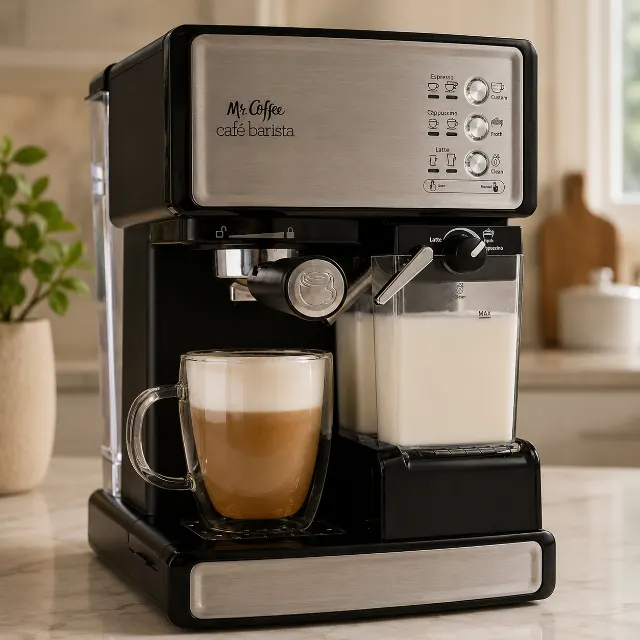
Mr. Coffee Café Barista
A detailed 2026 review of the Mr. Coffee Café Barista, an automatic milk frothing espresso machine for beginners who prioritize convenience over craft.
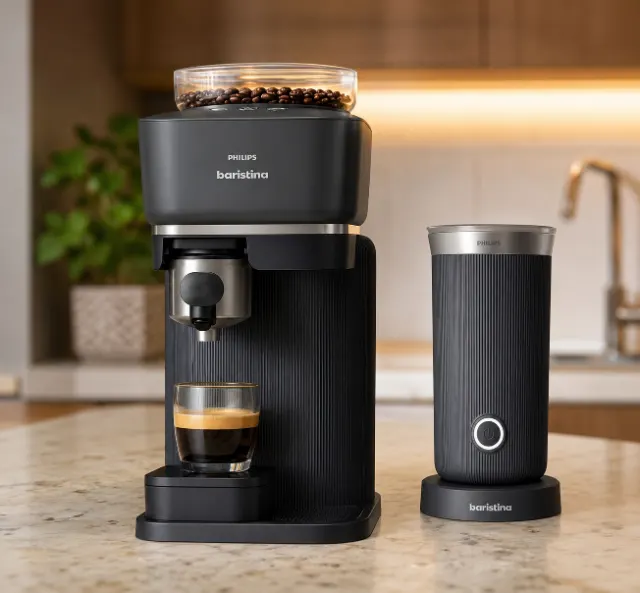
Philips Baristina Espresso Machine+Milk Frother Bundle
A beginner-friendly semi-automatic that pulls surprisingly good shots, but its long-term value hinges on buying a separate, capable grinder.
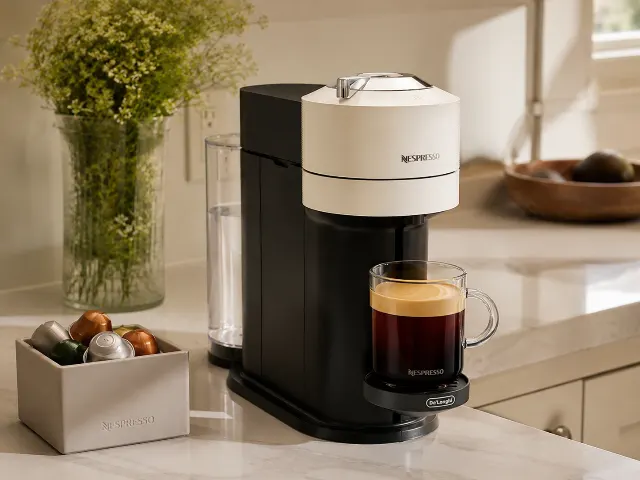
Nespresso Vertuo Next Coffee and Espresso Machine
A slim, versatile pod machine capable of brewing five coffee sizes, the Nespresso Vertuo Next is overshadowed by a critical design flaw that causes widespread leaking, making it a risky purchase despite its convenience.
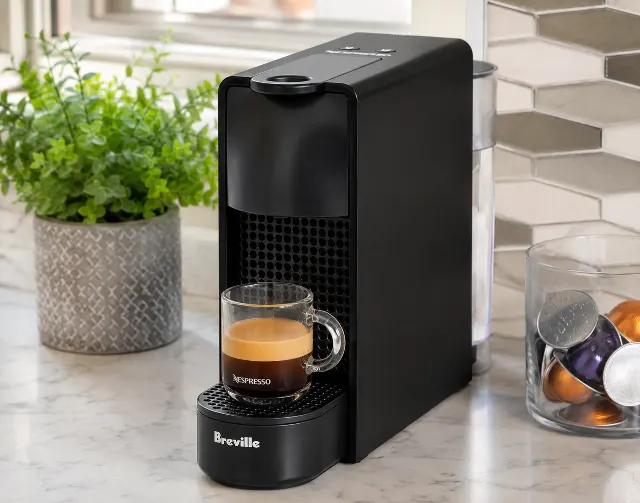
Nespresso Essenza Mini Espresso Machine by Breville, Piano Black
The Nespresso Essenza Mini by Breville delivers authentic, 19-bar espresso with unmatched speed and a tiny footprint, but its small water tank and pod container demand daily attention.
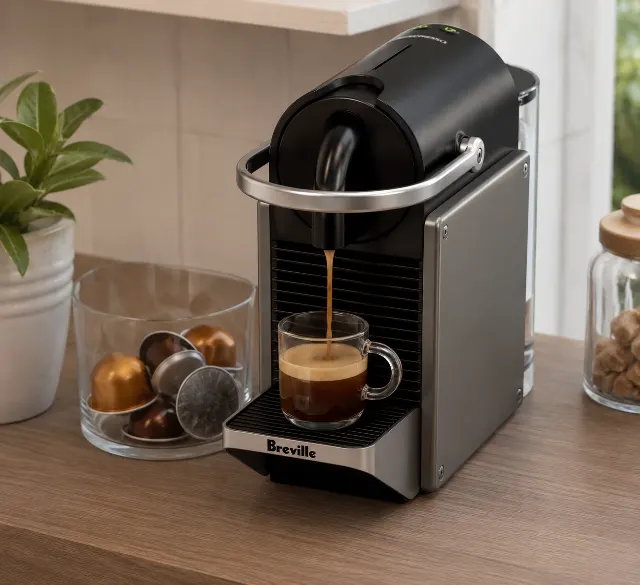
Nespresso Pixie Original Espresso Machine by Breville, Titan
A compact, lightning-fast espresso maker for small spaces, the Nespresso Pixie by Breville excels at speed and consistency but demands constant refilling of its tiny water tank and drip tray.