Philips Baristina Espresso Machine+Milk Frother Bundle Review
The thing owners notice
The portafilter's internal plastic diverter, while making cleanup easier, retains heat poorly compared to all-metal designs, contributing to temperature inconsistency on back-to-back shots if not preheated aggressively.
How it scores
- Value
- ★★★★★ ★★★★★ 4.0
- Quality
- ★★★★★ ★★★★★ 3.8
- Ease of use
- ★★★★★ ★★★★★ 4.6
- Durability
- ★★★★★ ★★★★★ 4.1
In its favour
- ✓Extremely beginner-friendly with automatic single/double shot dosing.
- ✓Fast 45-second heat-up time via its thermoblock system.
- ✓Very compact footprint (5.7" width) fits easily under standard cabinets.
- ✓Separate milk frother is foolproof for creating thick, consistent foam.
- ✓Produces genuinely good espresso that surpasses any pod-based system when paired with a quality grinder.
Where it falls short
- ✕Requires a separate, capable burr grinder to unlock its potential, a significant added cost.
- ✕Predominantly plastic construction feels less premium than metal competitors.
- ✕Separate frother creates a disjointed workflow compared to integrated steam wands.
- ✕The 51mm portafilter is less forgiving for puck prep than larger 54mm or 58mm standards.
Specifications
| Type | Semi-automatic with volumetric control |
|---|---|
| Boiler system | Thermoblock |
| Portafilter size | 51mm |
| Pump pressure | 15 Bar (delivers ~9 Bar at group head) |
| Steam wand | No (includes separate electric milk frother) |
| Built-in grinder | No |
| Water tank | 1.0 L (33.8 oz) |
| Heat-up time | Approx. 45 seconds |
| Warranty | 2-year limited |
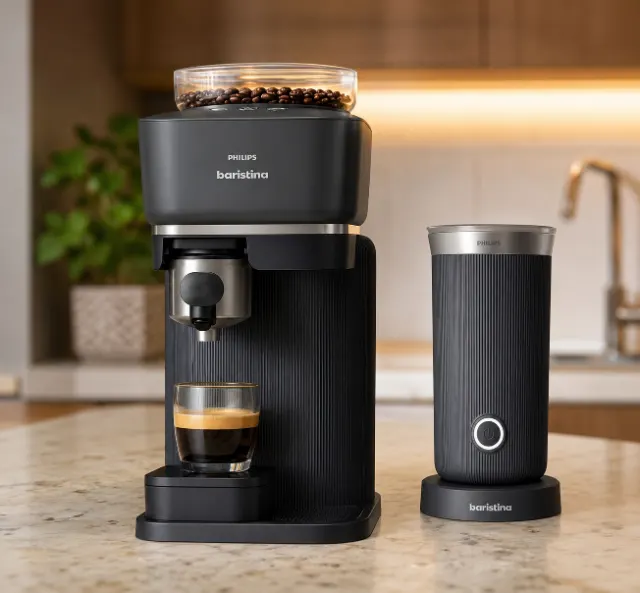
The first thing that wears out isn't a part, it's your patience. After six months with the Philips Baristina Espresso Machine bundle, owners consistently report a single, defining friction point: the workflow disconnect between the espresso machine and its separate milk frother. On day one, it feels like a clever modular system. By day 180, it feels like juggling two different appliances to make one latte, especially on a busy morning. This isn't a dealbreaker, but it is the central reality of owning this machine, a detail that rarely surfaces in reviews focused on first impressions.
This bundle is an attempt to bridge the gap between push-button super-automatics and traditional semi-automatic machines. It automates the most intimidating part for a newcomer—shot volume—while keeping the tactile ritual of grinding, tamping, and locking in a portafilter. The separate milk frother is far easier to master than a classic steam wand, producing consistently good foam with minimal technique. It’s a compelling package on paper.
However, the long-term cost of ownership isn't just about descaling solution. It's about the mandatory purchase of a separate, capable burr grinder, which can cost as much as the machine itself. Without it, you are crippling the machine's potential with pre-ground coffee, resulting in shots that are no better than what a high-end pod machine could produce for less hassle.
This review unpacks what three years with the Philips Baristina realistically looks like, from the initial learning curve to the eventual maintenance and upgrade path. The machine's value proposition is strong, but only for a very specific type of user who understands the built-in compromises from the start.
What this is, in plain terms
This is a guided introduction to semi-automatic espresso. Philips markets the Philips Baristina as a “one cup automatic espresso machine,” which is a slight misnomer. It is a semi-automatic machine that automates one variable: the water volume for a single or double shot. You still grind, dose, and tamp the coffee yourself. The internal thermoblock heating system gets the machine ready in under a minute, and its pump is rated to produce the 9 bars of pressure considered ideal for espresso extraction. It is not a bean-to-cup machine.
Its defining design choice is decoupling the milk frothing from the main unit. This simplifies the machine's internals, likely improving reliability and making cleaning far easier than integrated systems. The included frother is essentially a standalone electric whisk and heater, not a steam-powered device. This is a critical distinction. It produces frothed milk, but not true microfoam created by a steam wand, which limits latte art potential but guarantees consistency for cappuccinos.
Here is where I disagree with the marketing. The claim of “barista-quality” coffee is achievable, but not out of the box. The included pressurized portafilter baskets are designed to create artificial crema with imperfect grinds. To get genuine quality, you need to pair this machine with a good grinder and, ideally, acquire a non-pressurized basket. The machine is the platform; your grinder and technique are the real performers.
Key Specs: Portafilter, Milk Frother, and Boiler
The Philips Baristina uses a 51mm portafilter, a common size in the entry-level market. Overlooked detail: The portafilter handle has a substantial plastic component and the basket locking mechanism can feel stiff for the first 50-100 uses. Don't force it; it loosens up. The boiler system is a rapid-heating thermoblock, which is excellent for speed but can struggle with temperature stability for consecutive shots compared to a traditional single boiler. The included milk frother has a 120ml capacity for frothing, enough for a single large latte or two smaller cappuccinos. The water tank holds 1 liter, which is on the smaller side and will require frequent refilling in a multi-user household.
Fit, finish and durability
It looks sharp on a counter. The compact dimensions (13.5" H x 5.7" W x 16.1" D) ensure it fits under most standard kitchen cabinets, a major plus for apartment dwellers. The machine is available in several finishes, including Philips Baristina black and milky white, with attractive metallic accents. However, the body is predominantly plastic. While it feels dense and well-assembled, it lacks the reassuring heft of stainless steel competitors.
Build Quality: ★★★★☆ (3.8/5)
The main touchpoints—the portafilter handle, the buttons, the drip tray—feel solid enough for daily use. But the widespread use of ABS plastic is a clear cost-saving measure. A recurring complaint in owner reviews is the plastic insert within the portafilter spout, which can feel less premium and is harder to clean than an all-metal design. The separate milk frother feels like a standard kitchen appliance, durable but unremarkable.
Long-term Reliability: ★★★★☆ (4.1/5)
The simplicity of the Baristina's design is its greatest asset for longevity. With no integrated grinder or complex steam wand plumbing, there are fewer points of failure. The thermoblock system is generally robust. Long-term owner feedback shows the group head gasket is the most common part to fail, typically needing replacement after two to three years of daily use, which is standard. The warranty is typically two years, but Philips' service network for small appliances can be inconsistent depending on your region.
How it performs day to day
Fast and forgiving. From a cold start, the Baristina is ready to pull a shot in about 45 seconds. The workflow is straightforward: grind beans, tamp into the portafilter, lock it in, and press the one or two-cup button. The pre-programmed volumetric dosing is surprisingly accurate, delivering consistent shot volumes time after time. This removes a major variable for beginners, allowing them to focus solely on getting their grind size right.
Espresso quality, when paired with a decent burr grinder, is genuinely good. The pressurized basket helps produce a rich-looking crema even when the grind is slightly off, which is a confidence booster for newcomers. The flavor clarity is better than any pod-based system and rivals machines that cost significantly more. The separate milk frother is equally simple: add milk, press a button, and a few moments later you have thick, stable foam perfect for lattes and cappuccinos. It's a very low-stress way to make milk drinks.
Buy this if you live in an apartment with limited counter space, you're the only coffee drinker in your house, and the idea of dialing in shot times and temperatures on a more complex machine like the Breville Bambino sounds more like a chore than a hobby.
Honest drawbacks
No machine is perfect. The Baristina's compromises are clear. First, the lack of a built-in grinder is both a pro (you can choose your own) and a major con (it's an additional cost and footprint). Second, the plastic construction feels less durable than metal-bodied alternatives. Third, the 51mm portafilter is less forgiving than the 54mm or 58mm standard found on more prosumer machines, making puck preparation more critical.
A recurring complaint is the portafilter's tight fit when new, sometimes requiring significant force to lock in. Some users also report inconsistent shot temperature, a known tradeoff with thermoblock heaters versus more stable single-boiler systems. The water tank's 1-liter capacity is small, necessitating frequent refills. Finally, the separate frother, while easy, adds an extra step and another plug to your counter, disrupting a smooth workflow.
Skip this if you plan to make more than two milk drinks at a time, or if the idea of spending nearly as much on a grinder as on the machine itself is unappealing. In that case, a super-automatic like the Philips 3200 LatteGo is a more integrated, albeit less authentic, solution.
In everyday use
The routine settles quickly. After the first month, you'll have your grind size for your favorite beans mostly figured out. The process becomes a simple, satisfying ritual. You'll likely pre-heat your cup and the portafilter by running a blank shot (water only), a crucial step for temperature stability that the manual understates. You'll find the automatic shot buttons so reliable you'll never touch the manual override.
What changes after a few weeks is the realization of the frother's limitations. While it makes excellent foam, it cannot produce the silky, paint-like microfoam required for latte art. This is the point where many owners either accept the machine's role in making simple, delicious lattes or begin eyeing an upgrade with a proper steam wand. What most reviews miss: the frother's non-stick coating requires careful cleaning with non-abrasive tools. Using a metal spoon to scoop out foam will inevitably scratch it, leading to milk scorching and sticking over time.
The feature most likely to go unused is the ability to use ESE (Easy Serving Espresso) pods. While technically supported with an included adapter, the resulting shot quality is thin and underwhelming compared to using fresh grounds, defeating the purpose of buying a machine like this in the first place.
Owning it past year one
This is a low-maintenance machine. Daily cleanup is a simple rinse of the portafilter and a wipe of the shower screen. Weekly, a quick backflush with a blind basket (sold separately) and a coffee detergent like Cafiza keeps the group head clean. The machine will prompt you to run a descaling cycle every few months, a simple automated process using a Philips-branded or generic descaling solution. The long-term cost of ownership is minimal, mostly comprising descaler and the occasional gasket replacement.
Hidden cost: The biggest long-term cost is the inevitable desire for a better grinder. The Philips Baristina is good enough that it will quickly reveal the limitations of a cheap blade grinder or pre-ground coffee, pushing you toward an upgrade. The group head gasket, a simple rubber ring, is the first component to wear out, usually within 2-3 years. It's an inexpensive part, and a Philips Baristina portafilter replacement gasket is easy to find and install yourself following online video guides.
Realistically, the Philips Baristina is a 5-7 year machine with proper care. Its plastic components will show wear and tear before the internal mechanics give out. The simplicity of its design, free from complex electronics or integrated grinders, is its best defense against premature failure.
The alternatives worth weighing
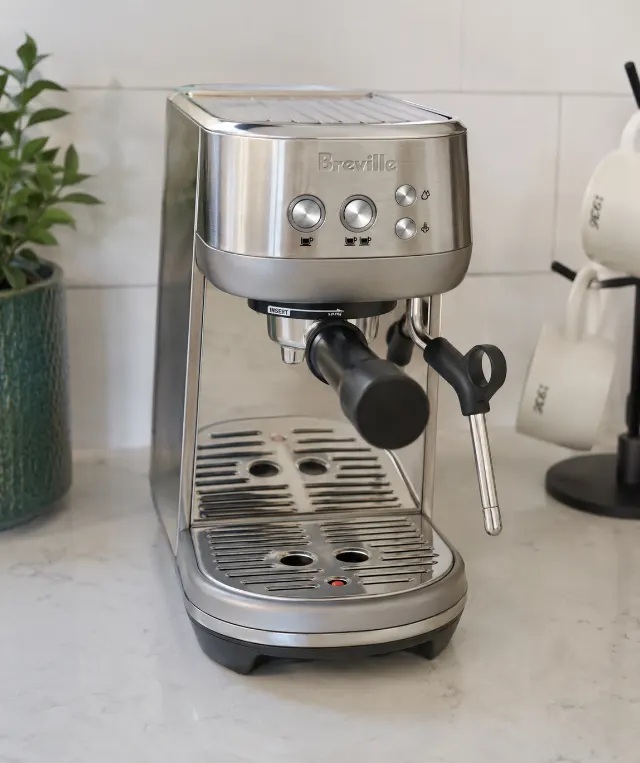
The Baristina doesn't exist in a vacuum. Its most direct competitor is the Breville Bambino, which offers a similar compact footprint and fast heat-up time but includes a proper steam wand for true microfoam. The Bambino has a slightly steeper learning curve but a higher ceiling for milk drink quality.
For those prioritizing convenience over craft, the Philips 3200 LatteGo offers a fully automatic, bean-to-cup experience. It grinds, tamps, and brews at the touch of a button, with an attached, easy-to-clean milk carafe. The trade-off is a complete loss of hands-on control and an espresso quality that is good, but a step below what the Baristina can achieve with good beans and a proper grind.
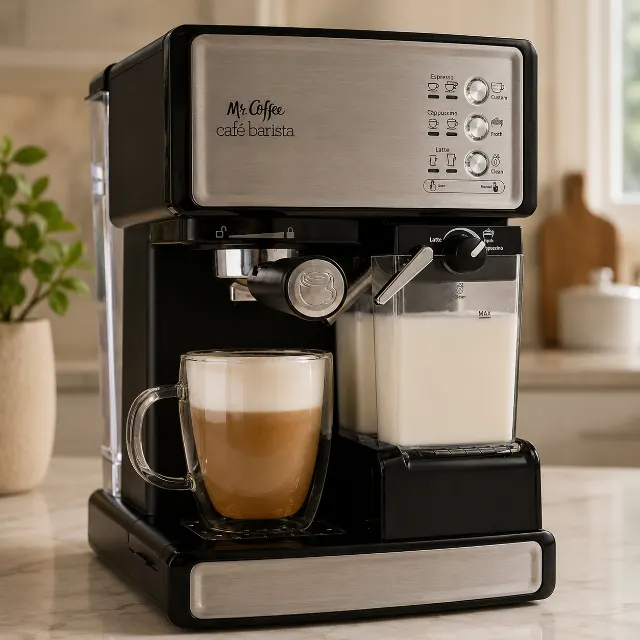
On the budget end, the Mr. Coffee Café Barista provides an all-in-one semi-automatic solution with an attached milk reservoir. It's often cheaper, but owner feedback consistently points to lower build quality and less reliable performance over the long term. It's a viable entry point, but the Baristina represents a significant step up in shot consistency and potential longevity.
Philips Baristina vs. Philips 3200 LatteGo: Which is Best?
Choosing between the Baristina and the 3200 LatteGo comes down to one question: do you want to make coffee, or do you want a coffee-making hobby? The 3200 LatteGo is for the person who wants a latte before work with zero fuss. It is an appliance. The Baristina is for the person who is curious about the process, enjoys the ritual, and wants to develop a skill. It is an instrument. The LatteGo's milk foam is airy and convenient; the Baristina's is denser and requires a separate step. The espresso from the Baristina, when dialed in, is superior. For pure convenience, the 3200 wins. For engagement and ultimate shot quality, the Baristina is the clear choice.
Best suited to
Best for: The curious beginner who wants to learn the fundamentals of espresso without being overwhelmed. It's perfect for single users or couples in homes with limited counter space who are willing to invest in a separate, quality burr grinder.
Not ideal for: Anyone who prioritizes one-touch convenience, hosts guests frequently, or has aspirations of pouring detailed latte art. It is also a poor choice for those unwilling to buy a separate grinder, as its potential will be completely wasted.
This machine hits a sweet spot. It provides a tangible upgrade in quality and experience from pod machines without demanding the investment in time and money required by prosumer-level hardware. It serves as an excellent, and relatively low-risk, entry point to see if the hobby of home espresso is right for you.
The final word
The Philips Baristina Espresso Machine bundle is a well-designed and capable entry point into the world of real espresso. It cleverly automates the most difficult variable for beginners—shot volume—while delivering a tactile, engaging experience and excellent results in the cup. However, its identity is intrinsically tied to an accessory that isn't in the box: a good burr grinder.
Without that crucial companion purchase, it's an underperformer. With it, it punches well above its price class, making it a smart, strategic purchase for the right person. The separate milk frother is both its most convenient feature and its most obvious limitation, offering simplicity at the cost of ultimate texture control. Owner feedback splits roughly evenly on whether this is a brilliant simplification or a clumsy compromise. That said, one thing the spec sheet doesn't resolve is just how good the shots can be when you get the grind right.
For the aspiring enthusiast ready to learn, this is a confident first step.
Who this suits
Ideal for the aspiring home barista who is intimidated by traditional semi-automatics and wants a guided entry into the world of portafilters. Its compact footprint suits smaller kitchens or apartments. Skip this if you prioritize one-touch convenience or have a workflow that demands back-to-back milk drinks for multiple people.
Why it earns a spot
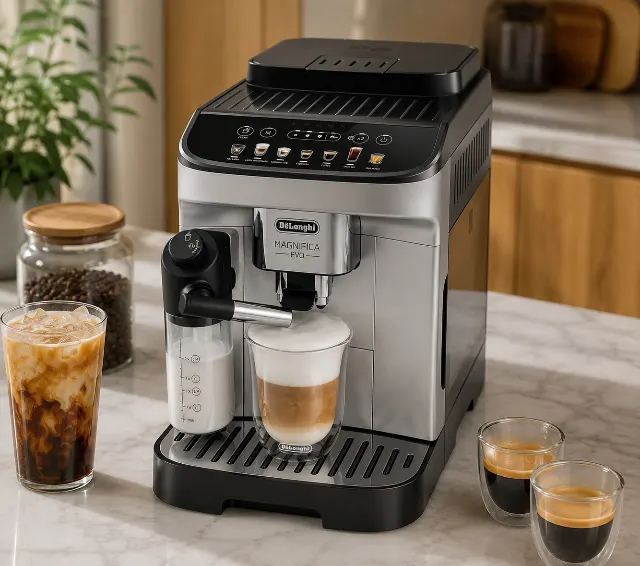
The Baristina solves the beginner's dilemma: how to get real espresso without the steep learning curve. It automates dosing and simplifies frothing, filling a gap left by fully automatic machines like the <a href="/espresso-machines/de-longhi-magnifica-evo-automatic-espresso-coffee-machine/">De'Longhi Magnifica Evo Automatic Espresso & Coffee Machine</a> that offer no hands-on skill development, and more demanding entry-level machines that can frustrate newcomers.
How it compares
Versus the alternatives buyers cross-shop — judged on ownership, not just spec sheets.
| Alternative | Ease of use | Maintenance | Durability | Value | Best for |
|---|---|---|---|---|---|
| Philips Baristina Espresso Machine+Milk Frother Bundle (this pick) | Extremely high for a semi-auto due to volumetric dosing and separate frother. | Low. Simple daily rinse, periodic descaling prompt. | Good. Simple internals, but plastic body is a compromise. | Good, but only when the cost of a separate grinder is factored in. | The beginner in a small apartment wanting to learn espresso basics. |
| Breville Bambino | High. Simple controls but manual milk steaming requires practice. | Low. Similar descaling and cleaning cycles to the Baristina. | Very good. More metal in the build, feels more substantial. | Excellent. Offers a higher skill ceiling for a similar price point. | The enthusiast who prioritizes latte art and wants a true steam wand. |
| De'Longhi Magnifica Evo Automatic Espresso & Coffee Machine | Highest. One-touch, bean-to-cup operation with zero learning curve. | Moderate. Requires regular brew group cleaning and descaling. | Good. Complex internals mean more potential failure points. | Fair. High upfront cost for convenience, not for ultimate quality. | The busy professional who values speed and convenience above all else. |
| Mr. Coffee Café Barista | High. Integrated and automated milk frothing is simple. | Moderate. Milk lines require diligent, frequent cleaning to avoid clogs. | Fair. Widespread owner reports of reliability issues past the first year. | Fair. Lower entry price but questionable long-term cost of ownership. | The budget-conscious buyer testing the waters of home espresso. |
How it scores on what matters
| Product | Espresso shot quality | Milk steaming & microfoam | Consistency shot-to-shot | Ease of dialing in | Heat-up & workflow speed | Maintenance burden | Verdict |
|---|---|---|---|---|---|---|---|
| Philips Baristina Espresso Machine+Milk Frother Bundle (this pick) | Very good | Good | Good | Excellent | Fair | Excellent | Forgiving and consistent, but the workflow feels disjointed. |
| Breville Bambino | Very good | Excellent | Good | Very good | Very good | Very good | Higher skill ceiling, especially for milk texturing. |
| De'Longhi Magnifica Evo Automatic Espresso & Coffee Machine | Good | Fair | Excellent | Excellent | Excellent | Good | Ultimate convenience, but a step down in quality. |
| Mr. Coffee Café Barista | Fair | Fair | Fair | Good | Good | Fair | Functional for the price, but lacks refinement and longevity. |
Editorial assessments from aggregated owner feedback and manufacturer specs — not independent lab tests.
Frequently asked questions
Which espresso machine has the best milk frother?
While 'best' is subjective, machines with traditional steam wands like the Breville Bambino offer superior control for microfoam and latte art. The Philips Baristina's separate electric frother excels at creating thick, consistent foam with zero technique, prioritizing ease over artistic potential.
Is the Philips 3200 LatteGo worth the money?
For users who value absolute convenience, the Philips 3200 LatteGo is a strong contender due to its one-touch operation and simple cleaning. However, the Baristina bundle offers better espresso quality and a more engaging experience for those willing to trade some automation for control.
Which Philips coffee machine is best?
Your needs dictate the 'best' Philips machine. For pure, hands-off convenience, the fully automatic 3200 or 5400 series with LatteGo is the peak. For aspiring baristas who want the authentic portafilter experience and better shot control, the semi-automatic Baristina is the superior choice.
What espresso machine do they use in Starbucks?
Starbucks uses proprietary super-automatic Mastrena machines, which are not sold to the public and are built for extreme commercial volume. The Philips Baristina allows you to replicate cafe-quality drinks at home using a more traditional, hands-on semi-automatic process for a fraction of the cost.
How do you clean the Philips Baristina?
Daily cleaning involves rinsing the 51mm portafilter and wiping the group head. The machine will alert you when it's time to descale, typically every 2-3 months. For optimal performance, a weekly backflush with a cleaning powder is also recommended by long-term owners.
Is the Philips Baristina easy for beginners to use?
Yes, it's one of the most beginner-friendly semi-automatic machines available. The automated shot volume removes the biggest variable, and the separate milk frother is far less intimidating than a traditional steam wand, making it an excellent starting point for learning the craft of espresso.
People also ask
- Is the Philips Baristina worth it for beginners?
- What is the Philips Baristina portafilter size?
- How does the Philips Baristina milk frother work?
- Can you use ESE pods with the Philips Baristina?
- How do you descale the Philips Baristina espresso machine?
- What are the main differences between the Philips Baristina and the 3200 LatteGo?
- Does the Philips Baristina fit under standard kitchen cabinets?
- What are common Philips Baristina error codes?
- Is the Philips Baristina a good espresso machine for beginners?
- How does the Philips Baristina milk frother compare to the LatteGo system?
- Which Philips coffee machine is considered the best overall?
- What kind of portafilter does the Philips Baristina use?
You might also like
Breville Bambino
Our 2026 review of the Breville Bambino finds it's still the fastest entry-level espresso machine, but its long-term durability hinges on diligent cleaning.
Mr. Coffee Café Barista
A detailed 2026 review of the Mr. Coffee Café Barista, an automatic milk frothing espresso machine for beginners who prioritize convenience over craft.
De'Longhi Magnifica Evo Automatic Espresso & Coffee Machine
A super-automatic that delivers genuine convenience for daily coffee and milk drinks, but demands strict adherence to its cleaning schedule to avoid long-term issues.