De'Longhi Stilosa Manual Espresso Review
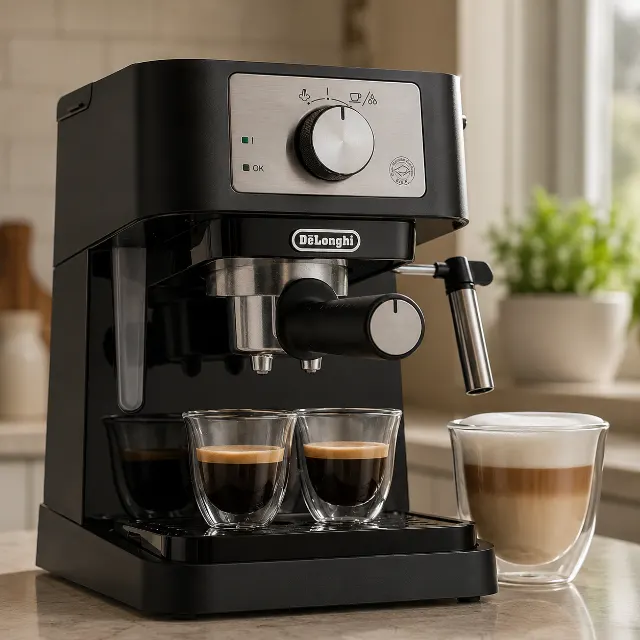
The thing owners notice
The machine's true cost isn't its sticker price, but the mandatory accessories (tamper, non-pressurized basket) and the eventual upgrade it inspires once you master its limitations.
Specifications
| Type | Manual / Semi-Automatic |
|---|---|
| Boiler system | Single Boiler (Stainless Steel) |
| Portafilter size | 51mm |
| Pump pressure | 15 Bar (Vibration Pump) |
| Steam wand | Panarello Style |
| Built-in grinder | No |
| Water tank | 33.8 oz / 1.0 L (Removable) |
| Heat-up time | Approx. 40-60 seconds |
| Warranty | 1 year limited |
How we rated it
- Value
- ★★★★★ ★★★★★ 4.3
- Quality
- ★★★★★ ★★★★★ 3.8
- Ease of use
- ★★★★★ ★★★★★ 4.2
- Durability
- ★★★★★ ★★★★★ 3.9
The upsides
- ✓Extremely compact footprint fits easily in small kitchens and apartments.
- ✓Fast heat-up time, ready to brew in under a minute due to the single thermoblock boiler.
- ✓Simple, intuitive three-position dial is unintimidating for first-time manual espresso users.
- ✓Pressurized portafilter baskets are forgiving for beginners using pre-ground or inconsistently ground coffee.
- ✓Very low initial cost of entry for anyone wanting to learn the basics of manual espresso.
What to watch for
- ✕Lightweight plastic construction causes the machine to slide on the counter when attaching the portafilter.
- ✕Weak, short steam wand produces bubbly foam and is incapable of creating true microfoam for latte art.
- ✕Limited clearance between the portafilter and drip tray requires using small cups and transferring shots.
- ✕Included 51mm plastic tamper is functionally useless, requiring an immediate accessory purchase.
The most common regret among new espresso machine owners is buying a device that becomes a countertop ornament within six months. It happens when the daily reality of using the machine—the setup, the cleanup, the inconsistent results—overwhelms the initial excitement. The De'Longhi Stilosa Manual Espresso, model EC260BK, exists at the epicenter of this risk. It promises the romance of manual espresso at a price that feels too good to be true. The central question isn't whether it can make espresso. It can. The real question is whether its compromises in build quality and performance create more friction than fulfillment over three years of ownership.
This review is structured around that long-term ownership picture. We will assess the total cost of ownership, including mandatory accessory upgrades and likely failure points, to determine its actual value. Many reviews focus on the first few weeks. We are concerned with month thirty-six.
Long-term owner feedback shows a clear pattern: the Stilosa serves as an effective, if frustrating, tutor. It forces you to learn about grind size, tamping pressure, and shot timing because it has no electronic aids to save you. Those who embrace this steep learning curve often upgrade within 18-24 months. Those who don't, revert to simpler coffee methods. The machine itself rarely lasts beyond the three-to-four-year mark with daily use before pump or seal failures become common.
Its value proposition is therefore not as a permanent kitchen fixture, but as a low-cost educational tool. It is a ticket to see if the espresso hobby is for you.
What it sets out to do
The De'Longhi Stilosa is engineered to be a first step beyond pod machines. Its purpose is to introduce the tactile process of grinding, tamping, and pulling a shot, using a simple three-position dial (On/Espresso/Steam). It targets the user who wants better coffee and is willing to trade the convenience of a Nespresso machine for control and quality, but is constrained by budget and counter space. Its core is a stainless steel single boiler and a 15-bar pump, packaged in a compact, lightweight plastic body.
De'Longhi's marketing emphasizes the 15-bar pump pressure. This is a classic misdirection in the budget espresso category. The ideal pressure for espresso extraction is around 9-bar. The higher rating is a sign of a vibration pump working against a restrictive, pressurized portafilter basket, designed to create artificial crema even with imperfectly ground coffee. It's a crutch for beginners, not a mark of professional-grade power. A non-pressurized basket, a common upgrade, will yield far better results but requires a capable grinder and precise technique.
Essentially, the Stilosa is designed to be forgiving enough for a novice to get a drinkable result, while offering just enough manual control to feel like authentic espresso making. It is not designed for consistency, high volume, or nuanced flavor exploration. Its primary function is accessibility.
Is the De'Longhi Stilosa a Good Beginner Machine?
Yes, but with a critical caveat. The Stilosa is an excellent machine for a beginner who wants to *learn*. Its pressurized portafilter baskets are forgiving of inconsistent grind size, producing a visually acceptable crema. However, this same feature masks flaws in technique and limits the potential for true, cafe-quality espresso. A beginner who just wants espresso with minimal effort will be frustrated. A beginner who enjoys process and tinkering will find it a rewarding, if limited, starting point. It teaches the fundamentals through its own limitations.
Build quality & reliability
You get what you pay for. The machine's primary construction is ABS plastic, which contributes to its very light weight. This becomes a functional problem: users must hold the machine firmly with one hand while locking the portafilter into the group head to prevent it from sliding across the counter. The drip tray and its stainless steel cover feel thin. The 33.8 oz (1 liter) water tank is adequate, but made of brittle-feeling plastic that requires careful handling.
Build Quality: ★★★☆☆ (3.8/5)
Internally, the use of a stainless steel boiler is a positive mark for longevity and taste neutrality compared to older aluminum designs. However, the surrounding pipework and connections are a mix of plastic and lower-grade components typical of this price tier. The portafilter itself is a 51mm aluminum body with a plastic handle and a plastic insert that directs the coffee flow. It feels insubstantial compared to the heavy, chrome-plated brass portafilters on more durable machines like the Gaggia Classic Pro.
Long-term Reliability: ★★★☆☆ (3.9/5)
After two years of daily use, a recurring complaint in owner reviews is water leaking from the group head, indicating a worn-out silicone gasket. This is a replaceable part, but a sign of the machine's component quality. Pump failure or a significant loss of pressure is the next most common issue, typically appearing in year three or four. The steam wand's plastic knob is another potential failure point. De'Longhi's one-year warranty is standard, but out-of-warranty repairs often cost more than a replacement machine, cementing its status as a disposable appliance in the long run.
What it does well
For its cost, the Stilosa's core function is competent. It heats up quickly, typically ready to pull a shot in under a minute, thanks to its small single boiler. This is a significant advantage for busy mornings. When paired with a decent burr grinder and fresh beans, the machine can produce a shot of espresso that is genuinely superior to any pod-based system, with more body and complexity. The pressurized basket, while a crutch, does its job of ensuring a crema-topped shot even when the grind isn't perfect.
The machine's simplicity is its greatest strength. There are no complex menus or programming sequences. A single dial controls all functions, making the De'Longhi Stilosa manual espresso instructions incredibly straightforward. This removes a layer of intimidation for first-time users. Its compact footprint is also a major benefit for small kitchens, apartments, and dorm rooms, where counter space is at a premium.
Pulling the Perfect Shot: Tips and Tricks
Achieving good results requires overcoming the machine's limitations. First, ignore the included plastic tamper; it's useless. A proper 51mm steel tamper is the single most important accessory. Second, always run a blank shot of hot water through the portafilter before dosing with coffee. This pre-heats the group head and portafilter, which is crucial for temperature stability as the Stilosa lacks PID temperature control. Third, use a scale to measure your dose (around 14-16g for the double basket) and yield (aim for a 1:2 ratio, e.g., 32g of liquid espresso out) in about 25-30 seconds. This consistency is key.
Buy this if you live in a small apartment, are the only coffee drinker in your household, and your primary goal is to learn the hands-on process of espresso making on a strict budget. It's a better choice than a similarly priced pod machine if you value the craft over convenience.
The annoyances
The daily frustrations are numerous. The steam wand is short, awkwardly positioned, and lacks the power for true microfoam needed for latte art. It produces stiff, bubbly foam suitable for old-school cappuccinos but struggles to create the silky texture for a flat white. Verified buyers note that the panarello-style sleeve can be removed for slightly better control, but the underlying power is still weak. This is a significant drawback compared to the surprisingly potent steam on the Breville Bambino.
Dripping is another common issue. The group head continues to drip for a considerable time after a shot is pulled, making a mess on the drip tray. Speaking of which, the space between the portafilter spouts and the drip tray is very limited, accommodating only small espresso cups or shot glasses. You will need to pull your shot into a smaller vessel and transfer it to a larger mug for an Americano or latte. The drip tray also fills quickly and requires frequent emptying.
Beyond the spec sheet, the workflow is clumsy. Because it's a single boiler machine, you must switch from brew to steam temperature. This involves pulling your shot, then flipping the dial to steam and waiting for it to heat up, purging water until steam appears. Then, to pull another shot, you must cool the boiler back down to brew temperature—a process called temperature surfing that is tedious and inconsistent.
Skip this if you primarily drink milk-based drinks, want to practice latte art, or value a clean and efficient workflow. If your mornings are rushed and you need to make multiple drinks back-to-back, this machine will be a source of constant frustration. In that case, the slightly more expensive De'Longhi Dedica offers a modest improvement in performance and build.
The day-to-day reality
Here is what the routine looks like after the first month. You turn the machine on. While it heats, you grind your beans. You run a blank shot to preheat everything. You dry the portafilter basket, dose it with coffee, tamp, and lock it in, holding the machine steady. You pull your shot into a small glass, watching the clock. Then you switch to steam mode, wait, purge the water, steam your milk, and clean the wand immediately. Finally, you knock out the wet, soupy puck (a common trait of pressurized baskets) and clean up the dripping group head.
What most reviews miss is the non-negotiable need for a good grinder. Using pre-ground coffee will lead to disappointing, watery shots. The cost of a capable burr grinder must be factored into the total cost of ownership, effectively doubling the initial investment. The machine's potential is entirely locked behind grinder quality.
Owners discover after a few months that the pressurized baskets are the first thing they want to replace. Upgrading to a non-pressurized, single-wall basket and a bottomless portafilter (a popular De'Longhi Stilosa mod on Reddit) transforms the machine, but also exposes every flaw in your technique. It's a path for the enthusiast, not the casual user.
Care and running costs
Maintenance is straightforward but essential. The drip tray and water tank need daily rinsing. The steam wand must be wiped and purged after every single use to prevent milk residue from clogging it. The shower screen in the group head should be wiped down after each session. This simple cleaning routine takes only a few minutes but is critical for the machine's longevity.
Cleaning and Descaling Your Stilosa
Descaling is the most important long-term maintenance task. Depending on your water hardness, this should be done every 2-3 months. The De'Longhi Stilosa manual espresso instructions outline the process: dissolve a descaling solution in a full tank of water, then run portions of it through the brew head and the steam wand until the tank is empty. Rinse by running a full tank of fresh water through. Failure to descale is the leading cause of pump failure and heating problems.
A hidden cost is the group head gasket. With daily use, expect to replace this rubber ring annually to prevent leaks. It's an inexpensive part, but finding the correct size and performing the replacement requires some minor disassembly. The long-term cost of ownership is low in terms of consumables (descaler, gaskets), but high when you factor in the eventual full-unit replacement after 3-4 years.
Where it loses to alternatives
The Stilosa operates in a crowded field, and its value diminishes as you move even slightly up the price ladder. Its most direct competitor, the De'Longhi Dedica , offers a slimmer profile, slightly better build quality, and programmable shot volumes for a modest price increase. For many, that's a worthwhile upgrade.
A more significant jump is to the Breville Bambino. It is more expensive, but its ThermoJet heating system provides near-instant heat-up and a much faster transition between brewing and steaming. Its steam wand is vastly more powerful, capable of producing true microfoam. The Bambino represents a superior user experience in every way and is a much better long-term investment.
For those willing to spend a bit more for a machine built to last, the Gaggia Classic Pro is the traditional entry point to prosumer-level espresso. It features a commercial-style 58mm portafilter and a robust build that is repairable and modifiable for years of service. It demolishes the Stilosa on every performance metric but requires a much higher investment in both the machine and a high-quality grinder.
An overlooked detail is how the Stilosa compares to newer, budget-friendly brands. The Casabrews 3700 Essential, for example, often includes a pressure gauge, a feature the Stilosa lacks, which provides crucial feedback for dialing in shots. While build quality may be comparable, these added features provide more tools for the aspiring barista.
Who it is right for
Best for: The absolute beginner on a tight budget who is more interested in the process of making espresso than the final result in the cup. It's for the patient tinkerer in a small apartment who sees a coffee machine as a hands-on hobby kit.
Not ideal for: Anyone who needs to make more than one or two drinks at a time, primarily drinks lattes or cappuccinos, or who values build quality and a streamlined morning routine. It is also a poor choice for anyone not willing to invest in a separate, quality burr grinder.
The De'Longhi Stilosa Manual Espresso occupies a narrow niche. It's a stepping stone. It serves the user who wants to prove their interest in the hobby before committing to a more substantial machine. If the limitations described here sound like dealbreakers, they are. Your money is better spent on a higher-tier machine. If they sound like a challenge you're willing to accept for the low cost of entry, the Stilosa is a logical, if temporary, choice.
Our verdict
The De'Longhi Stilosa EC260BK is a functional but deeply compromised espresso machine. It successfully lowers the financial barrier to the espresso hobby, but it does so by sacrificing build quality, performance consistency, and user convenience. Its value is not in its longevity, but in its role as an inexpensive educational course in espresso fundamentals.
It forces you to learn, and for that, it earns a qualified recommendation. However, owner feedback splits roughly evenly between those who appreciate the lesson and those who are simply frustrated by the teacher. The most important caveat is that its true cost is double its sticker price once you add the mandatory grinder and accessories.
For the curious and patient beginner on a strict budget, it's a justifiable first step.
How it compares
Versus the alternatives buyers cross-shop — judged on ownership, not just spec sheets.
| Alternative | Ease of use | Maintenance | Durability | Value | Best for |
|---|---|---|---|---|---|
| De'Longhi Stilosa Manual Espresso (this pick) | Simple dial, but requires manual technique and temperature surfing. | Frequent descaling needed; group head gasket may wear within 2 years. | Mostly plastic build; not designed for long-term daily use. | Low initial cost but requires immediate accessory upgrades. | The absolute beginner on a tight budget wanting to learn the craft. |
| De'Longhi Dedica | Adds programmable shot buttons for better consistency. | Similar descaling routine, slightly better component quality. | Slimmer metal body feels more substantial than the Stilosa's plastic. | A modest price increase for significant quality-of-life improvements. | Beginners who want a bit more automation and better aesthetics. |
| Breville Bambino | Far simpler workflow with near-instant steam and stable temperature. | Automated cleaning cycles and prompts simplify upkeep. | Higher quality components and better engineering for reliability. | Higher upfront cost but a much better long-term investment. | Anyone who values speed, consistency, and quality milk drinks. |
| Gaggia Classic Pro | Steeper learning curve but offers professional-level control. | Built to be serviced; requires manual backflushing. | Commercial-grade components designed for a decade of use. | High initial investment but excellent long-term value and performance. | The serious hobbyist who wants a machine they can repair and upgrade. |
| Casabrews 3700 Essential | Similar to Stilosa but includes a pressure gauge for feedback. | Comparable to Stilosa; descaling is key. | Plastic and light metal construction, on par with Stilosa. | Competitive price, often includes better accessories out of the box. | The data-driven beginner who wants visual feedback on pressure. |
How it scores on what matters
| Product | Espresso shot quality | Milk steaming & microfoam | Consistency shot-to-shot | Ease of dialing in | Heat-up & workflow speed | Maintenance burden | Verdict |
|---|---|---|---|---|---|---|---|
| De'Longhi Stilosa Manual Espresso (this pick) | Fair | Weak | Fair | Fair | Good | Good | Functional for learning, but limited by its hardware. |
| De'Longhi Dedica | Good | Fair | Good | Good | Very good | Good | A noticeable step up in consistency and build. |
| Breville Bambino | Very good | Very good | Very good | Very good | Excellent | Excellent | Superior performance and workflow in every category. |
| Gaggia Classic Pro | Excellent | Good | Good | Fair | Fair | Fair | Highest potential quality but demands the most skill. |
| Casabrews 3700 Essential | Fair | Weak | Fair | Good | Good | Good | Similar to Stilosa, but the gauge aids learning. |
Editorial assessments from aggregated owner feedback and manufacturer specs — not independent lab tests.
Who it is for
Ideal for the curious student or apartment dweller with minimal counter space who wants to learn the mechanics of espresso without a significant initial investment. Skip this if you value convenience over craft, have a household of more than two coffee drinkers, or expect cafe-quality milk foam out of the box.
The case for it
The Stilosa solves the problem of the high barrier to entry for manual espresso. It provides a hands-on learning experience for less than the cost of a super-automatic machine's first repair. While the <a href="/espresso-machines/breville-bambino/">Breville Bambino</a> offers a much better user experience, the Stilosa's lower cost makes it an accessible, if compromised, first step.
Frequently asked questions
Is the De'Longhi Stilosa manual pump coffee machine any good?
For its price, the Stilosa is a competent entry-level machine for a 1-2 person household. It requires significant user skill to produce good coffee, but it is capable of results far better than pod systems if you are willing to learn its quirks and pair it with a good grinder.
Does the De'Longhi Stilosa make good espresso?
With fresh, finely ground coffee and proper technique, the Stilosa's 15-bar pump and pressurized basket can produce rich espresso with a stable crema. Achieving consistently good shots takes practice; it's a capable machine for its budget price, not an effortless one.
How do you make espresso with the De'Longhi Stilosa?
First, fill the 51mm portafilter with fine grounds and tamp firmly. Lock it into the group head, place a cup below, and turn the main dial to the espresso icon. When you have your desired volume (aim for 25-30 seconds), turn the dial back to the off position to stop the shot.
What is the portafilter size for the De'Longhi Stilosa?
The De'Longhi Stilosa EC260BK uses a 51mm portafilter. This size is common among entry-level machines, which makes it relatively easy to find compatible third-party accessories like better tampers, distribution tools, and bottomless portafilters for upgrading your setup.
How do you use the steam wand on the De'Longhi Stilosa?
Turn the dial to the steam icon and wait for the ready light. Briefly open the steam knob to purge water, then submerge the wand's tip in your milk. Fully open the knob to create a vortex for texturing. Turn the steam off completely before removing the pitcher from the milk.
Is the De'Longhi Stilosa easy for beginners?
Its simple dial interface makes the Stilosa mechanically easy to operate. The pressurized portafilter is also forgiving. However, mastering shot consistency and milk frothing presents a genuine learning curve, making it a good choice for beginners who actively want to learn manual skills.
What tamper size does the De'Longhi Stilosa use?
You need a 51mm tamper for the De'Longhi Stilosa. The plastic tool included in the box is inadequate for proper tamping pressure and consistency. Purchasing a calibrated, stainless steel 51mm tamper is the most critical first upgrade for this machine.
People also ask
- Is the De'Longhi Stilosa a good beginner machine?
- How do you use the steam wand on a De'Longhi Stilosa?
- Can you use ESE pods in the De'Longhi Stilosa?
- How do you clean a De'Longhi Stilosa?
- Is the De'Longhi Stilosa better than the Dedica?
- Why is my De'Longhi Stilosa not making good crema?
- Is the De'Longhi Stilosa a good espresso machine?
- Can you use ESE pods with the De'Longhi Stilosa?
- How long does the De'Longhi Stilosa last?
You might also like
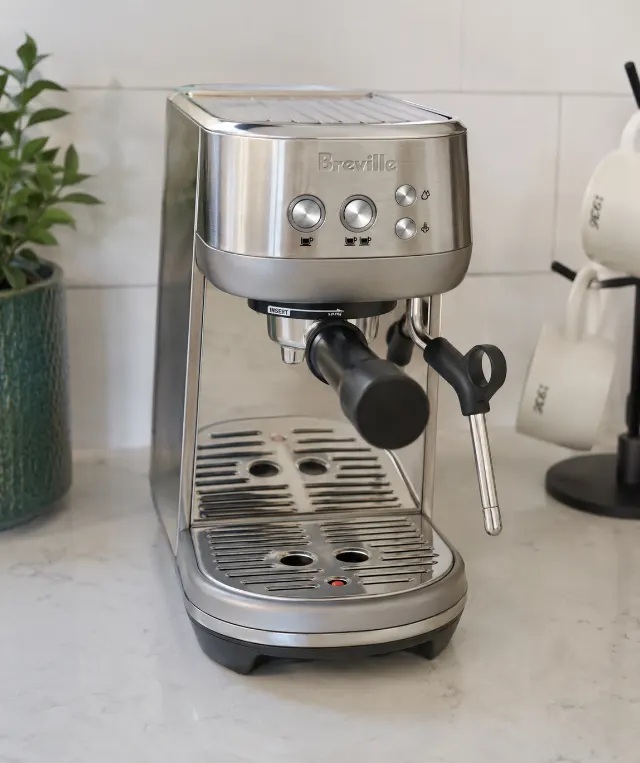
Breville Bambino
Our 2026 review of the Breville Bambino finds it's still the fastest entry-level espresso machine, but its long-term durability hinges on diligent cleaning.
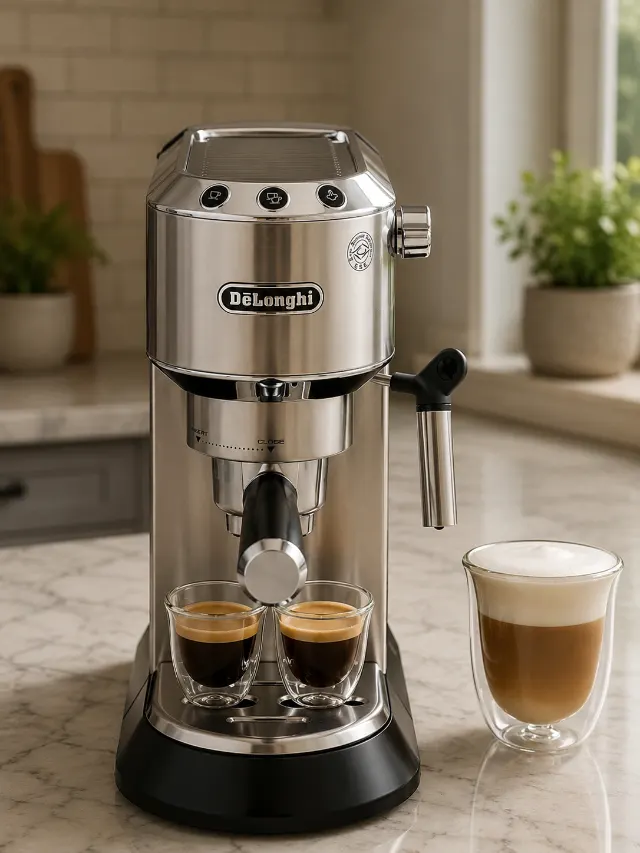
De'Longhi Dedica
The De'Longhi Dedica is a compact, fast-heating espresso machine ideal for small kitchens, but its pressurized system and weak steam wand limit true espresso hobbyists.
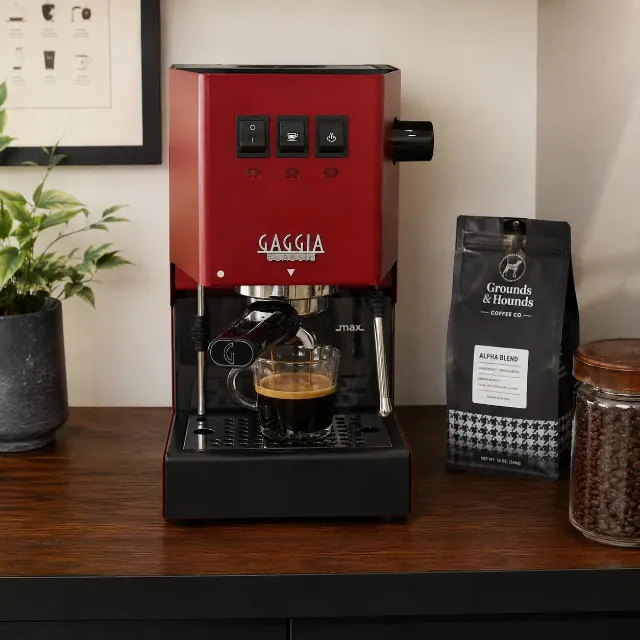
Gaggia Classic Pro
A durable, mod-friendly espresso machine for hobbyists, the Gaggia Classic Pro demands a learning curve but rewards with true café-quality potential.