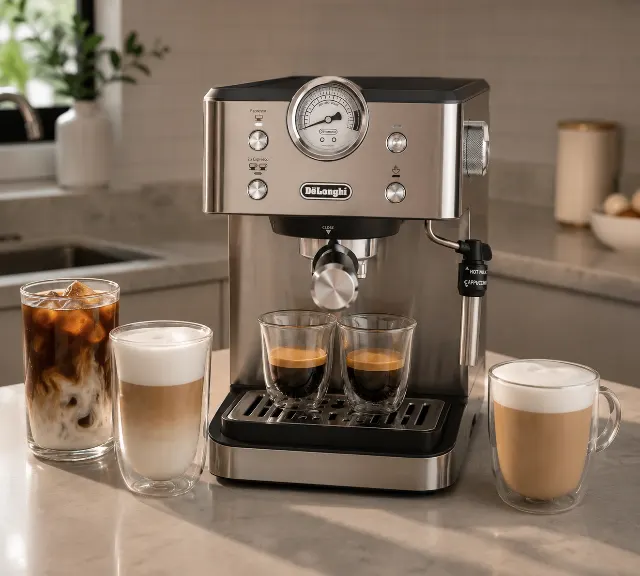
De'Longhi Classic Signature Espresso Review
How it scores
- Value
- ★★★★★ ★★★★★ 4.0
- Quality
- ★★★★★ ★★★★★ 4.3
- Ease of use
- ★★★★★ ★★★★★ 4.6
- Durability
- ★★★★★ ★★★★★ 4.2
Strengths
- ✓Fast 40-second heat-up time via the thermoblock system.
- ✓Three distinct brew temperature settings (approx. 92°C, 94°C, 96°C) for different roasts.
- ✓Powerful commercial-style steam wand creates excellent microfoam for latte art.
- ✓Compact, stainless steel body fits well in smaller kitchens.
- ✓Generous 2.5-liter water tank reduces frequency of refills.
What could be better
- ✕The 51mm portafilter limits aftermarket accessory options.
- ✕Steep learning curve; unforgiving of poor grind quality or puck prep.
- ✕Drip tray is shallow and requires daily emptying.
- ✕Long cool-down period required after steaming before pulling another shot.
You bought pre-ground coffee. Just this once. Your old machine died, the new one is on the counter, and you just want a passable latte before the first meeting of the day. You load the portafilter, lock it in, and hit the button. What comes out is a gushing, watery, 10-second nightmare that tastes like bitter regret. That moment of failure is what sends people searching for a machine like the De'Longhi Classic Signature Espresso. It promises control.
Two years ago, machines in this bracket were a mess of compromises. They either had decent brew temperature stability or a workable steam wand, but never both. De'Longhi’s previous efforts often felt plasticky and underpowered, aimed at the capsule-machine upgrader who wasn't quite ready for the complexities of a true semi-automatic. The De'Longhi ClassicSignature, model EM450M, is their attempt to fix that reputation.
It’s a direct response to the market dominance of Breville’s entry-level machines, adopting a similar stainless-steel-forward aesthetic and a focus on core features that matter: temperature control and steam power. The central tradeoff is clear. You get a machine with a thermoblock that heats up in under a minute and a surprisingly potent steam wand, but you are tethered to a 51mm portafilter and a learning curve that punishes bad prep.
This machine is a meaningful step up from appliance-grade espresso, but it is not the final word in its category.
A quick primer
This is a semi-automatic, single thermoblock espresso machine. That means it can’t brew espresso and steam milk simultaneously, and it relies on you to grind, dose, tamp, and time the shot. Its entire design is optimized for speed and temperature flexibility in a compact footprint. The target buyer is someone who has outgrown a pod machine or a cheaper appliance like the De'Longhi Stilosa Manual Espresso and wants to learn how to properly texture milk for latte art without committing to a premium, slow-heating boiler machine.
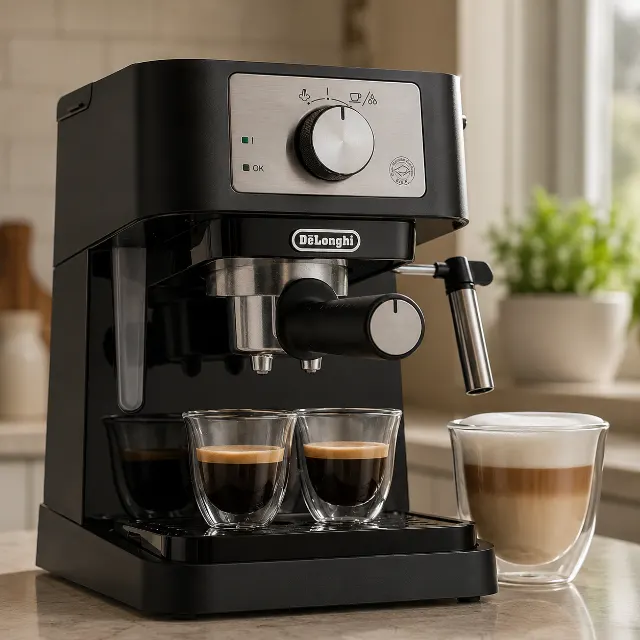
The spec sheet advertises a 15-bar pump, which is a classic marketing misdirection. Optimal espresso extraction happens at 9 bars of pressure; the higher rating is just a measure of the pump's maximum output, not the pressure at the group head. What actually matters here is the Active Temperature Control, offering three distinct brew temperatures (approx. 92°C, 94°C, 96°C). This is a real, tangible feature that helps compensate for different roast levels. The second key feature is the commercial-style steam wand, which has the power to create silky microfoam, a significant upgrade over the panarello-style wands on older De'Longhi models.
Here is where I disagree with the marketing. De'Longhi frames this as an all-in-one solution, even bundling their "Signature" beans. This is not an all-in-one solution. Its performance is entirely dependent on an external, high-quality burr grinder. Using pre-ground coffee or a cheap blade grinder will lead to nothing but frustration and wasted beans. It’s an enthusiast component, not a complete kitchen appliance.
How well it holds together
Build and Component Quality
Build Quality: ★★★★☆ (4.3/5)
The exterior is mostly stainless steel, giving it a reassuring heft and a premium look on the counter that belies its price point. The buttons are tactile and responsive. However, the story changes when you look closer. The drip tray is plastic, and the cover feels thin. The water tank, while a generous 2.5 liters, is also plastic and can be awkward to remove and refill if the machine is tucked under a cabinet. Owners consistently report the stainless steel body shows fingerprints and water spots easily, requiring frequent wiping to look its best.
Not on the spec sheet: While the portafilter is a heavy, satisfying chunk of metal, the internal group head assembly contains significant plastic components. This is standard for thermoblock machines in this category to manage heat and cost, but it's a long-term durability question compared to the all-brass groups found in more expensive single-boiler machines. It’s better than its predecessors, but it’s not built to be a 20-year machine.
Long-term Reliability and Maintenance
Long-term Reliability: ★★★★☆ (4.1/5)
The thermoblock heating system, while efficient, is a common failure point in all machines after several years, especially in hard water areas. The most recurring complaint in owner reviews is the need for frequent descaling. The machine has an indicator light, but in areas with high mineral content, owners find they need to run the descaling cycle every 6-8 weeks, not the 3-4 months suggested in the manual. The silicone group head gasket is the most common consumable part that will need replacing, typically after 18-24 months of daily use. Thankfully, De'Longhi Classicespresso machine parts are generally easy to source.
How it performs day to day
It’s fast. From a cold start, the De'Longhi ClassicSignature is ready to brew in about 40 seconds, a genuine advantage on busy mornings. Shot quality, once dialed in, is very good. The temperature control allows you to tame darker, more bitter roasts on the lowest setting or extract more from light roasts on the highest. The pressure gauge is more of a guide than a precise instrument, but it helps beginners understand if their grind is too coarse (low pressure) or too fine (choking the machine).
The steam wand is the star. It's powerful enough to steam 6oz of milk for a latte in under 30 seconds, creating smooth, paint-like microfoam suitable for latte art. There is a learning curve; the power can be unforgiving and will create bubbly foam if your technique is off. But unlike weaker machines, the power is there to work with. It's a massive improvement over the auto-frothing wands on machines like the De'Longhi La Specialista Touch Espresso if your goal is manual control.
What most reviews miss: The transition time from brewing to steaming is about 15-20 seconds. However, the transition back from steaming to brewing is much longer. The thermoblock gets very hot for steam and needs to cool down, often requiring a 30-45 second purge (a cooling flush) to get back to a stable brew temperature. This workflow hiccup can be frustrating when making multiple milk drinks back-to-back.
Buy this if: you live in an apartment with limited counter space, already own a good burr grinder, and your main goal is to master latte art without spending a fortune. For you, the powerful steam wand is worth the learning curve, and it offers a better manual experience than the more automated Breville Bambino.
What owners complain about
No machine is perfect. The most common frustration with the De'Longhi Classic Signature EM450M is the 51mm portafilter. While functional, the 51mm standard offers fewer choices for high-quality aftermarket baskets, tampers, and distribution tools compared to the 54mm or 58mm standards. This limits your ability to upgrade and experiment down the line. Many users also struggle with dialing in their grind, leading to inconsistent shots and questions about the machine being broken. It's not broken; it's just demanding.
Another recurring complaint is the small, shallow drip tray. It fills up incredibly fast, partly due to the pressure release system dumping water after each shot. Expect to empty it daily, sometimes more. Finally, there's significant confusion between this model and the similarly named 'Linea Classic'. They are different machines; the Classic Signature (EM450M) is the modern thermoblock model, and searching for accessories requires using the full model name.
Hidden cost: The included pressurized baskets are designed to create a fake crema with pre-ground or poorly ground coffee. To get real espresso, you must use the single-wall (non-pressurized) basket, which immediately exposes any weakness in your grinder and technique. The real cost of ownership includes budgeting for a grinder that costs at least half as much as the machine itself.
Skip this if: you want a single appliance that does everything and prioritizes convenience over control. You will be much happier with an all-in-one machine like the De'Longhi La Specialista Maestro Espresso, which has a built-in grinder and tamping system, removing the biggest variables and frustrations.
The day-to-day reality
Your first week is mostly frustration. You'll produce sour shots, bitter shots, and watery messes. After about two weeks, something clicks. You find the right grind setting for your favorite beans and learn how much pressure to apply when tamping. You start pulling consistent, drinkable shots. The pressure gauge, once a mystery, becomes a useful diagnostic tool.
After a month, the routine is second nature. You turn the machine on, prep your puck while it heats, pull your shot, and steam your milk. The whole process for a latte takes about four minutes. You learn to empty the drip tray every morning as part of the ritual. You also learn to purge the steam wand before and after every use to keep it clean.
What owners wish they'd known is the importance of water. Using filtered or softened water dramatically reduces the need for descaling and improves the taste of the espresso. The feature that gets used least is often the programmable shot volume. Most owners discover that 'dialing in' by weight with a small coffee scale yields far more consistent results than relying on the machine's volumetric presets, which can vary depending on the puck resistance.
Long-term ownership
This is not a maintenance-free appliance. A simple cleaning routine is essential. You must wipe the steam wand immediately after every use, flush the group head after each session (a 'backflush'), and empty the drip tray daily. The descaling prompt is non-negotiable; ignoring it will lead to clogs and temperature instability within months.
The group head gasket is the first part to fail, typically showing signs of leaking around the 18-month mark with daily use. It's an inexpensive part and simple to replace. The ongoing cost of ownership is low, limited to descaling solution and the eventual gasket replacement. The real long-term cost is in the coffee beans and the potential desire to upgrade your grinder or accessories.
Overlooked detail: The machine's auto-off feature, which powers it down after 20 minutes of inactivity, is great for safety and energy saving. However, it can be annoying if you like to make coffees for guests over a longer period, as you'll have to wait for it to heat up again. There is a way to disable this in the settings, as detailed in the De'Longhi EM450M manual, but few owners ever discover it.
Other options on the table
The market is crowded. The most direct competitor is the Breville Bambino. The Bambino is faster, heating up in just three seconds, and its automatic milk steaming is more beginner-friendly. However, the Classic Signature offers more manual control with its three temperature settings and a more traditional, powerful steam wand for those who want to learn the craft.
If your budget is tighter, the De'Longhi Stilosa Manual Espresso provides a basic espresso experience for a fraction of the cost, but it lacks the temperature stability and steam power of the Classic Signature. It’s a starting point, not a destination.
For those who want to eliminate the separate grinder, the De'Longhi La Specialista Maestro Espresso integrates a high-quality grinder and smart tamping station. It's a much larger and more expensive machine, but it offers a more streamlined workflow from bean to cup. The La Specialista is for the person who values convenience and repeatability, whereas the Classic Signature is for the hobbyist who enjoys the process and ritual.
Best suited to
Best for: The aspiring home barista with a small kitchen who is serious about learning to make café-quality milk drinks and already has a capable burr grinder. This user values temperature control and steam power over automation.
Not ideal for: Anyone seeking a simple, push-button solution or those unwilling to invest in a separate, quality grinder. Its learning curve will frustrate users who want immediate results without mastering the variables of espresso preparation.
This machine occupies a specific niche. It's a component in a system, not the entire system itself. It rewards effort and good technique with results that are genuinely a class above basic appliances. But it offers no shortcuts. If the process of dialing in a new bag of beans sounds like a fun puzzle, this machine is for you. If it sounds like a tedious chore, you should look elsewhere.
Final judgement
The vSignature Espresso (EM450M) is a competent and surprisingly powerful machine for its size and cost. It successfully addresses the weak steam performance of its predecessors and adds meaningful temperature control, a feature often missing at this price point. It's a worthy contender that forces you to learn the fundamentals of espresso.
The critical caveat is the grinder. Without a good one, this machine is an exercise in futility. It is not a beginner's first machine, but rather an excellent second machine for someone who has discovered their passion and is ready for more control.
If you have a good grinder and the patience to learn, buy this machine.
What sets it apart
The machine's three temperature settings are genuinely distinct, but the lowest setting is the only one that reliably prevents scorching dark roasts without a long cooling flush.
Specifications
| Type | Semi-Automatic |
|---|---|
| Boiler System | Single Thermoblock |
| Portafilter Size | 51mm |
| Pump Pressure | 15 Bar (Maximum Output) |
| Steam Wand | Commercial-style, manual |
| Built-in Grinder | No |
| Water Tank | 2.5 Liters, Removable |
| Heat-up Time | Approx. 40 seconds |
| Warranty | 1-2 years depending on region |
How it compares
Versus the alternatives buyers cross-shop — judged on ownership, not just spec sheets.
| Alternative | Ease of use | Maintenance | Durability | Value | Best for |
|---|---|---|---|---|---|
| De'Longhi Classic Signature Espresso (this pick) | Steep learning curve; requires a good grinder and technique. | Daily drip tray emptying; requires frequent descaling in hard water areas. | Good stainless steel exterior; internal plastic parts are a long-term question. | High performance for the cost, but only if you factor in a separate grinder. | The hobbyist in a small apartment focused on mastering manual milk steaming. |
| Breville Bambino | More forgiving for beginners with faster heat-up and optional auto-frothing. | Similar descaling needs; smaller drip tray requires frequent attention. | Comparable mix of steel and plastic components for the price tier. | Excellent for beginners; offers a faster path to decent results. | The user who prioritizes speed and convenience over manual control. |
| De'Longhi La Specialista Maestro Espresso | Much simpler workflow with integrated grinder and smart tamping. | More complex cleaning due to the integrated grinder; descaling is similar. | Larger and more robust build, but more potential points of failure. | Higher upfront cost for an all-in-one system that removes variables. | The buyer who wants convenience and consistency without a separate grinder. |
| De'Longhi Stilosa Manual Espresso | Simple operation, but very limited in capability and shot quality. | Basic cleaning; less frequent descaling due to simpler design. | Mostly plastic construction; not designed for heavy daily use. | A budget entry point, but quickly outgrown by anyone serious about espresso. | The absolute beginner on a strict budget testing their interest in the hobby. |
How it scores on what matters
| Product | Espresso shot quality | Milk steaming & microfoam | Consistency shot-to-shot | Ease of dialing in | Heat-up & workflow speed | Maintenance burden | Verdict |
|---|---|---|---|---|---|---|---|
| De'Longhi Classic Signature Espresso (this pick) | Very good | Excellent | Good | Fair | Very good | Fair | Excellent steam power but demands a skilled operator. |
| Breville Bambino | Good | Very good | Very good | Very good | Excellent | Fair | Unbeatable speed and ease of use for beginners. |
| De'Longhi La Specialista Maestro Espresso | Very good | Good | Excellent | Excellent | Good | Good | Top-tier consistency for an all-in-one machine. |
| De'Longhi Stilosa Manual Espresso | Fair | Weak | Fair | Good | Fair | Very good | A basic starting point with significant performance compromises. |
Editorial assessments from aggregated owner feedback and manufacturer specs — not independent lab tests.
Who this suits
Ideal for the patient hobbyist in a small kitchen who wants to master milk texturing and has a separate, quality grinder. Skip this if you expect perfect shots out of the box or live in a hard water area and hate descaling. You need countertop space for two devices, not one.
What you get for the money
It solves the problem of weak, watery steam common in this tier. While a <a href="/espresso-machines/breville-bambino/">Breville Bambino</a> is faster and more forgiving for beginners, the Classic Signature offers more manual control over temperature and a more substantial, commercial-feel steam wand for those prioritizing latte art.
Frequently asked questions
Is the De'Longhi Classic a good espresso machine?
For an aspiring home barista, yes. The De'Longhi Classic Signature provides excellent manual control over temperature and powerful steam for its class. However, its quality is entirely dependent on pairing it with a capable burr grinder, making it a poor choice for those seeking simple convenience.
What are the common problems with De'Longhi espresso machines?
Across the De'Longhi line, the most cited issues stem from maintenance. Reduced water flow from mineral buildup is common if the descaling schedule is ignored. On the Classic Signature specifically, users often struggle with inconsistent shots until their coffee grind and tamping are perfected.
How do you use the De'Longhi Classic espresso machine?
After the 40-second heat-up, you lock in a portafilter with 18g of finely ground coffee and press the brew button, stopping the shot manually. For milk drinks, you then switch to steam mode, purge the wand, and texture your milk. It's a fully manual process requiring practice.
Are De'Longhi Signature beans good?
De'Longhi's Signature beans are a medium roast blend designed to be forgiving and produce a lot of crema, especially with pressurized baskets. They are a decent starting point, but you will achieve far better results by sourcing freshly roasted beans from a local or specialty roaster.
What is the portafilter size for the De'Longhi Classic Signature?
The De'Longhi Classic Signature (model EM450M) uses a 51mm portafilter. This is a crucial detail, as most prosumer gear has moved to 54mm or 58mm standards, so aftermarket accessories like tampers and baskets must be specifically purchased in the 51mm size.
How often should you descale the De'Longhi Classic?
De'Longhi suggests descaling when the machine's indicator light activates, roughly every 2-3 months. However, owner feedback strongly indicates that in areas with hard water, a more frequent 6-8 week cycle is necessary to maintain performance and prevent clogs in the thermoblock system.
Can you use ESE pods in the De'Longhi Classic Signature?
No, the De'Longhi Classic Signature EM450M is not designed for and does not include an adapter for Easy Serving Espresso (ESE) pods. It is engineered exclusively for use with ground coffee in its single-wall and double-wall (pressurized) filter baskets.
What is the difference between De'Longhi Linea Classic and Classic Signature?
This is a frequent point of confusion. The 'Classic Signature' (EM450M) is the modern thermoblock machine reviewed here. 'Linea Classic' is often a misnomer or refers to older, unrelated De'Longhi models. Always search for parts and information using the full model number EM450M to ensure compatibility.
People also ask
- Is the De'Longhi Classic a good espresso machine for beginners?
- What are the most common problems with De'Longhi espresso machines?
- How do you use the De'Longhi Classic Signature espresso machine?
- Can you use pre-ground coffee in the De'Longhi Classic?
You might also like
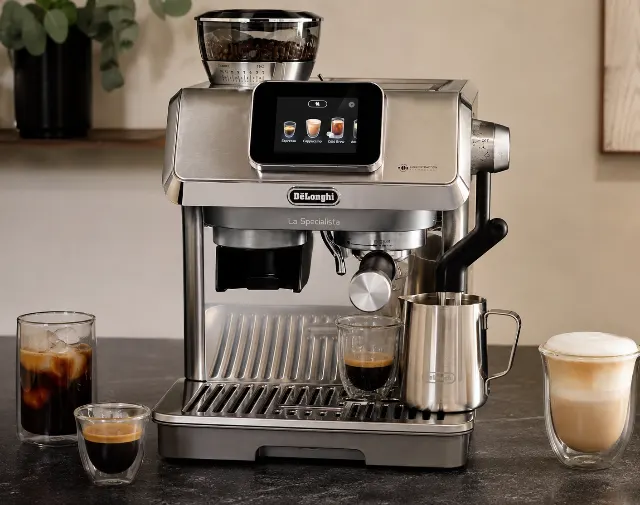
De'Longhi La Specialista Touch Espresso
The De'Longhi La Specialista Touch offers a uniquely guided manual espresso experience, excelling with its Smart Tamping Station but demanding a learning curve for its grinder and milk frothing.
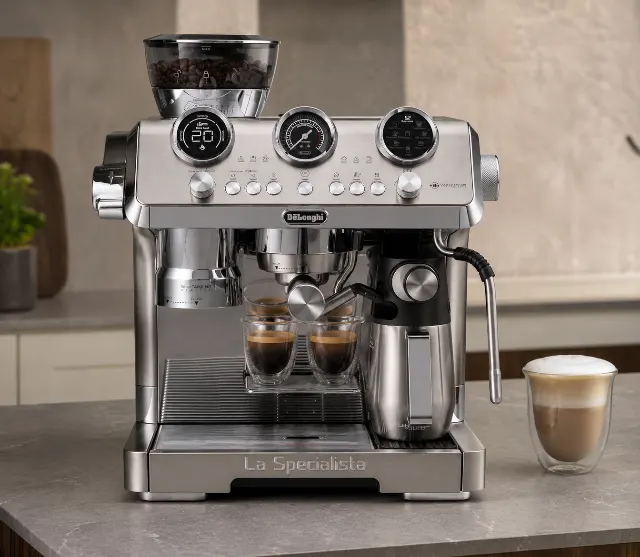
De'Longhi La Specialista Maestro Espresso
The De'Longhi La Specialista Maestro excels at convenient, repeatable espresso with a built-in tamper, but its grinder and plastic components betray its premium price point for purists.
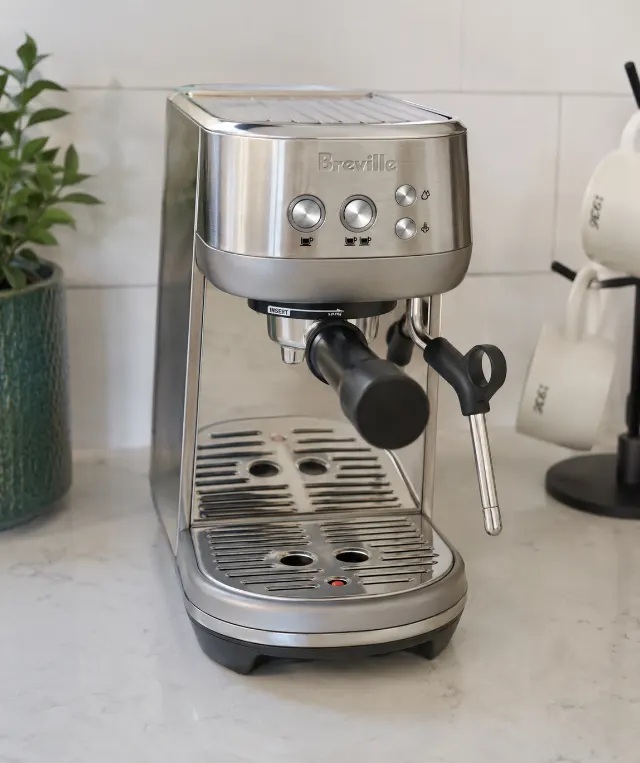
Breville Bambino
Our 2026 review of the Breville Bambino finds it's still the fastest entry-level espresso machine, but its long-term durability hinges on diligent cleaning.
De'Longhi Stilosa Manual Espresso
The De'Longhi Stilosa Manual Espresso is a capable entry point for learning manual espresso, but its long-term cost of ownership and required upgrades make it a calculated risk for beginners.