Breville Barista Express Impress Espresso Machine BES876BSS Review
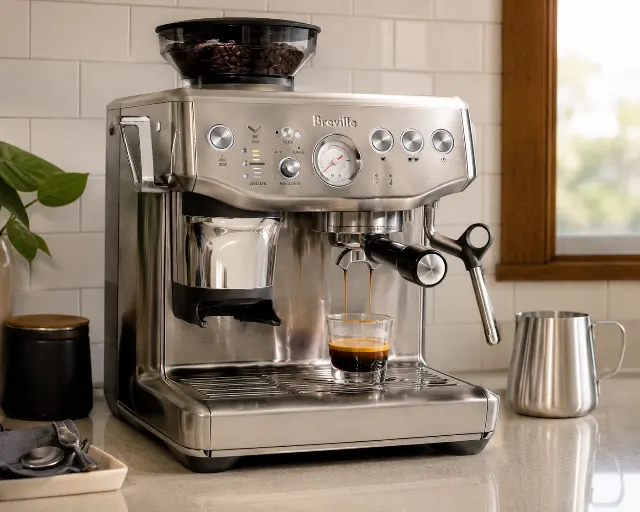
The standout detail
The 'intelligent dosing' system bases its adjustments on the *last* shot's puck height, not the current one. This means your first shot with new beans is always a guess, requiring a sacrificial pull to calibrate.
The scorecard
- Value
- ★★★★★ ★★★★★ 4.0
- Quality
- ★★★★★ ★★★★★ 4.3
- Ease of use
- ★★★★★ ★★★★★ 4.6
- Durability
- ★★★★★ ★★★★★ 4.2
What we like
- ✓Impress Puck System with assisted 10kg tamp dramatically reduces channeling and improves shot-to-shot consistency for beginners.
- ✓Integrated workflow minimizes mess by containing grinding and tamping, a significant quality-of-life improvement over separate components.
- ✓Features a pressure gauge, providing crucial real-time feedback for dialing in shots—a feature absent on the pricier Barista Pro.
- ✓25 stepped grind settings offer more granular control than the 16 settings on the original Barista Express.
- ✓Manual steam wand is capable of producing quality microfoam for latte art, a major step up from automatic frothers or panarello wands.
Cons
- ✕Integrated grinder struggles to grind fine enough for light roasts and is prone to clogging with very oily, dark roast beans.
- ✕The 'intelligent dosing' requires recalibration shots when changing beans, leading to some initial waste.
- ✕Assisted tamping cannot be bypassed, removing user control and preventing the use of puck prep tools like WDTs.
- ✕Thermocoil system requires a 20-30 second wait between brewing and steaming, slowing workflow for multiple milk drinks.
Specifications
| Type | Semi-automatic with assisted dosing & tamping |
|---|---|
| Boiler system | Thermocoil |
| Portafilter size | 54mm |
| Pump pressure | 15 Bar Italian Pump (delivers ~9 Bar at group head) |
| Steam wand | Manual, single-hole tip |
| Built-in grinder | Steel conical burr with 25 settings |
| Water tank | 2 Litre (67 fl.oz) |
| Heat-up time | Approx. 45-60 seconds |
| Warranty | 1 Year Limited Product Warranty (US/Canada), 2 Year in UK |
If you have already decided that the Breville Barista Express Impress is the machine for you, stop reading. This review is for the person caught between the original Express, the pricier Barista Pro, and the nagging feeling that a separate grinder might be better. You are weighing the convenience of an all-in-one against the ceiling of its performance. You need to know what, precisely, you are trading for that convenience.
This is not another feature list. This is a breakdown of what it costs to own the Barista Express Impress BES876BSS after the honeymoon period ends—in time, in cleaning cycles, and in the limitations you will eventually hit. We will cover the specific failure points that emerge after 18 months, the types of coffee beans its grinder genuinely cannot handle, and how its workflow compares not just to other Breville machines, but to a comparable setup with a separate grinder.
The central tradeoff of the Barista Express Impress is consistency for control. Its 'Impress Puck System' is an effective set of training wheels that produces repeatable results, especially for medium to dark roasts. But they are training wheels you can never take off. This machine delivers on its promise of a simpler, cleaner espresso experience, making it a strong contender for the right kind of buyer.
What you're really getting
The Breville Barista Express Impress is a semi-automatic espresso machine with a built-in conical burr grinder and a manual steam wand, built around a single Thermocoil heating system. Its entire identity is the 'Impress Puck System'—a combination of 'intelligent dosing' that adjusts the grind amount based on the last shot and an 'assisted tamping' lever that applies a consistent 10kg (22 lbs) of pressure. It is designed to solve the two most common points of failure for a beginner: dosing and tamping.
Breville's marketing frames this as a path to the perfect puck. The reality is a path to a *consistent* puck. That is a critical distinction. The system excels at minimizing channeling and ensuring a repeatable extraction, which is more than half the battle. But it is not magic. The dosing system, which uses a volumetric sensor to measure puck depth, can be fooled by a change in beans, requiring a few wasted 'learning' shots to recalibrate. The spec sheet implies flawless automation; what owners report is closer to reliable assistance that still requires user attention.
The 'Impress Puck System' Explained
Here is how it works. You grind directly into the 54mm portafilter. The machine uses the dose from the previous shot as a baseline. After grinding, you pull the large lever on the side. This does two things: it compresses the coffee with a calibrated 10kg tamp, and then it measures the depth of the tamped puck. A series of LEDs will tell you if the dose was correct, too low, or too high. If it's off, you can add a small amount more and tamp again. This feedback loop is the core of the machine's value, turning a messy, feel-based process into a simple, visual one.
How well it holds together
Build quality is a known quantity with Breville's Barista line: mostly brushed stainless steel on the outside, but with critical plastic components inside. It feels substantial on the counter, but it is not a commercial-grade machine.
Build Quality: ★★★★☆ (4.3/5)
The main chassis, drip tray, and portafilter feel solid. The weak point, cited often in owner feedback, is the plastic tamper cover attached to the tamping lever. It feels flimsy compared to the rest of the machine and can be a point of failure if handled roughly. Internally, the use of plastic in the group head collar and other components is a long-term cost consideration compared to machines like the Rancilio Silvia, which use more brass and steel.
Long-term Reliability: ★★★★☆ (4.1/5)
The most common failure point, across all Breville machines with built-in grinders, is the grinder itself. After two to three years of heavy use, the impeller (a small plastic fan that moves grinds) is known to wear out, leading to clogs. This is especially true if you use oily, dark-roast beans. The solenoid valve, which controls water flow, is another component that can fail, often due to scale buildup. The one-year warranty (two years in the UK) is standard, but repairs outside of warranty can be costly. A remanufactured Breville Impress can be a good deal, but check the warranty terms carefully.
Where it shines
This machine nails its target. For the beginner who wants to make milk drinks and doesn't want to fall down a three-month rabbit hole of YouTube tutorials on distribution techniques, it is superb. The learning curve is flattened dramatically. You can pull a decent, consistent shot within 20 minutes of unboxing, a feat nearly impossible on a fully manual setup like a Gaggia Classic Pro.
The workflow is clean. By containing the grinding and tamping within the machine, it eliminates the cloud of coffee dust that plagues most setups. The pressure gauge provides real-time feedback during the 9-bar extraction, helping you understand if your grind is too coarse or too fine. This is a feature missing on the more expensive Breville Barista Pro, which relies on a timer. The manual steam wand, while not as powerful as a dual boiler machine, is capable of producing fine-pored microfoam for latte art once you get the hang of it; it's a significant step up from cheap panarello wands.
Breville Barista Express vs. Barista Express Impress: Key Differences
The core difference is the Impress Puck System. On the original Express, you dose and tamp manually. This offers more control for experts but a much steeper learning curve for beginners. The Impress adds intelligent dosing and assisted tamping, which automates these steps for consistency. The Impress also features 25 grind settings versus the Express's 16, offering finer control. For a beginner, the Impress system's guidance is almost certainly worth the price difference by reducing wasted coffee and frustration.
Buy this if you are a beginner who values a clean counter and a repeatable morning routine over ultimate shot quality, and your drink of choice is a latte or cappuccino. It's for the person in a moderately sized apartment who wants an all-in-one solution and was considering the original Barista Express but is willing to pay a premium to skip the frustrating learning phase.
Where it disappoints
The biggest limitation is the integrated grinder. It's adequate for medium-to-dark roasts but struggles to grind fine enough for light-roast, high-density beans without choking the machine. This is a hard ceiling on the quality and variety of espresso you can make. A recurring complaint in owner reviews is the grinder jamming with oily beans; the oils cause the fines to cake up inside the burrs and chute. This isn't a defect; it's a design limitation.
Second, the lack of manual control is a double-edged sword. You cannot override the assisted tamping. If you want to experiment with different tamp pressures or use distribution tools like a WDT, you are out of luck. The machine's entire workflow is built around its system. This is a point many reviews gloss over: the Impress doesn't teach you *how* to tamp, it simply does it for you. You are learning the machine's system, not the craft of espresso.
Finally, the Thermocoil heating system, while fast to heat up (under a minute), has limitations. It cannot brew and steam simultaneously, and there's a 20-30 second wait to build steam pressure after pulling a shot. This slows down the workflow if you're making multiple milk drinks back-to-back. The Breville Barista Touch Espresso Machine BES880BSS with its ThermoJet system is significantly faster in this regard.
Skip this if you are an enthusiast who wants to explore the full spectrum of espresso, especially single-origin light roasts. If you already own a capable grinder (like a Baratza Encore ESP or better), buying this machine means paying for a redundant, and inferior, grinder. You would be better served by a machine like the Rancilio Silvia or Lelit Anna, which offer more control and longevity for a similar total investment.
Living with it
The first week is magical. The machine guides you, the coffee is better than your pod machine, and you feel like a barista. After a month, the reality of ownership sets in. You learn the quirks of the dosing system, discovering that you need to purge a few grams of old coffee from the grinder each morning if you want fresh grounds. You realize the 2L water tank needs refilling more often than you'd think, especially if you're using the steam wand daily.
You will find the included 'Razor' tool, designed for trimming the puck, becomes redundant. The entire point of the Impress system is to dose correctly so you don't have to trim. Most owners use it once and put it in a drawer. What most reviews miss is that the machine encourages a dependency on its own feedback lights, rather than teaching you to diagnose a shot by taste or sight. You learn to make the lights happy, which usually, but not always, results in a good shot.
Living with it long term
This is not a set-and-forget appliance. Its performance is directly tied to your cleaning discipline. The 'Clean Me' light will come on every 200 shots or so, requiring a backflush cycle with a cleaning tablet. Descaling is crucial, especially in hard water areas, and should be done every 2-3 months to prevent the solenoid from clogging and pressure from dropping. Troubleshooting low pressure on a Breville Barista Express Impress almost always starts with a thorough cleaning and descaling cycle.
An overlooked detail is the grinder burrs. While they will last for years for the average user, they are not easily replaceable like on a standalone grinder. Once they are worn, the entire machine likely needs to be sent for service. The hidden cost of ownership is in cleaning supplies and the potential for a significant repair bill after the warranty expires. Long-term owner feedback shows that a well-maintained machine can last 5-7 years, but one that is neglected may fail in under 3.
Cleaning and Maintenance Guide
Daily: Wipe the steam wand immediately after each use and purge it. Flush the group head for a few seconds. Empty the drip tray. Weekly: Clean the portafilter and baskets with hot water. Brush out any grounds from the grinder chute. Monthly: Run a backflush cycle with a cleaning tablet when prompted. Descale every 2-3 months using a proper descaling solution, not vinegar, which can damage the internal components.
How it compares to the field
The Barista Express Impress sits in a crowded market. Its closest sibling is the Breville Barista Pro, which offers a much faster ThermoJet heating system and an LCD interface for more granular control, but lacks the assisted tamping and pressure gauge. The Pro is for the user who wants more speed and control, while the Impress is for the user who wants more guidance.
For those wanting even more automation, the Breville Barista Touch Impress Espresso Machine BES881BSS adds a color touchscreen and automatic milk steaming, essentially turning the process into a one-touch operation for a significant price increase. It's a different class of machine for a buyer who prioritizes convenience above all else.
Against external competitors, its value proposition is less clear. A setup of a Gaggia Classic Pro and a Baratza Encore ESP grinder costs roughly the same, offers vastly superior performance potential, more durability with its commercial-grade components, and allows you to upgrade either piece independently. However, that setup requires significant learning and is far messier. For a completely different approach, a super-automatic machine like the KitchenAid Fully Automatic Espresso Machine KF2 with 6 Hot and Iced Coffee provides bean-to-cup coffee with zero effort, but the espresso quality is a noticeable step down from what a dialed-in Impress can produce.
Who should buy it
Best for: The aspiring home barista who is time-poor, values a clean workspace, and is more interested in making consistently good lattes and cappuccinos than in pursuing espresso as a deep hobby. It's for the person who wants to graduate from a pod system but is intimidated by the learning curve of a traditional semi-automatic setup.
Not ideal for: Anyone with existing espresso experience, those who want to experiment with a wide variety of coffee beans (especially light roasts), or buyers who are willing to trade some initial convenience for higher long-term performance and control. If you have the patience and counter space, a separate grinder and machine is a better investment.
This machine is an answer to a specific problem: the frustrating, wasteful, and messy process of learning to dose and tamp. It solves this problem effectively. If that is your primary barrier to entry for home espresso, the Breville Barista Express Impress is one of the most compelling options available. It trades the high performance ceiling of a modular setup for a much higher performance floor out of the box.
Where it leaves us
The Breville BES876BSS Barista Express Impress succeeds precisely because it understands its user: someone who wants the ritual and quality of real espresso without the steep learning curve. The Impress Puck System is not a gimmick; it is an effective, if rigid, training system that produces consistent results. Its weakness is its strength: the integrated, guided system that makes it so accessible is also a hard limit on its potential.
Owner feedback splits roughly evenly on whether the grinder is 'good enough'. For milk-drink fans using standard espresso blends, it is. For anyone chasing the clarity of a single-origin light roast, it is not. That is the fundamental divide. The machine is a well-designed, thoughtful package for a specific person. It is not, however, the last espresso machine you will ever need if you truly catch the bug.
For a guided, clean, and consistent entry into home espresso, the Barista Express Impress is a confident recommendation.
Who should buy it
Ideal for the aspiring home barista who is intimidated by the variables of dosing and tamping and wants a clean, guided path to a decent latte. Skip this if you already own a quality standalone grinder or want the tactile feedback and control of manual puck preparation for exploring nuanced, light-roast beans.
Reasons to pick it
This machine solves the two messiest and most frustrating variables for newcomers: getting the right amount of coffee in the portafilter and tamping it correctly. Where the original Barista Express leaves you to learn by trial and error, the Impress provides a structured system that dramatically shortens the time to a drinkable shot.
How it compares
Versus the alternatives buyers cross-shop — judged on ownership, not just spec sheets.
| Alternative | Ease of use | Maintenance | Durability | Value | Best for |
|---|---|---|---|---|---|
| Breville Barista Express Impress Espresso Machine BES876BSS (this pick) | Extremely high for a semi-auto; guided dosing and tamping removes major variables. | Requires disciplined, regular backflushing and descaling prompted by alerts. | Good; brushed steel exterior with internal plastic parts that are known failure points after 3-5 years. | Good; premium for convenience features that genuinely help beginners avoid waste and frustration. | The beginner in an apartment who wants a clean, all-in-one path to good lattes. |
| Breville Barista Pro | Moderate; requires manual dosing and tamping, but LCD provides helpful feedback. | Identical to the Impress; requires regular cleaning cycles for the ThermoJet system. | Similar to the Impress, with the same potential failure points in the grinder and internals. | Fair; faster heat-up is a plus, but lack of pressure gauge is a minus for learners. | The intermediate user making multiple drinks who values speed over guided puck prep. |
| Breville Barista Touch Impress Espresso Machine BES881BSS | Highest; touchscreen guides and automates both espresso and milk steaming. | More complex due to auto-steam wand which requires specific cleaning cycles. | Good, but adds touchscreen electronics as another potential long-term failure point. | Lower; a significant price jump for automation that moves it closer to super-automatic territory. | The user who wants the best possible result with the least possible effort and has a premium budget. |
| KitchenAid Fully Automatic Espresso Machine KF2 with 6 Hot and Iced Coffee | Effortless; a true bean-to-cup machine with one-touch operation. | Automated rinse cycles, but requires regular brew group cleaning and descaling. | Fair; complex internal mechanics can be prone to issues and costly to repair. | Good for its category; provides ultimate convenience but with a lower ceiling on espresso quality. | The household that prioritizes speed and variety (iced coffee) over espresso craft. |
How it scores on what matters
| Product | Espresso shot quality | Milk steaming & microfoam | Consistency shot-to-shot | Ease of dialing in | Heat-up & workflow speed | Maintenance burden | Verdict |
|---|---|---|---|---|---|---|---|
| Breville Barista Express Impress Espresso Machine BES876BSS (this pick) | Good | Very good | Excellent | Excellent | Good | Fair | Unbeatable consistency for beginners; grinder is the main limitation. |
| Breville Barista Pro | Good | Very good | Good | Good | Excellent | Fair | Noticeably faster workflow, but dialing in is less intuitive. |
| Breville Barista Touch Impress Espresso Machine BES881BSS | Good | Excellent | Excellent | Excellent | Excellent | Fair | Automates everything effectively, for a significant price. |
| KitchenAid Fully Automatic Espresso Machine KF2 with 6 Hot and Iced Coffee | Fair | Fair | Excellent | Excellent | Excellent | Good | Maximum convenience, but a clear step down in quality. |
Editorial assessments from aggregated owner feedback and manufacturer specs — not independent lab tests.
Frequently asked questions
Is the Barista Express Impress worth it?
For beginners prioritizing a gentle learning curve and minimal mess, yes. The Impress Puck System's guided dosing and tamping justifies its higher cost over the original Express by reducing frustration and wasted coffee, making it a solid investment for newcomers.
What's the difference between the Breville Barista Express and Impress?
The key distinction is the 'Impress Puck System'. It adds intelligent dosing that suggests adjustments and an assisted lever that applies a consistent 22 lbs of tamping pressure. The original Express is fully manual, demanding more skill from the user to dose and tamp correctly.
What are the common problems with the Breville Barista Express Impress?
Owners most frequently report the built-in grinder jamming, particularly with oily, dark-roast beans. Another common issue is the intelligent dosing system needing recalibration with new beans. Consistent descaling is also critical to prevent long-term pressure and solenoid valve problems.
Is the Barista Express Impress good for beginners?
It is an excellent choice for beginners. By automating the two most difficult variables—dosing and tamping—it allows new users to get consistent results quickly. This lets them focus on the more approachable skills of adjusting grind size and learning to steam milk.
Can you override the assisted tamping on the Impress?
No, the assisted tamping mechanism is integral to the machine's workflow and cannot be bypassed for a manual tamp. Users who want full manual control over puck preparation should consider the original Barista Express or a machine without this feature.
How often do you need to clean the Barista Express Impress?
Daily tasks include wiping the steam wand and flushing the group head. The machine's alert system will prompt a full backflush cycle with tablets about every 200 shots. Descaling is also essential every 2-3 months, especially in hard water areas, to maintain performance.
Is the Barista Express Impress easier to clean than the Express?
The day-to-day cleaning is significantly easier because the contained tamping system prevents the usual mess of coffee grounds on the counter. However, the core maintenance procedures like backflushing the group head and descaling the boiler are identical for both machines.
People also ask
- Is the Breville Barista Express Impress worth it?
- What is the difference between the Breville Barista Express and the Impress?
- What are the most common problems with the Breville Barista Express Impress?
- How long do Breville espresso machines typically last?
- Can you manually tamp on the Barista Express Impress?
You might also like
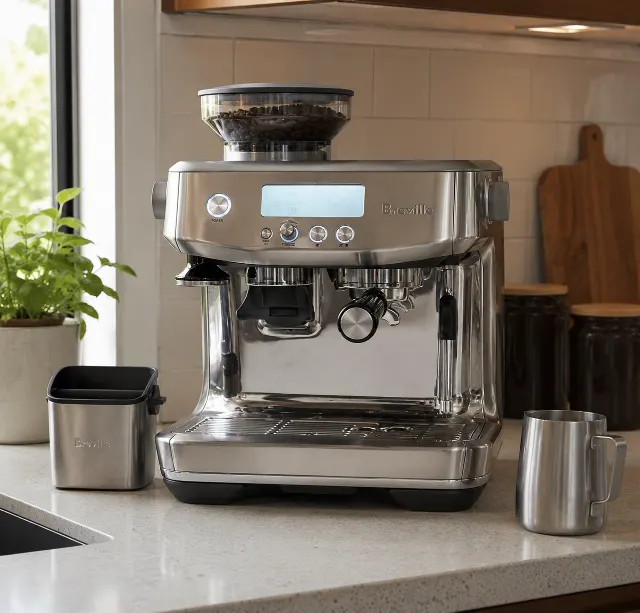
Breville Barista Pro
The Breville Barista Pro is an all-in-one espresso machine that excels at speed, thanks to its ThermoJet heating. It's a significant workflow upgrade over the Barista Express, but the integrated grinder remains its biggest long-term limitation for enthusiasts.
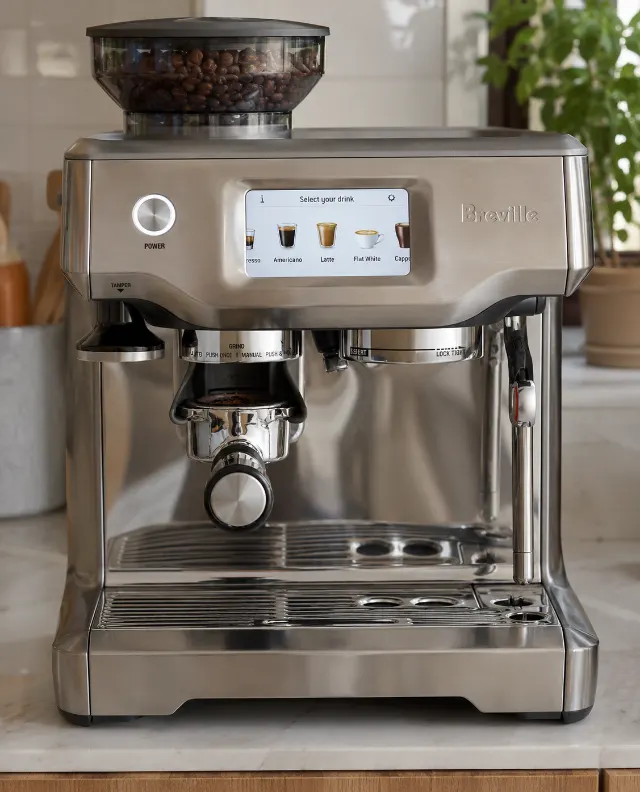
Breville Barista Touch Espresso Machine BES880BSS
The Breville Barista Touch BES880BSS excels at guided, consistent espresso for beginners, but its integrated grinder and single boiler system present real limitations for enthusiasts.
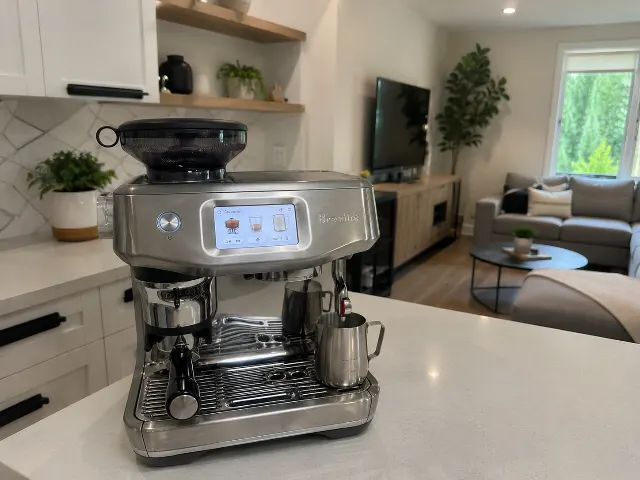
Breville Barista Touch Impress Espresso Machine BES881BSS
A long-term review of the Breville Barista Touch Impress BES881BSS, a machine that excels at guided espresso for beginners but reveals its limitations for enthusiasts over time.
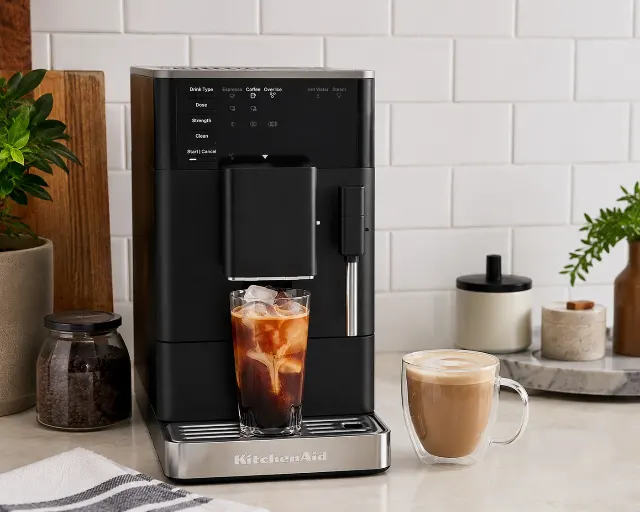
KitchenAid Fully Automatic Espresso Machine KF2 with 6 Hot and Iced Coffee
The KitchenAid KF2 makes excellent, consistent espresso and a uniquely legitimate iced coffee with push-button ease. It's a strong choice for style-conscious buyers who prioritize convenience over the granular control offered by its more complex rivals.