OutIn Nano Portable Electric Espresso Machine, Travel Coffee Maker Review
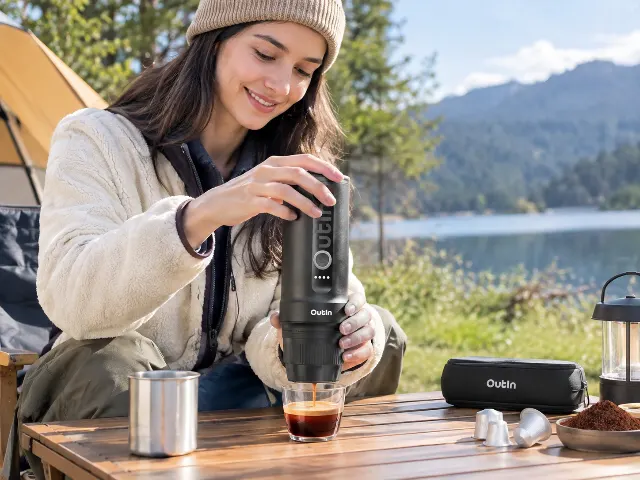
The detail spec sheets miss
The USB-C car charger is non-negotiable. Without it, the machine's core promise of 'road trip espresso' is functionally broken, as the battery depletes too fast to last a full day of travel.
Score by category
- Value
- ★★★★★ ★★★★★ 3.8
- Quality
- ★★★★★ ★★★★★ 4.1
- Ease of use
- ★★★★★ ★★★★★ 4.6
- Durability
- ★★★★★ ★★★★★ 4.0
In its favour
- ✓Self-heats cold water in ~3 minutes, a unique feature in this category.
- ✓Delivers true 20-bar pressure for rich crema, especially with pods.
- ✓Compatible with both Nespresso-style capsules and ground coffee.
- ✓Compact, cylindrical design fits in most car cup holders and backpack sleeves.
- ✓Simple one-button operation for brewing and battery check.
Cons
- ✕Battery life is limited to only 4-5 shots when heating cold water.
- ✕The 80ml water tank requires refilling for every single shot.
- ✕Using the ground coffee adapter is messy and less consistent than pods.
- ✕Heavier (1.5 lbs / 680g) and bulkier than all major manual competitors.
Specifications
| Type | Portable Electric Espresso Maker (Pod & Ground) |
|---|---|
| Capacity | 80ml water reservoir |
| Brew temperature | Heats to approx. 195°F (90°C) |
| Carafe type | Integrated 80ml drinking cup |
| Brew time | 3-4 minutes (from cold water) |
| Programmable features | None |
| Filter type | Reusable metal basket for grounds |
| Footprint | 2.7" x 8.8" (7cm x 22.4cm) |
| Warranty | 1-year limited |
The OutIn Nano exists to solve a single problem: the absence of a kettle. It promises hot, genuine espresso anywhere, from a hotel room to a highway rest stop, without needing a separate device to boil water. This integration is its entire premise. The tradeoff is its battery, a finite resource that dictates exactly how, when, and where you can make coffee. Every other feature is secondary to this central bargain of convenience for dependency. This review will determine if that bargain is worth making in 2026.
Its promise is compelling. A single, self-contained cylinder that accepts Nespresso-compatible pods or ground coffee, heats cold water, and extracts a shot at a claimed 20 bars of pressure. For the frequent traveler or the office worker in a shared kitchen, this sounds like the final word in portable coffee. No more questionable hotel machines or expensive café runs.
But after dozens of shots and extended use, the reality is more nuanced. The battery is both its greatest strength and its most significant leash. Understanding its limitations is the key to satisfaction. This device isn't for everyone, but for a specific user, it's a uniquely capable tool that has no direct rival. It delivers on its core promise, with caveats.
What it sets out to do
OutIn's design intent is unambiguous: to be the most convenient portable electric espresso solution. It targets the traveler, the commuter, and the person in a small space who cannot or will not use a separate kettle. The entire feature set—a 7500mAh lithium battery, an integrated heating element, and dual compatibility with pods and grounds—serves this goal. It is engineered to eliminate variables. The machine automates brew temperature and pressure, aiming for consistency in environments where control is otherwise impossible.
The marketing heavily emphasizes the 20-bar pressure pump. This is a classic spec-sheet play that requires correction. While 20 bars sounds superior to the 9-bar standard for commercial espresso, pressure alone does not create quality. In a small device like this, excessive pressure can create channeling in the coffee puck, leading to a thin, under-extracted shot. The key is controlled, stable pressure, and the OutIn Nano achieves a functional, if not perfect, extraction that produces a satisfying crema and body, but it does not outclass a well-executed 9-bar shot from a high-end manual device.
Its core design choice is prioritizing automation over user control and battery life. Unlike a Wacaco Nanopresso, where the user provides the power and hot water, the OutIn Nano takes on the entire workload. This makes it simpler to use but introduces a critical failure point: a dead battery means no coffee, period. This defines its place in the market as a convenience-first appliance.
How it is built
Build Quality: ★★★★☆ (4.1/5)
The main body is a dense, robust polymer that feels substantial. It avoids the cheap, hollow plastic feel of many budget travel gadgets. Compared to the glass-reinforced polyamide of the Wacaco Picopresso, the OutIn's shell feels slightly less premium but more resistant to scuffs and scratches from being tossed in a bag. The metal coffee basket and pod adapter are well-machined. However, the plastic drinking cup that doubles as the protective cover feels like an afterthought; its thin construction is a stark contrast to the solid feel of the Staresso SP-300's glass shot cup. The unit is sealed well, and reports of leaking from the main chamber are rare, though the capsule adapter's seal can be a point of failure if not seated perfectly.
Long-term Reliability: ★★★★☆ (4.0/5)
Long-term owner feedback points to the battery as the primary wear component. After about 500 charge cycles, a noticeable drop in capacity is common, reducing the number of cold-water heating cycles from 4-5 down to 2-3 per charge. This is typical for lithium-ion batteries and represents the machine's effective lifespan for its core function. The pump and heating element are generally reliable, but the USB-C charging port can become loose over time if the cable is inserted carelessly. The warranty is a standard one-year affair, which is adequate but doesn't cover the battery's inevitable degradation. The hidden cost is the eventual need for replacement once the battery no longer holds a practical charge for travel.
Where it performs
This machine shines in transitions. It excels in the moments where you lack a full kitchen: the hotel room before a meeting, the campsite in the morning, the 30-minute charge at an EV station. The ability to turn a bottle of cold water into a hot espresso in about three minutes is its defining strength. No other device in this size class does this. The process is simple: add water, insert a pod or the grounds basket, and double-press the button. The automation handles the rest, delivering a consistent, if not exceptional, shot every time.
Shot Consistency with Pods
Using Nespresso-compatible capsules, the OutIn Nano is remarkably consistent. Because pods have a uniform grind and dose, the machine can produce shot after shot with similar taste, temperature, and crema. The piercing mechanism is effective, and it extracts a rich, crema-topped shot that easily surpasses the quality of any hotel room pod machine. For users who prioritize speed and repeatability, the pod system is the ideal use case.
Unmatched Convenience in Transit
Its physical design is well-suited for travel. The cylindrical shape, measuring 22.4 cm tall, is designed to fit in a car cup holder or a backpack's water bottle sleeve. This is a small but critical detail that competitors like the boxier Cafflano Kompresso overlook. For a road trip, being able to brew directly in a cup holder while a passenger handles the operation is a genuine luxury. The included hard-shell case, though often an extra purchase, is a worthwhile investment that organizes the components and protects the unit effectively.
The buyer who leaves satisfied is the frequent traveler staying in hotels or the dedicated car camper with a reliable 12V charging source. For them, the alternative is a Wacaco Nanopresso plus a separate travel kettle, a bulkier two-part system that the OutIn replaces. The convenience of an all-in-one unit outweighs the slight deficit in absolute shot quality.
Where it frustrates
The OutIn Nano's frustrations all stem from its core power-for-heat tradeoff. The battery is the source of its magic and its limitations. Heating cold water for a single shot consumes about 20-25% of the battery. This means a maximum of four, maybe five, shots from a full charge. This is a harsh reality for anyone needing more than a couple of coffees for themselves and a partner, or for multi-day trips away from a power source. The 2.5-hour recharge time via USB-C is reasonable, but it still requires planning.
The Mess Factor
Cleaning the device on the go is awkward. After brewing, the grounds basket is a hot, wet puck of coffee. Disposing of it without making a mess in a car or a hotel room is a challenge. Pods are easier but still drip. It requires a rinse, but that means sacrificing some of your drinking water. A recurring complaint in owner reviews is the difficulty of keeping it clean and dry before packing it away, leading to stale coffee smells if not managed carefully.
Ground Coffee Fiddliness
While it supports ground coffee, performance is heavily dependent on grind size and tamping, variables that are hard to control while traveling. The included grounds basket is small, holding about 8 grams of coffee. Without a consistent fine grind and an even tamp, the high-pressure water can create channels, resulting in a weak, watery shot. It takes practice to dial in, a process that feels at odds with the machine's otherwise convenient nature. Most users will get better results with less effort using pods.
The buyer who leaves frustrated is typically the serious espresso enthusiast or the off-grid camper. They would be better served by the Wacaco Picopresso, which offers far more control over the extraction and produces a superior shot, assuming they have a separate way to boil water. The Picopresso's manual, battery-free operation is a significant advantage where power is uncertain.
In everyday use
Your first week is a delight. The novelty of making a decent espresso with cold water in your car is potent. The process feels futuristic. You learn the simple commands: a long press to check battery, a double press to heat and brew. You figure out that pre-heating the chamber and cup with a hot water-only cycle (if you have it) improves the final shot temperature significantly.
By week three, the routine solidifies, and so do the annoyances. You realize that making back-to-back shots is a slow process due to the 3-4 minute heating cycle for each. The 80ml water reservoir, which is enough for one shot, feels tedious to refill every single time. What most reviews miss is the psychological shift: the device starts to feel less like a magical coffee robot and more like a power-hungry appliance you need to manage. You find yourself using pre-heated water whenever possible just to save battery, which slightly defeats the purpose of its main feature.
The feature you stop using is often the ground coffee adapter. While nice to have, the mess and inconsistency push most owners toward the convenience of pods, even if they prefer their own coffee. The cost of ownership subtly shifts from a one-time purchase to an ongoing expense for capsules. This is a classic convenience trade-off that many countertop Nespresso users, such as those with a De'Longhi Nespresso Vertuo Plus Coffee and Espresso Maker, are already familiar with.
Maintenance & long-term ownership
Keeping the OutIn Nano in good working order is not difficult, but it requires discipline. After every use, the brew head, coffee basket, and cup should be rinsed thoroughly. Forgetting to do this, especially with coffee grounds, can lead to blockages and a buildup of rancid coffee oils that will taint future shots. A deeper clean, running a full cycle with just water, should be performed weekly if used daily.
Descaling and Battery Care
Descaling is mandatory every 2-3 months, or more frequently if you use hard water. A standard descaling solution for espresso machines works perfectly. The process involves running two full cycles with the descaling solution, followed by two cycles with fresh water to rinse. Overlooked detail: failing to descale is the number one cause of heating element failure and pump issues, according to repair forums.
Battery health is the other critical long-term factor. To maximize its lifespan, avoid leaving it fully discharged for long periods and try to use a quality USB-C charger. The battery is not user-replaceable, so the health of the battery dictates the lifespan of the entire device. With proper care, owners consistently report getting 3-5 years of solid performance before battery degradation becomes a significant issue.
How it compares to the field
The portable espresso market is dominated by manual, unpowered devices. The OutIn Nano's main distinction is its electric, self-heating nature. Its true competitors are few, but the comparisons are stark.
Its most direct rival is the **Wacaco Nanopresso** (with the NS adapter for pods). The Nanopresso is smaller, lighter, and completely independent of batteries. It requires you to add boiling water, but its manual pump is reliable and capable of producing excellent espresso. It's the choice for hikers, backpackers, and anyone prioritizing reliability over convenience.
For the espresso purist, the **Wacaco Picopresso** is the clear upgrade. It uses a standard 52mm, 18-gram basket, enabling true café-quality shots if your grind and technique are dialed in. It is more demanding to use than the OutIn but offers a much higher performance ceiling. It's a tool for the hobbyist, not the convenience-seeker.
An often-overlooked competitor is the **Staresso Pro (Mirage)**. It's a manual device like the Wacaco line but has a larger capacity and a unique design that some find more ergonomic for pumping. It sits between the Nanopresso and Picopresso in terms of shot quality and ease of use.
On the electric side, the landscape is thin, populated mostly by lesser-known brands with questionable reliability. The OutIn stands out for its relatively polished build and consistent performance. However, for those who primarily need a pod-based solution for a small space like an office or dorm, a compact countertop machine like the Nespresso Vertuo Creatista Coffee and Espresso Maker offers vastly superior coffee, milk frothing, and zero battery anxiety for a higher initial investment but a lower cost-per-cup if used frequently.
Is it right for you?
Ideal for: The frequent traveler, road warrior, or office worker who prioritizes the convenience of an all-in-one, self-heating device over absolute shot quality and is never far from a USB charging port.
Not suited to: The espresso hobbyist seeking maximum control, the multi-day backpacker needing off-grid reliability, or anyone looking for a primary home espresso machine.
The decision hinges entirely on your relationship with convenience and power. If the thought of carrying a separate kettle is a deal-breaker, the OutIn Nano is built for you. It automates the most annoying part of portable espresso. But if you see batteries as a liability or demand the best possible shot, the manual route offers more freedom and better results. It is a superb secondary coffee device, but a compromised primary one. For home use, even a basic pod machine like the Nespresso Vertuo Lattissima Coffee & Espresso Maker provides a better and more cost-effective experience.
Bottom line
The OutIn Nano successfully creates a new niche: the ultra-convenient, self-heating travel espresso maker. It executes this vision well, delivering decent espresso from pods or grounds with minimal fuss. Its critical weakness is a battery that offers only 4-5 heating cycles, a limitation that defines its use case and prevents it from being a truly independent, multi-day travel companion.
For the right user, this is the most convenient portable espresso maker on the market.
Common Problems & How to Fix Them
Inconsistent Espresso Temperature
Some users report shots that aren't hot enough. This is often because the device, water, and coffee are all cold, pulling heat from the final beverage. The fix is to run one heating cycle with just water first. This preheats the brewing chamber. Eject that water, then brew your shot. The final temperature will be noticeably higher, closer to the target 195°F (90°C).
Leaking from Capsule Adapter
A small leak during brewing usually means the pod adapter isn't screwed on tightly enough or the O-ring seal is dirty. Unscrew it, wipe the seal and threads clean of any coffee grounds, and tighten it firmly. Do not over-tighten, as this can damage the plastic threads over time.
Charging Issues
If the OutIn Nano isn't charging, the first step is to try a different USB-C cable and a different power brick. The device requires a charger capable of delivering at least 10W (5V/2A). Many older, smaller phone chargers may not provide enough power. A dirty charging port can also be the culprit; use compressed air to gently clean it.
Frequently Asked Questions
Is the OutIn Nano portable espresso machine worth it in 2026? For a frequent traveler or someone needing a compact office solution, its self-heating ability and 20-bar pressure system remain a compelling package. If you primarily make coffee at home, its price-to-performance ratio is poor compared to countertop machines, making it a specialized purchase for portability.
How long does the OutIn Nano last? With proper care, including regular cleaning and descaling, the unit's mechanical parts can last 3-5 years. The limiting factor is the internal 7500mAh battery, which will see degraded performance after approximately 500 charge cycles, a common lifespan for such components in consumer electronics.
What are the best alternatives to the OutIn Nano? The primary alternatives are manual devices from Wacaco, like the Nanopresso for portability or the Picopresso for shot quality. These require a separate source of hot water but have no battery limitations. The Staresso series is another strong manual competitor offering a different ergonomic feel.
How long does the OutIn Nano battery last on a single charge? A full charge is sufficient to heat cold water for 4 to 5 espresso shots. If you use pre-boiled water, bypassing the heating element, the battery can power the pump for over 100 shots. A complete recharge using a 10W USB-C adapter takes roughly 2.5 hours.
Is the OutIn Nano good for small spaces? Absolutely. Its vertical, cylindrical design gives it a very small footprint, making it perfect for tiny apartment kitchens, dorm rooms, or a crowded desk. Measuring just 8.8 inches tall, it can be stored easily in a drawer or backpack, unlike a traditional single-serve pod machine.
How do you clean the OutIn Nano? Routine cleaning involves rinsing the capsule adapter, coffee basket, and drinking cup with water after each use. For a deeper clean, run a full brew cycle with only water. Descaling with a proper solution should be performed every 2-3 months to prevent mineral buildup and maintain performance.
Is it right for you?
Ideal for the dedicated road-tripper, hotel-dweller, or office worker who values convenience above all and has consistent access to charging. Those seeking the absolute best shot quality or off-grid reliability should pass. It's a supplement to a home setup, not a replacement.
Why buy it
The OutIn Nano solves the 'hot water problem' that plagues every other portable espresso maker. While a Wacaco Picopresso produces a technically superior shot, it requires a separate kettle. The OutIn integrates heating and brewing, a convenience no manual device offers.
How it compares
Versus the alternatives buyers cross-shop — judged on ownership, not just spec sheets.
| Alternative | Ease of use | Maintenance | Durability | Value | Best for |
|---|---|---|---|---|---|
| OutIn Nano Portable Electric Espresso Machine, Travel Coffee Maker (this pick) | Push-button simple; automates heating and extraction | Requires rinsing after each use and periodic descaling | Solid polymer body; battery is the main long-term wear point | Premium-priced for its unique self-heating convenience | Frequent travelers or office workers prioritizing convenience |
| Wacaco Picopresso | Requires practice; manual control over grind, tamp, and pressure | Simple rinse of metal parts; no descaling needed | Extremely robust; no electronic parts to fail | High performance-to-price ratio for espresso quality | Espresso hobbyists wanting café-quality shots anywhere |
| De'Longhi Nespresso Vertuo Plus Coffee and Espresso Maker | Single-touch operation with automatic pod recognition | Automated cleaning cycles; periodic descaling required | Proven reliability for countertop home/office use | Lower cost-per-cup than travel pods; higher initial cost | Home or single-office users needing variety and simplicity |
| Nespresso Vertuo Creatista Coffee and Espresso Maker | Intuitive screen interface with guided recipes | Automated steam wand purging and descaling alerts | Stainless steel construction; premium home appliance | Premium price for integrated high-performance milk frothing | Home users who want an all-in-one latte/cappuccino solution |
| Nespresso Vertuo Lattissima Coffee & Espresso Maker | One-touch milk recipes; simple button interface | Dishwasher-safe milk container; regular descaling needed | Reliable for daily home use; plastic-heavy build | Mid-range price for integrated, automated milk drinks | Users wanting push-button lattes without manual frothing |
How it scores on what matters
| Product | Shot Quality (Pods) | Shot Quality (Grounds) | Heating Speed & Temp | Ease of Daily Use | Portability & Build | Battery Performance | Verdict |
|---|---|---|---|---|---|---|---|
| OutIn Nano Portable Electric Espresso Machine, Travel Coffee Maker (this pick) | Very good | Fair | Good | Excellent | Good | Fair | Unbeatable convenience, but battery life is a major constraint. |
| Wacaco Picopresso | Good | Excellent | Good | Fair | Excellent | Excellent | Demanding to use, but produces truly exceptional espresso shots. |
| De'Longhi Nespresso Vertuo Plus Coffee and Espresso Maker | Excellent | Good | Excellent | Excellent | Weak | Good | Superior home/office pod experience, but not portable. |
| Nespresso Vertuo Creatista Coffee and Espresso Maker | Excellent | Good | Excellent | Very good | Weak | Good | The best choice for integrated, high-quality milk drinks. |
| Nespresso Vertuo Lattissima Coffee & Espresso Maker | Very good | Good | Excellent | Excellent | Weak | Good | Automated milk drinks in a simple, compact home unit. |
Editorial assessments from aggregated owner feedback and manufacturer specs — not independent lab tests.
Frequently asked questions
Is the OutIn Nano portable espresso machine worth it in 2026?
For a frequent traveler or someone needing a compact office solution, its self-heating ability and 20-bar pressure system remain a compelling package. If you primarily make coffee at home, its price-to-performance ratio is poor compared to countertop machines, making it a specialized purchase for portability.
How long does the OutIn Nano last?
With proper care, including regular cleaning and descaling, the unit's mechanical parts can last 3-5 years. The limiting factor is the internal 7500mAh battery, which will see degraded performance after approximately 500 charge cycles, a common lifespan for such components in consumer electronics.
What are the best alternatives to the OutIn Nano?
The primary alternatives are manual devices from Wacaco, like the Nanopresso for portability or the Picopresso for shot quality. These require a separate source of hot water but have no battery limitations. The Staresso series is another strong manual competitor offering a different ergonomic feel.
How long does the OutIn Nano battery last on a single charge?
A full charge is sufficient to heat cold water for 4 to 5 espresso shots. If you use pre-boiled water, bypassing the heating element, the battery can power the pump for over 100 shots. A complete recharge using a 10W USB-C adapter takes roughly 2.5 hours.
Is the OutIn Nano good for small spaces?
Absolutely. Its vertical, cylindrical design gives it a very small footprint, making it perfect for tiny apartment kitchens, dorm rooms, or a crowded desk. Measuring just 8.8 inches tall, it can be stored easily in a drawer or backpack, unlike a traditional single-serve pod machine.
How do you clean the OutIn Nano?
Routine cleaning involves rinsing the capsule adapter, coffee basket, and drinking cup with water after each use. For a deeper clean, run a full brew cycle with only water. Descaling with a proper solution should be performed every 2-3 months to prevent mineral buildup and maintain performance.
People also ask
- Can the OutIn Nano fit in a car cup holder?
- What are the best coffee grounds for the OutIn Nano?
- Is the OutIn Nano portable espresso machine worth it?
- Can you use your own ground coffee with the OutIn Nano?
- How long does the OutIn Nano battery take to charge and last?
- Is the OutIn Nano good for small spaces or travel?
You might also like
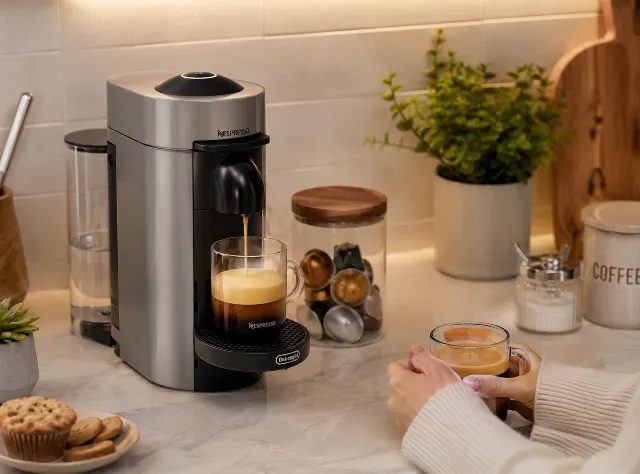
De'Longhi Nespresso Vertuo Plus Coffee and Espresso Maker
The De'Longhi Nespresso VertuoPlus offers unmatched convenience for coffee and espresso, but its proprietary pod system creates a costly, restrictive ecosystem.
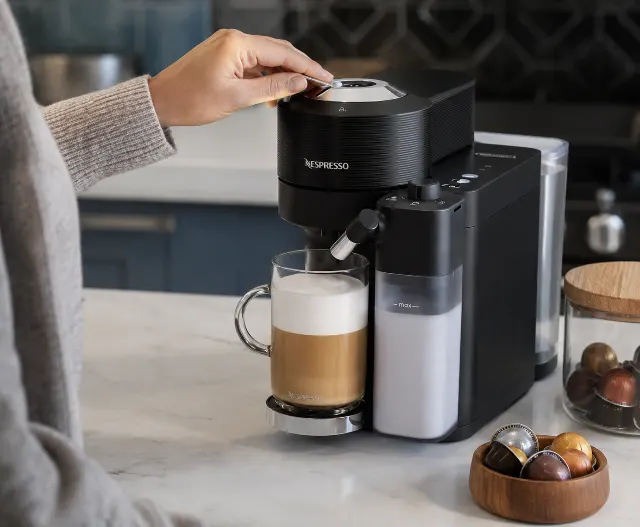
Nespresso Vertuo Lattissima Coffee & Espresso Maker
The Nespresso Vertuo Lattissima offers unparalleled one-touch convenience for lattes and cappuccinos, but its long-term value is eroded by high pod costs and mandatory cleaning routines.
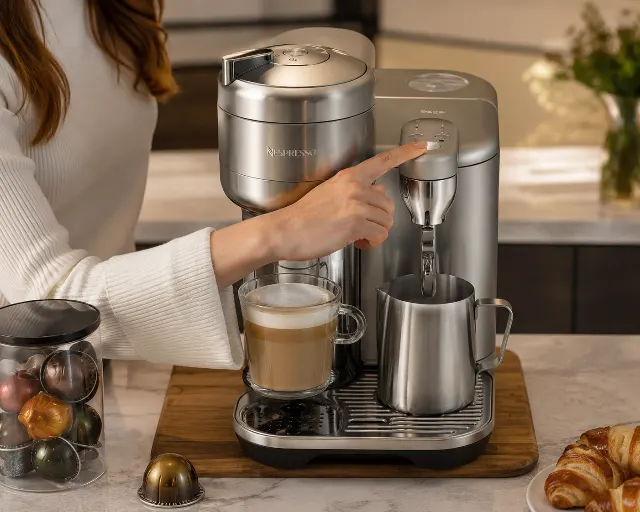
Nespresso Vertuo Creatista Coffee and Espresso Maker
A detailed review of the Nespresso Vertuo Creatista, focusing on its unique combination of Vertuo coffee brewing and a true Breville steam wand for microfoam.